How Are Online Learning Platforms Changing The Higher Education System?

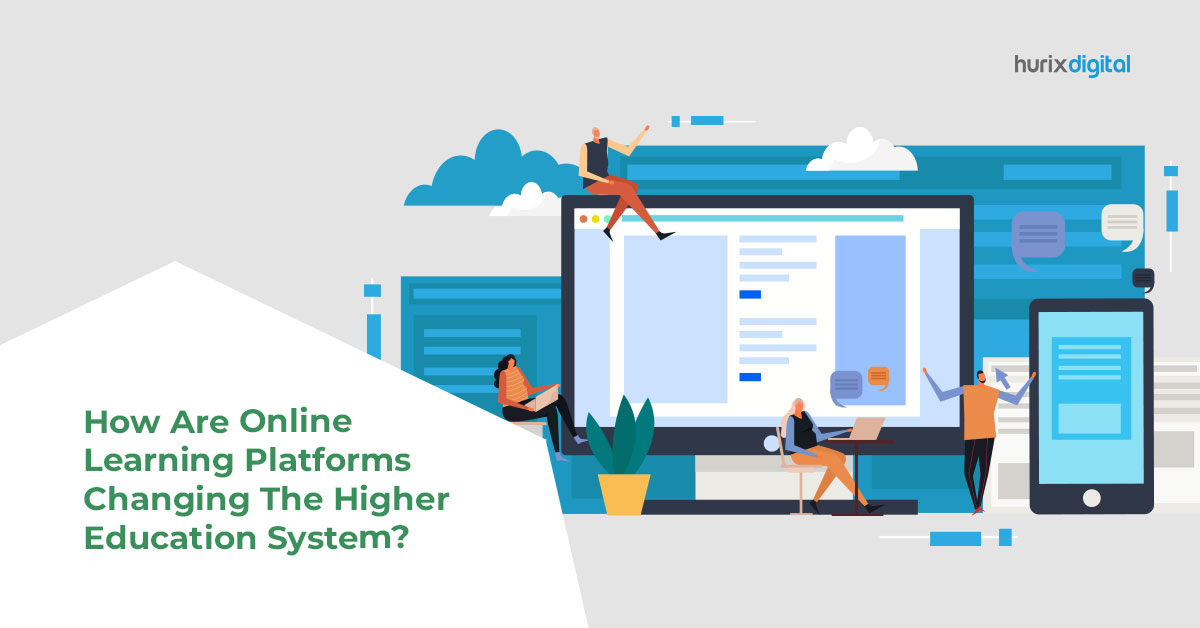
[vc_row][vc_column][vc_column_text]eLearning is revolutionizing the way people learn. According to Forbes, the eLearning market will have risen to $325 billion in global value by the end of the next three years. Especially in the case of higher education, online learning platforms provide better opportunities for students to improvise and customize their learning. This blog will discuss how online learning platforms for higher education are transforming traditional learning and why they have become exceedingly popular. 5 Ways Online Learning Platforms are Changing Higher Education Online learning has five revolutionary applications for the higher education system: 1. Collaboration and adaptive learning One of the most important aspects of education and the learning experience is the collaboration between teachers and students. Classrooms create learners’ communities led by educators, where all the participants contribute and exchange information. These platforms facilitate resource sharing and cooperation over digital and interactive interfaces, which allows learners and educators to “come together” with all the materials. When a physical presence cannot be facilitated, online and virtual classrooms more than fill the gaps and establish teacher-student communication, which is essential for effective learning. Furthermore, learning communities provide a way to socialize and interact where physical presence is challenging to arrange. 2. Technological familiarity In today’s digital era, the traditional education system is also adapting itself to a more technological familiarity. Digital educational tools can now be deployed over any compatible device, like laptops, mobile phones, tablets, etc., and accessed at the student’s convenience. Modern learners are more comfortable leveraging technology for flexibility benefits, which makes eLearning platforms pivotal for teaching efficacy. Statistics show that 46% of students use mobile phones to view eLearning material before sleeping. Furthermore, live classrooms and note-taking apps have made it simpler to stay attentive in classes without needing any concept to be repeated. Technology-enhanced learning has also enabled inclusivity through eLearning tools. For example, technologies like text-to-speech incorporated into learning modules have enabled visually challenged learners to participate in regular classrooms, encouraging participation and confidence in themselves. 3. Global Connectivity Global student exchange and cultural education have been integral to higher education. Through online learning platforms, educators can finally establish a connection between students with similar interests. In the process, they enable a global interaction between people of different cultures and backgrounds, enhancing exposure levels for the learners. By creating global access courses, a community of learners of the same subject facilitates virtual social interactions that otherwise would be difficult to achieve. It also helps to level the playfield for economically challenged learners by bringing a global community and improved resource access within affordable reach. 4. Supplementary Courses As schools and universities move towards adopting technologies into their regular curriculums, a parallel stream of supplemental courses can be conveniently accessed by students. Third-party eLearning platforms have become industry-leading solutions for students seeking knowledge over and above their school curriculums. For students with a penchant for supplementary or parallel skills and subjects, these online learning platforms have made it possible to access their interests at any time, pace, and level of difficulty they like. The customizability of supplementary courses is nothing short of extreme – with AI-based learning prompts for challenging concepts. Additionally, school faculty and staff can benefit from online learning platforms by publishing their own supplemental courses for students around the world who are interested. 5. Hybrid Learning Most higher education institutions have now reopened or are opening with selective attendance. However, with the convenience, customization, and benefits of online learning platforms, it is difficult for students to return to traditional schooling methods. The same online learning platforms also allow educational institutions to establish a hybrid school environment. This is a model where the lectures and lessons that can be understood better in person would require attendance at school. Every other lesson could be delivered through the school eLearning platforms or apps. Reasons Why eLearning is Popular in Higher Education The popularity of eLearning platforms in higher education can be attributed to several reasons: Online learning is inherently flexible, customizable, and accessible. Learners don’t need to be in a restrictive classroom environment to learn and can engage through interactive online content, including animated explanations of concepts and descriptive media. Students get access to multiple courses simultaneously and at any time that suits them. There is no formal classroom schedule that forces productivity or attention on students; instead, learners get to utilize their most attentive hours and productivity to learn the most challenging concepts. Online learning platforms retain a repository of learning resources and materials, eliminating the need for students and teachers to take notes or make physical copies of learning materials. It helps save on paper and printing costs while ensuring all learners can access the resources. The biggest reason eLearning is popular is because it can be delivered over various channels. It doesn’t matter whether or not a student has access to a laptop; digital courses work even over mobile phones, which a majority of the population possesses. This drastically improves the penetration of education into the societal fabric. Wrapping Up Online learning platforms for higher education are cost-effective, enable better learning experiences, and are inclusive and sensitive to the needs of every student individually. Hurix Digital empowers higher education institutions with their eLearning and digital technologies to ensure that the benefits of online learning platforms for higher education are translated effectively. To understand how Hurix Digital can help your educational institution, visit the website.[/vc_column_text][/vc_column][/vc_row]
Revolutionizing ELearning: The Benefits Of 3D Modeling And Animation In Course Development

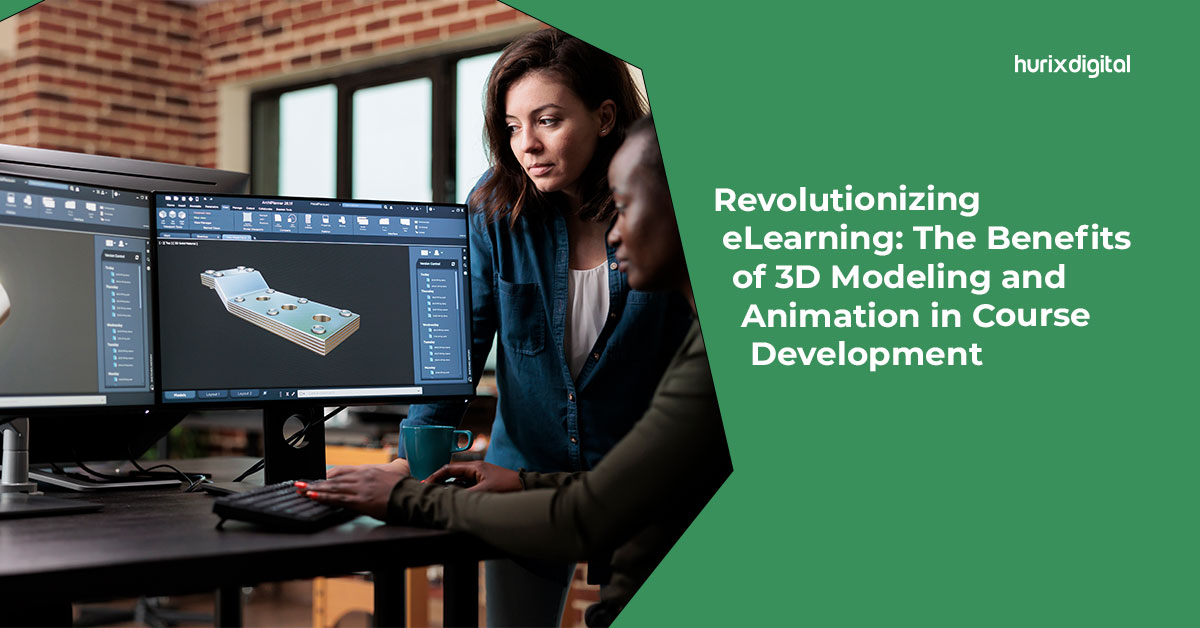
[vc_row][vc_column][vc_column_text]The pandemic has transformed the education sector in several ways. One of the most paramount changes in the education sector was the rise of e-learning and e-learning platforms. Since most of the world was in a complete lockdown, online learning became an indispensable tool for institutions and teachers to ensure uninterrupted education and engage with students remotely. However, e-learning course development had its unique shortcomings. One of the most common was that e-learning courses were less interactive and engaging than classroom programs. To overcome these problems, many organizations use animations and 3D modeling in their online program development to make them more engaging and fun. In this blog, we will see how animation and 3D modeling have revolutionized e-learning and the benefits of using them during course development. The Need For 3D Modeling And Animation In E-Learning Course Development The thing about online e-learning course development is that it lacks physical stimulation. Without proper physical stimulation and a lack of face-to-face interaction, learners may experience challenges in developing practical skills. This may also hinder their ability to build interpersonal connections. To overcome this issue and to make e-learning in higher education more interactive, fun, and relevant, digital aspects like 3D modeling and animations are incorporated into the course development. 3D modeling is the three-dimensional representation of pictures, figures, and objects. Similarly, 3D animations make all the pictures, figures, and objects come to life by creating an illusion that they are moving. 3D modeling is the initial step that can eventually be transformed into 3D animations to create realistic moving structures. Using such interactive objects in e-learning course development improves the quality of e-learning. Furthermore, they drive the learners’ attention quickly and get the most out of it efficiently. Benefits Of 3D Modeling And Animation In Course Development 3D modeling and animation have become essential tools for e-learning course development. It is becoming increasingly popular among organizations to use digital objects to create surreal learning experiences for their students. According to Statista, the global 3D animation modeling market is valued at 8.1 billion dollars in 2023. It is further expected to be valued at 11.6 billion dollars by 2026. These numbers depict the global growth of the 3D modeling and animation industry.  Let’s look at the key benefits of incorporating 3D modeling and animations in online program development. And why you should not miss it too! 1. It Creates Engaging Learning Experiences According to a study conducted in 2019 in the Czech, it was concluded that digital elements like 3D modeling and animations positively impact student learning experiences. The use of these resources also motivated students to learn about natural sciences.  Furthermore, learners are more likely to stay focused and engaged when exploring 3D visuals and animations. 2. It Enhances Visual Memory According to research by the American Physiology Society, decorative animations can improve visual memory by providing learners with an engaging visual experience. Learners are more likely to remember visuals from 3D objects and models than from traditional text-based course material. This way, they would be able to retain more and break the monotony of regular text-based learning materials. 3. It Creates An Interactive Environment 3D modeling and animation allow learners to interact more with the course content. This helps them better understand the material and allows them to ask questions and get feedback from the instructor. Furthermore, 3D modeling and animation can be used to create quizzes, assessments, and other interactive elements in the course, making the learning experience more effective and efficient. 4. Cost-Effective Solution Online 3D design courses and animation courses are relatively easier to produce and do not break the bank. Furthermore, the wide availability of online tools and resources, such as animation courses online, has made producing animations even easier. This makes animation and 3D modeling great options for businesses looking to create highly interactive and fun training programs and instructional videos.    How To Use 3D Modeling And Animation In Course Development? Now that you all know the perks of incorporating animations and 3D modeling into the course to enhance the e-learning experience, it is now time to understand how to structure an online course and what are some good practices to incorporate these digital objects into your course. Here are some Dos and Donts to keep in mind while adding animations and 3D modeling in courses: Dos Do use animations and 3D modeling to enhance the learning experience and strengthen the key concepts. Do make sure that the animations and 3D models are relevant to the course content and align with the learning objectives. Do keep the animations and 3D models visually appealing, engaging, and interactive to capture learners’ attention. Do test the animations and 3D models across different devices and platforms to ensure compatibility and smooth functionality. Do provide clear instructions or guidance on interacting with the animations or manipulating the 3D models, if applicable. Do consider accessibility by providing alternative text or descriptions for learners with visual impairments. Don’ts Don’t overload the course with excessive or unnecessary animations and 3D models that may distract or confuse learners. Don’t rely solely on animations and 3D models to deliver information. You can use them as supplements to text-based content. Don’t use animations or 3D models that are overly complex or difficult to understand, as they may confuse the learners. Don’t compromise on the quality of the animations or 3D models. Poor visuals can compromise the credibility and quality of the course. Don’t assume that all learners will have access to high-end devices or internet connections capable of running complex animations or 3D models. Consider different user scenarios and optimize the course accordingly. Don’t forget to provide clear navigation or instructions on how to navigate through the animations courses online. Also, make sure that learners can easily explore and interact with them. By considering these dos and don’ts, you can effectively incorporate animations and 3D modeling into e-learning course development to create engaging and impactful learning experiences for your students. Final Thoughts Using 3D

10 Benefits of Curriculum Mapping

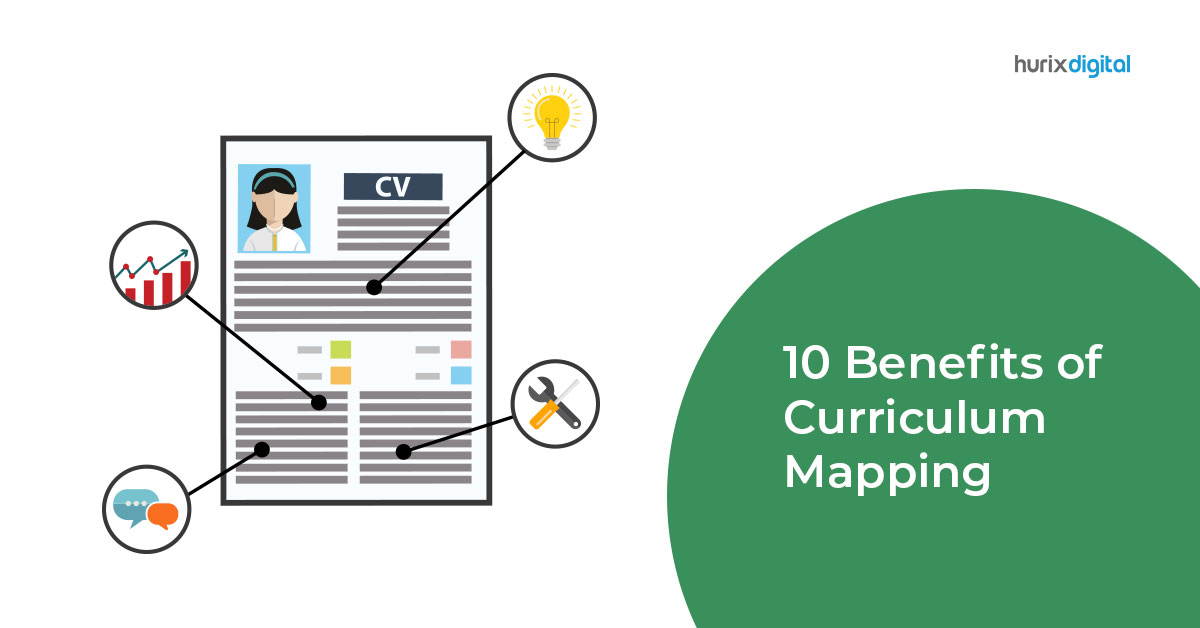
[vc_row][vc_column][vc_column_text]For teaching to be effective and impactful, educators need to have a clear idea and visibility of where a course is going. Courses don’t simply comprise learning materials; they have several other resources, techniques, pedagogies, and methodologies that make them effective. Teachers must ensure that the lessons are well-planned and engaging to boost the value delivered from each learning course to the students. A report that studied the scenario of K-12 education found that 92% of the teachers agreed that engagement was key. Using curriculum mapping, teachers can improve student engagement and deliver the course more effectively. What is Curriculum Mapping? Curriculum mapping is aligning all the aspects, resources, and education techniques into a program to enable efficient delivery, better engagement, and higher value from a course. The cornerstone of curriculum mapping is the process of blueprinting every detail of a course, including educational reforms, philosophies, pedagogies, instruction, assessments, and the activities involved. It may sound like creating a highly detailed lesson plan; however, there are key differences between the two that set them apart. While a lesson plan outlines the subject matter of a course, a curriculum map provides a more in-depth perspective, including goals and objectives. Curriculum Mapping Process The curriculum mapping process comprises five major steps to ensure that the education program is aligned properly with the curriculum: Decide Program Goals: In this step, the educators must identify goals specific to the course that is being mapped. It helps to keep the curriculum on track. Decide Course Objectives: Course objectives are the milestones or achievements you aim for your students to complete by the end of the curriculum. These need to be aligned with the goals. Gather Instructional Support Materials: These are the resources that will aid the students in achieving course objectives. Plan Formative Course Assessment: These are the materials and activities that help students self-assess their progress. Plan Summative Course Assessment: These are more formal assessments designed to measure student progress through a curriculum. What is the Importance of Curriculum Mapping? The importance of curriculum mapping is reflected in the fact that the better a curriculum is delivered to the learners, the better prepared they are for the future. It enables a program to be coherent, well-organized, timely, and intentional. It helps teachers deal with common course problems like information misalignment, locating lesson delivery bottlenecks, and improving lesson timing. Educators can plan the delivery of concepts, materials, activities, assessments, and other aspects of the course at the right time to help with retention and understanding. Curriculum mapping also ensures that the methods used for teaching are advanced and resonate with the learners’ preferred modes of consuming content. What is the Purpose of Curriculum Mapping? The purpose behind curriculum mapping for educators is to standardize their courses according to national or international standards. This enables them to deliver the lessons better and in a more organized way. Curriculum mapping is like a tool in instruction that enables educators to inform their future education strategy for a course, to compare their courses with others, and to achieve better organization and output from their curriculum. It helps the teachers to understand where they can reinforce learning in the curriculum and where it can be eased up a little to allow room for creativity or improvisations. Benefits of Curriculum Mapping for Teachers There are ten major benefits of curriculum mapping for teachers: Improved collaboration A curriculum map helps establish a communication bridge between teachers and students. The teacher can holistically gauge student progress before moving on to the next course modules. Teachers can compare their respective course progress when the curriculum is mapped. Simplified resource sharing A well-mapped curriculum helps educators refer to each other’s curriculums to pinpoint the right resources to share with students. Resource selection is made easier, and teachers save time searching for activities, media, books, etc., relevant to the course by enabling resource sharing. Benchmarks the course delivery Curriculum mapping is pivotal in helping educators achieve a standardized flow of the course. It establishes familiarity with the curriculum with the students and enables teachers to better align their materials with a variety of certified methods and pedagogies. It helps make the course more efficient. Improves student engagement A well-delivered course keeps students engaged throughout. By ensuring that teachers don’t begin new concepts without prior familiarity and removing redundancies, the subject matter remains interesting for students. Combined with advanced delivery methods, teachers can significantly improve engagement. Brings organization to a course Mapping a curriculum is like creating a roadmap of the entire course, complete with directions, logistical details, and travel information. It organizes the course delivery down to the last detail and helps teachers save precious time searching for materials, technologies, activities, etc., in the last moments. Helps gauge student progress The assessment modules in curriculum mapping help the teachers lay down the parameters and concepts that need special attention for assessment even before the course starts. It helps emphasize areas where more time needs to be dedicated to assisting students to progress better. It is a reflective practice tool Year after year, as teachers refine their curriculum mapping, they learn from past mistakes and reinforce the methods that deliver exceptional results. It helps them see how a curriculum needs to be designed to be effective, engaging, and efficient. Reflection on past curriculums also enables the teachers to align their courses to student expectations better. Delivers a better learning experience Curriculum mapping helps teachers highlight the ideal lesson delivery methods – like interactive, digital, or in-person – for specific concepts or modules in the course. It enables a better learning experience when concepts are easy to understand, and the course is aligned with student expectations. It defines an educator’s standards A good curriculum map enables teachers to deliver exceptional learning experiences and courses to students. This helps them create their own identity in the niche, helping them propagate good pedagogies and education practices to the masses. It helps create a resource library Many curriculum mapping

The Importance of Curriculum Planning for Effective Learning

[vc_row][vc_column][vc_column_text]The curriculum lays down an educational framework governing the instructional and learning methodologies. Curriculum planning is an essential aspect of effective teaching that establishes the groundwork of students’ academic careers. It involves designing, developing, and implementing educational courses with significant input from teachers, including the objectives, content, and assessment methods. In addition to ensuring that students have sound knowledge of what is expected of them academically, a well-planned curriculum establishes a meaningful and engaging learning environment. An effective curriculum offers teachers, students, school administrators, and community stakeholders a quantifiable strategy and structure for delivering quality education.  The curriculum specifies the learning outcomes, standards, and competencies students must demonstrate before proceeding to the next level. An evidence-based curriculum provides students with the necessary skills and knowledge, functioning as a road map directing instructors and students to academic success. Curriculum planning should be extensive, emphasizing cognitive growth domains and social, emotional, and aesthetic development. A student-centered approach to curriculum planning encourages diversification, adaptability, and consistency across levels. Thoughtful consideration is imperative to accomplish the primary objective of the planning process- successful student learning in an organized and systematic manner. Designing a well-conceived curriculum with learning objectives in mind can serve as a reference guide for the instructor in the classroom while guaranteeing that the teacher effectively conveys the right content to the students. The curricular plan ensures that daily instruction serves a greater purpose by dissecting a complex idea into smaller comprehensible portions. Curriculum planning induces well-coordinated, quality teaching, learning, and assessment programs enhancing students’ disciplinary knowledge and behaviors alongside their interdisciplinary, physical, personal, and social aptitudes. Here are a few key ways curriculum planning can achieve the intended student development outcomes. 1. Define Learning Goals and Objectives A curriculum plan incorporates multiple scheduled activities and learning objectives while defining the target outcomes regarding each subject. It serves as a road map, laying out your course and the actions required to realize the purpose of education. Students can understand what is expected of them to achieve their true potential. Distinct goals provide a directive, keep students motivated, engaged, and focused on their learning, leading to better academic outcomes. 2. Consistent and Coherent Content  A well-planned curriculum aids in preventing or eliminating gaps in learning and ensures optimum coverage of all domains within the curriculum. Continuity of learning between fields across various levels enables a logical progression of instruction, building on previously grasped concepts and skills. Cohesiveness in teaching, learning, and assessment practices ensures the entire scope of students’ learning needs is addressed. 3. Improved Assessment and Feedback Curriculum planning marks student progression on a learning curve, providing a reference point for evaluating the learning progress. Teachers can formulate assessments that accurately measure student growth by establishing clear learning objectives and expectations. Effective assessment allows teachers to provide immediate feedback to students by identifying areas of strength and progress, reaching out to extend support, and making necessary adjustments to curriculum and delivery methods to facilitate student comprehension. Curriculum planning fosters a culture of continuous improvement, where teachers are motivated to reflect on their practice, share feedback, and refine their strategies over time, leading to better outcomes for students while supporting the ongoing professional growth and development of teachers. 4. Increased Engagement and Motivation A curriculum built around student needs, interests, and goals of students garners engagement and motivation. Curriculum planning, wherein learner-centeredness is the essence, yields higher student satisfaction and retention rates. Assignments, activities, and learning experiences customized with differentiated lesson plans encourage students to seek answers, exercise their imagination and discretion, and help them develop into confident and self-directed individuals. 5. Personalized learning The delivery of personalized learning solutions that complement each unique learning preference and cater to individual academic strengths is made possible by careful curriculum development. A student-oriented approach to curriculum planning represents a fusion of educational practices and instructional strategies tailored to student needs. A learner-centered curriculum enables the attainment of individual educational aspirations while providing affluent opportunities to improve student learning abilities through a self-directed learning path. 6. Collaboration and Consistency Collaboration is an essential facet of k12 curriculum planning as it enables teachers to pool their expertise, knowledge, and resources to create a cohesive and consistent learning experience for their students. Teachers can share their perspectives, insights, and strategies to improve the quality of instruction and support a more effective teaching and learning process when they work in unison to plan a curriculum. Sharing resources such as lesson plans, instructional materials, and assessments mitigates the workload and avoids duplication of effort. They can also benefit from mutual experiences, ideas, and viewpoints, which assist in determining their strengths and weaknesses and making alterations to the curriculum as necessary. Working together to develop common instructional goals and standards ensures that students are exposed to the same concepts and skills, regardless of the teacher or classroom, encouraging consistency in teaching across classrooms. The Bottom Line Curriculum planning enumerates all elements and dimensions of learning deemed essential. It combines key concepts, skills, and knowledge students need to excel with the appropriate teaching strategies, resources, and assessments to augment their learning. A well-planned curriculum is essential for creating a conducive learning environment that fosters academic growth. Effective curriculum planning must consider the diverse needs and abilities of the learners, including their cultural backgrounds, learning styles, and individual interests. This ensures that learning is accessible, relevant, and engaging to all students. Curriculum decisions have far-reaching consequences for students and teachers in a K-12 education journey and beyond. K12 curriculum should undergo regular evaluation to preserve its efficacy in light of the shifting demands of society at large. Curriculum planning also involves ascertaining the scope and sequence of learning in a structured manner and ensuring the introduction of concepts coherently. Ensuring students have the necessary background knowledge and skills to build on as they progress through their academic journey is crucial. The dawn of digital initiatives in learning and the importance of curriculum development in formal education has triggered the proliferation of digital

Curriculum Design: How To Develop A Successful Curriculum

[vc_row][vc_column][vc_column_text]In an era where eLearning is the present and future of education, it’s a must for educators and course creators to prioritize the comfort of learners over anything else.  Since 2000, the eLearning sector has increased by 900%, and to keep that percentage high, it’s crucial to design courses that are perfect in every way, especially when it comes to curriculum. To set a course for success, one of the very first steps is designing a curriculum that’s engaging and motivates learners to make the most of their learning sessions.  A sound educational program design lays the foundation for effective learning and teaching. Students of today’s age have diverse needs, and a well-made curriculum design takes good care of them. However, creating a perfect curriculum is easier said than done – designers and educators need hours of research to determine what their target audiences need. To make the whole curriculum design process easier, it’s crucial to follow a step-by-step strategy. In this article, we will closely examine the types of curriculum designs, their importance, and how you can easily develop one using practical tips.  Curriculum Design: Types, Purpose, And More The process of curriculum design and development takes a lot of effort as the creator needs to consider many aspects. There are three types of curriculum designs, and each serves a different purpose. Read on to learn the unique benefits of each kind. Subject-Centered Curriculum Design As the name suggests, this type of curriculum strongly emphasizes a particular subject. It can be literature, mathematics, or any other subject. This type of design highly inspires K12 curriculums because it specifies what should be studied and how to make things easy for students to follow.  However, the student’s unique learning preferences are not considered while creating this curriculum design. As a result, there may be issues with motivation and involvement on the part of the learners, and they might even lag behind academically. Learner-Centered Curriculum Design Each individual’s needs, interests, and ambitions are considered in learner-centered curriculum design. It simply recognizes that every learner is unique and adapts to their needs. A learner-centered curriculum design aims to give students control over their education and equip them with the freedom to make informed decisions.  However, this curriculum creation method can be labor-intensive. It is the teacher’s responsibility to develop differentiated education to meet each student’s need for learning and identify materials that support that instruction. Teachers must balance the needs and interests of the students in order to develop a curriculum that is learner-centered, which is quite a challenging task to accomplish. Problem-Centered Curriculum Design In this type of curriculum design and development, real-life problems are used to sharpen the learners’ minds. This curriculum enables students to analyze a situation and find a solution. This also fosters the growth of creative thinking in learners, which later helps them in their careers.  However, this method of curriculum design has the issue of not always considering learning styles. The educator needs to be mindful throughout to make sure that all the students are learning the course effectively.  How To Design A Course Curriculum For Success It’s pretty evident by now that designing a curriculum for a course is harder than it looks. The key is choosing the right curriculum providers for your course that offers all the features you need and being very strategic throughout the process. Follow this step-by-step guide to craft the perfect curriculum for your course.  Step-1: Set The Purpose Of Your Course Curriculum The very first step of the process is determining the goals of your course. You must take your time while planning this part and be specific about each aspect of the process. Discuss your vision with your team to enhance it with their valuable suggestions.  Step-2: Identify The Core Content And Create Your Student Entitlement Your student entitlement (also referred to as the pupil offer) should be stated after you have clarified your goals and guiding principles in the first step. Make an outline of how you will enhance your curriculum with resources like articles, textbooks, video content, and other materials in this step.  Step-3: Curate Content For The Curriculum Of Your Course Once you are done with the first two steps, it’s time to organize the content of your program into subject schemes. Start by examining the course offerings, and then carefully consider what you are going to cover when you are going to cover it, and why. Establish the concepts and areas that will be covered in your curriculum and their connections to other disciplines. The knowledge and skill objectives that form the fundamental basis of learning must then be divided into smaller chunks. Step-4: Prepare Your Delivery Strategy For The Curriculum You must offer settings for delivering a long-term curricular plan after you are done establishing it. The national curriculum outlines different contexts for courses like history that must be addressed. However, you can develop compelling contexts for art or design topics. Each project’s or unit’s teaching narrative should describe the manner in which learning will be imparted. It must be organized and cohesive, properly demonstrating where the project began and how it progressed. This process can be lengthy and complicated – so make sure you take as much time as you’ll need to perfect every aspect.  Step-5: Obtain Top-Notch Materials To Use In Your Curriculum Delivery After all that hard work, the last thing you would want is poor resources for your curriculum. Inadequate resources are going to weaken the impact of the curriculum and may also lead to misunderstandings and even misinformation. Don’t compromise your curriculum’s effectiveness by settling for anything less – shop for the best delivery platform for your course.  Step-6: Evaluate Your Curriculum Your job does not end after successfully forming a course curriculum. You now have to periodically assess its effects on instruction and learning and make any adjustments or changes necessary to make it even better. And lastly, to help students succeed in the course, ensure they

5 Popular Curriculum Development Models You Should Know

[vc_row][vc_column][vc_column_text] The curriculum is a fundamental aspect that guides formal learning experiences. It is conceptualized to suit the educational objectives and philosophy of the learning institution for which it is intended. Curriculum development models serve as a guide for two important processes involved in curriculum creation: design and development. Broadly defined, curriculum design refers to a course’s overall structure or blueprint. Meanwhile, curriculum development is a step-by-step procedure that involves planning, implementing, evaluating, and improving course materials and teaching strategies to produce better educational outcomes. As an educator, being aware of the different curriculum development models will enable you to make informed decisions and chalk out an effective learning plan for your institution. So, let’s dive in! 5 Types of Curriculum Design Models There are several models for developing a curriculum. Here are a few popular ones: Tyler’s Model Tyler’s Model was developed by American educator Ralph W. Tyler in 1949. It is also known as the objective Model and is among the most widely used curriculum design models.  It is based on the notion that the objective of education is to develop learning that is meaningful and useful to learners. Tyler’s Model lays importance on the planning phase. At the same time, it focuses on maintaining consistency among objectives, outcomes, and educational experiences. It is a linear model that considers four fundamental aspects of developing a curriculum, including: The purpose or objective of education to be achieved The learning experience required to attain the defined objective Organizing educational activities for effective learning experiences Assessing the Learning experiences The strength of this Model lies in its concise structure and systematic approach. At the same time, it allows for flexibility. Educators can easily apply this Model to develop curriculum for any level of education and subject area. Since it gives importance to the evaluation of the curriculum, Tyler’s Model enables educators to assess the effectiveness of their educational plans and introduce required changes. However, it has a few shortcomings. It does not give much importance to social learning. Its specific learning objectives don’t address critical thinking or emotional development. As such, this Model may not meet the diverse requirements of students.    Taba’s Model Taba’s Model emphasizes the planning of instructional strategies. Also known as the interactive Model, it was designed in 1962 by Hilda Taba, an Estonian-American curriculum theorist, reformer, and teacher.  It follows a Grassroots or Down-Top approach and promotes a major role for teachers. The Model consists of seven stages of the learning and teaching system, which are mutually interactive. They are as follows: Diagnosis of learners’ needs Formulation of objectives Selection of the content Organization of the content Selection of learning experiences Organization of learning activities Evaluation This Model promotes open-ended questions rather than focusing on right or wrong responses. One of the major benefits is that it offers scope to explore a concept at a deeper level using critical thinking skills. John Goodlad’s Model A Canadian theorist and educational researcher, John Goodlad, conceptualized Goodlad’s Model. It is a distinctive curriculum based upon the core belief that the driving force of educational systems should be values or goals. Goodlad considered values as data sources, contrasting Tyler’s consideration of values as a screen. In his curriculum development model, Goodlad focuses on four data sources, which are as follows: Values Funded knowledge Conventional wisdom The learner’s needs and interests This varies from Tyler’s Model in several aspects. One of the major differences is that Goodlad’s Model recognizes scientific knowledge that stems from research. When it comes to data sources, the Model depends on explicit value statements. This Model proposes continuous evaluation at all stages of the curriculum development process.  Wheeler’s Model Wheeler’s Model is cyclic. It was devised by D. K. Wheeler, a British educator and researcher. This Model uses a systematic and structured process to design and implement a curriculum. It aims to help educators create and implement a dynamic curriculum that is relevant, effective, and efficient. Wheeler’s Model comprises five phases of curriculum development, which are as follows: Selection of aims, goals, and objectives Selection of learning experiences Selection of content or subject matter Organization and integration of learning experiences and content Evaluation and revision of curriculum Wheeler developed this Model to address the shortcomings of Tyler’s concept of curriculum development. Since Tyler’s Model is linear and basic, it overlooks the relationship between different curriculum elements. In response to it, Wheeler proposed this cyclic Model. It underlines the interconnectedness of the various curriculum aspects. This Model enables curriculum designers to begin working on it at any stage. It also focuses on situational analysis. However, this Model is time-consuming and may be difficult to implement.      Kerr’s Model Kerr’s Model of curriculum development was proposed by John Kerr, a British curriculum specialist. Several features resemble those in Tyler’s and Wheeler’s Models. But the difference lies in the emphasis on the interrelatedness of the various components that are a part of this Model. This interrelatedness can be either direct or indirect and is achieved by the flow of the data between the components.   John Kerr proposed four components for his curriculum development model: Objectives Knowledge School learning experiences Evaluation Kerr’s Model recommends sorting objectives as cognitive, psychomotor, and effective. It also underlines that knowledge needs to be organized, integrated, sequenced, and reinforced. This Model pays attention to the needs and interests of students, the influence of social conditions and school, and the maturity of the learners. However, one drawback is that it doesn’t focus on teacher input. The Bottom Line Curriculum development is an integral part of every education program, whether offered online or offline. But designing and implementing a curriculum is not easy, especially when it comes to online learning. This is where digital curriculum providers can be of great help. Hurix is one of the most reliable k 12 curriculum development companies that designs customized curricula based on client requirements. The team of experts at Hurix is adept at developing an eLearning curriculum and ensuring success for your

These Trends And Predictions Will Shape The Future Of Curriculum Development

[vc_row][vc_column][vc_column_text]The pandemic spurred a lot of changes in the educational sector as well as others. Now, innovations are happening in many fields at a fast pace, but the education sector is lagging. It has a lot of catching up to do. And a good place to start is bringing changes to the curriculum.  Curriculum lies at the core of every course and learning process. Making thoughtful improvements to it is the only way to go forward.  In other words, curriculum development is the need of the hour.  And to help you with it, here is a compilation of the emerging trends and predictions you can incorporate to transform the educational landscape.  Blended Mode Of Learning Blended or hybrid learning is gaining popularity for making education accessible and attainable for every student, especially those living in remote areas.  Blended learning brings together the good features of classroom learning and online learning. It provides students with the option of virtually attending classes from their homes or physically attending classes in school. Blended learning makes education flexible and, at the same time, better structured and enhances students’ learning experience. Personalized Learning  Every student has a different learning style. Being cognizant of this, personalized learning takes a student-centric approach and tailors learning courses in a way that meets the need of every student. It imparts knowledge through different mediums, including textbooks, video and audio lectures, storytelling, etc. Combining the powers of AI and personalized learning will make education more impactful and powerful and develop a self-driven and accountable attitude from an early age in students, which will help them through their adult life. Gamification Gamifying the way education is delivered with the help of K12 ed-tech companies will make education engaging. It will also increase students’ interest and encourage them to participate actively in learning activities. In addition, it will motivate the students to perform better and rank higher on the leaderboard than they do now.  Gamification will improve the overall learning process and result in the formation of an interactive classroom environment.  Collaborative Learning Collaborative learning revolves around the concept of students teaming up in small groups to work on a task, create a product, or solve a problem. Working together facilities discussions among students and helps them voice their points of view. Listening to differing points of view develops the quality of open-mindedness and also improves their understanding of concepts. Besides increasing the engagement of students, collaborative learning builds interpersonal skills, which are pre-requisite for success in every field today.  Immersive Learning Digital curriculum providers now offer VR (virtual reality) and AR (augmented reality) based learning. VR and AR enable students to interact with their course material in 3D, thus creating an immersive learning experience. They simplify complex concepts by making them realistic and also add an element of exploration to the learning process.  AR and VR are expected to grow at 18.2% CAGR from 2022-27 in the education sector. As a result, in the future, AR and VR will completely change the way students learn and the way teachers teach.  Mobile-First Learning Statista expects there to be 7.49 billion mobile phone users globally by 2025. This means that mobile-first learning is here to stay.  Mobile-first learning refers to accessing the course content on mobile-based devices. It allows students to access the educational resources at a time and place of their convenience. Implementing mobile-first learning will ensure that learning continues to take place outside the boundaries of the classroom.  Micro-Learning Micro-learning, also known as bite-sized learning, is an approach to learning where complex topics are divided into small digestible chunks. Micro-learning prevents burnout by reducing cognitive overload. It also improves students’ focus and leads to better retention of knowledge. Owing to the benefits of micro-learning, many K12 curriculum development companies now offer course material in the form of multimedia-rich bite-sized chunks.  Disability-Accessible Learning A current trend in curriculum development is about making learning accessible to K12 students with disabilities, including blindness, speech deficits, deafness, photosensitivity, etc. Owing to this, educational institutions have started ensuring that their websites are WCAG-compliant. Many e-learning K12 companies have also started providing screen-reader-friendly and easy-to-understand content that includes the learning needs of differently-abled students.   Social-Emotional Learning The pandemic brought the mental health crisis to the forefront. The likelihood of children suffering from stress, anxiety, depression, and other mental health disorders has drastically increased. Suicide has reportedly become the second leading cause of mortality among 10 to 14-year-olds. All this has created a need to include social-emotional learning (SEL) in educational content development. SEL focuses on developing self-awareness, control, management, and interpersonal skills of K12 students and teachers through academic resources, systems, and programs. It also assists them in becoming mentally and emotionally strong.  Project-Based Learning Alternatively referred to as learning by doing, project-based learning (PBL) is a teaching strategy intended to allow students to build their skills and knowledge through projects based on problems and obstacles they may encounter in the real world.  PBL fosters the development of technical abilities and skills in students and prepares them to face the workforce. At the same time, PBL stimulates the growth of soft skills like problem-solving, team-working, and critical thinking skills.  PBL focuses on providing a holistic learning experience to K12 students, so implementing it in curriculum development is of utmost importance.  Summing Up The curriculum of K12 students needs to undergo a lot of developmental changes. Implementing the current and emerging trends in the curriculum of your educational institution is a great place to start.  It’s no secret that transforming the curriculum alone can be time- and resource-extensive. So, if you want a hassle-free curriculum development experience, reach out to Hurix.  Hurix offers custom learning solutions for elementary, middle, and high school student’s education. It provides multilingual multimedia-rich content, game-based learning, simulation-based learning, and more. In addition, Hurix is the trusted preference of educational companies like Wiley, Cambridge University Press, Carnegie Learning, etc.  To expedite your curriculum development process, connect with Hurix. [/vc_column_text][/vc_column][/vc_row]

How to Infuse Diversity and Inclusivity into Your Curriculum Design

[vc_row][vc_column][vc_column_text]As an educator, you have the critical responsibility of ensuring every student feels valued, heard, and seen in the classroom. However, achieving this requires more than just including diverse topics in your lesson plan. To foster diversity and inclusion in schools, educators must focus on curriculum development that caters to a broad range of learning needs and cultural backgrounds. In this guide, we explore practical ways educators can infuse diversity and inclusion in education and create a safe and welcoming learning environment for all students. What is Diversity, Equity, and Inclusion (DEI) in education? Diversity, Equity, and Inclusion, or DEI in education, refer to the policies and practices that help create learning environments that embrace the differences among students from diverse backgrounds. Diversity encompasses students of various races, ethnicity, genders, abilities, background, cultures, and sexual orientations. Equity refers to the fair distribution of resources and opportunities to help students reach their full potential. By prioritizing equity, educators can help close the achievement gap and promote equal access to educational resources for all students, regardless of their diverse backgrounds. Inclusion refers to the extent to which students feel a sense of belonging in the classroom. Inclusive teaching practices recognize that every student has unique needs and learning styles and seek to meet these needs in the school. Why is DEI in Education important? The impact of DEI in K-12 and higher education is tremendous, whether in improving learning outcomes or shaping the development of students and empathetic human beings. Over the years, various schools and universities have conducted studies on the values of DEI in school and found the following results: Learning with people from diverse backgrounds and cultures in the classroom leads to a better understanding of the subject matter. Diverse classrooms foster critical thinking and problem-solving skills, especially when applied to real-world problems. Exposure to diverse cultures helps develop tolerance and a greater sense of security in environments where foreign cultures are present. Diverse classrooms promote intercultural sensitivity and allow students to learn about other languages and cultures. Creating awareness and personal connections with diverse cultures in the school can prevent the development of prejudices later in life and foster empathy with others. Diversity and inclusion in higher education better prepare students for the global workforce, where they must work with people from different cultures and social groups. Ways to Infuse Diversity and Inclusivity into Your Curriculum Design Here are some ways to promote DEI in your curriculum design: Start With Self-Reflection Before teaching diversity and inclusion to students, take a step back and reflect on your own biases and assumptions. Everyone has biases, and acknowledging and understanding them is the first step in creating an inclusive learning environment. Incorporate Diverse Perspectives Into Course Materials One of the best ways to promote diversity and inclusivity in schools is to incorporate diverse perspectives into course materials. This can be done by adding opinions and philosophies of various authors, artists, and experts from diverse backgrounds to the reading material. However, it must be ensured that these materials are not just a token representation of diversity. They should be authentically integrated throughout the course, not as an isolated incidence. Foster Inclusive Classroom Culture Besides integrating DEI into the course, it’s also important to provide a safe space for students to discuss issues related to diversity and inclusion. Encourage students to share their experiences and perspectives in the classroom. Make sure that they feel safe and respected when discussing sensitive topics. Additionally, create opportunities for students to interact and learn from each other through physical or virtual collaborations. It helps promote a sense of community and belonging. Address Bias Timely To ensure that all students are respected, educators must set clear expectations for behavior and address any instances of bias or discrimination promptly and appropriately. Addressing bias does not mean shaming the other but instead generating awareness about biases in our minds. Once people recognize their biases, they can take steps to eliminate such harmful thinking. Use Inclusive Language And Imagery Another important aspect of inclusive curriculum development is using non-discriminatory language. Educators must make sure to avoid gendered language and use gender-neutral pronouns instead. Similarly, stereotypes and derogatory terms must be removed from the K12 curriculum. It’s also vital that images and other visuals used in course materials reflect diversity in the community and do not perpetuate harmful stereotypes. Leverage Technology For Accessibility E-learning in higher education has become a common phenomenon in today’s digital era. Modern digital curriculum providers offer newer technologies and accessible solutions that make course content accessible for all groups. They provide features such as closed captioning and transcripts for videos and audio recordings, multiple formats, and compatibility with screen readers, enabling access to students with visual or auditory impairments. They also provide multiple–language translations for course materials to help non-native speakers better understand and engage with the content. Educators can leverage them to promote DEI in higher education. Provide Cultural Competency Training For Instructors Providing cultural competency training for instructors is another crucial step for ensuring diversity and inclusion in schools. The areas of training should include: How to create inclusive course material? How to facilitate respectful discussions about sensitive topics? How to address instances of bias or discrimination in a live or virtual setting? Such training can help ensure educators are equipped to create an inclusive learning environment and appropriately address instances of bias or discrimination. Use Feedback To Improve Inclusivity Finally, do not forget to take feedback from students on course materials and group discussions. You can use the feedback to make improvements and adjustments and create a truly diverse and inclusive learning environment. Final Words Undoubtedly, incorporating DEI in education is essential for creating an inclusive and supportive learning environment. Educators must focus on curriculum development tailored to the varied learning needs of students from diverse backgrounds. As an e-learning platform and digital curriculum provider, Hurix Digital provides various tools and resources, such as Universal Design, closed captioning, translation & localization, etc., to

7 Steps Of Curriculum Design: How To Design Your Curriculum

[vc_row][vc_column][vc_column_text]Education as an industry is expected to amass a global value of 10 trillion dollars by 2030. What does that mean for students and teachers across the world? Academic concepts, such as e-learning and curriculum design, will be at the forefront of the education industry. Curriculum design in education can be defined as a thinking process that explains how teachers want the students to learn. The better the curriculum is designed, the easier it will be for students to learn. As the process boasts the utmost importance, every education institute must understand the process to create an efficient educational program design.  Curriculum Design: What Should Be Your Focus? A curriculum design is used to arrange courses, create schedules, and design lesson plans.  The overall process involves coursework, educational analysis, and activities that lead to academic success. Another reason behind creating a curriculum is to meet the school’s teaching standards.  Whatever your motives, the focus should remain on creating a seamless education experience. Your learning environment should be adaptable and cater to your community. That is why these designs vary across the K12 curriculum. Here is an overview of how curriculum designs are categorized. Different Types Of Curriculum Design There are three standard types of curriculum design: Subject-centered design Learner-centered design Problem-centered design Subject-Centered Design  This type of educational program design focuses on specific subjects.  An ideal example for the category would be a maths curriculum design that covers the knowledge spread across the K12 curriculum. Such curriculums revolve around subjects instead of individuals. Learner-Centered Design As the name suggests, these curriculums cater to the goals, needs, and interests of every learner. They revolve around the concept of every student being unique. Thus, this type of curriculum design in education empowers learners and shapes their academic journey via choices. Problem-Centered Design Such curriculums are niche and focus on real-world problems. They are used to teach students how to formulate their solutions to a unique problem. Why Devise A Curriculum Design? Even with new technologies simplifying higher education learning, teachers should invest time and resources in curating a curriculum design, and here is why:  Better Engagement: Adding a learning game or group activity to the curriculum can encourage learners to be more engaging. Elevated Learning Space: An organized structure for learning leads to better efficiency in lesson plans. Learning Goals: A framework allows teachers to maintain focus on learning goals, at times, in an intuitive way. Track Progress: A curriculum design in education leads to effective tracking of students’ progress and skills. Steps in Curriculum Design Now that you understand the fundamentals of curriculum design let’s see how they should be created: Step 1: Set The Purpose What is the need for your curriculum? What problems and issues are you targeting? What do your students need? Ask such questions before trying to design your curriculum. This will help you scope the program effectively. Moreover, it will help you integrate the school’s guidelines, context, and educational policies by the government. Step 2: Work On A Curriculum Map It is always ideal to get a visual representation of your ideas. The same goes for curriculum design in education.  Add necessary details, such as deadlines, student progress, exams, and activities. Mapping the curriculum gives you an overview of what to do, exposing areas that need more work. You can even involve curriculum providers to get an expert assessment of the situation. Tip: Create a student entitlement for better results. Also called pupil offer, a student entitlement should focus on broadening the curriculum. It can include enrichment experiences, such as extracurricular activities and educational visits.  Step 3: List The Intended Outcomes Now it is time to state the intended outcomes that a learner will gain by participating in curriculum design.  This section should include the defined outcomes, the components surrounding the outcomes, some examples, and an overview of learning tendencies. Step 4: Arrange Curriculum Content This is the meaty part of the process, as you will decide the whats, whens, and whys of teaching. You will also select the subjects and concepts the curriculum will cover. How these aspects interconnect with other subjects should also be on your list. This will require a further breakdown of the components. Thus, the content must be carefully structured, revamped, and designed. Step 5: Set Up The Curriculum Design Delivery  Now that the educational program design is taking form, you need to plan its delivery. This step will focus on using picking learning styles, activity design worksheets, and different delivery modes. Another crucial part of the step is to pick the right resources. Focus on using high-quality ad-hoc resources and equipment to keep the curriculum top-notch.  Step 6: Produce Curriculum Product Once everything is finalized, the production of the curriculum material will take place. You should find suggestions from existing materials for better evaluation. During this step, you will also set up the assessment criteria to track the course’s growth.  Step 7: Assess, Adapt, And Improve A process as complex as curriculum design might take some review and revamping.  In the final step, you ensure the sustenance of the educational program with regular reviewing. Make adaptations wherever needed, keep up with the latest policies and programs, find better methods, etc. Keep the curriculum up-to-date with industry standards to ensure you are producing well-equipped learners. In Conclusion Education in an industry that will produce over 800 million K12 graduates by 2030. To keep up with this growth spurt, educational institutions will require an additional 1.5 million teachers annually.  However, the need for elevation won’t step at human resources, with developing economies like Africa and Asia leading the expansion. It will require a redesign of technologies and concepts, such as curriculum design. Since the process involves students’ academic learning, it requires vast knowledge and skills for impeccable execution. That is why names like Hurix help institutions curate their curriculum design with ease.  With 20 years of experience in assisting education technology companies, Hurix is one of the best global curriculum providers.

The Key Principles of Effective Curriculum Development

[vc_row][vc_column][vc_column_text]The curriculum is the backbone of any nation’s education system. To achieve quality education, designing a good curriculum becomes paramount. While there is no right or wrong approach to curriculum development, it’s essential to follow the principles of curriculum development to design a balanced curriculum. Without these principles, the curriculum design will likely lack the learning experiences required to nurture a balanced development of a child. Before we jump into these principles, let’s first understand the basics of the curriculum development process.   The Curriculum Development Process Curriculum development is a process of designing instructional activities, sequencing and selecting objectives, choosing assessment methods, etc., for the programs or courses offered at educational institutions. It aims to develop an effective learning environment for students to acquire the required skills and knowledge to succeed in their personal and professional lives outside of the classroom. The curriculum development process involves continuous improvement rather than a stagnant approach. The content is revised, reviewed, and upgraded based on the demands and needs.  What are the Types of Curriculum Development Designs? 1. Problem-Centered Model Problem-centered curriculum designs help students develop critical thinking, problem-solving, and communication skills. The basic idea is to provide a highly interactive learning environment wherein the students are given problems and encouraged to find solutions after careful observation.    2. Subject-Centered Model Subject-centered curriculum designs focus on a specific discipline or subject matter rather than on the students. They follow the traditional approach that includes four curriculum design subtypes: discipline design, subject-area design, correlation design, and broad-field design. 3. Learner-Centered Model Learner-centered curriculum designs focus on the learning needs of each learner. They aim to create an independent learning environment for students with well-regulated liberty.   What are the Main Principles of Curriculum Development? The principles of curriculum development are the foundation of an effective and well-rounded curriculum. They are values, philosophies, moralities, and norms that benefit students, teachers, and the entire education system. There are several curriculum development principles, but here are the most significant ones:    1. The Principle of Child-Centeredness A child-centered curriculum focuses on students’ motives, needs, and concerns and ensures that they are actively engaged in learning. This principle allows educators to customize instructions to meet each child’s unique needs and interests rather than sticking to the predetermined curriculum.  Students’ interests change based on their age groups, circumstances, and tastes. So learning experiences must be curated to match the learners’ interests, psychology, aspiration, and capacity. Also, while developing any curricular activities, teachers should consider ways to enrich students’ interests.    2. The Principle of Integration The principle of integration helps students acquire a more comprehensive understanding of concepts by adding varied subjects at distinct stages of education. This promotes problem-solving and critical thinking skills. Likewise, to enable learners to correlate with the content, the existing subjects must be integrated with other subjects. When students see how science, social studies, math, and language arts are connected, they can better understand every subject. The integrated curriculum should also provide opportunities for students to collaborate on projects and develop emotional and social skills. 3. The Principle of Utility According to the principle of utility, the curriculum must include valuable and rich content that is relevant to students’ interests and lives. The main aim of the curriculum design must be to maximize its utility to the individual and society, enabling them to meet their goals. This principle not only helps educators to cover the essential skills and topics for their learners but also helps them to ensure that the curriculum is in line with the state standards.    4. The Principle of Character Formation The principle of character formation highlights the significance of developing the moral values and character of students. A good curriculum not only educates students via textbook knowledge but also aids in character training throughout their academic years. When students are taught to think and behave morally, they become productive and good citizens. Excellent character traits like integrity, perseverance, and discipline enhance learners’ capacity to excel academically and beyond the classroom. Additionally, character education also aids in reducing delinquency and crime rates and promoting social justice. 5. The Principle of Flexibility Dynamism and flexibility are ideal qualities that a curriculum must possess to meet the unique needs of learners. Students have different interests and abilities, and they learn in distinct ways. A flexible curriculum not only enables educators to be responsive and creative in their teaching but can also be adapted to changes in technology. Appropriate modifications and timely updates ensure that students are up-to-date with the latest advancements and trends.     6. The Principle of Creativity and Conservation While the principle of conservation emphasizes that resources must be used creatively and wisely, the creative principle encourages the exploration of new approaches and innovative ideas. Following both these principles is critical to developing an effective curriculum that will help conserve one’s cultural heritage. 7. The Principle of Practical Work Active by nature, children learn more and gain a deeper understanding of a subject by applying theoretical or abstract concepts to practical scenarios. The principle of practical work states that a curriculum must be developed to offer students maximum practical work opportunities. 8. The Principle of Mental Discipline The principle of mental discipline focuses on developing a curriculum that fosters students’ mental powers or faculties through practice and cognitive training. Mental discipline enhances students’ attention and helps them to persist in their efforts despite setbacks or distractions. It encourages learners to think logically and critically and hone their problem-solving skills. However, it takes plenty of effort and patience to instill a sense of mental discipline in students. But the benefits reaped by the learners are worth all the efforts. Wrapping Up! While curriculum development is necessary for educational institutions, implementing the curriculum is equally important to achieve its objectives. Regularly reviewing the curriculum is also essential to ensure it aligns with the student’s needs and changing global educational trends.   If you’re seeking the services of professionals to develop an effective curriculum, get in touch with