How IoT Will Impact Your Mobile App Development

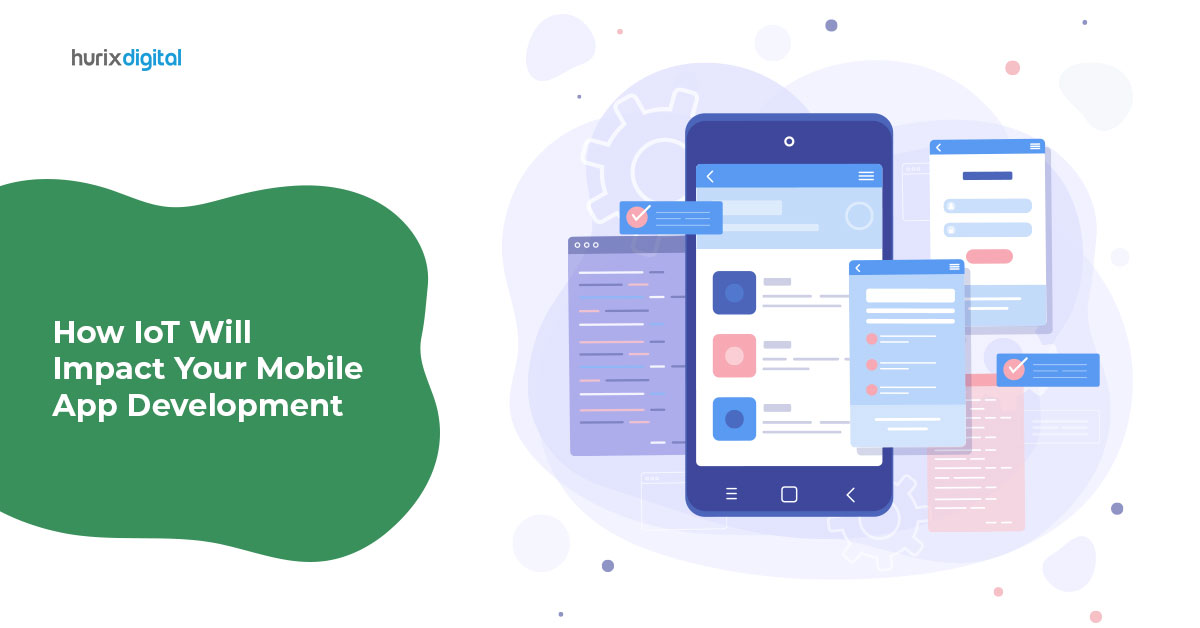
[vc_row][vc_column][vc_column_text]“Internet of Things” refers to a network of physical devices, vehicles, buildings, and other objects that are embedded with sensors, software, mobile applications, and network connectivity, allowing them to collect and exchange data. This data can be used to monitor and control various aspects such as temperature, lighting, air quality, security, health, device status, and more. IoT technology is being used in many different industries, including healthcare, agriculture, manufacturing, transportation, and smart homes. The potential benefits of IoT include increased efficiency, improved safety and security, and better directing based on real-time data analysis. How Mobile App Development Interfaces with IoT Mobile app development is increasingly dominated by IoT, as connecting devices to smartphones to control devices and report data is proving more useful to all types of users.  The largest use of IoT is observed in the healthcare industry, relevant information like a heartbeat, and BP is monitored using sensors and relayed to the user through the mobile application. Such type of information plays a critical role in monitoring a person’s health. Mobile apps can be used to control and monitor IoT devices, such as smart thermostats, security cameras, and lighting systems. Mobile apps can be integrated with third-party applications to share and use the data generated through IoT devices.  The Impact of IoT in Mobile App Development The Internet of Things (IoT) has the potential to greatly impact mobile app development. IoT refers to the network of interconnected devices that can communicate and share data with each other over the internet. When it comes to mobile app development, IoT opens up new possibilities and challenges. Here are some ways IoT implementation can impact mobile app development: IoT and Mobile App Integration: Mobile apps can be developed to communicate and interact with various IoT devices such as smart thermostats, wearable devices, home automation systems, and more. This integration allows users to control and monitor IoT devices remotely through their mobile apps, offering convenience and enhanced functionality. Data Collection and Analysis: IoT devices generate vast amounts of data, and mobile apps can be developed to collect, analyze, and present this data to users in a meaningful way. For example, a fitness app can collect data from a user’s wearable device and provide insights on their activity levels, heart rate, sleep patterns, and more. Enhanced User Experiences: IoT can enable mobile apps to provide personalized and context-aware experiences. By leveraging data from IoT devices and sensors, apps can deliver tailored content, recommendations, and notifications based on a user’s preferences, location, and real-time data. Improved Automation and Control: Mobile apps can serve as a control center for IoT devices, allowing users to automate and manage various aspects of their connected environment. For instance, an app can enable users to remotely control their home security systems, lighting, or even appliances. Security and Privacy Considerations: With the increasing number of IoT devices and their integration with mobile apps, security and privacy become critical concerns. Developers need to implement robust security measures to protect the data transmitted between devices and ensure user privacy. Development Complexity: IoT integration adds complexity to the development process. Developers must consider compatibility with different IoT platforms, protocols, and device specifications. They need to possess the necessary skills and knowledge to work with IoT technologies and understand the unique challenges they present. Increased Collaboration: IoT app development often requires collaboration between different teams, including mobile app developers, hardware engineers, cloud architects, and data scientists. Effective collaboration and coordination become crucial to create comprehensive IoT solutions. Continuous Iteration and Updates: IoT technologies are evolving rapidly, and developers need to stay updated with the latest advancements and standards. Mobile apps integrating IoT may require continuous iteration and updates to adapt to new devices, protocols, or security measures. In conclusion, IoT has the potential to transform mobile app development by enabling integration with a wide range of devices, enhancing user experiences, collecting and analyzing data, and providing automation and control functionalities. However, developers must also address security and privacy concerns and adapt to the complexities introduced by IoT technologies. Conclusion Overall, mobile app development can enhance the functionality and usability of IoT devices, making them more accessible and useful for users. The Internet of Things has also created a way to secure apps by protecting consumer identities and ensuring data encryption. If you are still confused about interfacing IoT with your mobile app, then the Hurix team of experts can guide you to make the right decision.  We mainly focus on providing the app user with a personalized user experience by integrating the app with mobile device functionalities. Our experienced team will help you understand and implement features like push notifications, user engagement, reminders, and security that can be effectively implemented using IoT to deliver an exceptional mobile application. Contact us or drop a mail to marketing@hurix.com for more information.[/vc_column_text][/vc_column][/vc_row]

4 Most Common Mistakes in Automation and How to Avoid Them

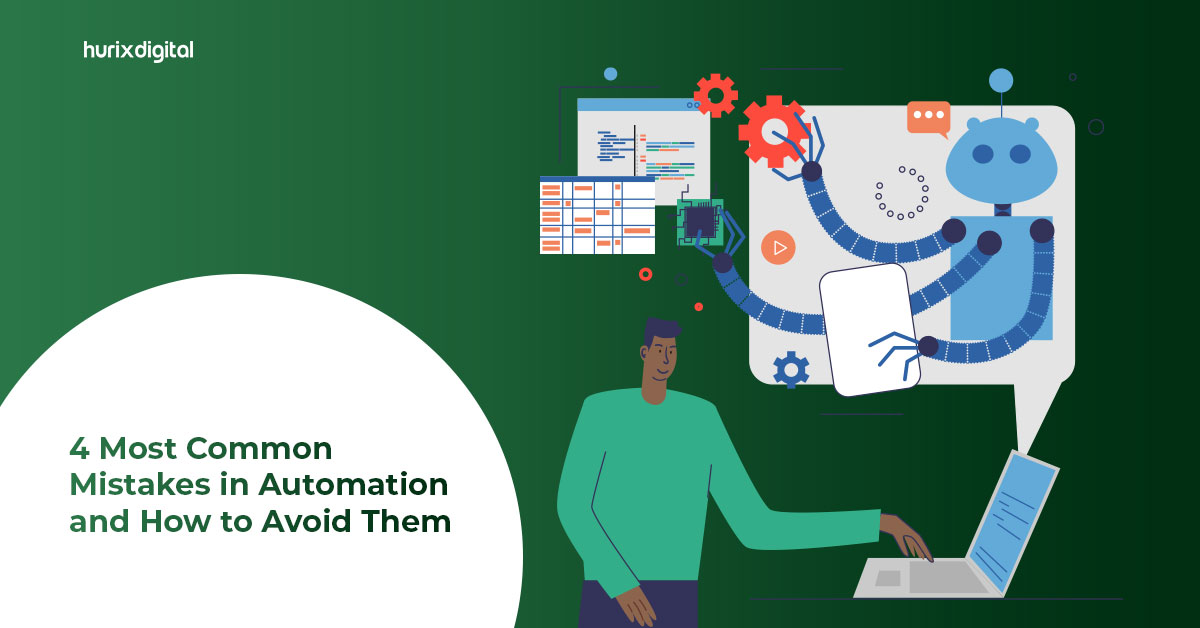
[vc_row][vc_column][vc_column_text]Automation offers numerous benefits saving time and money, and quality and speed improvements; however, it can also be problematic, especially with increasing hyperautomation and newer technologies such as Robotic Process Automation (RPA).  Automation has become an integral part of modern businesses, and implementing automation best practices can streamline processes, increase efficiency, and improve overall productivity. Organizations often seek automation integration and consulting services to ensure a smooth and successful automation journey. Automation integration involves seamlessly incorporating automated systems and tools into existing workflows. By leveraging the expertise of automation consulting services, businesses can identify areas where automation can deliver maximum impact and develop a strategic roadmap for implementation. These consulting services provide guidance on selecting the right automation solutions, customizing them to meet specific business needs, and integrating them into the existing infrastructure. One critical aspect of automation best practices is automation testing. Automation testing involves utilizing automated tools and frameworks to verify and validate software applications, systems, or processes. It ensures the reliability and functionality of automated processes and minimizes the risk of errors or failures. Automation testing allows organizations to detect issues early, reduce manual testing efforts, and accelerate the overall testing process. 7 Best Automation Best Practices  To effectively implement automation and achieve desired results, it is important to follow some automation best practices. These include: Clearly Define Objectives: Clearly define the goals and objectives of automation initiatives. Understand the specific processes or tasks that can benefit from automation and set realistic expectations. Start Small and Scale: Begin with automating simple and repetitive tasks before moving on to complex processes. Gradually scale automation efforts to cover more areas and processes as confidence and expertise grow. Select the Right Automation Tools: Choose automation tools that align with the organization’s requirements and technical landscape. Evaluate factors such as ease of use, compatibility, scalability, and support. Involve Stakeholders: Involve key stakeholders from different departments or teams throughout the automation journey. Collaboration and communication are essential to ensure that automation initiatives align with organizational goals and meet specific departmental needs. Establish Clear Metrics: Define metrics to measure the success and effectiveness of automation efforts. These metrics may include time saved, error reduction, cost savings, and overall process efficiency. Continuous Monitoring and Maintenance: Regularly monitor and maintain automated processes to ensure they are functioning correctly and delivering the expected results. Proactively identify and address any issues or bottlenecks that may arise. Invest in Training and Skill Development: Provide training and skill development opportunities to employees involved in automation initiatives. This empowers them to effectively utilize automation tools, troubleshoot issues, and optimize automated processes. By following these automation best practices, organizations can maximize the benefits of automation, streamline operations, and achieve higher levels of efficiency and productivity. Automation integration and consulting services play a crucial role in guiding businesses through the automation journey, ensuring successful implementation, and leveraging automation tools effectively. What are the 4 Most Common Mistakes in Automation? Here are the most common mistakes that can hamper automation efforts and actions to avoid these mistakes. 1.Not engaging all stakeholders As we know, automation impacts the enterprise on a broad level, therefore it becomes critical to engage stakeholders from across the organization in the decision-making process. Automation should be viewed as an end-to-end process. Often individual company departments have isolated solutions and do not coordinate their automation strategies. This results in a lack of overarching, clearly defined strategy. Only when you put everything together and have someone to control the operation, it becomes a well-defined strategy and process. Action: Assign responsibility for coordination and stakeholder management to a team member so that roadmap and strategy can be clearly outlined. 2. Believing that anyone can do automation without the need for IT With the further adoption of RPA and low-code/no-code applications, many business users believe that they can automate a process without the assistance of IT. However, many of those applications are integrated with other systems which require technical expertise and knowledge in order to manage and control. If the IT team isn’t involved, there is a risk of failures during certain system changes and upgrades. Action: Involve individuals who are knowledgeable and skilled across technical, business and operations for successful implementation. 3. Deploying automation is always the solution Many enterprises believe that automation is the solution to many business processes to improve efficiency or to cover up gaps in systems. In the process, multiple automation tools are deployed all at once across the enterprise too soon. This can create issues and challenges to manage multiple automated systems efficiently. Action: Evaluate the benefits and drawbacks of automation individually for every potential system by considering system functionality, integration and maintenance strategy. 4. Inefficient monitoring post-production  Automation projects require extensive monitoring and regular quality checks after implementation. Automation reduces manual effort but increases the need for monitoring and if necessary, correction effort. For example, for RPA rollouts, it is important to ensure that robots are working as expected.  Action: Establish processes to enable post-production continuous monitoring. AI can be used to have automatic controls that detect faults and if possible independently correct the faults. Implementing the recommendations to avoid these four automation mistakes can help businesses to achieve desirable outcomes and maximum efficiency in their automation projects.  Contact us or drop a mail to marketing@hurix.com for more information. [/vc_column_text][/vc_column][/vc_row]
Top 7 Emerging Trends in Educational Technology In 2023

[vc_row][vc_column][vc_column_text]Educational technology is a rapidly evolving field, with newer technological modules and resources being introduced at an alarming speed. The entire educational landscape has undergone a sea change in the aftermath of the Covid-19 pandemic and continues to develop with advancements in educational technology. According to a projection by online marketing and consumer data platform Statista, the worldwide e-learning market is predicted to reach almost 400 billion U.S. dollars by 2026.  Emerging trends in educational technology are set to revolutionize the field of education in 2023 and the years to come. Educational technology makes learning accessible to a larger section of society and makes education more engaging for students. Institutions can also use EdTech to create customized learning programs for different categories of students, including those with learning difficulties. If you want to remain relevant in the coming years, there is no way you can afford to miss these top emerging trends in educational technology. Also Read: The Scope of Higher Education with e-Learning in the Digital Era Table of Contents: Top 7 Emerging Trends in Educational Technology Artificial Intelligence (AI) Powered Tutoring Systems  Microlearning Augmented and Virtual Reality (AR/VR) Gamification Personalized Learning Processes Blockchain Technology in Education  Automated Assessment Conclusion  Top 7 Emerging Trends in Educational Technology 1. Artificial Intelligence (AI) Powered Tutoring Systems  One of the most important emerging trends in educational technology, AI-powered tutoring systems, has been around for a while now. However, the scale of their usage is expected to increase manifold soon. AI-powered systems are computer-based learning systems that employ AI to simulate human educators and can provide effective lessons without a human teacher. AI-powered systems can create personalized learning experiences for students, complete with on-demand instruction and feedback to learners. Why Are AI-Powered Tutoring Systems Here To Stay?  Human-Like Learning Experience  AI-powered tutoring systems can provide interactive learning and collaborate with learners just the way human teachers can. They can be engaging and are different from basic menu-based AI bots. In a randomized clinical trial involving medical students, AI-powered instructional systems demonstrated superior performance outcomes and skill transfer.  Personalized Feedback AI tutors can give relevant feedback to students, similar to the way human teachers do. Such personalized feedback helps motivate learners and encourages them when needed.  Multimedia Learning  AI-powered tutoring systems offer a variety of learning mediums and can host multimedia learning through text, video, audio, simulations, and games.  Encourage Self-Paced Learning AI-powered tutoring systems are great for educational modules aimed at promoting self-paced learning. AI tutors can constantly monitor and track learners’ progress and give them feedback accordingly. Constantly Evolving AI-powered tutoring systems are constantly evolving with advancements in edtech. Newer methods and techniques can be added to the learning modules every year.  Also Read: AI-Powered Education: Revolutionizing K-12 Learning through Robotics and AI 2. Microlearning  Microlearning is an approach to digital education in which information is broken down into smaller, easily digestible chunks and delivered in under ten minutes per session. Microlearning is already happening through YouTube shorts, Instagram reels, and TikTok. This trend is among the significant emerging trends in educational technology that will grow in 2023 and beyond.  Benefits of Microlearning Less time to deliver and consume the content Better information retention Increases learners’ engagement  Encourages learning on the go through mobile learnings Enables personalized learning Supports self-paced learning  3. Augmented and Virtual Reality (AR/VR) Augmented and Virtual Reality (AR/VR) are emerging trends in educational technology that have grown multifold in usage over the past decade. AR provides an interactive experience to the viewer wherein a computer-generated image is superimposed on the viewer’s image of the real world. Technology makes learning more fun and engaging and helps the learner easily acquire, process, and retain information. VR provides a simulated experience to the user utilizing a 3D image or environment that they can interact with in a seemingly “real” way by using special electronic equipment. VR allows learners to learn through experience, making education more engaging.  4. Gamification  Gamification in education is a strategy that incorporates elements of games like scorecards, leaderboards, and trophies into educational modules and learning environments. Gamification can make education a more interactive experience for learners by adding elements of fun, engagement, and healthy competition. It helps improve intrinsic motivation in the learners and encourages them to learn enjoyably.  Benefits of Gamification in Education Higher levels of engagement Makes learning fun and interactive  Improved knowledge retention  Instant feedback and reinforcement Connects education with real-world applications Encourages healthy competition among peers  Enhances the overall learning experience for different categories of students  Motivates learners to learn from their mistakes  5. Personalized Learning Processes One of the major emerging trends in educational technology in the current era is personalized learning experiences. Data analytics and machine learning technology can gather relevant information about learners’ abilities, interests, preferred learning styles, etc., to create customized learning programs with a student-centric approach. This trend is expected to become widespread in 2023. Advancement in EdTech has made it possible to design targeted lesson plans and assignments that are tailored to each student’s needs. This technology allows students to learn at their own pace, leading to increased engagement.  Also Read: Creating Personalized Learning Experiences with K-12 Content Solutions 6. Blockchain Technology in Education  Blockchain is a decentralized, digital ledger of transactions that enables the secure sharing of information. In other words, it is a digital database that can be shared across a private or public network. Global spending on blockchain solutions is predicted to reach almost $19 billion by 2024. Given its rising popularity, Blockchain technology can potentially change how academic data is stored and how instructors and students interact with each other soon. This EdTech innovation can revolutionize the way education is imparted in numerous ways.  How Can Blockchain Technology Impact the Education Sector? Aid educators in developing lessons and courses Digitize report cards and degrees Incentivize and tokenize education Streamline fees payment Improve accessibility of education to different sections of society Lower costs in the long-run 7. Automated Assessment  Automated assessment technology helps

Why Integrating IoT Technology into Your LMS is the Future of Learning

[vc_row][vc_column][vc_column_text]An LMS that has the ability to use advanced technology to deliver a personalized, automated, and adaptive learning experience is a Smart LMS. Any regular web-based LMS or LMS mobile app can be taken to the next level by integrating it with IoT technology. Increasing demand for flexible, personalized, and efficient learning experiences in today’s digital age has created a need for interactive Smart Learning Environment (SLE) systems based on new IoT technologies. 8 Reasons Why IoT in LMS is the Future of Learning Integrating IoT (Internet of Things) technology into Learning Management Systems (LMS) has the potential to revolutionize the future of learning. Here are some reasons why: Real-time Data and Analytics: IoT-enabled devices can collect and transmit data in real time. By integrating IoT technology into an LMS, educational institutions can gather valuable insights into student behavior, engagement, and performance. This data can be used to personalize learning experiences, identify areas for improvement, and provide timely interventions to support student success. Personalized and Adaptive Learning: IoT can enable personalized and adaptive learning experiences by collecting data on individual students’ preferences, learning styles, and progress. By integrating this data into the LMS, educational content and resources can be dynamically tailored to each student’s needs, providing a more effective and engaging learning experience. Smart Classrooms: IoT devices such as smart boards, sensors, and wearable devices can transform traditional classrooms into smart learning environments. These devices can interact with the LMS to automate administrative tasks, monitor student attendance, track learning progress, and provide real-time feedback. Smart classrooms equipped with IoT technology can enhance collaboration, interactivity, and overall learning outcomes. Seamless Access and Connectivity: IoT devices can enable seamless connectivity and access to educational resources. For example, students can use their IoT-enabled devices, such as smartphones or tablets, to access course materials, participate in virtual classrooms, and interact with online learning platforms. This flexibility and convenience promote anytime, anywhere learning, breaking down barriers of time and location. Experiential and Immersive Learning: IoT technology can facilitate immersive and experiential learning experiences. For instance, augmented reality (AR) and virtual reality (VR) devices can be integrated with the LMS to provide simulated environments and interactive content, enabling students to explore complex concepts, engage in hands-on activities, and develop practical skills. Collaboration and Remote Learning: IoT-enabled devices can foster collaboration among students and educators, even in remote or distributed learning settings. By integrating IoT technology into the LMS, students can collaborate on projects, share resources, and communicate seamlessly with peers and instructors. This enhances social learning, teamwork, and knowledge sharing. Enhanced Safety and Security: IoT devices can contribute to a safer learning environment. For example, connected sensors can monitor classroom conditions, detect hazards, and ensure the safety of students. In emergency situations, IoT-enabled systems can facilitate prompt communication and response, ensuring the well-being of students and staff. Continuous Learning and Feedback: IoT technology can enable continuous learning and feedback loops. By tracking student progress, collecting data on learning activities, and providing real-time feedback, the LMS can support students in their ongoing learning journey. Adaptive assessments and personalized recommendations based on IoT data can help students identify areas for improvement and guide their learning paths. In summary, integrating IoT technology into Learning Management Systems offers numerous advantages, including real-time data insights, personalized learning experiences, smart classrooms, seamless connectivity, experiential learning, collaboration, enhanced safety, and continuous feedback. By embracing the potential of IoT, educational institutions can create a future of learning that is dynamic, engaging, and tailored to the needs of individual learners. 3 IoT technologies to deliver the smart LMS Virtual Reality (VR) and Augmented Reality (AR): VR and AR can be implemented in LMS to achieve simulation-based learning, interactive and engaging content like 3D objects, deliver a personalized learning experience, establish remote and collaborative learning, especially for language learners, and performance tracking and analytics. Smartboards: An interactive whiteboard can highly engage learners and save training and support costs. Features like write, erase, and an on-screen keyboard will help save the instructor time and make learning fun for the kids. Wearable devices: This technology can be implemented mainly to send notifications, reminders, and updates of courses, tests, assignments, and classes. It can be useful to collect personalized data and create an analysis based on this data. All of the above mentioned technologies can also be useful in implementing an advanced Authoring tool to create and authorize e-learning content. Conclusion The use of IoT technologies in LMS can help to create more personalized and efficient learning experiences, while also improving the management of educational resources.  Integrating IoT technology into Learning Management Systems (LMS) is the future of learning, providing innovative solutions that enhance the educational experience. Several top LMS platforms and providers offer comprehensive LMS services and solutions that incorporate IoT capabilities. These platforms, recognized as the best in the industry, understand the significance of AR and VR integration in LMS to create immersive and engaging learning environments. By integrating AR and VR technology into the LMS, students can experience interactive and experiential learning. The LMS solution facilitates the seamless integration of AR and VR, allowing educators to incorporate augmented and virtual reality experiences into their lessons. These technologies enable students to explore complex concepts through simulated environments, hands-on activities, and interactive content, enhancing their understanding and retention. Furthermore, smartboard software and apps are instrumental in enabling smartboards in classrooms. With the integration of IoT, these smartboards can connect to the LMS, providing teachers with advanced teaching tools and capabilities. Teachers can access digital resources, interactive presentations, and collaborate with students using smartboards. This integration fosters dynamic and interactive classroom experiences, improving student engagement and learning outcomes. When considering LMS providers, it is essential to choose top LMS platforms known for their robust features, user-friendly interfaces, and comprehensive support. These platforms offer a range of LMS services, including IoT integration, AR and VR capabilities, and smartboard compatibility. By selecting the best LMS platforms, educational institutions can harness the power of IoT technology and provide a cutting-edge learning

Explore The Top 20 Learning Experience Platforms(LXP) Of 2023

[vc_row][vc_column][vc_column_text]If you are looking for a comprehensive guide to the top learning experience platforms of 2023, you’re in the right place. In this blog, we’ll embark on a journey to explore the top 20 LXP platforms that are transforming the way we learn and grow. From interactive content and personalized learning paths to gamification and data-driven analytics, these platforms take employee training and development to new heights.  Read ahead to learn more about the top 20 LXP platforms! Top 20 Learning Experience Platforms (LXP) Of 2023 According to market research by Facts & Factors, the global learning experience platform (LXP) market was worth 508.5 million USD in 2020. And it’s predicted that it will skyrocket to a whopping 2.18 billion dollars by 2026, with a growth rate of 25.3% CAGR. Thus, as an organization, you might not want to miss out on this latest digital resource that has been transforming employee learning and training. Following are the top 20 LXP platforms of 2023: 1. Lessonly Founded in 2012, Lessonly is a learning experience training platform by Seismic Software Inc. It is designed to streamline sales coaching and learning. Lessonly offers a huge array of tools to facilitate effective employee training and development. Furthermore, its user-friendly interface allows organizations to create, manage, and deliver various types of learning content, such as interactive courses, quizzes, videos, and assessments. 2. Udemy Business Udemy Business has all the tools and resources that are needed from a learning experience platform. According to Business Insider, there was a massive growth in course consumption on the platform between 2020 and 2021. Talking about its features, the best part about Udemy Business is its customized learning paths. Thus, organizations can create personalized learning paths to cater to the unique needs and goals of individual learners. This personalized approach ensures that employees receive targeted training that addresses their specific skill gaps. 3. 360Learning Being a Learning Experience Platform, 360Learning helps organizations create collaborative learning experiences. This is achieved through group discussions, sharing content, and providing relevant feedback through in-app forums. In addition, 360Learning integrates with other learning platforms such as Coursera, content creation tools like Canva, and HR Management Systems to provide a complete solution for all business needs. 4. Docebo Docebo is an exceptional AI-powered learning experience platform that is changing the way organizations train their employees. What truly sets Docebo apart is its ability to harness the power of AI to provide valuable insights and recommendations. It utilizes AI and human-centered design to create assessment exercises and customized learning paths. 5. Cornerstone Learning In Santa Monica, Cornerstone Learning was founded in 1999 by Adam Miller, Perry Wallack, and Steven Seymour. As one of the top LXP platforms, Cornerstone Learning provides robust analytics and performance-tracking capabilities. This enables organizations to measure the impact and effectiveness of their training programs. The platform also offers data and insights into learners’ progress, completion rates, and performance metrics. 6. EdApp EdApp is an all-in-one employee training platform integrated with features such as Canva-integration and cloud-based translation. One of the biggest advantages of using the EdApp Learning Experience platform is that it is a mobile-first learning platform. Thus, enabling learners to learn anywhere and anytime according. Other in-built features include a template library, PowerPoint converter, course review and reporting, and analytics for performance measurement.  7. Axonify With its intelligent learning and personalized education plans, Axonify is an excellent employee training and education platform. Its employee analytics tools help the employees to know their shortcomings. Furthermore, with Axonify’s personalized learning pathways, employees can narrow these skill gaps and enhance performance. 8. Skills Caravan LXP Skills Caravan is an all-in-one learning experience platform that utilizes generative artificial intelligence. Furthermore, this platform integrates top-notch content libraries and gamification tools to enhance the learning experience. The user interface is interactive and easy to navigate. At the same time, the real-time analytics tool helps learners track their course progress. 9. Tovuti LMS Founded by Troy McClain, Tovuti LMS enables organizations to create personalized courses and train teams easily and efficiently. It is a cloud-based LXP platform that offers organizations all the tools to train their employees and track the effectiveness of the course effectively. The integration of virtual classrooms enables employers to connect and train employees virtually. 10. Learn Amp With Learn AMP’s learning management and learning experience platforms, organizations can drive engagement and improve their overall performance. Just like Tovuti LMS, it is also a cloud-based platform that integrates learning, employment, and talent development tools all in one place.  11. Auzmor Auzmor LXP platform is the one-stop solution for creating highly interactive training courses and modules for your employees. The platform utilizes social-media-like communications features to keep the learners engaged. Organizations can create, launch, modify, and track courses very easily. Furthermore, the courses can be accessed through any device due to the availability of the Auzmor mobile app. 12. Whatfix Whether you want to create training courses or highly interactive how-to guides, Whatfix LXP allows users to create and launch their courses easily. The highly interactive activity dashboard, activity tracking, and asynchronous learning mode make Whatfix a top learning experience platform choice globally.  13. Wormhole Like its counterparts, Whatfix and Auzmor, Wormhole is also integrated with course authoring, performance tracking tools, and asynchronous learning mode. With Wormhole, organizations can curate personalized learning paths for their employees to reduce their skills gap and enhance their overall performance. 14. Rallyware Rallyware LXP is a cutting-edge Learning Experience Platform that revolutionizes employee training and development. With its intuitive interface and robust features, it offers personalized learning paths, interactive content creation, gamification elements, and data-driven analytics. Organizations can utilize Rallyware to create performance-driven courses and enhance the teams’ performance. 15. OpenSesame OpenSesame is widely used for employees’ professional development through e-learning and online courses. OpenSesame has a huge library of online courses covering multiple industries and topics. These courses can be directly accessed through OpenSesame. The platform also provides users with a dashboard, performance-tracking tools, and certificates to enhance the

4 Reasons Why Your Business Should Invest in Technology

[vc_row][vc_column][vc_column_text]The world is experiencing the magic of the evolution of technology, and technology is shaping up to be an integral part of today’s business landscape. Investing in technology for your business has become the backbone for many. For smooth business operations, every business requires technical support. If you are not using technology. Before investing in technology, you should have the right people to recommend technologies and the benefits of technology in business. Knowing the importance of technology in business and incorporating technology into your business helps to reach your goals and experience digital transformation faster than their competitors. An example of this is – Chatbots are very popular with the young crowd, and more millennials interact with a chatbot for faster communication and response to queries. This blog answers why invest in digital marketing, digital transformation technologies, and the benefits of technology in business. Let’s take a look at the reasons why you need to make an investment in digital transformation: 1. Achieve a Competitive Edge To deliver customer excellence, technology is considered the main aspect of your business. It can be implemented for internal workflow efficiency to customer-facing activities. Before implementing technology, you should check technological updates in your industry and how these technology updates can improve your current business performance. Straightforward ideas on these points will help you to identify the problems in your existing systems that can be enhanced through technology 2. Gain Agility in Business Technology is changing quickly nowadays. Technology plays a pivotal role in helping companies survive the evolving business requirements and market trends. So you must realize the upgradation of the existing technology or adapt new technologies as and when required. 3. Improve Organizational Data Security Your legacy IT infrastructure might become vulnerable to ever-increasing digital attacks and data breaches. Companies have to understand these threats and increase their technology involvement to improve security protocols for their organization’s data security. 4. Improved Operational Productivity Process automation technologies improve workflow productivity so CXO can utilize those time in critical thinking and decision-making. Technology solutions are innovating the core of businesses across every industry. Therefore, it is an intelligent step to invest in technology to be ahead of the competition. Hurix.com helps you to grow your business with the latest technology solutions. Pioneering in digital transformation in business, Hurix has experienced IT teams working on various technologies like web/mobile technologies, process automation, database development, Integration solutions, and so on.[/vc_column_text][/vc_column][/vc_row]

Why Tech-as-a-Service (TaaS) is Gaining Popularity over the Traditional Approach?

[vc_row][vc_column][vc_column_text]In today’s rapidly changing world of technology, it becomes crucial to have a flexible and robust system and process in place. The line between hardware and software is constantly blurring. The traditional services approach finds it difficult to keep up with the evolving demands of technology and customers. They have limitations on innovations, costs, and storage. TaaS is a new and dynamic digital transformation to software services delivering value to customers and businesses. Today, successful companies like Google, Amazon, and Netflix have adopted the TaaS model.  Table of Contents: What is TaaS Key characteristics that differentiate TaaS from traditional technology services Proprietary and Ownership Ease of customization Privacy is Guaranteed Subscription and On-demand Cost-saving Sustainability In Conclusion What is TaaS? What is TaaS? TaaS stands for “Technology as a Service.” It is a cloud-based testing strategy in which businesses contract out their software testing requirements to an outside service provider. Functional testing, performance testing, security testing, and other testing services are all available through TaaS. Employing TaaS software enables businesses to access a specialized team of testing specialists, cutting-edge testing tools, and infrastructure without using significant internal resources. With the help of this on-demand testing strategy, businesses may scale their testing efforts in accordance with their unique needs, cut expenses, and shorten the total software development lifecycle.  Key characteristics that differentiate TaaS from traditional technology services 1. Proprietary and Ownership In the TaaS model, the ownership of proprietary technologies remains with the provider and is not transferred to the customer. 2. Ease of customization Traditional technology services have limitations concerning customizations. However, TaaS allows flexibility in the customization of services to suit the customer’s needs. 3. Privacy is Guaranteed In traditional methods, the technology is shared among multiple users which can compromise security. With TaaS customers can enjoy complete privacy of their assets without having to worry about sharing with others.  4. Subscription and On-demand TaaS follows a subscription-based model which enables customers to pay for the services as per usage. Also, the technology resources can be scaled up or down on demand. 5. Cost-saving The cost of ownership of hardware and software is significantly reduced with TaaS. This can prove to be a good proposition, especially for small companies and startups with tight budgets. 6. Sustainability By adopting the Taas model, companies can promote sustainability and reduce their carbon footprint caused by frequent upgrades. Companies can minimize their environmental impact by incorporating sustainable products and assets in TaaS.  In Conclusion: TaaS is the future of the technology industry, as more companies and customers are making the move to proprietary technologies. Choosing a company like Hurix.com provides TaaS service makes your business future-proof.  Contact us today to book a call with us.[/vc_column_text][/vc_column][/vc_row]
5 Reasons Why IT Companies Require Technology Roadmap

[vc_row][vc_column][vc_column_text]In today’s fast-paced and rapidly evolving technology landscape, IT companies need a clear and well-defined technology roadmap to navigate the complexities of the industry. A technology roadmap serves as a strategic plan that outlines the organization’s technology strategy, including current technologies in use and future implementations. In this blog, we will highlight why technology roadmap is important and why IT companies require a technology roadmap to drive their success and stay ahead of the competition. Table of Contents: Ensuring Consistent Growth Identifying Areas for Investment Supporting Innovation Improving Customer Experience Enhancing Collaboration and Communication Conclusion    1. Ensuring Consistent Growth A technology roadmap provides a structured approach to ensure consistent growth for IT companies. By identifying emerging technologies and industry trends, organizations can adapt and evolve their technology strategies accordingly. Technology planning helps IT companies stay competitive and relevant in a rapidly changing market, fostering long-term growth and success.          2. Identifying Areas for Investment A technology roadmap assists IT companies in identifying areas where they should allocate resources and investments. By prioritizing initiatives based on their potential impact on the business, organizations can make informed decisions about resource allocation. This ensures that assets are directed towards projects aligning with the company’s objectives, maximizing returns, and minimizing risks.          3. Supporting Innovation Innovation is essential for IT companies to stay ahead of the competition. A technology roadmap is vital in supporting innovation by identifying new technologies and approaches that can be explored. By staying informed about emerging trends, IT companies can proactively experiment with technology implementation, products, and services, giving them a competitive edge and driving continuous improvement.           4. Improving Customer Experience Delivering an exceptional customer experience is paramount for IT companies. A technology roadmap development helps identify technologies that can enhance the customer experience. By leveraging the right tools and solutions, organizations can streamline processes, improve efficiency, and deliver superior services to their customers. This leads to increased customer satisfaction, loyalty, and ultimately, business growth.           5. Enhancing Collaboration and Communication A technology roadmap template promotes collaboration and communication within IT companies. By providing a clear picture of technology initiatives and their alignment with business goals, a roadmap helps different teams work cohesively towards a common objective. It facilitates cross-functional collaboration, ensures that teams are well-informed, and creates a shared understanding of the company’s technological direction. Conclusion: In the highly-competitive IT industry, having a well-defined technology roadmap is crucial for digital transformation planning and success. Technology roadmap development enables IT companies to consistent growth, identify areas for investment, support innovation, improve customer experience, and enhance collaboration and communication. By developing and implementing a technology roadmap, IT companies can effectively leverage technology to drive their business objectives, stay ahead of the competition, and embrace digital transformation.  Finding a company that knows how to create a technology roadmap helps your business to maximize the potential of its IT investments and drive success. As a software development company, Hurix helps in IT strategy planning for clients to make the most out of their technology.[/vc_column_text][/vc_column][/vc_row]
When to use Microservices Architecture for Application Development

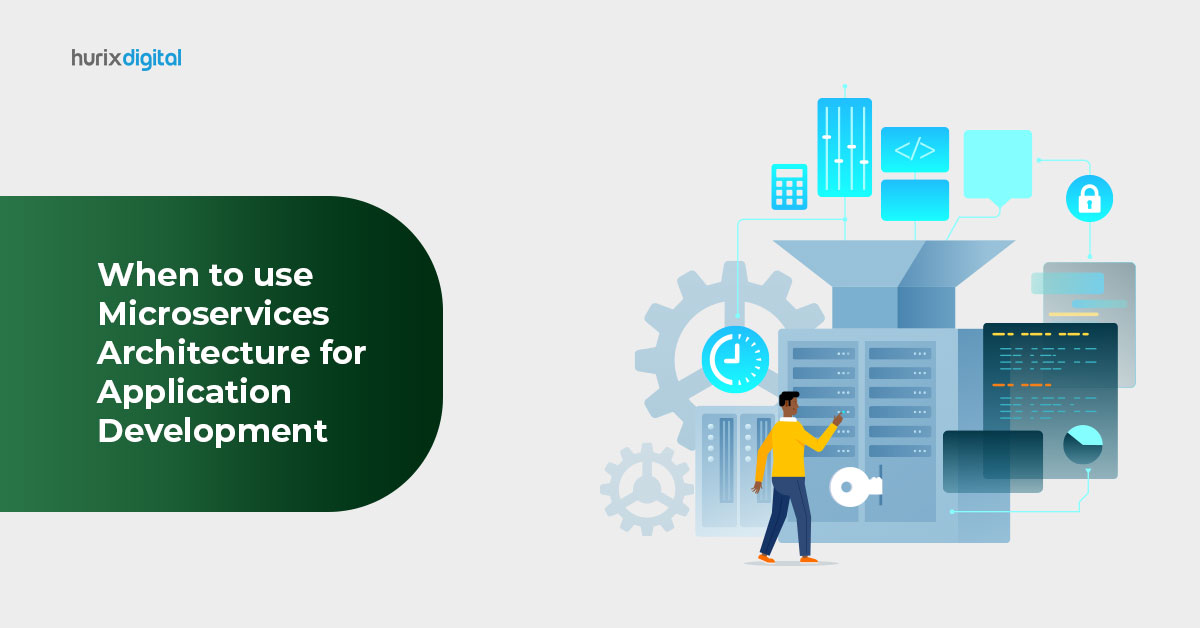
[vc_row][vc_column][vc_column_text]Microservices are also known as microservice architecture in which a large application is built from a set of services. It is an approach to developing software systems. Each service performs a unique business function, while those services are connected via a well-defined interface.  Before microservices, applications were developed with a monolithic architecture. It was always microservices vs monolithic architecture. But, many companies moved from the traditional approach to the modern microservices architecture.  While this approach still works well for smaller and easy projects; however, Microservices architecture is suitable for bigger and more complex application development. It separates functionality and business operations into micro and more manageable components. Each service may have its database and interacts with other services via API endpoints. This blog explores when to use Microservices Architecture, its challenges, its benefits to organizations, and the constraints around its implementation.  Table of Contents:       Introduction       When to Use Microservices Architecture?       Complex and Scalable Applications     Polyglot Development       Rapid Innovation and Deployment       Challenges around Microservices Architecture       Increased Complexity     Distributed System Management       Operational Overhead       Microservices Architecture Benefits to the Organization       Scalability and Agility     Enhanced Resilience and Fault Isolation       Technology Flexibility       Constraints around Implementing Microservices Architecture       Development and Maintenance Overhead     Communication Complexity       Organizational Impact       Conclusion When to Use Microservices Architecture?  Microservices Architecture is suitable in the following scenarios: 1. Complex and Scalable Applications: When developing complex applications with multiple modules or functionalities that need to scale independently, Microservices Architecture offers flexibility. It allows different microservices to be developed, deployed, and scaled individually based on their specific needs.  2. Polyglot Development: If an organization prefers to use different programming languages or frameworks for different parts of an application, Microservices Architecture can accommodate this polyglot development approach. Each microservice can be developed using the most appropriate microservices technology stack. 3. Rapid Innovation and Deployment: Microservices Architecture supports agile development practices, enabling organizations to quickly innovate, iterate, and deploy new features or updates. The independent nature of microservices facilitates faster development cycles and reduces the risk of impacting the entire application during updates. Challenges around Microservices Architecture: While Microservices Architecture offers numerous benefits, it also presents some challenges: 1. Increased Complexity: Breaking down an application into smaller microservices introduces additional complexity regarding inter-service communication, data consistency, and service orchestration. Proper design, implementation, and management strategies are crucial to address this complexity effectively. 2. Distributed System Management: As microservices are distributed across different systems and environments, managing and monitoring the entire system can be challenging. Organizations need to invest in robust monitoring and management tools to ensure visibility and stability. 3. Operational Overhead: With multiple services to deploy, monitor and scale, there is an increased operational overhead. Organizations must invest in automated deployment and management processes to handle the complexity efficiently. Microservices Architecture Benefits to the Organization: Here are the microservices benefits organizations can use: 1. Scalability and Agility: Microservices allow for the independent scaling of services, enabling organizations to respond to changing demands quickly, and offering agility in microservices. Scalability in microservices offers the flexibility to scale only the required services, ensuring optimal resource utilization. 2. Enhanced Resilience and Fault Isolation: In a microservices environment, if one service fails, it doesn’t bring down the entire system. The fault is isolated, and the rest of the services can continue to function, improving overall system resilience. 3. Technology Flexibility: Microservices Architecture allows organizations to adopt the most suitable technology stack for each service. It promotes innovation and flexibility by leveraging the strengths of various technologies and frameworks.  Constraints around Implementing Microservices Architecture: Implementing Microservices Architecture may come with certain constraints: 1. Development and Maintenance Overhead: Breaking down an application into multiple Microservices designs requires additional effort in development, testing, and deployment. Organizations must carefully consider the trade-off between the benefits and the increased development and maintenance overhead. 2. Communication Complexity: Microservices rely heavily on inter-service communication, which introduces additional complexity. Organizations must design robust communication protocols and mechanisms to effectively handle service interactions. 3. Organizational Impact: Adopting Microservices Architecture often requires a shift in organizational structure and processes. It may involve changes in team composition, collaboration patterns, and DevOps practices to align with the microservices paradigm. Conclusion: Microservices Architecture offers numerous benefits, but evaluating its suitability for your application development needs is essential. It is well-suited for complex and scalable applications, polyglot development requirements, and scenarios that demand rapid innovation and deployment. However, organizations should be aware of the challenges surrounding increased complexity, distributed system management, and operational overhead. By understanding the constraints and properly addressing them, organizations can harness the benefits of Microservices Architecture to build robust, scalable, and agile applications. At Hurix, our robust technical team designs and develops applications using microservices that assure the success of the project in terms of scalability and the use of the latest technologies.[/vc_column_text][/vc_column][/vc_row]
Test Automation and DevOps: What You Need to Know

[vc_row][vc_column][vc_column_text]In today’s fast-paced software development landscape, organizations are constantly seeking ways to enhance their efficiency and productivity. Two concepts that have gained significant popularity in recent years are test automation and DevOps. Recently, there has been a lot of talk about the importance of DevOps test automation. And rightly so, since “automation testing” and “DevOps” have increased in the industry. Why not combine both and understand them in detail? This blog will explore test automation and DevOps, and why they are crucial for successful software development. Table of Contents: What is Test Automation What is DevOps? Top 5 Benefits of Test Automation in DevOps Deliver products quickly Software stability Simplifies the testing process Collaboration across teams Improved Quality In Conclusion What is Test automation? Test automation uses automation frameworks and tools to verify the software or product’s functionality. The importance of test automation has risen over the years as this reduces the manual effort to a large extent and also saves time, which means a quicker release of high-quality products in the market. These test automation frameworks ensure continuous delivery within the DevOps framework. What is DevOps? DevOps, short for Development and Operations, combines practices and philosophies to deliver applications and services faster than the traditional approach. DevOps focuses on agility which can be achieved through the integration of various processes and automation in software development and operations to deliver reliable software with a shorter lead time. DevOps promotes a continuous delivery approach, where software changes can be released quickly and frequently. Top 5 Benefits of Test Automation in DevOps Listed below are some of the top benefits of test automation and performance testing in DevOps: 1. Deliver products quickly In today’s fast-paced world, where consumer aspirations are constantly evolving, software companies need to keep up with the changes. Automated testing and DevOps go hand-in-hand as they incorporate the philosophy of quicker release in a shorter time. This will enable reliable and bug-free products to be delivered to the market quickly. 2. Software stability With constant upgrades to products and releasing newer versions, it becomes all the more imperative to ensure stable software. Continuous testing in DevOps is important to ensure products are glitch-free and function smoothly after undergoing software upgrades. 3. Simplifies the testing process By using the right test automation tools and frameworks in DevOps, many repetitive tasks that are time-consuming and cumbersome can be automated. Automation testing in DevOps will increase efficiency while reducing human errors. 4. Collaboration across teams Collaboration of the test automation team with the development and operations teams is crucial for the test effectiveness within the release pipeline. 5. Improved Quality By automating tests, organizations can achieve consistent and reliable results. This leads to higher product quality as critical bugs are caught early, reducing the risk of releasing flawed software. In Conclusion: Considering these benefits, several enterprises are now incorporating test automation in DevOps to improve efficiency and business value. By combining the power of test automation and DevOps, organizations can achieve shorter development cycles, enhanced product quality, and ultimately, greater customer satisfaction. Embracing these practices is crucial for staying competitive in today’s rapidly evolving digital landscape. Hurix.com helps you with your test automation framework and other requirements. Get in touch with us to know more![/vc_column_text][/vc_column][/vc_row]