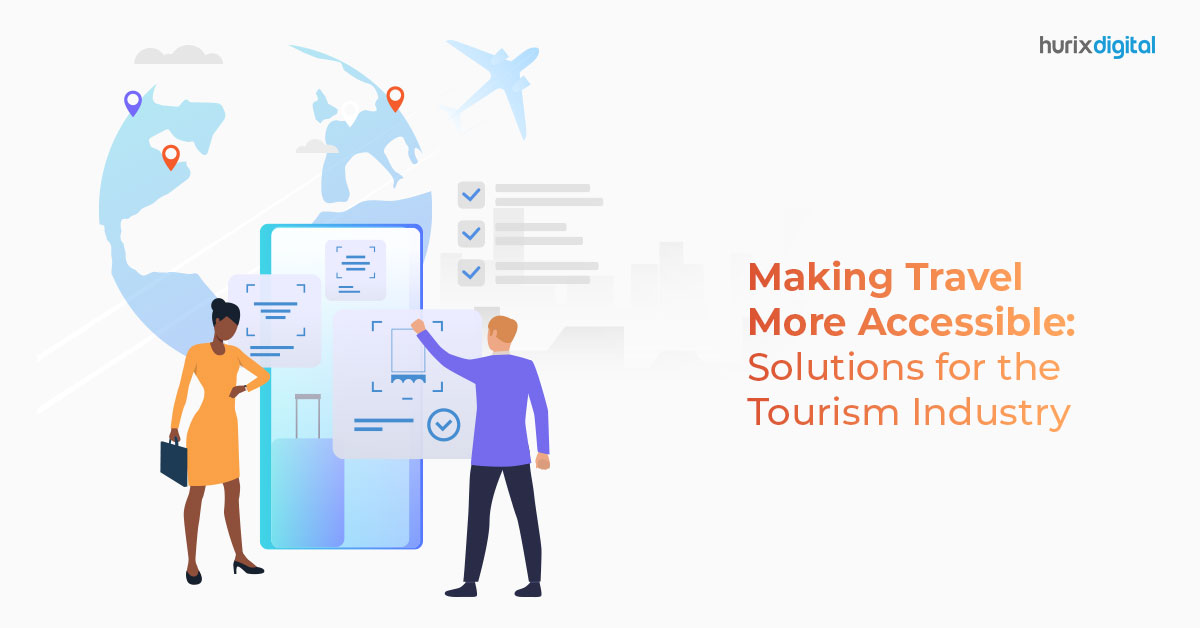
Making Travel More Accessible: Solutions For The Tourism Industry

[vc_row][vc_column][vc_column_text]In the strive to become an inclusive society, what must be recognized, first and foremost, is that not all individuals have the same needs and abilities. This is particularly true in the tourism industry, where accessible travel is a fundamental component of ensuring that everyone has the means and opportunity to enjoy the pleasures of travel. From individuals with disabilities to seniors, from families with young children to those with language barriers, there is a significant and growing need for accessible travel. This blog post will explore the criticality of accessibility in the tourism industry and the innovative solutions being developed to improve accessibility for all travelers. In addition, we will delve into the importance of web accessibility and the legal requirements that are in place to promote accessibility in the tourism industry. The State Of Accessibility In The Tourism Industry The current state of accessibility in travel leaves much to be desired. While there have been some improvements in recent years, the reality is that travel remains inaccessible for many individuals. For example, a 2021 study by the National Library of Medicine found that individuals with disabilities are less likely to travel than those without disabilities. This is due in part to the lack of accessibility in many travel destinations, as well as the limited availability of accessible transportation, accommodation, and activities. 1. The Impact Of Inaccessibility On People With Disabilities The impact of inaccessibility on people with disabilities cannot be overstated. Travel can be a transformative experience, allowing individuals to explore new cultures, learn about history, and create memories that last a lifetime. But when travel is inaccessible, it becomes another barrier for people with disabilities to overcome. Inaccessibility can cause individuals with disabilities to feel excluded from society, further isolating them from the rest of the world. It can also lead to physical and emotional challenges as individuals struggle to navigate unfamiliar environments and encounter difficult or impossible obstacles. 2. The Need For Universal Design In The Tourism Industry Universal design is a concept that emphasizes the creation of products, environments, and experiences that are accessible to all individuals, regardless of ability. In the tourism industry, universal design means creating travel experiences that are accessible to everyone, including individuals with disabilities. Implementing universal design in the tourism industry is important from a moral and ethical perspective and makes good business sense. A more inclusive travel industry has the potential to attract a broader range of customers, increase revenue, and foster greater customer loyalty. Innovative Solutions For Accessibility In Travel As the tourism industry becomes more aware of the need for accessibility, innovative solutions are emerging that make travel more inclusive for everyone. From accessible accommodations to transportation and tours to activities, numerous initiatives are being implemented to make travel more accessible for individuals with disabilities. A good example is the accessible beach program in Miami-Dade County, Florida, which includes wheelchair-accessible beaches, special beach wheelchairs, and beach accessibility mats that provide a stable surface for wheelchairs and strollers. 1. The Role Of Technology In Promoting Accessibility Technology is playing an increasingly vital role in promoting accessibility in travel. For example, apps and websites now provide information on accessible travel destinations, accommodations, and activities. Some airlines have also developed apps that provide real-time information on accessible features on their planes, such as the location of accessible restrooms. This important role that technology is fulfilling in promoting accessibility. It also provides a range of previously unavailable solutions that can make the travel industry a more inclusive and accessible environment for all travelers. 2. Web Accessibility In The Tourism Industry Web accessibility refers to the design and development of websites and web-based applications that can be accessed and used by individuals with disabilities. Web accessibility ensures that individuals with disabilities can perceive, understand, navigate, and interact with web content and that they can do so using a variety of assistive technologies. In the tourism industry, web accessibility is critical in ensuring that individuals with disabilities can access and use the information and services provided by travel providers. Without accessible websites, individuals with disabilities may be unable to do many actions. This can range from booking accommodations, purchasing tickets, or obtaining important travel information, such as the location of accessible facilities. Some shared web accessibility barriers in the tourism industry include using images without alternative text, inaccessible forms and controls, and the lack of keyboard accessibility. Additionally, some websites may use small fonts or poor color contrast, making it difficult for individuals with visual impairments to read the content. Strategies For Improving Web Accessibility In Travel To improve web accessibility in travel, travel providers can take several steps, such as conducting accessibility audits of their websites, providing alternative text for images, using accessible forms and controls, and ensuring keyboard accessibility. Other strategies include: Using clear and easy-to-read fonts. Providing high color contrast. Providing captions and transcripts for videos. Additionally, travel providers can consult with individuals with disabilities and disability organizations to better understand their needs and preferences and ensure their websites are designed and developed to meet their needs. Legal Requirements For Accessibility In Travel In many countries, including Canada, the United States, the United Kingdom, and Australia, there are legal requirements for accessibility in the tourism industry. These laws and regulations ensure that individuals with disabilities have equal access to travel and tourism services. Some standard legal requirements for accessibility in travel include the Americans with Disabilities Act (ADA) in the United States, the Accessibility for Ontarians with Disabilities Act (AODA) in Canada, and the Disability Discrimination Act (DDA) in the United Kingdom. These laws and regulations require travel providers to make their facilities, services, and information accessible to individuals with disabilities. 1. The Impact Of Legal Requirements On The Tourism Industry While legal requirements for accessibility in travel may impose additional costs and responsibilities on travel providers, they also provide significant benefits by ensuring that their facilities, services, and information are accessible to individuals with disabilities. This helps travel
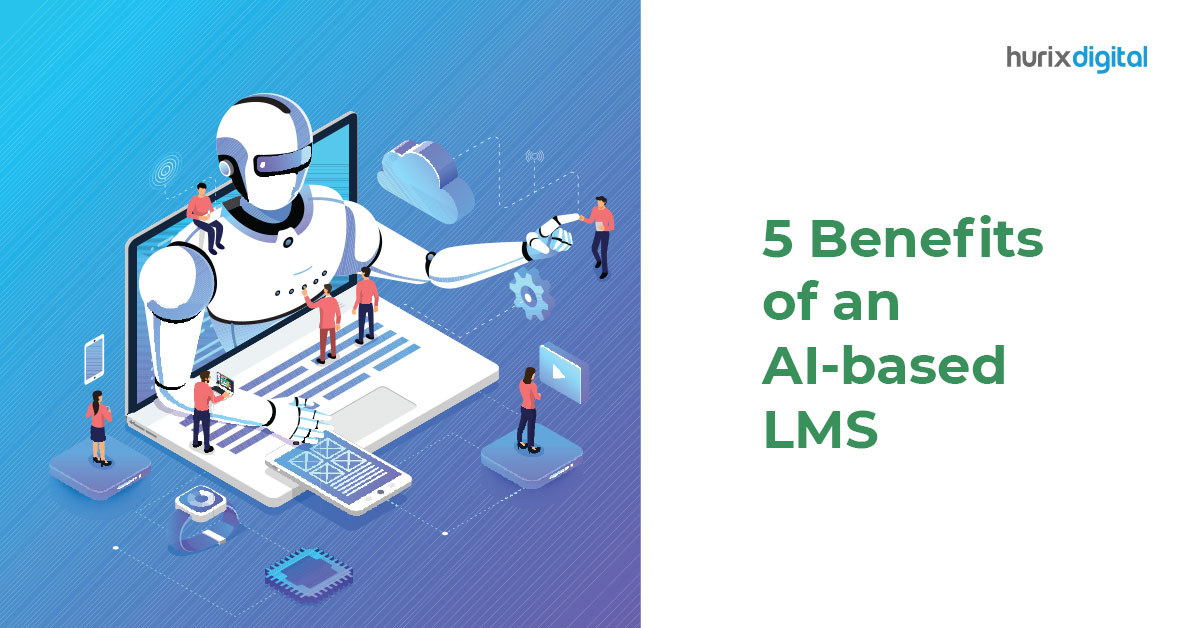
Why Choose an AI-Based LMS? 5 Key Benefits You Can’t Ignore

[vc_row][vc_column][vc_column_text]Artificial Intelligence (AI) is transforming the way we live and work, and education is no exception. AI-based Learning Management Systems (LMS) are becoming increasingly popular in the education sector due to their ability to personalize learning and improve student outcomes. AI-powered LMS can analyze student data, provide personalized feedback, and adapt learning content to suit individual needs. In this blog post, we will discuss the benefits of AI-based LMS and their potential impact on the future of education. 5 Key Benefits of an AI-Based Learning Management System (LMS) Seamless integration Immersive Learning Time-saving Chatbot Assistance Learner-centric Training 1. Seamless integration It often happens that a trainer who is an expert in a particular field has to switch to a new role or field. Adaptation to a new environment and learning system is quite challenging for the person. AI-powered LMS reduces the human effort involved in this task and improves productivity. It provides seamless integration with the new systems making the job less stressful as possible. 2. Immersive Learning AI-based LMS can create an environment of intuitive and immersive experience for users. With the integration of AI learning tools, content management can be automated. The training content can be easily imported and exported across channels with the AI feature. It will benefit in creating more engaging customized content to enhance the content effectiveness. 3. Time-saving Repetitive tasks performed by admins and trainers such as grading assignments and reporting can be automated with the help of AI. This will reduce the cost and save time and manual effort greatly, allowing the trainers and admin to focus on more important tasks and increase efficiency. 4. Chatbot Assistance In the current times, remote and virtual learning has become normal. To aid this process AI and chatbots have played an important role. Users can get 24/7 support from chatbots virtually from any part of the world to resolve their queries or issues. Human intervention is highly reduced with this AI feature. 5. Learner-centric Training AI-powered LMS can create a personalized learning experience for learners. AI algorithms have the potential to recommend the content and learning path that could match the learner’s skills and interests. Also, AI algorithms can translate the training content into different languages which will benefit a wider learning audience. Conclusion AI-based Learning Management Systems are transforming the education sector by providing personalized learning experiences for students. By analyzing student data, AI-powered LMS can provide personalized feedback and adapt learning content to suit individual needs. The benefits of AI-based LMS are numerous, including improved student engagement, higher retention rates, and better learning outcomes. As technology continues to advance, AI-based LMS will become increasingly sophisticated, providing educators with new tools to improve student learning. As a result, AI-based LMS will play an essential role in shaping the future of education.[/vc_column_text][/vc_column][/vc_row]

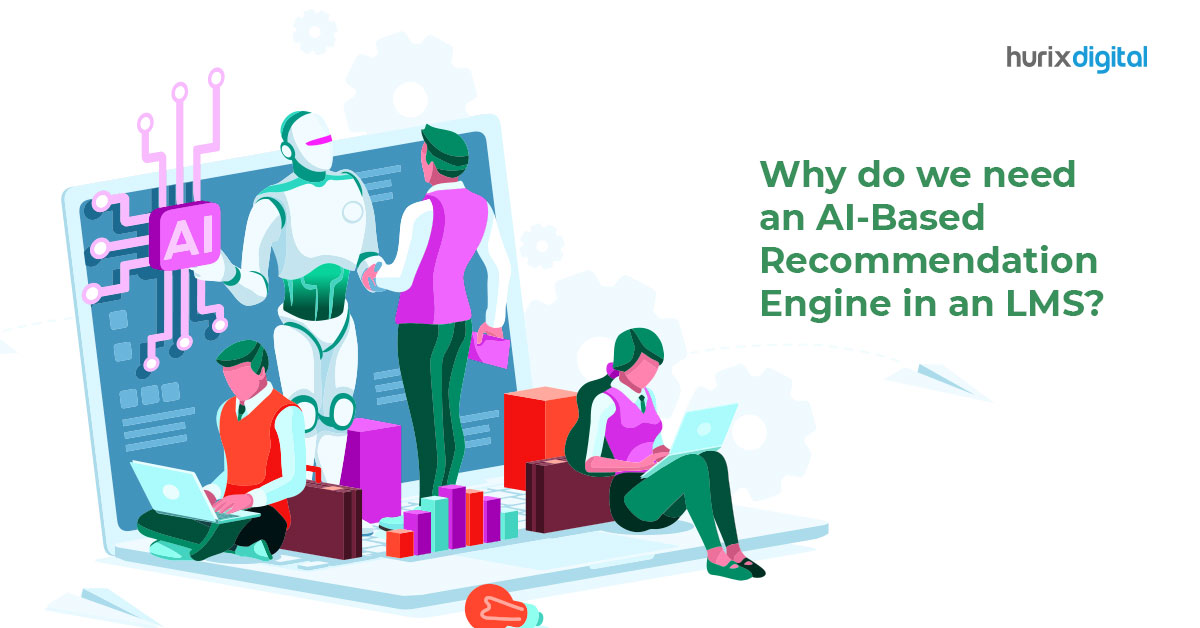
Why do we need an AI-Based Recommendation Engine in an LMS?

[vc_row][vc_column][vc_column_text]An AI-based recommendation engine is an advanced feature of a Learning Management System (LMS) that can significantly improve the learning experience for students. The recommendation engine uses machine learning algorithms to analyze student data and suggest personalized learning paths and resources to students. In this blog post, we will discuss the benefits of implementing an AI-based recommendation engine in an LMS, how it works, and its potential impact on the future of education. A recommendation engine within an LMS is a type of machine learning that uses data from the learners and helps to predict, narrow down and find what e-learning courses should be taken by the learners based on their previous performance. Artificial intelligence algorithms within a recommender help to predict with accuracy and solve data inadequacy and cold start problems (issues where the recommender engine cannot draw any inferences because it does not provide enough information).  An AI-based recommendation engine can be a valuable addition to a Learning Management System (LMS) for several reasons: Personalization: An AI-based recommendation engine can provide personalized learning experiences for each user based on their learning preferences, past performance, and interests. By understanding the individual needs of learners, the system can suggest relevant and personalized content, courses, and learning activities, which can increase engagement and motivation. Efficiency: With an AI-based recommendation engine, learners can quickly access the content they need, rather than wasting time searching through the LMS for relevant resources. This can save learners time and help them stay focused on their learning goals. Scalability: As the number of learners using an LMS grows, it can become increasingly challenging to manage and deliver personalized learning experiences. An AI-based recommendation engine can help automate the process of content curation, making it possible to scale personalized learning to a larger audience. Continuous improvement: By analyzing data on learner behavior and performance, an AI-based recommendation engine can identify areas where learners are struggling and suggest ways to improve their learning outcomes. This feedback loop can help LMS administrators continuously improve the content and learning experiences offered on the platform. Overall, an AI-based recommendation engine can enhance the effectiveness and efficiency of an LMS, making it a more valuable tool for learners and educators alike. Hurix’s AI/ML Labs have been successful in developing T5 models and training them with TB size of data to bring more than 90% accuracy for the recommendation.  Conclusion AI-based recommendation engines have revolutionized the way students learn in a Learning Management System. By analyzing student data and suggesting personalized learning paths and resources, these engines have helped students to better understand complex topics and improve their learning outcomes.  The benefits of an AI-based recommendation engine are numerous, including increased student engagement, higher retention rates, and better learning outcomes. As technology continues to advance, AI-based recommendation engines will become increasingly sophisticated, providing educators with new tools to improve student learning. As a result, the implementation of an AI-based recommendation engine in an LMS will play a crucial role in shaping the future of education.[/vc_column_text][/vc_column][/vc_row]

Accessibility Solutions for eCommerce Websites

[vc_row][vc_column][vc_column_text]Online shopping has been all the rage in the past decade, and the recent global pandemic only accelerated this trend. But are all customers the same? According to The World Bank, around 15% of the world’s population, or 1 billion people, experience some form of disability. A recent CDC report claims that around 26% of adults in the U.S. have a disability. What’s more, they have a significant combined disposable income. This makes web accessibility critical for eCommerce websites. Prioritizing eCommerce web accessibility is not only good for ethical reasons but also to target this huge untapped audience. In this blog, we’ll cover some best accessibility solutions for eCommerce websites that will help your shoppers with disabilities and boost your conversion rates.  eCommerce Web Accessibility: Decoding the Meaning eCommerce web accessibility is all about creating an inclusive experience to ensure that everyone has barrier-free access to your website. This means even people with cognitive, physical, and situational disabilities can use your online store. An accessible eCommerce website is built by adhering to the following 4 principles: Perceivable: Ensuring that your online store’s content is easily perceivable by all. For example, adding alternate text to non-text content. Understandable: Ensuring that the user interface and information are very clear to customers. Robust: Using valid code markup to make your website effective and easily interpreted by assistive technologies. Easily Operable: Ensuring that all users can effectively use your website. For example, having a flexible website design to facilitate navigation via keyboard. Benefits of eCommerce Web Accessibility Ensuring web accessibility for eCommerce websites provides you with a large customer base. If customers find it difficult to purchase from your eCommerce website, they are likely to shift to another one. An accessible user interface, on the other hand, can increase your conversion rates. It reduces the bounce rates or chances of shoppers leaving without making a purchase. Rather, customers are more likely to join the sales funnel and finish the purchase. Implementing eCommerce web accessibility makes you compliant with the ADA (Americans with Disabilities Act of 1990), protecting your online store against web accessibility lawsuits. 7 Ways to Make Your eCommerce Website Accessible 1. Include Image Alt Text Visually-impaired customers use screen readers to access eCommerce websites. They depend on product descriptions and image alternative texts to choose the correct order size and product and know about details such as instructions and ingredients. Adding descriptive alternative text to convey details of non-decorative pictures will help blind people better perceive the website information. Also, ensure that you hide decorative pictures from screen readers to avoid confusion. 2. Avoid Relying Completely on Color Did you know that around 300 million of the world’s population have color blindness? Using color as a primary user experience element for your website will make it difficult for color-blind shoppers to comprehend the information. To solve this issue, ensure you use other cues like meaningful text and labels (such as exclamation points) to help shoppers understand and use the information. You can also include features (like explanatory link text etc.) that will help them distinguish between information text and clickable links.   3. Focus on Text Clarity Your online sales will take the biggest hit if the shoppers are unable to read your website content. Here’s when text clarity comes into play. Text clarity is all about reinstating the readability and legibility of the text content on your website. This can be achieved by allowing customers to resize the text along with colors. You can use a high level of contrast between the background and the text so that blind users can read it easily.   Refer to Web Content Accessibility Guidelines (WCAG) to implement the appropriate color contrast and size ratio. 4. Implement a Keyboard-friendly Design Many users with disabilities depend on keyboards rather than a mouse to use computers. In such cases, it will be nearly impossible for them to buy anything if your website requires a mouse for interaction and navigation. Here’s when designing an intuitive and logical keyboard navigation order comes in handy. Make use of the TAB key to switch between active links. This is highly essential for an online retail store selling products as it will allow customers to navigate to the product they want without using a mouse.   5. Provide Audio Descriptions and Captions For Videos Ensure that all the videos on your website are easily accessible to shoppers having hearing and visual impairments, along with those who have cognitive limitations. Wondering how this can be done? You can add audio descriptions to help them understand what the video is about. Often, the pauses in the audio of the video are insufficient to allow audio descriptions that will deliver visual information. That’s when an extended audio description comes in handy. Including captions for your videos will help users having hearing impairments experience them.   6. Ensure Touch Controls have a 44*44 px Clickable Area As per the web accessibility guidelines, the touch controls must have a 44*44 px clickable area. This ensures sufficient space for customers to activate targets, irrespective of the device they’re using (be it a desktop, laptop, or mobile device). A 44*44 px clickable area per target provides enough space for users with limited dexterity to activate buttons and make selections. What’s even better is this will also make your “add to cart” or “buy” buttons easier to click, which in turn can increase your online sales.   7. Structure Content in HTML The reading order plays a critical role when it comes to designing your website. When you create an eCommerce website, ensure to structure the content in a manner that can be read by a screen reader without hampering the intended meaning. Screen readers “read” your website content in a linear order, so they require a source code. It’s essential to create a source code to prevent user confusion.    Wrapping Up Fulfilling ethical and moral responsibility is not the sole benefit of implementing eCommerce web accessibility. For online stores, it ensures business success

How to Improve Accessibility in Healthcare Setting

[vc_row][vc_column][vc_column_text]Health is a basic human right, and timely access to quality healthcare help individuals prevent disease and improve their quality of life. Everyone deserves equal access to effective healthcare facilities and services regardless of their abilities or impairments. Unfortunately, many healthcare facilities still struggle to provide everyone access to critical health services. Nearly half of the world’s population lacks essential health care. Further, around 100 million people are put into poverty yearly from healthcare spending. Awareness of the barriers to healthcare is the first step towards equitable healthcare services. This article will cover the numerous accessibility concerns in healthcare settings. It will also discuss the steps that can be taken to create a more inclusive and accessible environment in healthcare centers.  Common Barriers To Healthcare Accessibility Ideally, essential healthcare services should be accessible and affordable for all. But unfortunately, many barriers still exist that prevent some individuals, especially those with disabilities, from accessing quality healthcare services. 1. Physical Barriers Physical barriers can be real obstacles for differently abled people to access quality healthcare services. For instance, people in wheelchairs often struggle with steps, narrow doorways, and examination tables that are not height adjustable. Many healthcare facilities lack assistive technologies, such as ramps or lifts, that accommodate the needs of people with mobility impairments. 2. Attitudinal Barriers Some healthcare professionals have negative attitudes toward patients with particular medical disorders or limitations. They speak patronizingly to patients, view them as less capable, believe they have intellectual limitations, or completely underestimate their needs. Such attitudes on the part of healthcare staff lead patients to experience a lack of respect or empathy.  3. Communication Barriers Effective communication is critical in health services. But doctors and nursing staff are often not trained to communicate effectively with people with disabilities. This can lead to severe consequences, like misunderstandings, incorrect diagnoses, or inappropriate treatment, among others. For instance, deaf individuals may overlook crucial information during medical consultations or become perplexed about properly administering medication. Similarly, visually impaired people could find reading printed information crucial to their treatment difficult. 4. Financial Or Logistical Barriers The accessibility of healthcare is also affected by logistical and financial constraints. Lack of insurance coverage, restricted access to transportation to reach healthcare facilities, a dearth of clinics, and a lack of medical professionals are a few significant financial and logistical obstacles. They prevent patients from getting timely access to medical care. For instance, about 3.6 million Americans cannot seek medical treatment because they lack access to reliable transportation to the nearest healthcare centers. 5. Lack Of Access To Healthcare Information Or Technology Differently-abled patients often face challenges in accessing or understanding health information available on the internet. For instance, the absence of healthcare information in accessible formats like Braille or large print reduces accessibility to the blind or visually impaired. Similarly, a lack of access to telehealth solutions prevents patients with logistic barriers from receiving medical care. Steps to Improve Accessibility in Healthcare Setting It is important to address and eliminate the above accessibility barriers so everyone has fair access to healthcare services. Here are some steps you can take to make the healthcare sector more inclusive: 1. Conduct An Accessibility Assessment Conducting an accessibility audit of the facility is the first step to enhancing accessibility in healthcare. This will make it easier to spot any physical or attitudinal obstacles hindering people from obtaining quality healthcare. It is crucial to include people with disabilities in the assessment process to comprehend their unique requirements and challenges fully. 2. Provide Healthcare Compliance Training Healthcare compliance training can be an effective tool to make the medical staff understand their legal obligation to provide accessible care. The training can cover topics related to the disability act of the country, effective communication techniques, and disability etiquette. They can help improve medical service quality and reduce lawsuits due to inaccessible facilities or improper attitudes toward patients with disabilities. Studies also suggest that training healthcare personnel can facilitate better patient communication and help eliminate attitudinal barriers. 3. Offer Simulation Training For Healthcare Professionals Another training that can prove beneficial for healthcare providers to understand the experiences of patients with disabilities and empathize with them is simulation training. The training exposes healthcare professionals to different realistic scenarios involving patients with disabilities, thus providing a deeper understanding of their needs and challenges.  This way, they can develop more patient-centric strategies for overcoming these challenges and improving accessibility. 4. Implement Technology Solutions Technology solutions are making healthcare accessible and affordable in many ways. For instance, individuals living in rural areas can use telehealth services for remote consultations, eliminating their need to travel miles to reach the nearest clinic. A study by the National Institutes of Health backs this point. It suggests that telemedicine services can improve healthcare access for individuals living in rural or remote areas. Similarly, assistive technologies, such as mobility aids, electronic health records, voice-activated technologies, captioning services, etc., can make health education and services more accessible to differently-abled patients. 5. Expand Medical Coverage Expansion of health insurance coverage through employer sponsorship can benefit people who might otherwise not have access to affordable healthcare services owing to their financial limitations.  Similarly, government initiatives like financial assistance programs and community health centers can make healthcare services more affordable to low-income households. 6. Incorporate Gamification into Healthcare Finally, health centers can also use Gamification to improve healthcare accessibility. By incorporating game-like elements, such as points, rewards, and competition, into healthcare apps and programs, health centers can encourage patients to participate actively in preventive health practices. Such gamified education can be presented in various formats like audio or video to accommodate the needs of differently-abled individuals. The availability of different formats can improve health outcomes for all and enable differently-abled patients effectively manage chronic illness. Improve Accessibility with Hurix Digital Accessibility barriers pose a significant hurdle for the healthcare sector, preventing many individuals from getting quality healthcare services. It’s high time for the healthcare sector to take the necessary measures to create a

What is Learning Content Management System (LCMS)?

[vc_row][vc_column][vc_column_text]Learning content management systems, commonly known as LCMSs, have become an effective instrument for organizing and providing educational content. The demand for LCMSs has increased significantly with the widespread adoption of online education and e-learning. A learning content management system refers to a software application that streamlines creating, managing, delivering, and tracking learning content for educational and training purposes. It is a sophisticated platform that allows educators, trainers, and instructional designers to develop, organize, and distribute educational content for learners.  What is a Learning Content Management System (LCMS)? A learning content management system (LCMS) is a progressive form of the content management system (CMS) that concentrates solely on producing learning material. In addition, the primary purpose of an LCMS is to make the management, creation, and delivery of educational material more effective and efficient. With the help of LCMSs, teachers and trainers can create multimedia-rich content, such as animations, videos, simulations, and interactive activities. They can also manage the content in a centralized spot, making it seamless to revise and circulate to students. Understanding the Features of LCMSs LCMSs are designed to facilitate creating and delivering learning content across multiple channels, such as web-based courses, mobile devices, and other online learning platforms. Below are some key features of a learning content management system.  Content Management The content management feature allows users to manage and organize learning content effectively. Moreover, with an LCMS, individuals can track, store, and update learning content in a central warehouse. It makes handling considerable amounts of learning content easier and ensures students have access to the most up-to-date content. Content Creation The content creation feature of an LCMS allows instructional designers, subject matter experts, and trainers to create multimedia-rich learning content. LCMSs typically provide content creation tools, such as authoring tools, video/audio editors, and graphic design tools. An LCMS’s content creation feature helps create engaging and interactive learning content that can keep learners motivated and interested. Content Delivery The content delivery feature of a learning content management system allows users to provide learning content to students across different devices, platforms, and locations. LCMSs generally support various delivery modes, such as mobile learning, web-based courses, virtual classrooms, and combined learning. Besides, the content delivery feature of a learning content management system ensures that students have access to learning content anytime, anywhere. Assessment and Evaluation An LCMS’s assessment and evaluation feature allows users to create and administer assessments and evaluations to measure learner progress and performance. LCMSs typically provide a variety of assessment types, such as quizzes, tests, and surveys. An LCMS’s assessment and evaluation feature helps ensure that learners have achieved the desired learning outcomes and that their progress is evaluated and monitored. User Management The user management feature allows users to oversee instructors, learners, and administrators. This feature authorizes users to create and handle user profiles, track user progress, and assign roles and permissions. It helps ensure that learners receive the appropriate level of access to learning content and that their progress is tracked and monitored. Social Learning The social learning feature of a learning content management system allows students to communicate and collaborate and instructors. It enables students to share ideas, knowledge, and feedback and to learn from each other. It also helps create a cooperative learning environment that encourages learning and engagement.  Reporting and Analytics An LCMS’s reporting and analytics feature gives users detailed insights into learner progress, performance, and engagement. LCMSs typically provide reporting and analytics tools like dashboards, graphs, and charts. Moreover, this feature helps determine areas where students are struggling and where progress can be made in learning content and delivery. Personalization The personalization feature of an LCMS allows users to customize learning content to meet individual learners’ specific needs and preferences. It enables the creation of personalized learning paths, content, and assessments based on learner profiles and performance data. It also helps increase learner engagement and motivation by providing learning content that is relevant and meaningful to learners. Advantages of A Learning Content Management System Learning content management systems offers different advantages to organizations and educators, making it a worthwhile investment. Below are some of their key advantages  Scalability A learning content management system is highly scalable and can efficiently manage large amounts of academic content. It is particularly essential for developing companies that need to expand their educational content. LCMSs allow instructors to create and provide content to many trainees without performance issues. As learners thrive, LCMSs can adapt to the increased demand for educational content. Streamlined Content Creation and Management An LCMS allows educators to create and handle educational content in a streamlined way. It offers a centralized forum for content creation, assessment, and authorization. With LCMSs, educators can team with other team associates in real-time, which makes the content-creation process more efficient. Additionally, such systems provide version control, so educators can track changes made to the content over time, making it more effortless to maintain a constant message and avoid mistakes. Cost-effective An LCMS is a cost-effective solution for organizations that need to deliver educational content. It eliminates the need for physical classrooms, textbooks, and other materials, which can significantly reduce costs. LCMSs also provide a centralized platform for content creation and delivery, reducing the need for multiple systems and tools. Customization LCMSs allow educators to customize the educational content based on the needs of the learners. They can create content tailored to learning styles, knowledge levels, and preferences. By offering customized content, learners are more likely to engage with the material and retain the information. Improved Learner Engagement A learning content management system offers several features that enhance learner engagement. For instance, LCMSs provide interactive content, such as games, quizzes, and simulations, making learning more engaging and enjoyable. Additionally, LCMSs can provide learners with personalized feedback, which can help them understand their strengths and weaknesses and improve their performance. Analytics and Reporting An LCMS offers robust reporting and analytics features that allow educators to track student performance and gauge the effectiveness of the learning content.

Top 10 Learning Management System Platforms for Education

[vc_row][vc_column][vc_column_text]Are you seeking a strategy to improve the learning and development process at your educational institution? Do you want to give your students a centralized platform where they can access all of their learning resources, track their progress, and collaborate with other students? If so, you’ll want a learning management system (LMS). An LMS is software that allows educational institutions to design, manage, and distribute eLearning material and training programs to their students. With the development of online learning, LMS platforms have grown in popularity among educational institutions all over the world. In this blog article, we’ll look at the best ten LMS platforms for education, ranked by features, cost, and user reviews. Top 10 Learning Management Systems LMS Platforms for Education These are the top 10 best LMS platforms for education. 1. Hurix Hurix is a comprehensive LMS platform that offers learners personalized and engaging learning experiences. Hurix provides a wide range of services, including: eLearning development: Hurix creates custom eLearning solutions for businesses using a variety of formats, such as interactive simulations, gamification, and microlearning. They also offer localization and translation services for global businesses. Digital content creation: Hurix creates high-quality digital content, including videos, animations, and graphics. They use cutting-edge technology to produce engaging and interactive content for a variety of platforms. Platform management: Hurix offers end-to-end platform management services, including platform design, development, hosting, and maintenance. They also provide analytics and reporting tools to help businesses track the effectiveness of their eLearning programs. Mobile learning: Hurix specializes in mobile learning solutions, creating mobile-friendly eLearning content and apps that can be accessed on smartphones and tablets. 2. Moodle Moodle is an open-source LMS platform that includes course administration, grading, and assessment tools. Moodle also supports several languages, making it a popular choice for universities working in multilingual settings. One of Moodle’s most significant features is its vast developer community, which is always working to improve the platform. 3. Edmodo Edmodo is another cloud-based LMS platform that is intended to be user-friendly for both educators and students. Assignment and grade management, communication tools, and a collaborative learning environment are among its primary features. Edmodo also provides a variety of third-party connections, making it simple to integrate other educational tools and resources into the platform. 4. Blackboard  Blackboard has been a popular LMS platform for more than two decades. Course administration, content development, and student interaction tools are among its primary features. Blackboard also provides a variety of analytics tools to help educators analyze student achievement and find areas for improvement. One of the most significant benefits of Blackboard is its scalability, which makes it an excellent solution for colleges of all sizes. 5. Canvas Canvas is one of the cloud-based LMS platforms that include course management, grading, and assignment tools. Canvas also provides several customization possibilities, allowing educators to customize the platform to their requirements. Canvas’s user-friendly interface is one of its primary features, making it simple for both educators and learners to navigate and use the platform. 6. Schoology Schoology has an easy-to-use interface and extensive tools for creating, managing, and delivering courses and tests. Teachers may use Schoology to manage course materials, assignments, and grades, as well as connect with students and parents. Schoology accepts a variety of material forms, including multimedia and interactive information, and it connects with other educational programs like Turnitin, Google Drive, and Khan Academy. 7. Brightspace Brightspace is a mobile-first design that allows students to access courses and information from any device. It also incorporates interactive multimedia material like movies, simulations, and virtual reality to engage students and improve their learning experience. Brightspace distinguishes itself by its emphasis on individualized and adaptable learning. Its intelligent agents monitor student behavior and offer tailored learning routes using machine learning methods. 8. Absorb Absorb LMS is a cloud-based LMS platform for enterprises, organizations, and educational institutions. It has an easy-to-use interface, customized course authoring, and extensive reporting and analytics options. Absorb LMS supports a variety of multimedia types, including films, animations, and interactive quizzes. To boost learner engagement and motivation, the platform offers gamification elements such as badges and leaderboards. Absorb LMS also integrates with a variety of third-party platforms, including Salesforce, Zoom, and Shopify. Its cost is determined by the size of the organization and the features required. 9. Google Classroom Google Classroom is a cloud-based LMS platform that connects with Google’s suite of productivity products, such as Google Docs, Google Drive, and Google Calendar. It is intended for use in K-12 schools and higher education institutions for the creation and management of digital classrooms, assignments, and communications. Instructors may simply develop and share course materials, quizzes, and exams, as well as give students feedback and scores. 10. Talent LMS Talent LMS is a cloud-based LMS platform that serves enterprises, organizations, and educational institutions. It has an easy-to-use interface, customized course authoring, and extensive reporting and analytics options. The platform supports a variety of multimedia content forms, including films, presentations, and e-books. Gamification components like badges, points, and leaderboards are also included to improve student engagement and incentives. Conclusion Ultimately, in the digital era, a learning management system is a vital tool for educational institutions. It can assist universities in providing students with interesting, individualized, and successful learning experiences. With so many LMS systems on the market, it might be difficult to select the best one for your school. Yet, you may make an educated selection by assessing your institution’s needs, budget, and goals. Evaluate platform features, user usability, scalability, security, and customer support. Consider the comments and experiences of other users via internet reviews, testimonials, and case studies. Whichever platform you pick, invest in training and support for your teachers, staff, and students. A well-implemented and maintained LMS may improve student engagement, cooperation, and accomplishment while also contributing to the success of the institution. For more information on LMSs, contact Hurix today. [/vc_column_text][/vc_column][/vc_row]