Blog

Hurix April 18, 2023 No Comments

Switch to Blended Learning for Better Learning Outcomes

[vc_row][vc_column][vc_column_text]The impact of technology in transforming the classrooms of today has been phenomenal. Instructors are now adopting different teaching methods to fit the learning styles, interests, and expectations of the learners. This is one of the reasons why Blended Learning is becoming the preferred teaching strategy for instructors and learners alike. The rising popularity of the concept is because of the fact that it effectively combines the advantages of traditional instruction mode with online learning methodologies. In this post, we are going to discuss everything you need to know about blended learning and blended learning classrooms.[/vc_column_text][vc_custom_heading text=”1. What is Blended Learning?” font_container=”tag:h1|font_size:18|text_align:left” google_fonts=”font_family:Lato%3A100%2C100italic%2C300%2C300italic%2Cregular%2Citalic%2C700%2C700italic%2C900%2C900italic|font_style:900%20bold%20regular%3A900%3Anormal” css=”.vc_custom_1560516981037{margin-top: 0px !important;margin-bottom: 0px !important;border-top-width: 0px !important;border-bottom-width: 0px !important;padding-top: 0px !important;padding-bottom: 10px !important;}”][vc_column_text]An excellent learning approach, blended learning refers to a combination of offline (traditional learning methodologies, face-to-face learning) and online learning strategies (online quizzes, discussion boards, and other resources) in perfect synchronization with each other. Leveraging technology, educational software, and new learning tools, educators across the world are increasingly blending in-class and online learning strategies giving rise to this interesting model known as Blended Learning. Also known as mixed or hybrid learning, this learning approach can be put to use in various forms. While some organizations prefer to use blended learning as the primary teaching method within the course curriculum, others use this technique only at specific instances. The main focus of the blended learning model is to give learners more freedom in the way that they learn and engage in their education.[/vc_column_text][vc_custom_heading text=”2. What are the different types of blended learning?” font_container=”tag:h2|font_size:18|text_align:left” google_fonts=”font_family:Lato%3A100%2C100italic%2C300%2C300italic%2Cregular%2Citalic%2C700%2C700italic%2C900%2C900italic|font_style:900%20bold%20regular%3A900%3Anormal” css=”.vc_custom_1560512753714{margin-top: 0px !important;margin-bottom: 0px !important;border-top-width: 0px !important;border-bottom-width: 0px !important;padding-top: 0px !important;padding-bottom: 10px !important;}”][vc_column_text]There are 6 main methods of blended learning as discussed below- a) Online Model In this model, an instructor delivers lessons via an online platform using various eLearning resources complemented by periodic face-to-face meets. b) Flex Model In this model, learners are given customized, fluid schedules on an individual basis for online work, along with other course materials. The flex model involves an on-site instructor for teaching the online content while also providing face-to-face support for individual instruction, small-group instruction, as well as group projects. c) Rotation Model In the Rotation Model, students go from one learning activity to another, either in a structured learning session managed by the instructor or online in a self-directed fashion. Examples of this model include labs, learning stations, and the flipped classroom where learners practice the lesson before attending the face-to-face training. d) Self-blend Model In this model, learners include various resources such as videos, webinars, blog content, etc. to enhance their own learning. They may refer to resources available online to augment their content. e) Online Lab This is another popular blended learning model which is entirely digital, with minimal or no instructor interaction. It usually takes place either before, during, or after training. In this model, learners can access content either on their mobile phones (m-Learning), laptops, or other smart devices for better engagement and solid learning. f) Face-to-face learning Model In this model, lessons are delivered using online media by an on-site instructor. It is also sometimes referred to as Instructor Led Training ILT or Classroom Training.[/vc_column_text][vc_custom_heading text=”3. What are the benefits of blended learning for learners and organizations?” font_container=”tag:h2|font_size:18|text_align:left” google_fonts=”font_family:Lato%3A100%2C100italic%2C300%2C300italic%2Cregular%2Citalic%2C700%2C700italic%2C900%2C900italic|font_style:900%20bold%20regular%3A900%3Anormal” css=”.vc_custom_1560512874682{margin-top: 0px !important;margin-bottom: 0px !important;border-top-width: 0px !important;border-bottom-width: 0px !important;padding-top: 0px !important;padding-bottom: 10px !important;}”][vc_column_text]Benefits for learners The approach offers learners flexibility to learn remotely and conveniently at their own pace. Because of its collaborative nature, it allows learners to interact with other fellow participants as well as instructors which is great for networking and social learning. Blended learning classrooms offer learners a more comprehensive understanding of the curriculum/course content due to its blended nature. Benefits for organizations Extremely cost efficient for organizations due to reduced expenses related to face-to-face training including space, travel, and printing material cost. Leads to better learner engagement because of various e-Learning methods used by the organizations such as webinars, online tutorials, and more. Blended learning classrooms result in greater ROI for companies due to cost efficiency. [/vc_column_text][vc_custom_heading text=”4. What are some of the potential drawbacks to the blended learning model?” font_container=”tag:h2|font_size:18|text_align:left” google_fonts=”font_family:Lato%3A100%2C100italic%2C300%2C300italic%2Cregular%2Citalic%2C700%2C700italic%2C900%2C900italic|font_style:900%20bold%20regular%3A900%3Anormal” css=”.vc_custom_1560512920813{margin-top: 0px !important;margin-bottom: 0px !important;border-top-width: 0px !important;border-bottom-width: 0px !important;padding-top: 0px !important;padding-bottom: 10px !important;}”][vc_column_text]Although blended learning classrooms are quite popular in the present educational environment, there are a few pitfalls to the approach as well. Some of these are – The model is not a natural fit for courses which require a more traditional or hands-on learning approach. For such courses, it is difficult to translate the curriculum in an online environment. The tech resources used in blended learning need to be extremely reliable and easy to use by all stakeholders or else the initiative will fail miserably. Another disadvantage of blended learning is a cognitive load for students. If the instructors are new to the blended model, the result might be over delivering the content and educational activities which will impact students negatively. [/vc_column_text][vc_custom_heading text=”5. Why is blended learning effective?” font_container=”tag:h2|font_size:18|text_align:left” google_fonts=”font_family:Lato%3A100%2C100italic%2C300%2C300italic%2Cregular%2Citalic%2C700%2C700italic%2C900%2C900italic|font_style:900%20bold%20regular%3A900%3Anormal” css=”.vc_custom_1560512963116{margin-top: 0px !important;margin-bottom: 0px !important;border-top-width: 0px !important;border-bottom-width: 0px !important;padding-top: 0px !important;padding-bottom: 10px !important;}”][vc_column_text]There are various reasons that make blended learning effective and popular. Some of these are- The approach caters to different learning styles and helps in improving the performance. Offers increased flexibility as it enables anytime anywhere learning. It is an inclusive model that has visual, written, as well as auditory components to cater to every type of learner. It allows the participants to learn at their own pace and their own ability level. The model eliminates the need to physically attend classes thus benefiting students who cannot attend classes at set times every day or week. Having different learning components keeps learners engaged resulting in better outcomes. [/vc_column_text][vc_custom_heading text=”6. How to implement blended learning?” font_container=”tag:h2|font_size:18|text_align:left” google_fonts=”font_family:Lato%3A100%2C100italic%2C300%2C300italic%2Cregular%2Citalic%2C700%2C700italic%2C900%2C900italic|font_style:900%20bold%20regular%3A900%3Anormal” css=”.vc_custom_1560513009898{margin-top: 0px !important;margin-bottom: 0px !important;border-top-width: 0px !important;border-bottom-width: 0px !important;padding-top: 0px !important;padding-bottom: 10px !important;}”][vc_column_text]Wondering how can you implement blended learning? Well, there are quite a few standard ways of incorporating blended learning into learning environments. These include- Video conferences Podcast Web-based courseware Online references Gamification Additionally, if you have a
The Benefits Of AEM For The Healthcare Industry

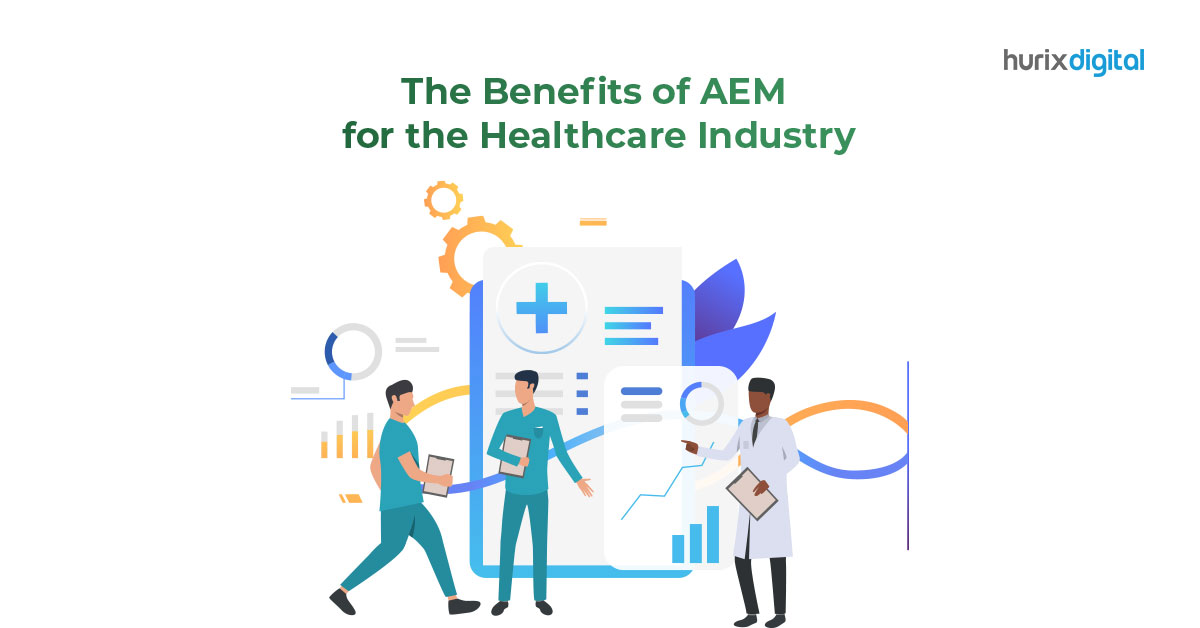
[vc_row][vc_column][vc_column_text]In today’s highly competitive online landscape, every website needs a powerful content management solution to stay updated and keep up with the competition. This is where Adobe Experience Manager (AEM) enters the picture! Adobe Experience Manager, or AEM, is a great tool that allows users to provide experiences and online content to meet the needs of customers. Equipped with powerful features and functionalities for users to take benefit of, AEM is a popular CMS system for enterprise users across the board. This post aims to explore more about AEM and its benefits for the healthcare industry specifically. What Is Adobe Experience Manager (AEM)? Adobe Experience Manager, or AEM, is a robust content management system that enables and empowers business teams to establish full control over web content and offers personalized user experiences across all channels. With over 34,788 live websites using it and an additional approx 94,000 sites having used AEM historically, the tool is gaining a lot of popularity. AEM primarily combines digital asset management with the power of a content management system. You can use AEM CMS to create, manage as well as distribute context-driven messages scalable across enterprises, products, or services. AEM is quite a powerful, enterprise-grade digital experience CMS  that allows businesses to create better customer experiences across channels to engage them fully. AEM offers a range of interesting features to help you manage your digital content and streamline the overall content creation process.    What Can You Do With Adobe Experience Manager? One of the main reasons why a number of healthcare brands are using AEM for their CMS solutions is because the platform offers a range of exciting tools and features, including- Simple, flexible, and in-context content authoring  Excellent toolkit including artificial intelligence (AI) and machine learning (ML) features to address varied business needs Various components that both developers and creators can use A cloud-native service that is updated regularly to facilitate optimal site performance with little to no downtime Benefits Of Adobe Experience Manager For The Healthcare Industry  Adobe Experience Cloud for Healthcare is a powerful solution by Adobe that empowers healthcare companies to deliver smooth and seamless user journeys with personalized and secure digital experiences.  Among some of the key benefits of AEM for the healthcare industry are the following- Improves Overall Patient Experience AEM improves the overall patient experience with consistent data collection, data-driven decision-making, and simplifying common administrative tasks that patients must complete. Apart from this, AEM offers a complete and holistic view of patients that is consistent through various contact points along with their healthcare journey. Enhance Engagement With Physicians Healthcare companies can also leverage AEM to deepen engagement with physicians. Adobe Analytics is an excellent tool to help healthcare service providers gain deeper customer insights across digital interactions. Marketo Engage feature of AEM further enables tailored digital experiences that support all stakeholders, including physicians, patients, and caregivers, on their healthcare journey. Offer Personalized Omnichannel Experience AEM has several functionalities, such as Adobe Analytics, Adobe Target, Adobe Audience Manager, and Adobe Campaign, which allow healthcare companies to customize every aspect of the digital experience for their clients, including email, website, and mobile app for the retail business. Further, it helps healthcare organizations engage various stakeholders, including patients, providers, members, and healthcare professionals, with experiences that matter.  Give Access To Real-World Healthcare Data  Adobe Experience Cloud for Healthcare allows life science organizations to securely access as well as use real-world healthcare data such as EMR,  claims, and labs to be able to do the following: Send patients or participants information specific to their treatment Identify and enroll users/patients for relevant trials Set appointment reminders  Offer Personalized Care Recommendations  Payors in the healthcare industry can use various data insights available within Adobe Experience to create a comprehensive, cross-channel view of both patient and member activities. This, in turn, can help patients and other individuals better navigate healthcare systems, leading to personalized care recommendations for almost everything from scheduling wellness checkups to in-network specialists. Who Can AEM Help In Healthcare Industry? The best part about Adobe Experience Cloud for Healthcare is that it helps to unlock capabilities across the health and life sciences industries. Among these include the following- Insurance Companies The healthcare ecosystem is quite complex and can get difficult for consumers to navigate. Adobe Experience Cloud for healthcare offers deep data insights that can help insurance companies seamlessly navigate the healthcare system while reducing costs simultaneously. For instance, insurance companies or payors can utilize AEM for a single view of member activities across channels and take a holistic view of their members and their patient care journey. This includes claims, phone support, online chat/phone support, and website visits. Healthcare Providers Adobe Experience Cloud for Healthcare allows healthcare companies to offer more and better choices when managing their care. Among the things that consumers can do include- Inform providers of their preferred channel for communications, such as healthcare management tips or receiving appointment reminders. Combine the preference data with the other health data to offer consumers a better, connected, and seamless experience, thus enhancing care and customer loyalty. Pharmacies Pharmacies can use Adobe’s omnichannel capabilities to personalize and unify in-store and digital experiences for visitors. Apart from this, Adobe Experience Cloud for Healthcare also allows pharmacies to leverage the understanding of their visitors’ health and behavioral data to send automated and timely prescription alerts and reminders to them. In Conclusion Healthcare is a rapidly evolving industry today with ever-growing business opportunities, fast-changing customer needs, and a highly competitive industry to keep pace with. AEM is an excellent solution in such a dynamic industry, specifically designed to help you easily manage your content across channels.  If you are interested in understanding how AEM can help you with your healthcare business needs, get in touch with us at Hurix today. As your AEM  implementation partner, we can help deploy AEM for businesses of all sizes and industries. [/vc_column_text][/vc_column][/vc_row]

Julia Suk April 18, 2023 No Comments

Training Evaluation – 10 Best Ways to Evaluate Training Effectiveness and Impact

[vc_row][vc_column][vc_column_text]The impact and effectiveness of training solutions signify how helpful a specific training module is in facilitating employee learning. In simpler words, the effectiveness of a training program measures the extent to which employee performance can improve by the content and design of training imparted. When it comes to training effectiveness evaluation, there are several proven methods and strategies to do it. In this post, we will discuss a few strategies you can use for your employee training evaluation. 1. Kirkpatrick’s Levels of Evaluation Kirkpatrick’s model is one of the most preferred assessment models that can be used to evaluate both formal and informal training. This training evaluation tool works by analyzing the training against four main levels of criteria, which are Reaction – i.e., to understand learner satisfaction  Learning – i.e., to assess the understanding of a topic and skill development  Behavior – i.e., to evaluate if employees are able to apply their learnings in day-to-day tasks Results – i.e., to check if the business objectives are fulfilled 2. CIPP or Context, Input, Process, and Product Evaluation Model The CIPP or Stufflebeam model is another popular model for the evaluation of training. As the name suggests, the model assesses four different aspects of a training program, including context, input, process, and product, and helps to determine its efficacy in meeting business objectives. The method focuses on: Context evaluation – the evaluation of overall goals or mission  Input evaluation – the evaluation of plans and resources  Process evaluation – the evaluation of activities or components  Product evaluation – the evaluation of outcomes or objectives 3. Kaufman’s Evaluation Method Kaufman’s model is mainly a response or reaction to Kirkpatrick’s model and takes it one level up. The model is built on the below parameters. Input – evaluation of resources is done Output – assesses delivery of instruction Acquisition – assesses if the learners retained the knowledge  Application – assesses how well the learners utilize the skills and knowledge learned Organizational Payoffs – assesses the impact of learning in the organization. 4. Summative vs. Formative Evaluation A formative assessment is a method of assessment that focuses on employee learning during or at the time of their training. It offers trainers real-time feedback so they can work on and improve learning outcomes. Examples of formative assessment are games, quizzes, assessments, and instructor observation. A summative evaluation, on the contrary, is a type of assessment that takes place after the completion of training. Some examples of summative assessments are reports, presentations,  tests, examinations, and projects highlighting the employee’s knowledge gained throughout their training. 5. Anderson’s Model of Evaluation   This is yet another preferred method or method for the evaluation of training. The three key stages of Anderson’s Model are mentioned below. Stage 1: This is the stage where the evaluation of the current training program takes place against the strategic priorities of the business. Stage 2: At this stage, trainers measure the contribution of the overall training program towards strategic business results. Stage 3: This stage aims to determine the relevant approaches to decide whether the ROI is worthwhile. If not, the training approach is changed. 6. Feedback and Survey Considered to be the most basic forms of evaluating the impact and effectiveness of training solutions, feedback and surveys are crucial to determine the success of any training program. The best approach is to gather real-time feedback from the learners to measure the effectiveness as well as the impact of the training and accordingly make required changes to the program. Expert L&D professionals should curate the survey and feedback questions to collect valuable feedback on both company-wide and role-specific training imparted to the learners.  7. Measuring Training Effectiveness While ‘Doing’ Today, various new-age tools are available to measure the impact and effectiveness of training programs. Among these are the microlearning platforms that empower you to collect the finer details on how your employees engage with the overall structure and content of the training while continuing to work at the same time. This is also why an increasing number of companies are converting their traditionally designed training programs into microlearning-based bite-sized learning content. 8. The Phillips ROI Model The Phillips ROI model is another popular training evaluation method that evaluates the return on investment (ROI) of a training solution. This model is quite similar to the scope and sequence of Kirkpatrick’s Model with an additional level which is the measuring of ROI. Here is the procedure to calculate the ROI of a training solution as per this method. Pre-training data collection for comparing metrics before and after the training Post-training data collection from sources such as supervisors, performance charts, peer groups, etc Gauging training effects and factors contributing to performance improvement Converting data to monetary values Calculating return as ROI (%) = (Net Training Benefits/Total Training Cost) * 100 9. The CIRO model  The CIRO Model is a popular training evaluation method that evaluates the effectiveness of management training solutions. CIRO here is an acronym that stands for the following: Context – Primarily assesses the operational condition of the organization to be able to identify and evaluate the training needs and objectives  Input –  Analyzes available resources for determining the best possible training method to achieve respective training goals or objectives. Reaction – Takes feedback from training participants through evaluation forms to evaluate the reactions against learning  Outcome – Evaluate training outcomes to overcome any training gaps 10. Visual Authentication of Training Effectiveness  The visual authentication of training effectiveness is an approach that measures the impact of training via visual confirmation of employees completing the tasks in real life. The employees, in this method, upload images, audio, or images as proof of task completion, which helps managers gauge the success of training and customize future training sessions accordingly. In Conclusion  Evaluation of training programs is an important aspect that helps companies cut costs and save a great deal of time, which they can use for other strategic priorities of the business. If done using

Julia Suk April 17, 2023 No Comments

How to Ensure Compliance Training Is Effective for USA Employees

[vc_row][vc_column][vc_column_text]Compliance training is legally mandated enterprise training for employees, and every organization has its own compliance training program. However, not all compliance training programs are the same when it comes to effectiveness. It is not enough to implement a generic training program for your employees. It is important to design and develop compliance and training solutions that are tailored to meet the unique needs of your organization. Let us understand compliance training and enterprise training in detail. What is Compliance Training? Compliance training is a kind of employee training that is mandated by legislation and employment policies. It entails educating the employees on the laws and regulations applicable to their work responsibilities and the industry the company operates in. Corporate and regulatory laws are primarily meant to maintain safety in the workplace and protect the dignity of the diverse employees working in the organization.  According to Verizon’s 2022 Data Breaches Investigations Report, 82% of data breaches involve a human element. Violation of laws, regulatory policies, accreditation requirements, and corporate regulations can negatively impact your business and lead to fines, penalties, and even lawsuits. It is important to have an effective compliance training program in place to avoid these issues.  Why is Compliance Training Important? Effective compliance training is of extreme significance to the long-term health of the organization. Here are some of the most important reasons.  1. Mitigate the Risk of Non-Compliance  Compliance training helps reduce the risk of non-compliance. Often, legal violations that happen in organizations are preventable. Employees who have received training are more likely to work in accordance with the policies and legal regulations. A well-planned compliance training program can help your business save unnecessary legal expenses in the future. 2. Build a Safe Work Environment Compliance and enterprise training go a long way in building a safe and inclusive work environment. Employees learn how to handle compliance issues and where to report serious grievances. Trained employees make fewer errors and are likely to have higher productivity than untrained ones. Compliance training also helps enhance a company’s reputation in the industry.  3. Define Organizational Policies  Compliance training for employees helps define high-level organizational policies. It provides structures that are mandatory for keeping the workplace safe and secure. Having clearly defined policies in place makes it easier for everyone to follow the company procedures. 4. Optimize Ethics and Priorities  Compliance training can help employees learn how to achieve their work responsibilities ethically. They receive training on using multiple systems at work and perform in a way that adheres to both internal and external rules and regulations.  5. Promote Company Image  Implementing effective compliance and training solutions can help boost the company’s image in the long run. Such training has a high return on investment (ROI) and can save the business thousands of dollars in penalties and non-compliance. Employees become more efficient at handling conflicts and get better at decision-making, thereby adding more value to the organization. Seven Elements of Effective Compliance Training in the USA An effective compliance program is crucial for a company’s risk management and long-term success. Different countries have different compliance requirements according to their laws and regulations. Here are seven elements of effective compliance training for employees in the USA. 1. Policies and Procedures  The compliance training modules should list all the relevant policies, standards of conduct, and procedures in a structured manner. The employees should be able to understand the procedures relevant to their specific job functions so that compliance can be maintained. The policies should be reviewed and updated regularly. 2. Compliance Officer  One of the major steps in implementing compliance training in your business is the appointment of a compliance officer and compliance committee. Designating them will help to detect and correct non-compliance at the earliest and support the business’s compliance program with adequate resources. The compliance committee will set standards of conduct and establish a safe and clear route of communication for reporting non-compliance. 3. Training Modules  Effective compliance training needs to be provided to employees at all levels of the organizational hierarchy. Compliance training programs should be revamped and repeated at regular intervals, ideally at least annually, as the legislation, rules, and policies are subject to change. It is important to stay current and relevant on compliance issues. 4. Effective Communication  Effective communication is a prerequisite for a great compliance training program that successfully delivers its goals. It is imperative to develop effective lines of communication for reporting occurrences of potential non-compliance. The top management needs to be visible and approachable so that everyone in the hierarchy feels safe to report anything of concern. Providing methods for anonymous reporting, such as anonymous hotlines or surveys, will encourage more open communication. 5. Monitoring and Auditing For your compliance and training solutions to be highly effective, your business needs a stringent internal monitoring and auditing system in place. Determine an annual work plan, identify the potential areas of risk, conduct regular audits, and regularly monitor the operations. This will ensure that any issue of non-compliance is caught and corrected at the earliest. The compliance program needs to be reviewed periodically, ideally annually. 6. Disciplinary Guidelines  While implementing compliance training for employees, it is important to establish clearly defined disciplinary guidelines to ensure that the set standards are followed throughout the organization. Everyone in the organizational hierarchy, irrespective of their position and title, is expected to adhere to the predetermined norms of compliance. Disciplinary guidelines need to be strictly enforced to make certain that the compliance training for employees is effective.   7. Identifying Non-Compliance and Corrective Action    A bullet-proof method for tracking and reporting non-compliance issues is necessary to ensure the effective implementation of compliance training. All the potential non-compliance issues that come up should be thoroughly documented and investigated. If any deviation from the set standards is found, then corrective action should be enforced immediately. The offenses should be dealt with and resolved promptly before any further complications arise. Undertaking appropriate corrective action is key to maintaining effective compliance within

webadmin April 17, 2023 No Comments

Mobile Learning – Teachers Talk Tech

[vc_row][vc_column][vc_column_text]That’s no secret that an increasing number of individuals nowadays use smartphones to access the Internet. Even though desktops and laptops are still popular, having many gadgets has become common, and utilizing them for various purposes rather than just sticking with one. Nowadays, our hands are hooked to our smartphones. We utilize it for every purpose, like getting in touch with loved ones, buying online, placing food orders, playing games, etc. Mobile learning is the use of mobile devices to access educational materials. The central attraction of mobile learning is its emphasis on the learner’s mobility; by allowing them to decide when and where they want to learn, and they may also do it at their own speed, which boosts interest and information retention. If we examine the statistics of users of different websites, we can see that the majority of those who access public information from various websites do so via mobile gadgets. When it comes to participants taking classes or courses, there is nearly an equal split between participants using mobile and desktop devices.  Mobile learning platforms in corporate education provide a chance to reach its members who are always on the go, operating remotely, or choosing to complete their training outside of regular business hours by not using their desktops. We all are quite familiar with the benefits of digital learning for workforce development, but how can we make the most of it? Here are the key recommendations we have for developing a successful and impactful mobile learning plan. Make the start simple – In 3-4 clicks, the learners will analyze whether the mobile learning platform is worthwhile. Seamless learning, which provides learners with immediate access to learning content without logging in, minimizes friction across the whole onboarding process and makes it simple to restart learning once logged in. Create your mobile learning with mobile – Consider how you and the learners will use mobile devices in order to create an engaging and successful mlearning experience. You may make an interface that is simple to use and intuitive by emulating the activities that they are used to from their favorite apps. Use video footage/content – We use YouTube videos more often than textbooks these days for a reason: our brains are 95% better at processing information when it is given in video format. If you wish to replicate short video clips we’re used to consuming on social media, try introducing video into your mobile learning content with a personal greeting from the company’s Managing Director or CEO, a safety tutorial, or a “day in the life” type ride along. Explore with gamification – Gaming elements, such as scores, accomplishments, and chances to “leveling up,” make an experience for users more enjoyable. Businesses that include gamification aspects in their training really report a 60% boost in engagement and a 50% increase in productivity. Use a light-hearted, conversational tone – Most individuals get nervous when they hear the phrase “corporate training.” Use a conversational tone in your mobile learning application to disprove this misconception since it is more engaging, makes learning seem less like a “job,” and it fits better in a more comfortable environment. Some uses of mobile learning in corporate education are the following: Sharing learning content for mobile consumption The most common usage of mobile learning is this. You may share your learning materials with your participants so they can study on their mobile devices at their own pace after developing them. It’s simple to distribute the information by email or texting link. This mobile learning strategy prioritizes more on personal consumption. Discussions in between lessons Mobile devices can also be used as part of a blended learning method. Instructors may ask questions during in-person training, and learners may reply by completing a survey on their smartphones. The trainer can accomplish this by emailing participants a link to the survey or even making a QR code that is simple to scan with a smartphone camera. Quick feedback is possible, which is incredibly helpful when training large groups of people. Advantages and Disadvantages of Mlearning Digital gadgets have been a part of the millennial generation’s upbringing. Therefore, mlearning is designed to fit the patterns and routines of millennials. But mobile learning offers so many benefits that all ages may make use of it. So now, let’s look at some of Mlearning’s advantages. Millennials adore mobile devices Better Efficiency Easily Accessible Extremely Interesting Cost-effectiveness Encourages Continuous Usage Enhances Employee Retention Now, some of the disadvantages of mlearning are: Distraction Technical Barrier Internet Connectivity Issues Screen too small Expertise Our lives have been profoundly transformed by technology in ways we could never have imagined, and it is going to be more in the coming years. Mobile devices have an impact on how we live our daily lives, even if they have their pros and cons. As these gadgets’ capabilities and performance grow, so does their potential to help to learn. These kinds of developments help to foster new learning environments and increase trainee engagement. In the next five years, you will be able to witness the beneficial effects engaged workers have on your company. They will be performing wonders that you can’t imagine. Related Read: Transform L&D with Future-Ready mLearning Solutions How Can You Use mLearning in Employee Training? How mLearning is Changing The eLearning Landscape [/vc_column_text][/vc_column][/vc_row]

Top 7 Companies Providing Educational Content Development Services

[vc_row][vc_column][vc_column_text]Today, content development companies are developing instructional, educational, interactive, and academic content for online learners across the globe. With a broader vision of providing access to a larger audience without compromising the quality of the online content, educational content development companies are offering the most current learning techniques for the students to have a comprehensive learning experience.[/vc_column_text][vc_custom_heading text=”Here are the top 7 firms providing educational content development services.” font_container=”tag:h2|font_size:18|text_align:left” google_fonts=”font_family:Lato%3A100%2C100italic%2C300%2C300italic%2Cregular%2Citalic%2C700%2C700italic%2C900%2C900italic|font_style:900%20bold%20regular%3A900%3Anormal” css=”.vc_custom_1677588754103{margin-top: 0px !important;margin-bottom: 0px !important;border-top-width: 0px !important;border-bottom-width: 0px !important;padding-top: 0px !important;padding-bottom: 10px !important;}”][vc_column_text] Hurix Digital Integra Swift eLearning Services EI Design Day One Technology Zeus Learning  Aims Digital  1. Hurix Digital Hurix is one of the leading digital content solution providers offering services to global educational publishers, institutions & enterprises. With multiple awards under its hat, the company designs and develops robust custom eLearning solutions for educational institutions. Below are a few key highlights of Hurix services- Provides a diverse range of product & service solutions to offer compelling, effective & engaging digital content across traditional & newer mobile platforms. Specializes in developing creative and engaging eLearning content using innovative technology. Wide bouquet of services including blended learning, game-based learning, mobile learning, localization, Flash to HTML conversion, and more. Among their other learning solutions include a cloud-hosted Learning Management System to develop, deploy and update content with great ease. Modern learning-based designs catering to the unique strengths and challenges of learners. Offers a robust mobile-first platform, KITABOO, to create and deliver mobile-friendly content that can be accessed on multiple platforms and devices. 2. Integra  Integra is a well-known digital content services company offering content development, enrichment, and transformation services to various educational institutions, publishers, and workplace learning and development services to enterprises. Among some of the key highlights of Integra include- Various innovative source-to-publish solutions for educational institutions, publishers, and other digital learning solutions across a diverse range of industry verticals. Offer end-to-end digital content solutions and multiple content-focused technologies and workflow solutions to help educational institutions maximize their return on content production investment. Vast experience in developing robust learning content and designing interactive learning, along with offering digital learning solutions to customers in the education and enterprise segments.  3. Swift eLearning Services Swift is another innovative eLearning content and design company that offers technology-enabled eLearning solutions for different educational institutions and other organizations around the globe. Some of the key highlights of Swift include- Interactive, intuitive, and cost-effective learning solutions Offers a range of solutions, including custom eLearning development, rapid eLearning, blended learning solutions, mobile learning, game-based learning, learning management solutions, translation & localization, and more. Expertise in authoring tools such as adobe captivate, iSpring, articulate storyline 360, and more. 4. EI Design EI Design is an award-winning learning development organization with a primary focus on learner-centeredness. The company largely concentrates on creativity and continuous discovery methods based on a human-centric approach. Among the other key highlights of EI Design include- Interactive video learning, virtual reality, gamification, microlearning, and more. Maintains the right balance between technology, learner experience, and institutions needs. Offers highly interactive eLearning solutions to help educational institutions achieve high learner performance. 5. Day One Technology Day One Technology is a well-known name in creative and interactive eLearning solutions. As a tailor-made eLearning solution provider, the company blends learning psychology and various best practices with the latest technologies to make learning effective, engaging, and enjoyable. The key highlights of the company include- Provides a wide range of services and solutions, including the development of e-learning materials, scenarios, learning management systems (LMS), and much more. Expertise in working directly with clients and end-users and providing online learning, simulation-based training, and mixed learning platforms to enhance the performance of learners and educational institutions.  Offers white-label e-learning solutions for training or online learning businesses to complement and expand their existing offering. 6. Zeus Learning   Zeus Learning is an eLearning company with robust offerings in content and courseware development. Highlights of the company- Offers a range of varied solutions including Flash application programming, institutional training, custom LMS and CMS development, content & application porting, application development and simulation, art and design animation, and much more. An experienced team of instructional designers, software developers, and learning strategists offer their skill sets to create interactive eLearning programs to engage learners and speed their skill development. Expertise in taking large-scale eLearning course development projects with strict budgets and timelines. 7. Aims Digital A professional educational development company, Aims Digital, offers custom eLearning, mobile learning, and rapid learning solutions. The company focuses on designing and delivering structured eLearning solutions across various platform types to ensure that enterprises meet their learning outcomes with relative ease. Key highlights of the company include- A simple, intuitive yet powerful learning management system to develop and deploy eLearning solutions. Offers a complete range of learning solutions covering various aspects of eLearning, including microlearning, mobile learning, game-based learning, and ILT. Professional team with expertise in interacting with clients to closely analyze the gaps in their learning strategy and design interactive, engaging, and relevant solutions. [/vc_column_text][vc_custom_heading text=”In Conclusion” font_container=”tag:h2|font_size:18|text_align:left” google_fonts=”font_family:Lato%3A100%2C100italic%2C300%2C300italic%2Cregular%2Citalic%2C700%2C700italic%2C900%2C900italic|font_style:900%20bold%20regular%3A900%3Anormal” css=”.vc_custom_1653632307957{margin-top: 0px !important;margin-bottom: 0px !important;border-top-width: 0px !important;border-bottom-width: 0px !important;padding-top: 0px !important;padding-bottom: 10px !important;}”][vc_column_text]Developing content for educational institutions can be challenging; every piece of information needs to be completely aligned to the learning objectives and respective standards of the curriculum framework. We have listed here some of the top educational content development companies with expertise in creating content that is mapped to meet the learning objectives of the curriculum defined by higher institutions. Apart from it, these online content development service providers also offer various other services along with 24/7 availability so the content can be delivered across various time zones.[/vc_column_text][/vc_column][/vc_row][vc_row][vc_column][vc_column_text]Need to know more about our Products & Services ? Drop us a Note. We respect your privacy. We use the information you provide us to send you relevant content about industry trends and our products & services. You may unsubscribe from our list at any time. For more information, check out our Privacy Policy[/vc_column_text][/vc_column][/vc_row]

Aparna April 17, 2023 No Comments

How to support an adult learner in today’s world?

[vc_row][vc_column][vc_column_text]Pavan took an online course to boost his chances of promotion, but when he finished it, he didn’t feel too confident about what he had learned. He felt as if he had wasted his time and money, as he couldn’t retain or apply the learning too well. How many of you have been in a situation like Pavan’s? Many of us, I guess. Adult learners are commonly known to face challenges like time constraints, self-doubt, financial constraints, and lack of focus on learning that come their way in acquiring necessary skills. Little wonder that they are drawn toward learning methods that are more accessible, interactive, and less time-consuming. Adult learners have unique learning needs. They prefer to take responsibility for their own learning and tend to be self-directed. They bring a wealth of experience and knowledge to the learning process. They want to be able to apply what they have learned in their work or personal lives immediately. As a result, their preferences and ever-changing technologies have been keeping learning experts constantly on their toes, demanding them to relentlessly skew their teaching strategies. A quick look at what they comprise. Microlearning:  The beauty of microlearning is that it can fit easily into a learner’s busy schedule, allowing them to learn at their own pace and in their own time. With the world moving at such a fast pace. It involves breaking down information into smaller, bite-sized chunks that can be easily absorbed and retained. Social learning:  Great news! There are plenty of Learning Management Systems (LMSs) that let adult learners connect with peers and like-minded individuals. These social learning platforms offer collaboration, discussion, and support in a relaxed environment. It’s like having a study group online, where learners can share insights and ideas on the course material. Gamification:  Just imagine diving into a new topic and exploring it through a fun and interactive game-like interface. You can compete with other learners in a friendly way, earning rewards and badges for progress and achievements.  Scenario-based learning:  Scenario-based learning is an incredibly powerful tool for adult learners, as it provides a dynamic and immersive learning experience that is both engaging and memorable. By placing learners in these practical scenarios, they are encouraged to think critically and apply the knowledge they have acquired to real-world situations. This promotes a deeper level of understanding and helps learners retain the information more effectively. Combined approach:  Microlearning, social learning, Scenario-based learning, and gamification can be combined in a suitable way to create a highly interactive and fun-filled, and curious training module.   Personalized approach: AI-integrated LMSs have transformed the way we approach adult education, creating a dynamic and personalized approach to learning. By incorporating AI into learning management systems, individuals can now access tailor-made educational content and feedback that caters to their unique learning styles, preferences, and needs. Friends, the learning solutions utilizing the above methods will help everyone acquire and retain the essential skills. These are one of the advantages of online learning. The world of technology is moving at lightning speed and it’s bringing with it some pretty cool solutions. All we need is an open-minded approach to exploring and utilizing the tools and techniques available to us. Let’s create a whole new world of possibilities and level up adult learning.  For expertise in adult learning and other kinds of learning too, you can turn to Hurix. Hurix Digital provides customized digital solutions for institutions and enterprises. [/vc_column_text][/vc_column][/vc_row]

admin April 17, 2023 No Comments

How to Find the Best Custom eLearning Services Provider

[vc_row][vc_column][vc_column_text]Companies that implement eLearning observe a 42% increase in their revenue over the next quarter according to a recent study. Not only that, statistics further state that companies using eLearning technology achieve an 18% boost in employee engagement. Outsourcing custom eLearning services help you with the translation of the material as well, allowing you to increase knowledge retention. An individual tends to think in their native language regardless of whether they know global languages or not. Outsourcing allows you to target content in native languages to increase familiarity and boost understanding of the content. You also save a lot of money – outsourced services, on average, account for 42% of the training budget. With outsourcing, you save 70% of all overhead costs like training materials and travel. For organizations that need a learning framework that bolsters productivity and revenue through an online platform, outsourcing to an eLearning services provider has become essential. But why have they become essential? How can you choose the one best suited for you?[/vc_column_text][vc_custom_heading text=”Benefits of Outsourcing to eLearning Service Providers” font_container=”tag:h1|font_size:18|text_align:left” google_fonts=”font_family:Lato%3A100%2C100italic%2C300%2C300italic%2Cregular%2Citalic%2C700%2C700italic%2C900%2C900italic|font_style:900%20bold%20regular%3A900%3Anormal” css=”.vc_custom_1591971563088{margin-top: 0px !important;margin-bottom: 0px !important;border-top-width: 0px !important;border-bottom-width: 0px !important;padding-top: 0px !important;padding-bottom: 10px !important;}”][vc_column_text]When it comes to bespoke or customized eLearning service providers, the best ones are always those that can understand your requirements and deliver on their promises. Below is a list of some features and why they are absolutely instrumental for an eLearning service provider to be the best. 1. Diversified Scope eLearning service providers can enhance your corporate eLearning program across all domains and regions. An organization, with eLearning, has the upside of leading overviews, conducting user feedback surveys, and tailoring content based on the targets to analyze productivity levels. For instance, measuring learner gratification or recognizing areas that need improvement. 2. Self-Responsibility of Deadline Adherence Employees undergoing courses can slack at work at times. Online courses ensure that assignments and submission deadlines are met religiously. A survey revealed that 70% of employees are more likely to stay with you long-term should they be provided with job-related training and development. 3. Operational Support Through the Web The most crucial benefit of an eLearning service provider is that your vendor is now responsible for e-commerce coordination, which empowers you to advertise your courses. These reports allow you to keep track of changes, explore rates, and make arrangements to improve your future eLearning strategy. 4. Consistent Responsiveness Structure Employees need access to eLearning courses regardless of location or environment. Thus, you need an eLearning service provider that can curate and design convenient, welcoming content right away. The ideal vendor is one that values your feedback, prioritizes your requirements, and consistently improves the performance and structure of the eLearning platform. 5. Brand Awareness and Brand-Image Enhancement You can integrate your logo, color palette, and brand message into the bespoke eLearning framework. The service provider may even have the option to make a unique, altered layout for your organization. Your course content can be aligned with your brand image and what you stand for, leading to revenue generation through new leads and brand awareness. Some stand out factors of such a system are – They are customized to meet your requirements regardless of your domain They convey content that lines up with your learning and development culture They are adaptable and can be adjusted to fit changing business and target audience needs You can revise the course according to your spending capacity, keeping in mind financial restraints and viable ROI Your organization will claim full rights to the course forever Once you realize how profitable it is to implement a bespoke eLearning system, the next question you’re likely to have is – How to identify the ideal eLearning service provider? Also Read: Why Custom eLearning Solutions Are Better Than Off-the-Shelf Courses[/vc_column_text][vc_custom_heading text=”Seven Features That Make an eLearning Services Provider Stand-Out” font_container=”tag:h2|font_size:18|text_align:left” google_fonts=”font_family:Lato%3A100%2C100italic%2C300%2C300italic%2Cregular%2Citalic%2C700%2C700italic%2C900%2C900italic|font_style:900%20bold%20regular%3A900%3Anormal” css=”.vc_custom_1591971784885{margin-top: 0px !important;margin-bottom: 0px !important;border-top-width: 0px !important;border-bottom-width: 0px !important;padding-top: 0px !important;padding-bottom: 10px !important;}”][vc_column_text]1. Data Tracking Methods and Policies There are a few factors you should remember while conveying your eLearning courses. Whichever vendor you decide to team-up with should be able to track and analyze data effectively and with user-friendly, ethical policies. Data that must be analyzed include – a) Course satisfaction rate Of the number of individuals who enter your course, how many really complete it? This will assist you in making sense of whether your employees feel connected to your training material or not. b) Results – final scores as well as average scores Regardless of whether your learners connect with the course content and complete it, you need to know whether they are adapting effectively. For instance, if the satisfaction rate is high, yet the scores are low, this implies your employees are finishing your course, but are not able to remember crucial points that can enhance their knowledge in the longer run. c) Course Attempt Rate This is not the same as satisfaction, because, in this situation, you are checking what number of individuals decide to partake in your course. In the event that you offer a discretionary course or a course to your email list via email marketing, you can find out what number of them enlisted for the course. 2. Ease of Deployment Ease of deployment is often overlooked by companies when choosing an eLearning company. You might mistakenly opt for an eLearning service provider that offers feature-heavy learning modules, but if the deployment is complex and tedious, the entire point of ease-of-access and user-friendliness goes down the drain. 3. Bespoke and Multiple Revisions Policy Make sure to go with vendors that are open to revising content multiple times based on data analysis, user feedback, and your company requirements. This also means the flexibility to modify the course content to realign with a new brand image that you may be trying to create. 4. Tracking Progress to Enhance Credibility If an eLearning system does not have assignments, projects, tests, and quizzes where scores are recorded, there is no way to ensure if the learner actually learned anything. This will lead to corporate learners taking

Hurix April 17, 2023 No Comments

The Best Learning Experience Platforms (LXPs) for Employee Training

[vc_row][vc_column][vc_column_text]Organizations have long been using learning management systems (LMS) to impart employee training but changing training needs necessitated a more robust and diverse learning environment. The learning experience platform (LXP), a natural progression of the LMS is a software designed to provide experiential learning, making the whole experience fun and engaging, and resulting in greater learning outcomes. An LXP combines a wealth of learning assets, both internal and external third-party content and delivers them using AI across all digital touchpoints including the mobile and web. It makes data the focal point of all organizational activities, enabling businesses to manage digital disruptions in the workplace more effectively. LXPs are also a major diversion from traditional methods of delivering L&D as they provide enhanced engagement to learners. They take conventional learning to the next level to deliver deeply personalized learning experience to those that use this platform. Several major organizations have already adopted an LXP to deliver their training. There are several LXP service providers in the market and so choosing the right one can be tricky. Related Read: LMS or Learning Experience Platform (LXP) – What’s Best for your Training Needs[/vc_column_text][vc_custom_heading text=”Here, in this article, we discuss the best LXP solutions for employee training.” font_container=”tag:h1|font_size:18|text_align:left” google_fonts=”font_family:Lato%3A100%2C100italic%2C300%2C300italic%2Cregular%2Citalic%2C700%2C700italic%2C900%2C900italic|font_style:900%20bold%20regular%3A900%3Anormal” css=”.vc_custom_1595426171611{margin-top: 0px !important;margin-bottom: 0px !important;border-top-width: 0px !important;border-bottom-width: 0px !important;padding-top: 0px !important;padding-bottom: 10px !important;}”][vc_column_text] 1. Degreed The owner company positions its LXP as ‘The Lifelong Learning Platform’. Organizations can use it to discover, develop and measure their organizational capabilities, as also build and certify employee skillsets. 2. Valamis This LXP specializes in providing on-demand training to the medical and space travel industries. Businesses can leverage its capabilities to provide inter-generational learning, identify potential skill gaps, and equip the L&D teams to create informed strategies. 3. Edcast This AI-driven cloud-based LXP enables companies to train employees on industry-driven skills. Besides, they can also provide their customers, partners and developers with anytime, anywhere access to learning materials and course content. 4. Pathgather This learning experience platform is designed to integrate together all the complex elements of corporate training. It also includes social learning elements, allowing learners to take discussions to a larger community. Pathgather can also integrate with existing LMS, HRIS, LRS and HR systems. 5. Cornerstone This integrated talent management system has tools to enhance various business functions such as recruitment, learning, performance and HR functions. Companies can use the LXP side of the software to brand their training to increase familiarity and add to the comfort level of the employees. 6. Bridge This LXP is an integrated solution for training on performance management, learning management, engagement measurement and career development. Its various communication and collaboration tools enable remote employees to connect beyond boundaries. Built on an industry-leading platform, Bridge provides all performance management tools such as performance reviews, goals tracking, manager/employee one-on-one, planning tools, employee engagement analytics, and surveys. 7. 360Learning This platform offers simple and user-friendly tools and features to create and improve courses. It is ideal for a range of trainings such as onboarding new employees, training sales teams on a new product, or leadership training. 8. Axonify This LXP is ideal for training frontline employees and bringing about the required behavioral change to make a meaningful impact on the business. It provides an entertaining and personalized educational experience that has employees coming back to train again. The high engagement can be attributed to its AI-powered platform that offers lots of opportunities to reinforce important concepts encapsulated in the form of bite-sized microlearning content and other modern techniques. 9. Coursera for Business This unmatched technology driven LXP is another powerful enterprise learning solution providing a range of content options to meet business challenges. Some of its powerful features include curated content from over 170 top universities, and easy-to-use mobile platform, centralized program management and progress tracking tools, and certifications. 10. EdApp This microlearning-based LXP is integrated with authoring tool, reward and analytics, and delivery app to provide a seamless experience on both mobile and the web. EdApp includes features such as gamification, spaced repetition, and push notifications to make learning fun, interactive and engaging, and at the same time, deliver simple and smart workplace learning. 11. Rallyware This LXP is ideal for businesses with a vast and diversified workforce. It delivers the right training activity to the right audience, at the right time. Supporting over 20 languages, the platform leverages its proprietary algorithms to connect workforce performance data with business-specific experience. 12. NovoEd’s This collaborative LXP platform enables organizations to create, design and deliver experiential learning. Companies rely on its algorithms and high-value capabilities to provide training, mentorship and group collaboration. NovoEd’s proven approach to learning and development effectively connects mentors, leaders, and diverse group of learners to deliver high-impact training, unlock collective knowledge and achieve measurable outcomes. 13. OpenSesame With its comprehensive range of eLearning courses, this LXP is the platform of choice for publishers worldwide supporting them every step of the way from mapping their core competencies, to finding courses, to improving their L&D programs. The software is easy to use and administer online courses. 14. Inkling This experiential LXP is designed to provide interactive and intuitive training that not only engages the employees but also ensures improved learning outcomes and long-term retention. It also has a searchable reference library that helps the employees at their moment of need. Content is easy to create, store, and maintain, ensuring employees have access to information anywhere and anytime, and on the device of their choice. 15. Udemy for Business The LXP empowers companies to remain competitive in the ever-evolving workplace by offering relevant and on-demand content to meet their business needs. It contains a massive library of 3,000+ top rated courses taught by 1,000+ of the world’s leading experts, on topics ranging from development and IT to leadership, marketing, design and stress management. Companies can also host and distribute their own proprietary content. Suggested Reads: How to Leverage your LMS to Create a Blended Learning Environment How to Enhance Your Existing Corporate Training Programs Top eLearning Development

Why Could Hurix be a Right Development Partner for Implementation of Mobile Applications?

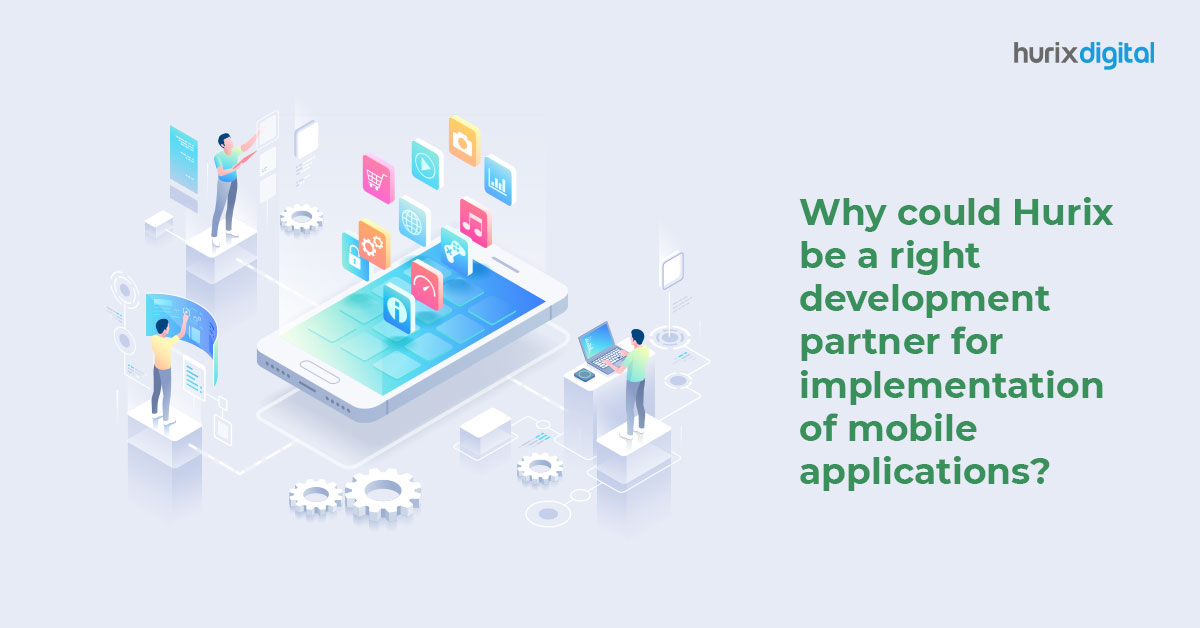
[vc_row][vc_column][vc_column_text]Choosing the right mobile application development company is critical to the success of your project. Here are some factors to consider when making your decision: Experience: Look for a company that has extensive experience in mobile app development. Check their portfolio to see if they have developed apps similar to what you’re looking for and if those apps are well-designed and functional. Expertise: Ensure that the company has expertise in the technology stack you require. They should be proficient in developing for the platforms you want to target (iOS, Android, or both), and should also have experience with the programming languages and frameworks required for your app. Process: The company’s development process should be transparent, and they should be able to provide you with regular updates on the progress of your project. Make sure they have a solid process for quality assurance and testing, and ensure that they follow industry best practices. Communication: Communication is crucial for successful collaboration. Choose a company that has good communication skills and is responsive to your queries and concerns. Pricing: While cost should not be the only factor in your decision, it is important to consider your budget and ensure that the company’s pricing aligns with your expectations. Client references: Ask for client references and contact them to get an idea of their experience with the company. This will give you an idea of their strengths and weaknesses and help you make an informed decision. Support and maintenance: Ensure that the company provides support and maintenance services after the app is launched. This is important to ensure that the app remains functional and up-to-date with the latest technology and operating system updates. Overall, choosing the right mobile application development company requires careful consideration and research. It is essential to partner with a company that has the expertise, experience, and process in place to deliver a high-quality app that meets your needs and exceeds your expectations. We at Hurix bring all the values mentioned above and our expertise in mobile development and related test automation could significantly contribute to your company’s success in mobile apps.[/vc_column_text][/vc_column][/vc_row]