Blog

Darshan Shah December 27, 2022 No Comments

Top 5 Reasons to Consider Learning and Development for Your Workforce

[vc_row][vc_column][vc_column_text]It is truly said that employees are the organization’s greatest assets. So by investing in employee learning and development (L&D), you carve the path for the growth and success of your organization. Employee training today should no longer be limited to C-suite executives. With the rapidly evolving technology bringing newer workforce challenges every day, an organization-wide skill development program is the need of the hour for every business to stay ahead in the game. Table of contents 5 reasons to consider learning and development for your workforce Retain talent Fill skill gaps in the organization Develop and nurture future leaders Foster innovation Boost your brand Over 40% of Fortune 500 companies use e-learning to train their employees. But what do they gain by investing in employee learning and development, and why should you follow suit? Read on to find out! 5 Reasons to Consider Learning & Development for Your Workforce L&D Helps You Retain Talent Employee satisfaction today relies not only on compensation and monetary benefits but also on growth opportunities available at their workplace. In fact, learning and development have been touted as one of the top benefits current employees seek from their employers, beating health and wellness benefits and other in-office perks. A study states that 39% of U.S. employees consider the potential for growth as a contributor to employee satisfaction. Similarly, another LinkedIn study found that 94% of employees would stay longer in companies willing to invest in their professional development. Providing employees with need-based training opportunities also helps them develop a positive attitude toward learning. This translates into higher employee engagement, lower absenteeism, better productivity, and more loyalty toward the organization. So try and discuss with your employees what their career goals are. Then help them carve their goal path by offering training and skill development in the company. Here are some tips on how to use L&D as an Employee Retention Strategy. L&D Helps You Fill Skill Gaps in the Organization With the accelerating technological innovations, the skills needed to stay competitive in the workplace are evolving rapidly. The in-demand skills are changing every year, making it critical for employees to upgrade their skill sets every now and then. According to Gartner, the skill required for a job is increasing by 10% each year, while 30% of skills needed 3 years ago will soon become relevant. What’s more, the World Economic Forum predicts that nearly half of the core skill sets will likely change by 2022 alone. The learning and development opportunities you provide in the organization can help fill the skill gap. It will make your employees more resilient and prepared to face future challenges. An empowered employee will engage more with the organization and drive greater business impact. If you’re looking for ways to simplify upskilling in your organization, here are the five best LMS platforms you can refer to. L&D Helps Develop and Nurture Future Leaders When you help your employees learn and grow, you develop a potential future leader. These talented skill forces can fill internal promotion positions and successfully take on the role of leaders when the time arrives. Such internal promotions result in massive cost savings for the organization that would otherwise have been wasted in interviewing, hiring, onboarding, and training new employees. According to Gallup research, replacing an employee can cost you 1.5 to 2 times their current salary by conservative estimates. This figure can quickly add up for employees in higher positions. Besides costing you, losing employees can also break down team morale and hamper customer relationships. All this can be avoided by upskilling your employees and providing them with growth opportunities. Plus, your current employees are familiar with your company’s culture, vision and operation. So you won’t lose productivity when you hire from within. Have a look at the top 5 workforce learning and development trends to get started with employee training in your organization. L&D Foster Innovation                Training and development initiatives help employees develop their creativity and problem-solving skills and stimulate inventiveness. This is why companies that value innovation invest heavily in the training and development of their employees. Deloitte Research points out that organizations with strong learning cultures are 92% more likely to develop novel processes and products and be 17% more profitable than their peers. Similarly, a findcourse.com L&D report reveals that high-revenue growth companies are three times more likely to report an increase in their L&D budget. Along with enhancing the capacities of innovative thinkers, L&D can help others tap their untapped potential. It creates a safe space for everyone to pitch their ideas and learn through exploration. Your employees feel empowered enough to take on new roles and challenges, ultimately improving your bottom line. Here are some L&D strategies to build a learning and growth culture in the organization. L&D Will Boost Your Brand We’ve seen how L&D can boost the productivity and morale of existing employees. But it is equally helpful in recruiting new talent as well. Showcasing that you invest in your employee’s growth will bolster your brand and attract top talent. Your current employees can play a significant role in boosting your brand image through employee advocacy. They can add their certificates and credentials to their social media profiles and spread positive word of mouth about your organization. The improved organizational credibility can also help you win new clients and boost your image in the industry. Also read,  7 interactive eLearning solutions for employee training Final Words Inculcating a culture of learning and development is paramount to the success of any organization, no matter the size of the company or the industry it belongs. However, offering just any learning program is not good enough. You’ll need to find strategic L&D programs that connect with the organization’s objective, goals, and employee’s functional role in the workplace. Hence, investing in quality e-learning and training solution is the need of the hour. Though it may seem expensive initially, its benefits will outweigh the cost. At Hurix, we help institutions across industries achieve learning and development goals with our intuitive and visually engaging


Darshan Shah December 27, 2022 No Comments

5 Things That Will Make Your Employees Stay in 2023

[vc_row][vc_column][vc_column_text]Since the pandemic, businesses have witnessed a new trend of increasing numbers of employees resigning and changing jobs. Given employee departures, it has become a key concern to retain employees.  Increased employee turnover can be inconvenient and costly with frequent changes. According to Gartner, companies that had a 20% employee turnover rate before the pandemic may now witness a turnover rate of up to 24% in upcoming years.  Employers are looking for ways to incentivize and engage employees and encourage them to stay. Reducing the employee turnover rate and retaining talent is a key priority for 2023.  Why Is Retaining Employees Important? Retaining employees is an integral part of business performance. When employees leave, the company often loses important work experience and contextual understanding that the employee has developed in the course of their role. It also leads to changes in the workplace and further adjustments when new employees replace the former ones. If the position remains unfilled, the remainder of the team may have to cover up until a replacement is found. This can put further pressure on the team, affecting the other employees and the performance of work. Additionally, finding and replacing an employee involves extra administrative costs and time.  The process of recruiting and onboarding new employees and the time it takes for them to adjust to the workplace is another factor that can affect the regular continuance of work. In cases where a role requires training and technical know-how, this can be time-consuming and costly.  5 Things That Will Make Your Employees Stay Here are five things your business can do to help make your employees stay in 2023.  A Better Hiring Process  The hiring process plays an important role in finding the right employees for your business. If you hire candidates who align with the business vision and values, they are more likely to adjust and stay on.  Additionally, hiring candidates who have the requisite skill set helps ensure that they can perform well in their roles and are more likely to continue at the company.   Another benefit of an improved hiring process is that it helps avoid mismatches between the candidate and the workplace. According to a McKinsey report, 48% of workers are quitting their current job to move to an entirely new industry. Given this trend, it is increasingly important to ensure that employees’ professional interests align with the workplace and the work involved.  Onboarding and Training A good onboarding process can help employees get a clear understanding of the expectations and norms at the workplace. It can also help them adjust better and integrate with the organization.  As a part of the onboarding process, it’s a great idea to train employees to work on systems in place so that they are familiar with the technology and processes involved. This sets the basis for their role in the organization.  Incentives to Retain and Attract Talent  Incentives are a great way to encourage employees to continue at the workplace. They are also a factor that potential employees or applicants consider and can help your business attract new talent.  Incentives can take various forms, ranging from competitive pay to benefits or perks. Pay and perks play an important role in motivating employees and enable employers to show appreciation for work. Incentives also help attract talent and reduce the cases of talent leaving the company. Some of the perks that employers are considering in 2023 include the following: Increased flexibility and paid leave, particularly for parental leave Increased investment in physical and mental well-being (like ergonomic office furniture and well-being apps) Reimbursement for technology expenses  Remote Work and Flexible Work Hours During the COVID-19 pandemic, remote work became the norm across different industries. Many employees who had been working from home during the pandemic were reluctant to switch back to the earlier work setup. Flexible and remote work conditions became a priority. These are now key benefits that workplaces are offering existing and new employees to enable more convenient work options. Remote work and flexible work hours can also promote employee productivity. By offering more convenient work options, you reduce the chances of burnout and employee departures.  As an employer, you can facilitate remote work in various ways to enable your employees to work from anywhere. Many employers are assisting employees with the remote work process by ensuring they have the right devices and encouraging virtual work where possible, along with virtual collaboration.  Engagement and Collaboration  Engaging employees helps involve them and boosts workplace morale. Recreational activities and team outings are a fun way to liven up work. Encouraging collaboration between employees helps develop better work connections and promotes participation.  Strengthening employee relations and interactivity helps your business retain employees in the long run. Additionally, it helps foster a better work environment. Some ways to do it include group activities, team projects, and facilitated interactions.  With remote work, your business can facilitate engagement and collaboration through various digital interactive tools. These include video chats, meetings, conferences, and other communication channels. Another way to do this is through interactive training tools. These create an immersive learning environment for employees and make training a participative process. These digital tools can help involve and integrate employees better, leading to better employee retention.  By improving the training process, you ensure that employees can absorb and integrate learning material and skills, enabling them to manage work better.  Summing Up Given the trend of employees resigning and switching jobs, retaining employees in 2023 may be a key consideration for your business. Implementing ways to retain employees not only helps your business avoid additional time and costs. It also offers a way to incorporate engaging solutions and incentives at your workplace. Hurix offers an array of digital tools that provide interactive solutions for your organization or business. With collaborative tools, training technology, learning management systems, and more, these solutions will enhance what your business has to offer.  Contact us on marketing@hurix.com to find out how we can help improve the workplace setup and retain employees for the long haul.[/vc_column_text][/vc_column][/vc_row]

Darshan Shah December 20, 2022 No Comments

8 Reasons Why Flexibility is the Future of Higher Education 

[vc_row][vc_column][vc_column_text]It is no secret that the traditional system of higher education is no longer working out in the post-pandemic era. It is not accessible to everyone, especially those living with physical and mental disabilities, working professionals, busy young parents, and people who are unable to find the time to attend classes on time. This is why the world is today becoming more inclined towards online higher education and e-learning modules. According to a study by the National Center for Education Statistics (NCES), almost 12 million undergraduate students in the United States were enrolled in at least one distance education course in late 2020 (1). Around 7 million undergraduate students exclusively chose distance education courses.  Digital higher education that offers ease of accessibility and flexibility is much in demand throughout the world.  Flexibility in Higher Education: Why is it Needed?  Until a few decades ago, the typical college student was a young male from a privileged background who could afford to attend college full-time and devote several hours to his education. But now, times have changed, and so have the demographics of students who desire to acquire higher education. Students of higher education in the modern era comprises people across gender, ethnicities, and age groups. Many students today are 25 years old or older. Several have full-time jobs, while numerous are married with small children. In the changing scenario, an efficient education system needs to allow for flexibility in the way people access higher education.  What is Flexibility in Higher Education? In a flexible higher education system, students can decide what, when, how, and where they learn. The students can customize their learning experience based on their needs and convenience. Digital learning and online education are forms of flexible learning. Digital education is often accessed at home via the internet. Flexible learning can also be delivered in a classroom setting with the option of attending the sessions online. A flexible higher education system makes it possible for people with full-time jobs and/or children to continue their academic journey and avail of new opportunities.  Why Flexibility is the Future of Higher Education? Technological advancements have made digital education modules and online courses extremely popular on an international level. The traditional system of education is no longer considered the benchmark as the ways education is delivered continue to evolve. While classroom teaching might not become obsolete soon, there is no doubt that hybrid ways of teaching and online education are here to stay. Here is why flexibility in higher education is the future.  1. Convenient Platform Flexible digital learning platforms are convenient for a wide range of students, including older people, working professionals, and parents with small children. Online education modules are often designed in such a way that they are accessible to anyone, irrespective of how hectic their schedule might be. Anyone who can access the internet can partake in online education.   2. Flexible Learning Environment Most digital courses are not time-bound. One need not attend the live classes as recordings are made available to watch later. People with jobs can do their course on the weekends or in the evenings after returning from their jobs. Young parents can plan their study time according to their children’s schedules.  3. Meaningful Interactions with Others Thanks to technology, students of higher education not only have access to their own professors and coursemates but also have the option of connecting with industry experts and alumni members. Online courses often entail group discussions on Zoom, PowerPoint presentations, and other interactive methods of interaction.  4. An Array of Learning Programs and Courses When it comes to digital higher education, there are no limits to the variety of learning programs and courses one can access. Since there are no physical barriers to online education, one can explore a wide range of courses in the area of their interest and choose what to study. Students living in one country can easily enroll in a program offered by a college in a different country.  5. Study without Compromising Your Lifestyle  Are you a travel enthusiast? Do you go for long walks daily? Do you volunteer at a children’s shelter on the weekends? Each person has a rich life encompassing numerous activities, hobbies, and interests. One does not have to compromise with their lifestyle just to earn a higher degree. By choosing flexible higher education options, students can easily fit in their study time in their leisure hours.  6. More Economical Than Traditional Degrees  Acquiring a quality higher education is a basic right that should be available to everyone. Traditional college courses are often expensive, and not everyone is in a position to afford a full-time college degree. However, with online digital education, one can access a range of courses in the fields of their interest. Besides full-time online courses, one can also opt for part-time courses at very nominal rates.  7. Access a Plethora of Resources  Those who enroll in digital courses get access to a plethora of resources. Students often get lifetime access to course materials, the option to join dedicated Facebook and Telegram groups, and 24*7 online access to college libraries. They also get online or telephonic support regarding queries, questions, and advice. Some universities also give their remote students the option of joining their students’ union community.  8. Learn Essential Life Skills Successfully completing online learning programs takes much self-discipline. Students opting for digital courses simultaneously learn essential life skills like time management and personal responsibility. Online education offers the scope for more nuanced learning that is not possible in traditional classroom environments.  How Hurix Can Help You Implement Flexibility in Higher Education For over two decades, Hurix Digital has been providing customized e-learning solutions and higher education solutions to corporates and educational institutions. At Hurix, we recognize the significance of being flexible in our approach to higher education so that education solutions are available to as many people as possible. Are you looking to upgrade your educational models to cater to the changing needs of the modern student? Get in

Darshan Shah December 20, 2022 No Comments

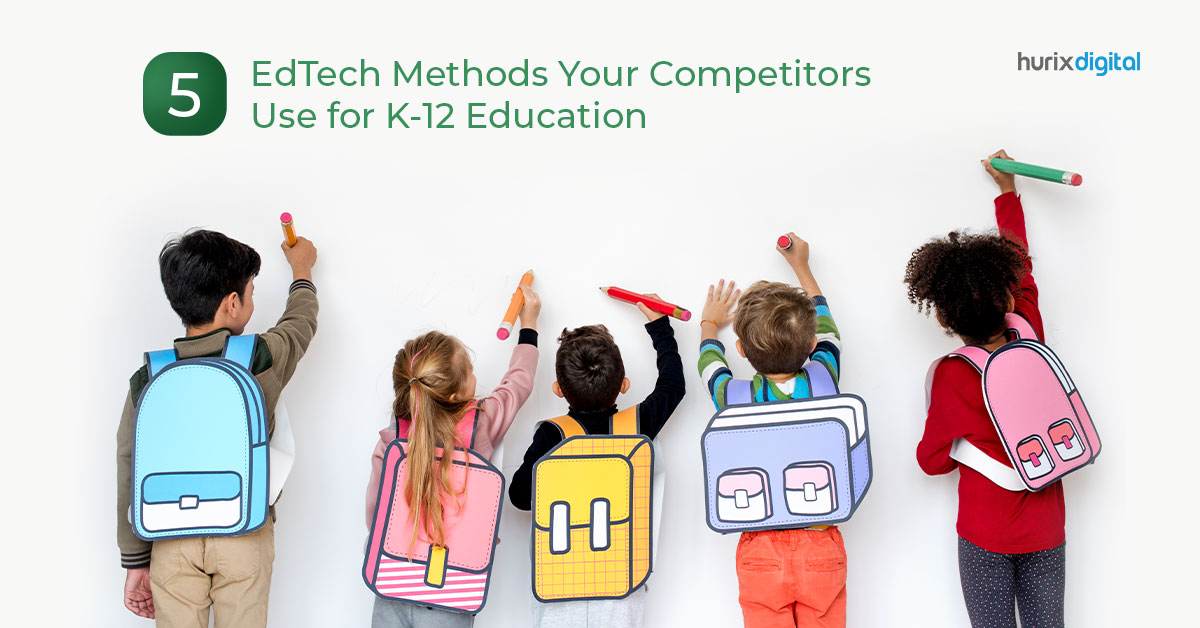
5 EdTech Methods Your Competitors Use for K-12 Education

[vc_row][vc_column][vc_column_text]K-12 education is where students gain the most knowledge and skills that help them become capable of handling complicated problems later on.  Therefore, it’s a must to make sure that K-12 learners don’t miss out on the wonderful opportunities they have awaiting in the future due to a lack of efficient learning.  Not all learners learn in the same way; some students learn better when they are taught using diagrams, maps, and charts, while others prefer to listen to the information again and again to memorize.  Keeping that in mind, the experts introduced new EdTech methods to ensure that all students learn effectively without having to make compromises. It’s time to bid goodbye to the old-school ways of K-12 education with these five highly impactful EdTech methods used by your competitors in the education sector. 1. Collaborative Learning Several studies have shown over the last couple of years that students learn best with active participation in the classroom. Collaboration has been pretty common in educational institutions, but things have improved a lot more after the inclusion of technology in classrooms.  Students can now collaborate on projects and other important tasks assigned in classes online and make the most of their day outside the classroom, and as they work together and brainstorm ideas, their collaborative skills increase.  Collaborative skill is one of the most important soft-skills students must learn to improve their understanding and grow as a person.  That’s not all; this new EdTech method also fills the gap between learners and teachers – a great thing about the collaborative learning method is that teachers and students get more time to communicate with each other outside classes online and clear out any misconceptions.  2. Social Media in Learning There have been lots of debates about the good and bad sides of social media. Even though it is widely believed that social media impacts negatively on K-12 students, the inclusion of the same in learning by experts tells a different story.  It’s not possible to keep K-12 learners away from social media platforms for too long – instead, the experts decided to make the most of this trend in education, and the results are amazing so far.  Many institutions use social media platforms as a tool for communication to allow students to interact and participate actively. Sharing study materials, eBooks, images, and video content among peers is now even easier.  This move has helped the learners stay dedicated to learning and attaining knowledge, and even the ones who lagged noticed improvement with regular engagement on social media.  3. Interactivity in Classroom Introducing the latest technology inside the classroom has proven to be highly effective for teaching and attaining knowledge. Apart from textbooks, there are times when students are required to read other books to work on projects and for various reasons.  If the books are provided by the library of the educational institution, chances are, not all students get copies of the same book. Using eBooks, educational institutions can easily make the course content accessible for all students because there will never be a shortage of eBook copies, unlike physical books.  Most importantly, eBook has a whole lot of excellent features to offer – the embedded video and audio content and inclusion of AR make learning from eBooks an amazing experience for all kinds of learners. eBooks are also way more affordable than physical books, and storing them is never an issue.  That’s not all; the inclusion of eBooks in the classroom also makes the learners more eager to participate actively in classes. eBooks are highly interactive, which allows the learners to continuously test themselves as they move forward with learning new topics.  Therefore, it’s safe to say that interactivity in the classroom is the future of learning as it’s one of the most effective ways to keep K-12 students focused on their goals. 4. Immersive Learning Using AR and VR Even though the education sector always looked out for opportunities to improve the learning experience of the students, the impact of the global pandemic back in 2020 on the education sector cannot be denied. In the initial stage, the education sector faced a lot of difficulties, but gradually, educational institutions bounced back and put a whole lot of effort into restoring normalcy in education. Thanks to the introduction of VR (virtual reality) and AR (augmented reality) in the education system – the learning experience was no longer the same for students.  The introduction of AR and VR made learners attain knowledge on complicated topics in the comfort of their homes using nothing but their electronic devices. This advanced technology allowed them to see enhanced versions of objects and images to gain in-depth knowledge of the topics in their courses.  AR (Augmented Reality) helps learners view enhanced versions of objects and images, while VR (Virtual Reality) gives them a false perception of reality.  Needless to say, the combination of these two has taken online learning to greater heights. This EdTech method makes students learn the most complex subjects easily.  5. Gamification As previously discussed, there are different kinds of learners and there exist learning methods for each kind.  In the last few years, the introduction of gamification in learning has made a massive impact on learners. Not all subjects are interesting enough for students to pay attention to, but that doesn’t mean that the students are going to avoid those subjects and not live up to their full potential.  To tackle all those complicated and ‘not-to-interesting’ subjects effortlessly, many competitors are now utilizing the gamification method in classrooms.  A student learns the best by participating in classes actively, and gamification is the best way to ensure that. With exciting rewards, gamification makes learning and retaining knowledge a fun process for learners.  Gamification makes the majority of learners identify the areas they need to work on easily and strive to perform better with regular practice. This method has been proven highly effective for fostering morale and encouragement among students. It’s safe to

Darshan Shah December 20, 2022 No Comments

How to Prepare K-12 Students for Higher Education?

[vc_row][vc_column][vc_column_text]Did you know that around 60% of high school graduates aren’t really equipped for college-level work? Additionally, surveys have shown that students in grades 3-5 in the K-8 setting underperform compared to students enrolled in stand-alone elementary schools. What this means is that K-12 education isn’t primed for academic success. This ultimately affects the type of higher education students get once they graduate from K-12. In this article, we explore a few ways that teachers, parents, and caregivers can help students ready themselves for higher education after K-12. 11 Ways to Prepare K-12 Students for Higher Education   1. Encourage extracurricular hobbies Inculcating hobbies and interests beyond academics can help students become more aware of the world and learn new skills that can come of use in college. For example, a hobby like stamp collecting can inculcate skills like research, attention to detail, an eye for design, awareness about world history/geography/culture, etc. Or, you could give them access to a virtual science lab or science-based video games where they can hone their observation, experimentation, and analysis skills. 2. Give them opportunities to organize family events Allowing students in K-12 to help organize family events can allow them to put their existing skills to use while discovering latent ones. Planning, organization, patience, critical thinking, etc., are some of the skills that are needed to organize events. These are skills transferrable to college and jobs too. 3. Introduce them to community work Community and social work can allow K-12 kids to gain important people skills. They’ll also become more empathetic to diversity, which is necessary for today’s global college environment. Plus, it’s a great way to boost the student’s admission resume. 4. Let them travel solo Just as with community work, travel can help students become more aware of the world they live in. Travel can help them become truly global citizens, ready for higher education abroad, should they wish to pursue that. 5. Enroll them in skill development courses These days, you have incredible interactive e-learning programs on diverse topics aimed at getting K-12 students ready for higher education. These programs range from foreign languages to stock market trading to UX design to artificial intelligence. They are designed according to state-of-the-art standards and have rigorous assessments that test both soft and technical skills. Consult your child’s school if they offer such programs to students. 6. Help them Prepare Career Roadmap The first thing schools can do to get their K-12 learners ready for higher education is to check what higher education institutions expect from applicants. What skills and experiences must applicants have? What factors might set an applicant apart from the rest during the admission process? How can applicants thrive in the competitive collegiate setting? Schools must sit down with each student, find out what they might want to study after school, and help them plan their choice of classes and extracurricular activities accordingly. They must provide students with the facilities and amenities they need to become higher-education-ready. 7. Create a curriculum that focuses on the future Post-K-12 higher education focuses on the real-world implementation of academics. This is why schools should focus on creating K-12 curriculum which supports holistic education and skill development. This curriculum should not only help students get into the college of their choice, but it must help them learn skills that they can use at work in the future. It’s important for schools to keep in touch with developments across various industries and update their curriculum to reflect these changes. 8. Partner with neighborhood businesses to offer summer internships In addition to changing curricula based on industry needs, schools should also partner with local businesses to create opportunities for summer internships. That way, what K-12 students learn in the classroom can be applied in a job setting, giving them real-world experience. This can prove invaluable for higher education applications by helping students stand out amidst their peers. 9. Make classroom interactions more active and engaging Having an interactive and engaging classroom environment can help students learn better and also retain information for a longer period of time. For this to happen, first off, teachers must be provided training on how to deliver engaging sessions. This can be easily done by opting for e-learning programs geared towards teacher upskilling and development. Second, students should be given classroom activities to enliven their learning. Taking advantage of technology can help here. For example, students can be asked to download lesson-specific e-learning programs that offer entertaining and interesting assessments they can do in class. Instead of talk-based lectures, they can be shown slides, videos, infographics, etc., on a projector screen in the classroom. Schools can even take students on virtual field trips to the places they are discussing – quite literally bringing their lessons to life. Such versatile ways of training teachers and teaching students can be achieved by implementing robust content distribution platforms in schools. 10. Encourage participation in local, national, and international events Every city, state, and country offers a variety of activities aimed at K-12 age groups. From spelling bees to mathletes to track and field, there are plenty of events that students can pursue when in school. Not only do these events give students global awareness and opportunities to develop unique skills, but they can also boost their college resumes post-K-12. 11. Offer extracurricular courses and programs Finally, schools should offer enriching courses and programs that are designed to help supplement the school curriculum. This could be a beginner’s course in cryptocurrency for students interested in taking up finance or computer science in college. Or, it could be a workshop in news writing or public speaking for students interested in journalism and media. The sky is the limit. What Next? The great news is that it’s very easy for schools to offer relevant programs to their students these days. All you need to do is choose the right content distribution system that can allow you to share content customized to different learner groups. That’s where

Darshan Shah December 15, 2022 No Comments

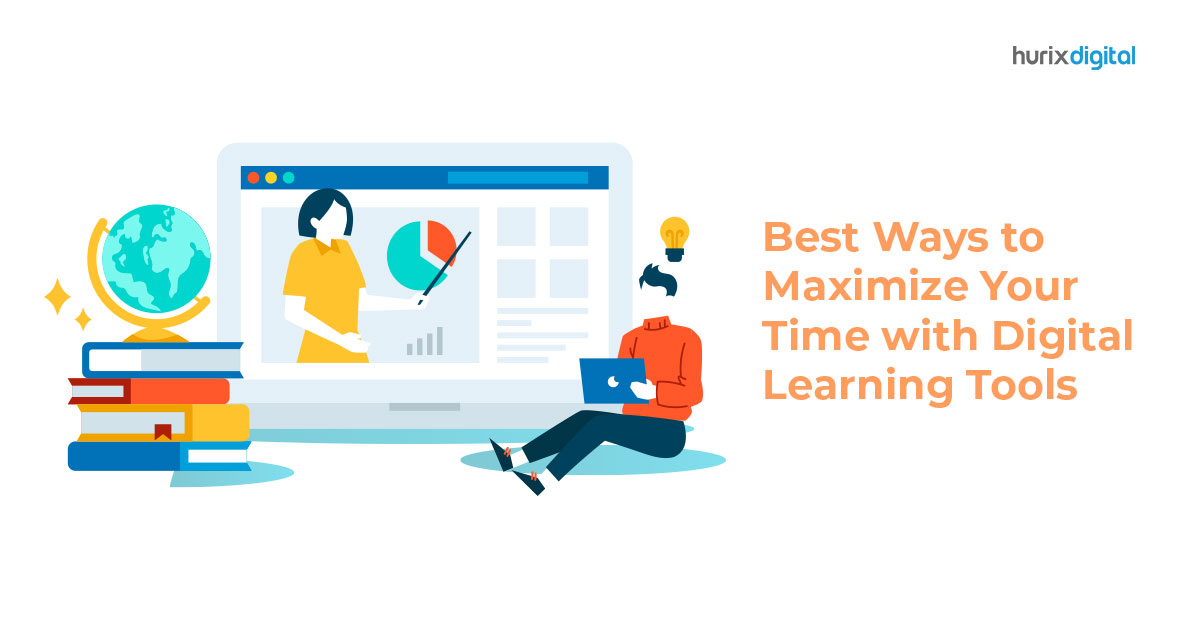
Best Ways to Maximize Your Time with Digital Learning Tools

[vc_row][vc_column][vc_column_text]82% of Gen Zers feel social media is a distraction for them instead of supporting them in their studies. Moreover, the pressure has increased, and the demands of your course can become too much to handle on your own. This is where digital learning tools are doing wonders for students. Don’t worry if you are struggling to keep up with the pace of your studies or are finding it tough to keep up with your deadlines. You can use digital learning tools to organize your tasks and manage your time efficiently. Let’s see the tools you can use to make the best use of your most important resource – time. Table of contents: Identify your needs Tools to organize your task Productivity Avoid distractions Identify Your Needs Before getting into digital learning tools, the first step is to identify the areas where you are constantly struggling. Perhaps you do not prioritize your tasks and fall behind on your deadlines. Or you struggle to keep track of everything happening in your school. Some students prefer learning through videos. Some students work well in teams. A few are better at individual tasks. Other students tend to leave everything at the last minute and end up doing a shoddy job due to the lack of time. Your needs may be unique, but you can find the perfect solution only when you know your struggle areas. Further, teachers can use the best Edtech solutions to cater to all these different needs of students. Select Relevant Tools to Organise Your Tasks Digital learning tools allow you to prioritize your tasks and send reminders and notifications to ensure you never miss any deadline. Here are a few apps you can use for this purpose: MyStudyLife – This is one of the free digital learning tools that allow students to organize their tasks and keep track of classes and assignments to submit. Apart from this, students can plan their study sessions and plan revisions on this app. It is available for iOS and Android phones and is also downloadable on Windows and Mac if you want to use it on your laptop. With this app, you will never miss any homework deadlines or forget to revise a lesson before an exam. Trello – Here’s an app that is equally beneficial for students as well as professionals. It is particularly useful when you work on a project with other students. It allows you to make boards for your projects and divide them into simple tasks. You can delegate these tasks on the boards for group assignments. Moreover, you can mark the tasks that you are yet to do, have completed, or are working on right now. It is useful in tracking the progress of a project and speeding up if you are falling behind. Remember the Milk – Many students feel overwhelmed with the sheer number of tasks they need to do. There are tests to study for, assignments to submit, and doubts to clear. Remember the Milk is an app that remembers all your tasks for you. It integrates with other apps like your calendar and emails and makes sure you never forget anything. Quizlet – This app helps you prepare for your exam. It allows you to create your own flashcards or use the existing ones made by other students like you. Flashcards are best for revision and let you know the areas you need to work on. The app will also identify the parts that you need to revise again. There’s a fun feature that allows you to race against the clock. MyHomeWork – Here’s a planner app that sets up a calendar to track upcoming assignments, exams, projects, events, and homework. The best part is you can receive reminders for your assignments that are due, so you do not forget them. You can also sync with other devices for uniform information. Productivity One of the areas where most students struggle is productivity. At times, you don’t realize that you are getting distracted by other thoughts. Pomodoro Timer is an app that can help you with this and also help you in the long term. It is based on Pomodoro, a time management technique that has been around for decades. The app features a web-based timer that will let you know the lengths of time you work and the breaks you take. It allows you to customize your work and break periods to manage your work the way you like it. You can also create labels to categorize your work, so you know how much time you are spending on each task. Avoid Distractions One of the many things that can get in your way is social media distractions. It is possible to lose track of time when you browse through these platforms or surf other websites. Before you know it, you end up spending hours and hours on them. By the time you realize it, you have lost significant time. Here are some tools that can help you stay focused on your studies and limit the time you spend on other websites: StayFocusd – If you tend to lose track of time on social media or other similar websites, you can use the StayFocusd extension for Google Chrome. It restricts the time you spend on these websites. Once you have used up your quota for them, these websites will be blocked for the rest of the day. It is a sure shot way to ensure you stay focused on your studies. AntiSocial – Here’s an app that lets you know if you are addicted to your phone. It gives you data about your smartphone usage and compares it to other people’s. Other than that, you can also use the app to block an app once you have exhausted your daily quota. It will also send reminders if you have used it for a certain time. Also read, how to create personalized learning path for learners. Conclusion Digital learning tools are a student’s best friend in this

Darshan Shah December 15, 2022 No Comments

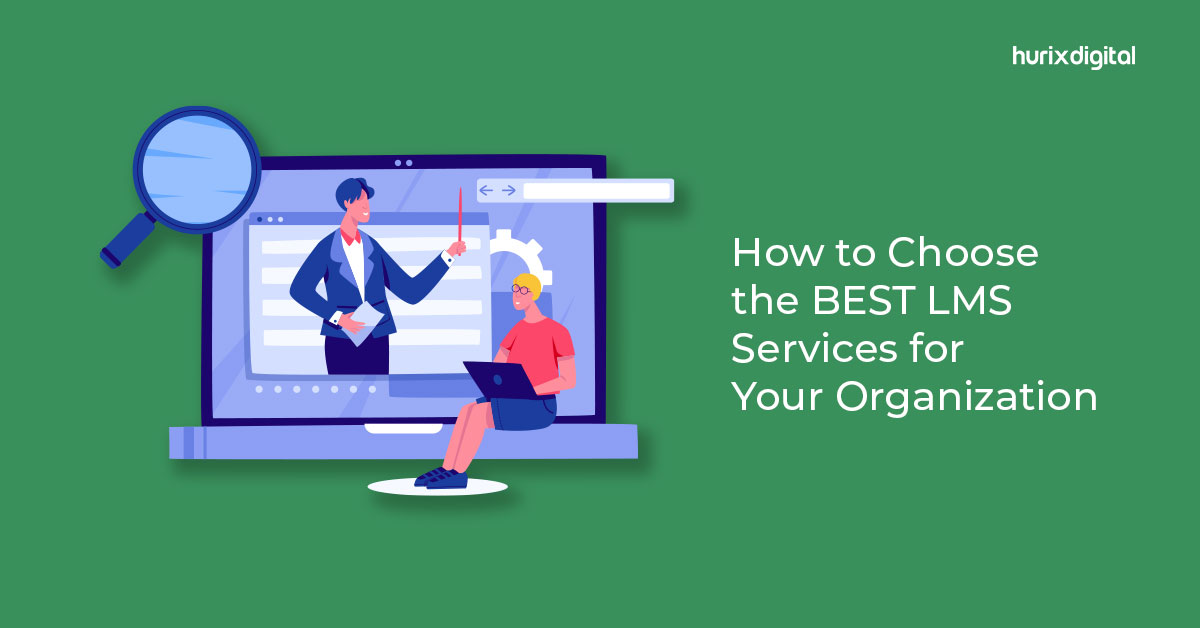
How to Choose the BEST LMS Service for Your Organization?

[vc_row][vc_column][vc_column_text]A finding by Degreed shows that when employees don’t know something on-the-job, 55% ask their colleagues for the answer. But such peer learning doesn’t always have positive results. Apart from an absence of knowledge/skill, misinformation can affect the performance of your employees – this is where LMS service comes into play. Comprehensive training and upskilling can be the best way to ensure your staff has the sharpest skillsets in the market. This is where Learning Management Systems (LMS) can help. Today, almost 83% of organizations use LMS services. As your competitors start to partner with LMS service providers and bring on-board world-class L&D solutions to empower their employees, it becomes imperative for you to do the same. With the right competitive advantage offered through LMS services, your company can thrive against any competition. In this article, we offer key tips to help you choose the best LMS services for your organization. What is an LMS Service? An LMS, or Learning Management System, refers to software designed to manage an organization’s start-to-finish learning and development needs. It is estimated that the LMS services industry will be valued at $23.21 billion by 2023 and $40.95 billion by 2029. When selecting an LMS service, companies often make a couple of mistakes, which can impact the development of their talent. These mistakes typically include: Only considering the company’s short-term L&D needs. Not having the technological prowess to manage and use the chosen LMS. Selecting the LMS with the wrong set of features or insufficient features. Not providing sufficient learning flexibility, personalization, and engagement. Making the LMS only laptop/desktop compatible and ignoring mobile compatibility. Not investing in L&D analytics and reporting. Not upgrading the LMS as the company grows and L&D requirements change. Knowing how to circumvent these issues can help your organization select an LMS service that perfectly fits your company’s changing needs. Factors to Consider when Choosing an LMS Service Based on these commonly made mistakes, companies should consider the following factors when investing in their LMS: The Specific Needs of Every Type of Employee Each type of employee – front-line, middle management, C-level, people-facing, technology-oriented, etc. – will have unique L&D requirements. You need to consider if the LMS service you pick is flexible and scalable to suit the distinct needs of each user group. Essentially, the LMS service should cater to employees’ different technical and soft-skill levels at different points in their careers at the company.  Your LMS should cater to both individual and group learning sessions as needed. The LMS service should also support in-office, remote, and hybrid learning environments. The Personalization Requirements of the Content Speaking of personalization, every learner has a unique learning style. While some are visual, others are auditory. While some learn better through detailed text, others respond very well to games and quizzes. The LMS service chosen must have the features needed to customize the learning experience. You should be able to create and share different types of content based on the audience and goal of training. If you have employees working across different time zones or within unconventional team structures, the LMS must be able to support their learning needs. Consider the differences in training requirements for teams and individual contributors as well. The LMS service must allow the creation of personalized learning paths that support employees at the learning stage and career path they are in. The Access Needs of Different Teams and Employees L&D has gone beyond the conventional boundaries of boardrooms. Today, more employees take up corporate training and skills development either from their homes or when on the move. Teams such as sales, event management, or security will find mobile training ideal when on the field. In fact, research shows that when companies make training accessible on mobile devices, it increases productivity by 40%. McKinsey calls this “mEducation” – an L&D solution available to learners anywhere, anytime, through 2G/3G/4G/5G. Your LMS service should not only support mobile learning but also have options for content download for offline viewing. This can help your employees access their lessons and skill-development tasks wherever they are. In the age of the digital nomad, such an LMS service can help organizations gain a tremendous competitive advantage.  3 Options Available for Companies Looking for LMS Services There are three things a company can do when considering investing in an LMS service: Create Your Own Corporate LMS Instead of choosing an LMS service, you could build one from scratch. Building a bespoke LMS service for your organization can give you the highest degree of customization possible. Your LMS service can be anything you need. However, building an LMS can take a lot of time, money, and effort – which many organizations may not have. Additionally, companies must have a high degree of technological savviness to manage such a custom-built LMS service. If your organization is not tech-centered, the LMS can quickly become a legacy system that ceases to benefit your firm. From software integration issues to data security concerns to scalability problems, there may be many costly issues to contend with. Purchase an Off-the-Rack LMS Service Another option that companies have is to purchase an off-the-rack LMS. Such a service can be great if you’re on a tight budget or need simple features for your L&D programs. This type of mass-produced LMS can be implemented very quickly, with the least technical training, and can be perfect if you need a short-term LMS service. On the other hand, an off-the-shelf LMS service can offer the least degree of personalization. The LMS may possess only a handful of features and may put a wrench in your corporate training and upskilling plans. So, despite saving a few thousand dollars at first, you may spend more than your budget later trying to upgrade the LMS service you do have. Other issues with off-the-rack LMS are infrequent updates and security patches. Plus, the service may not be as scalable as you need, making it necessary to find another LMS service later. Choose a

Darshan Shah December 15, 2022 No Comments

6 Effective Ecommerce Solutions to Boost Sales

[vc_row][vc_column][vc_column_text]For online businesses looking to thrive and grow consistently, there are multiple ecommerce solutions available. In the highly dynamic and competitive contemporary ecommerce scene, online businesses must take all possible steps to stay relevant and on top of their game. The worldwide ecommerce sales are projected to reach $7.385 trillion by 2025—this means there is ample scope for growth for online businesses. Optimum utilization of ecommerce services can help online marketers streamline their operations, conduct business more efficiently, and ultimately improve their profitability. What are Ecommerce Solutions? Ecommerce solutions are products and services designed to help online marketers successfully conduct business across the internet.  In the modern day, a plethora of ecommerce services are available for businesses across a range of industries. Some ecommerce solutions also help traditional brick-and-mortar stores design, create, and run their website on the internet to boost their business.  They encompass an array of web development software, website building tools, mobile app builders, and ecommerce platforms. Services like professional product photography, cataloging, and domain and hosting services can also come under the purview of ecommerce solutions.  All online businesses have to opt for different solutions to support their operations at different stages of growth.  Types of Ecommerce Solutions Often, a business has to utilize a combination of ecommerce solutions to run its operations smoothly and effectively.  Web Development Solutions Web development refers to the process of building and maintaining websites. A well-functioning website is imperative for the seamless running of an online business.  Web development solution providers help create different types of web-based apps and modules for the efficient management of different business activities. Website Building Tools  In the olden days, website building encompassed considerable manual coding.  However, today, many website-building tools can be used to construct websites without manual coding. Web hosting service companies provide online tools businesses can use to build their websites.  Shopping Cart Solutions A shopping cart is an integral part of any ecommerce website. Shopping cart ecommerce solutions help online businesses add this essential feature to their website.  Every ecommerce company needs at least a very basic shopping cart to enable customers to buy more than one product at a time. If your budget permits, you can also go for more advanced features in your company’s shopping cart. Website Theme Marketplace Website theme marketplaces provide an important ecommerce solution to businesses. These marketplaces generally have a collection of free and paid themes for different kinds of business websites.  You can explore a variety of themes and choose one that showcases your brand most authentically. Enterprise Ecommerce Solutions All online businesses, irrespective of their size, require reliable infrastructure to run their websites. The ecommerce solutions used should fully support your business’s accounting, marketing, and customer service requirements.  Enterprise ecommerce solution providers provide businesses with a comprehensive and customized package of solutions required for the effective operation of the business. B2B Ecommerce Solutions  Many businesses cater exclusively to other businesses. B2B organizations have different requirements than companies that cater to individual customers.  Ecommerce solutions for B2B organizations have to support a different array of services that ecommerce solutions for regular businesses may not support. So, depending on the industry in which you operate, you will have to go for online business solutions designed to meet your specific needs. How Ecommerce Solutions Can Help Your Online Business Integrating effective ecommerce strategies can help your business in the following ways. Make Customer Interaction Simple Ecommerce solutions help to make it easier for your customers to explore your website and complete purchases. When browsing online stores, customers are looking for a simple, hassle-free experience that a business can achieve by implementing the right ecommerce solutions.  Besides shopping, you can also include blogs and vlogs on your site to make it a more enriching experience for your customers. Express Your Unique Brand Identity  With the help of ecommerce services, you can easily create a unique brand identity for your business.  While free options in this field are available, it is better to pay for a custom design to express a brand identity that is unique to your business and helps you stand out from the competitors. Simplify the Payment Process  Talking of ecommerce solutions for online payment, numerous services are available, including payment gateway, online payment services, merchant account providers, and efficient payment processing.  Choosing the right solutions can help make the payment process uncomplicated, safe, secure, and easy for the customers.  More Effective Marketing  Many ecommerce services come equipped with numerous powerful SEO tools and marketing features. Using the right ecommerce solutions can make your marketing procedures more efficient.  You also get to access built-in statistical and analytical tools for tracking the performance of your marketing activities, including campaigns and special offers. Provide Exceptional Customer Service Implementing the right ecommerce services can play a major role in ensuring customer satisfaction and retention. You can provide your customers with easy product selection options, simple checkout ways, and quick payment processing with these ecommerce solutions.  All the operations in online shopping can be automated to give your customer the best service. Keep your Store Open 24×7 Fully automating the shopping process means you can keep your store up and running all the time. No need to close your shop even when you take a vacation!  Automating your online store means your business hours are no longer limited by the availability of staff, and there is no need to monitor your shop continually. Also, ecommerce services enable you to see anyone located anywhere in the country or the world.  How can Hurix Help your Business Thrive? To thrive in the highly competitive world of online business, your company needs a trustworthy partner to work with in implementing effective ecommerce services.  At Hurix, we are committed help small and medium-sized enterprises integrate the right ecommerce solutions with their business processes so that their customers enjoy a seamless, user-friendly experience. We understand that different businesses have different needs, and that is why we provide robustly customizable ecommerce solutions that can be tailored to meet your unique requirements.  Get in touch with the experts at Hurix to take your online business to the

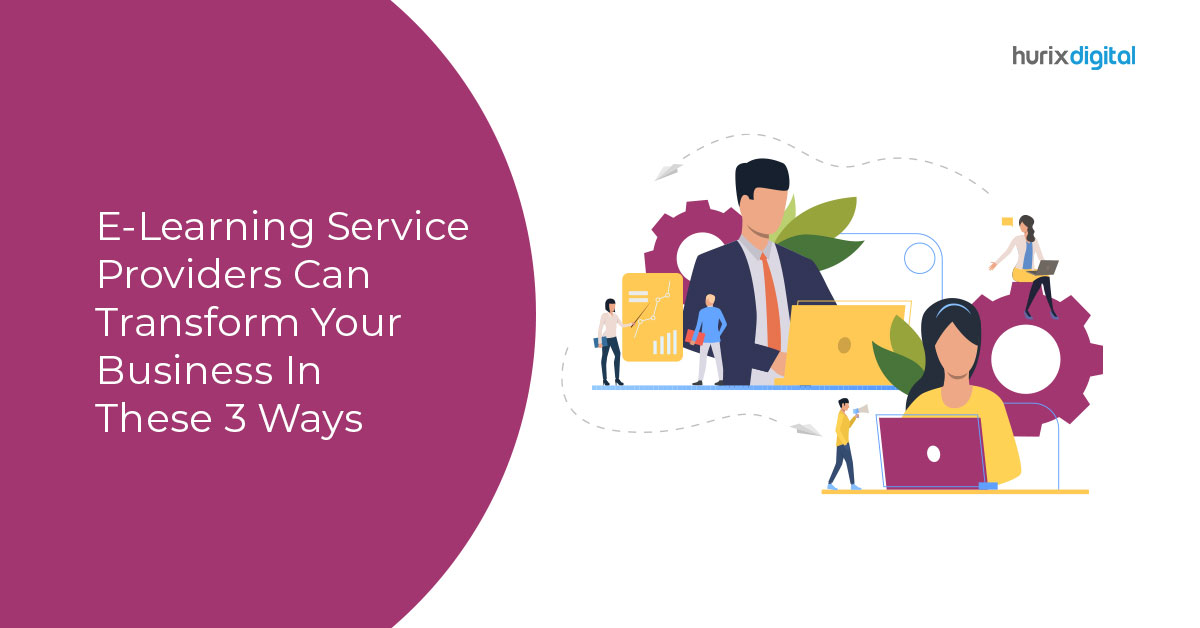
E-Learning Service Providers Can Transform Your Business In These 3 Ways

[vc_row][vc_column][vc_column_text]Did you know that job unhappiness is at a record high this year? In their State of the Global Workplace: 2022, Gallup revealed that almost 60% of the global workforce feels emotionally uninvolved and detached from work. 19% of respondents reported feeling downright miserable in their jobs. Companies lost about $7.8 trillion to low employee engagement in 2022! Statistics like this are very concerning. When employees feel detached from the work they do or they experience negative emotions at the workplace, it can have a significant impact on their productivity. By extension, it can derail the achievement of your business goals. One of the main reasons for low employee engagement and higher employee stagnation is poor quality L&D programs and the absence of qualified E-learning service providers. [/vc_column_text][vc_custom_heading text=”Learning and Development – The Move from Physical to E-Learning”][vc_column_text]During the Covid19 pandemic, many companies could not give their employees the learning they needed to help them gain desired professional growth. According to the research from the Association for Talent Development, investment in L&D came down to, on average, $1267 per employee in 2020 – which was significantly lower than 2019’s $1308 per employee. According to a Gartner survey, almost 40% of respondents felt they didn’t have the right capabilities and solutions to develop powerful and impactful skill development experiences. But, the absence of L&D tech did not douse companies’ desire to maintain a focus on critical upskilling and competency building. Throughout 2020 and 2021, companies brought in qualified E-learning service providers with the expertise, the learning management software, and the online assessment systems necessary to provide a compelling L&D experience to staff. Studies into the effectiveness of e-learning from 2021 and 2022 showed that these online learning sessions were, in most cases, equal to or surpassed the effectiveness of physical training sessions. Of these virtual, E-learning service providers enabled sessions, 55% were live online training, and the rest were self-paced. Today, most organizations have shifted to completely virtual L&D offerings or some form of a hybrid setup through the help of technologically-savvy E-learning service providers. As HR leaders head into 2023, they have plans for innovating for success. They hope to do this through more focused leadership development, robust change management and organizational development, and improved employee experiences. More companies will partner with E-learning service providers to achieve this in 2023. But what benefits do LMS and E-learning service providers offer which make them so integral to the future of employee development and engagement?[/vc_column_text][vc_custom_heading text=”3 Major Ways E-Learning Will Boost Profits and Revolutionize Your Business”][vc_custom_heading text=”E-Learning Helps Employees Acquire the Most Current Job Market Skills” font_container=”tag:h3|text_align:left”][vc_column_text]E-learning helps employees engage their mind and their senses. It offers them an opportunity to sharpen rusted skills and to learn new ones. Studies show that the average lifespan of a skill is 5 years. Plus, each year, the competencies and skills needed by employees for a particular job increase by 10%. E-learning service providers can make available the most current tools and assessments employers need to help train their employees correctly. When your workforce is skilled in the correct skill sets, it automatically improves their job performance. Even if employees are on Performance Improvement Programs, you will be better equipped to give them the right training for the future.[/vc_column_text][vc_custom_heading text=”E-Learning Keeps Employees Tech-Savvy and The Company Tech-Driven” font_container=”tag:h3|text_align:left”][vc_column_text]Industry 4.0 is upon us. E-learning service providers can help companies equip themselves with the technological skills and agility necessary to respond to the changing industry landscape. Most e-learning systems support multi-type content playlists, from static text to AR/VR experiences. Companies can create job-specific simulations that allow teams to learn how to be more effective, productive, and successful on the job. They can test knowledge gained through training using a variety of engaging formats, from multiple-choice quizzes to interactive puzzles. Apart from this, e-learning technology can help businesses get to market faster. E-learning service providers can support teams in product development and quality analysis by providing the most conducive platform to test their offerings. For example, the same AR/VR simulations can be used by employees to try out newly released product features or experiment with workplace tools. This can help them make quick design and functionality decisions and reach customers faster than competitors. What makes the LMS software by e-learning service providers all the more powerful is that they are often cloud-based. Now, training module creators can collaborate more easily on the cloud. Plus, they can quickly share updated content with the audience as their needs change over time.  In fact, Deloitte research shows that SMEs and start-ups that use cloud-based technology (such as LMS) can grow 26% faster and experience about a 21% increase in profits.[/vc_column_text][vc_custom_heading text=”E-Learning Can Improve Training Effectiveness While Reducing Company Errors and Mistakes” font_container=”tag:h3|text_align:left”][vc_column_text]Speaking of technology, these tech-centric e-learning service providers can help high-risk industries by giving their employees intensive scenario-based training. Take industries like safety/security services, chemical formulation, or oil & gas. By working with a multitude of AI-generated scenarios and AR/VR-enabled experiences, teams can learn the exact procedures and processes to follow when dealing with various situations in real-time. This can save companies from making expensive mistakes resulting from regulatory non-conformance, safety issues, and legal battles. Additionally, through e-learning, employees can stay abreast with industry changes and developments. They can also become cognizant of how their company is currently responding – and how they should respond – to these changes. Poll/quiz-based or case-study-centric self-paced training modules can be particularly powerful in these situations. This, too, can help the organization work smart and avoid errors. Finally, e-learning service providers can play a pivotal role in meeting compliance requirements. This could be in the form of helping employees learn about important operations regulations (such as GDPR) or workplace protections (such as Sexual harassment protection rights). Since non-compliance with any local or international regulations can result in millions of dollars worth of damages, not to mention the financial loss incurred due to loss of customer patronage, timely e-learning can prevent major problems. [/vc_column_text][vc_custom_heading text=”Choosing the Right E-Learning Service Providers Can Make a Profound Difference for Your Company”][vc_column_text]Before we talk about e-learning service providers, let’s discuss this: Did you know that job unhappiness is at a

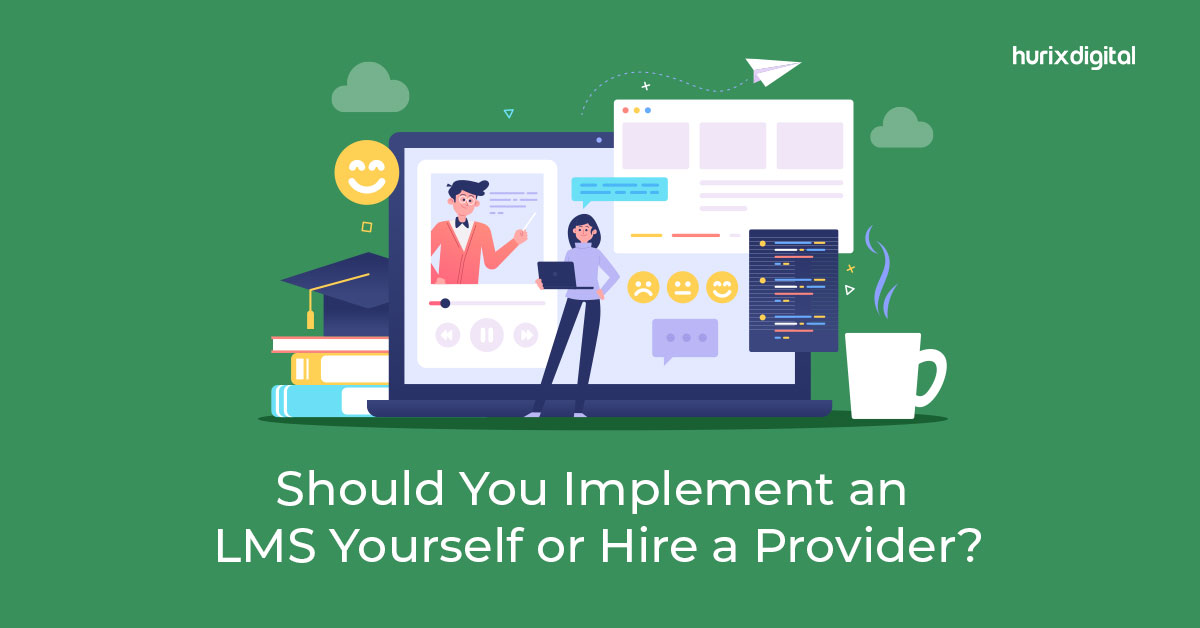
Should You Implement an LMS Yourself or Hire a Provider?

[vc_row][vc_column][vc_column_text]An LMS is a kind of software application, also known as a learning management system, that helps educators manage and track the progress of students’ learning. It provides a platform for educators to share resources, manage assignments, and track student performance. The LMS market is projected to become a US$29 billion industry by 2026. LMSs enable educators to create and administer tests, manage student files, and communicate with students and parents. In other words, a good LMS can make your job as an educator much easier and more efficient. When choosing an LMS, it’s important to consider your needs and preferences. Some features you might want to consider are the system’s capabilities, how easy it is to use, and the number of features it offers. They can either be implemented independently or accessed by hiring LMS providers. [/vc_column_text][vc_custom_heading text=”What is the Use of an LMS?”][vc_column_text]An LMS is a software system that helps educators manage and check the progress of students’ education. It provides a user-friendly platform for administrators to monitor and track the academic resources and assignments for students, as well as communicate with students and their families. LMSs are commonly used in schools, colleges, universities, and other educational institutions. They are a great way to keep an eye on students’ progress and evaluate the progress of your courses. They also make it easy to create and manage course materials and can help you monitor student grades and attendance.  In addition, LMSs can help you create online forums and discussion boards, which can be a great way to connect with your students and provide them with valuable feedback.  Finally, LMSs can help you manage your online course content and promote it through social media platforms like Facebook and Twitter. So if you’re looking for a way to improve your teaching skills and track student progress, a learning management system is a great option.[/vc_column_text][vc_custom_heading text=”Building an LMS By Yourself Vs. Hiring LMS Providers”][vc_column_text] Expertise: Although one can build an LMS on their own, it won’t be as perfect as what is required to run it perfectly. So, expert LMS providers would definitely help in this case and perfectly fulfill the requirements you have from the LMS.  Cost: The second argument that comes up is the cost of making an LMS. Building an LMS is a strenuous affair. You need a solid plan, a tie-up with an LMS design partner, find the MVP, choose the UX, test the LMS solution on users, and more. All of these can pose problems if you do not have the know-how of the process. In contrast, professional LMS providers have all of these at their disposal. They can conveniently understand your LMS requirements and provide cost-optimized solutions.  Time: This is an important aspect of an LMS. You would be spending a lot of time creating an LMS, and there is no surety that it would fulfill your needs. In contrast, LMS providers have adequate expertise in creating LMSs in time.   User Experience: This is one of the most important aspects that must be perfect. This can be best provided to users when an expert works on it. So, an LMS provider is the best choice to give your users the best experience.  [/vc_column_text][vc_custom_heading text=”Should You Implement an LMS Yourself or Hire a Provider?”][vc_column_text]When it comes to LMSs, there’s a lot of confusion among business owners. On the one hand, many believe they can build their own LMS from scratch. However, this is not always the case – and in some instances, it can be very difficult and time-consuming to create an LMS from scratch.  Instead, hiring LMS providers to create and manage a professional LMS for you is often more cost-effective. There are several reasons why: For one, a provider will already have experience creating and managing LMSs, making the process smoother and easier.  Providers typically have access to a wide range of features and capabilities you may not be able to explore by yourself.  LMS providers have proven capabilities in course management, online learning, and student tracking. In addition, they typically offer various customization options, allowing you to tweak your LMS to reflect your specific needs. So if you are looking for an LMS that meets your specific needs, a provider is the best option you could go for. This would ensure that all the needs and requirements associated with the LMS are fulfilled by the LMS provider itself, and there would be no stress for the management. [/vc_column_text][vc_custom_heading text=”How to Choose the Best LMS Provider?”][vc_column_text]LMS providers make your system more effective and relevant to your business’ needs. So, hiring an LMS provider can be a great way to improve your business processes and drive ROI. Although there are many LMS providers in the market, finding the best one isn’t always easy. The best LMS provider is the one that allows you to manage and circulate your training and educational materials seamlessly. They help you improve productivity and ensure your employees or students get the right training materials.  Presently, reputed LMS providers like Hurix provide customizable white-label systems with perpetual Intellectual Property Rights (IPR). It is also wise to choose an LMS based on Moodle architecture, as it is open-source, enabling your LMS to be more customizable. Moreover, check whether the LMS is mobile and intranet compatible or not. The best LMS must provide convenient integration capabilities with third-party tools and external systems.[/vc_column_text][vc_custom_heading text=”Conclusion”][vc_column_text]Now that you know the top differences between building LMS and hiring LMS providers, you should be able to make an informed decision. Hiring LMS providers is often the best option rather than creating one on your own. Choosing an LMS provider can be less costly and non-time-consuming, making it important to seriously consider this option. When choosing an LMS, it’s important to evaluate your business needs. Do you need a platform that’s easy to use? Is storage space a priority? Is customization important to you? Once you’ve determined your needs, you can connect with the best LMS provider and explain your needs.