Julia Suk February 10, 2023 No Comments

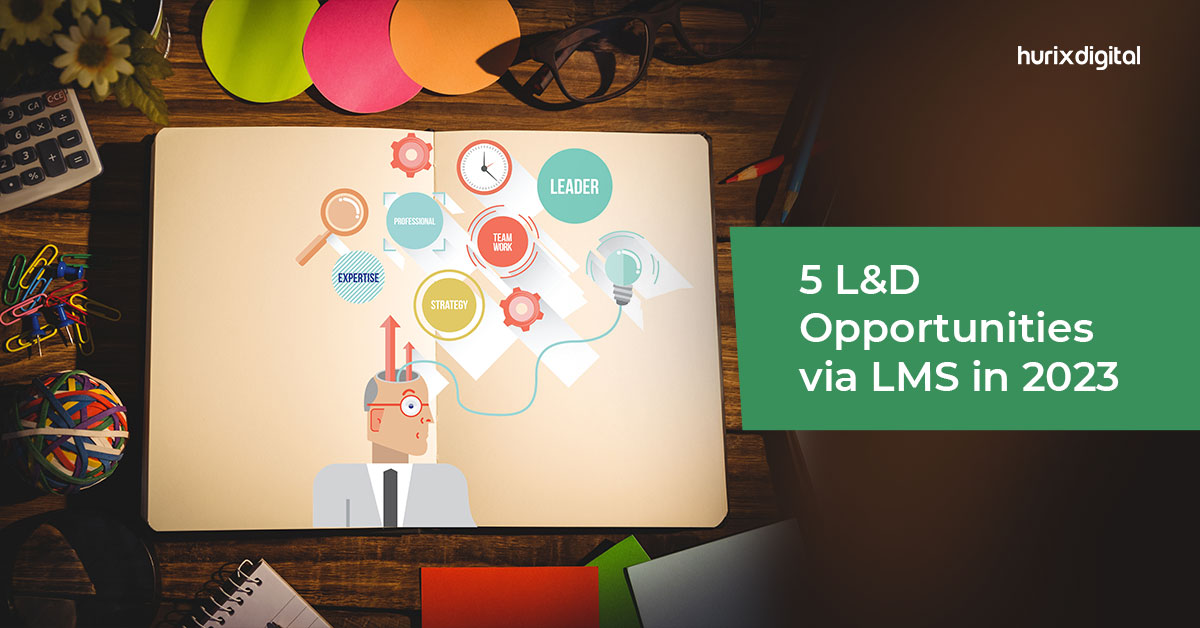
5 L&D Opportunities via LMS in 2023

[vc_row][vc_column][vc_column_text]Learning Management Systems (LMS) have become an essential tool for Learning & Development(L&D) professionals in recent years, as they provide various benefits that can aid in the effectiveness of their learning and development programs.  The tools and technologies that L&D professionals rely on to deliver effective training programs evolve in tandem with the world of learning and development. LMS services can assist L&D professionals in developing effective learning programs that result in better student and professional outcomes. The Global E-learning market, on average, grows at 14% annually. This blog will explore five key ways L&D professionals can leverage this annual growth via LMS solutions in 2023.  We’ll dive deep into the world of LMS and explore the many benefits these systems can offer L&D professionals.  Five Ways To Leverage LMS Solutions in 2023 In 2023, we are seeing a shift towards new trends in education and training that are catching on and proving effective. Here are five trends that will be big in 2023, and L&D professionals can capitalize on using LMS.  Microlearning Microlearning is a way of delivering small, bite-size chunks of information that can be easily consumed and retained by learners. It involves breaking down complex topics into manageable pieces and providing them in short, interactive, and mobile-friendly modules.  The modules can be completed in a few minutes and accessed on the go. L&D professionals can leverage an LMS solution to create and deliver microlearning modules, track employee progress, and provide analytics on how well the content is being received. The LMS also offers quizzes, assessments, and progress monitoring to ensure employees or students effectively retain the information.  L&D professionals can also include gamification to improve overall interest and interactivity. Artificial Intelligence AI is becoming increasingly prevalent in L&D and can personalize the learning experience, provide adaptive feedback, and automate administrative tasks. An LMS can be integrated with AI to provide personalized and adaptive learning paths.  For example, an LMS can use machine learning algorithms to analyze an employee’s performance data and recommend specific training modules based on their strengths and weaknesses. LMS can also provide personalized feedback to employees on their performance. AI can also automate administrative tasks such as tracking employee progress, providing analytics on the effectiveness of training programs, and identifying areas where additional training is needed. Virtual and Augmented Reality Virtual Reality (VR) and Augmented Reality (AR) can be used to create immersive and interactive learning experiences that are more effective than traditional learning methods. L&D professionals can leverage this technology to create simulations, virtual tours, and other interactive content that can be delivered via an LMS. For example, VR can simulate real-life scenarios that employees might encounter on the job, such as customer interactions or emergencies, and train them to deal with each accordingly.  In addition, LMS can be used to track employee progress and engagement with VR and AR content and provide analytics on the effectiveness of the training. Video-Based Learning Video-based learning is becoming increasingly popular as it allows for the delivery of engaging and interactive content. L&D professionals can use an LMS to create and deliver video-based content, such as video lectures, demonstrations, and webinars, and track employee engagement with the content. Video-based learning can also create interactive and engaging e-learning courses, which employees can access and complete at their own pace. In addition, an LMS service can be used to track employee progress and provide analytics on the effectiveness of the training. Social Learning Social learning is becoming an increasingly important part of Learning & Development in modern times. An LMS service can facilitate social learning by providing features such as discussion boards, chat rooms, and peer-review assignments.  This allows employees to learn from each other and collaborate on projects and tasks. Additionally, L&D professionals can leverage social media integration to provide employees access to a broader range of learning opportunities and resources.  An LMS can also provide analytics on employee engagement, participation, and effectiveness of social learning initiatives. How Can L&D Professionals Use LMS Solutions Effectively?  L&D professionals can also use LMS solutions to improve the overall learning experience and effectiveness of the training programs and educational materials they create. Some of the ways they can do this are given below. Automated Course Administration and Tracking One of the advantages of an LMS service is that it can automate many administrative tasks associated with course delivery. This includes tracking progress, assigning grades, and providing access to course materials.  This automation can save L&D professionals a significant amount of time and allow them to focus on more strategic tasks such as curriculum development, instructional design, and evaluation of the learning program’s effectiveness. Personalized Learning LMS can provide students and professionals with a more personalized learning experience.  For example, L&D professionals can use the system to create customized learning paths based on an individual student or professional’s needs and abilities or to provide adaptive learning experiences that adjust to the performance in real time. This allows the L&D professionals to cater to the diverse learning needs of everyone using their training programs and educational materials.  Personalization can also increase engagement and motivation, leading to better learning outcomes. Improved Collaboration and Communication An LMS can serve as a central hub for learning and collaboration, allowing students or professionals to connect and their instructors in various ways. This can include online discussions, collaborative projects, and peer-to-peer feedback.  This enhances the learning experience and develops soft skills, such as communication and teamwork. Data-Driven Insights An LMS can provide a wealth of engagement, progress, and performance data. L&D professionals can use this data to identify areas where individuals struggle and adjust their instruction accordingly.  This data-driven approach can also help in the evaluation of the effectiveness of the learning program and make necessary changes to improve it. Flexibility and Scalability An LMS can provide the flexibility and scalability needed to meet the learning and development needs of a large and diverse student population. This can include self-paced learning, mobile accessibility, and support for

Julia Suk February 10, 2023 No Comments

How LMS is making online learning easier than ever?

[vc_row][vc_column][vc_column_text]The last few years have seen a phenomenal shift in the educational landscape, where online learning has become an integral part of the industry. In addition, the pandemic-driven digital disruption has significantly changed how online learning is delivered. While an increasing number of institutes and organizations initially found it challenging to make the shift from traditional or physical classrooms to online classrooms, the one technology that has made this shift much easier is the learning management system (LMS). Leveraging the best LMS not only help institutions and organization simplify their remote or online learning offerings and create a better experience for learners. If you are still unsure how LMS platforms make online learning easier, this post is for you. Here, we will explore some of the key ways LMS assists in making online learning simpler. What Is LMS? An LMS or Learning Management System is a software program that enables students to access and receive course/learning content and other educational resources online to fulfill their educational needs. Put simply, and an LMS is a system that educational institutions and organizations can use to offer their remote online courses. Apart from making it easy for students to learn from anywhere, anytime, the best LMS can also enroll new students, easily deliver e-learning courses and efficiently manage the tests or assessments provided to the student. 7 Ways an LMS Helps Make Online Learning Easier Offers Unlimited Access to Course Content One of the key advantages of LMS platforms is their ability to offer unlimited access to course content. As soon as the course materials are uploaded onto the LMS, it allows learners unlimited access to the information. This is especially helpful to students who need to access the material on the go. They must log in to the LMS platform via their smartphones, tablets, or other devices and access the required content without waiting for the next online training session to develop the requisite skills.  Organizes Learning in One Single Location Traditional training systems use outdated methods to store training content in multiple drives and devices. This significantly enhances the risk of losing important data. A learning management system makes storing the training content in one location easier. Apart from this, learners can access all courses remotely without having to be physically present in the training location. Easy Tracking Of Learner’s Progress An LMS allows the instructors to conveniently observe the learner’s progress on the platform itself. This then helps the instructor administer various corrective measures based on the skill and knowledge gaps. For instance, if the learner is lagging, then the instructor can offer additional resources to them. Likewise, if the learner is going too fast on the platform, the instructor can ensure the availability of more relevant courses for them. Reduces Costs An LMS helps you reduce L&D costs significantly. Other than cutting down on travel costs, you also have to spend much less on things such as renting online training sites, costs related to printed eLearning materials, and more. A good LMS system allows your learners to carry out all of their training modules online, thus helping you save substantial money on your overall learning and development budget. Enables Various Assessment Options LMS systems make online learning easier by allowing you to run diverse assessments in multiple formats. These include quizzes, videos, MCQs or multiple-choice questions, questionnaires, etc. Further, the system offers immediate test results, thus allowing learners to see the areas where they need to improve. Educators and teachers can use an LMS system to leverage disparate content formats such as podcasts, webinars, games, presentations, and more for learning materials. This allows online learners to choose how and what they want to learn and enhances their learning experience. Enables Gamification  While e-learning comes with a whole set of benefits, it also has certain disadvantages, such as ensuring that learners maintain focus when having online classes. To navigate this better, gamification or to add game elements into e-learning course content is an excellent way to make learning much more engaging and fun. Based on the varied game elements and design, the technique can be instrumental in helping learners retain the information. Further, various gamification tools such as leaderboards, badges, and points systems help engage learners better and develop a healthy competitive spirit. Easy Tracking and Reporting LMSs are a great way to help educators keep track of their student’s learning progress in a virtual learning environment. It allows them to conveniently view and analyze learner performance while ensuring they meet various milestones. If the learner cannot reach certain milestones within the defined timelines, the educator can work on giving additional classes to supplement learning. Apart from this, most LMS platforms available in the market today come with powerful reporting and analytics features to help educators assess the effectiveness of the e-learning course so they can modify the content per the learners’ specific needs. To Conclude  Online or virtual learning is the new normal in today’s environment. Whether you go for synchronous or asynchronous training, an LMS serves as a great tool for making your online training process easier. Investing in a good LMS brings several academic benefits to institutions and organizations alike and cost efficiency to overall L&D initiatives.  While choosing an LMS platform, it is best to look into all the above-mentioned benefits that the software can bring to aid online learning. This will help you make an informed choice.  One of the best LMS you can look at is from Hurix Digital. The LMS solution by Hurix can be conveniently leveraged through the e-learning platform to avail both traditional classroom training and blended learning models.  Get in touch with us to learn more about our LMS solutions.[/vc_column_text][/vc_column][/vc_row]

Julia Suk January 31, 2023 No Comments

Quality Control Process: Definition, Approaches, and Steps

[vc_row][vc_column][vc_column_text]When it comes to retaining loyal customers, companies have just one tool that’s powerful enough to appeal to every type of customer/audience they’re targeting. Yes, we’re talking about quality. A product or service that meets the quality expectations of buyers will always keep them happy and coming back for more. But how can companies manage quality and keep it consistently high at all times? The answer lies in the quality control process. What is Quality Control? “Quality” refers to the degree of excellence or superiority that something possesses compared to things of a similar nature. “Quality control” refers to the set of activities, processes, and operations that companies have in place to maintain and improve the quality of the product/service they are offering. Factors that Determine Quality Quality is a subjective experience and differs based on industry and the type of product/service purchased. But ultimately, the following factors work together to increase quality in the eyes of the customer: Type of Raw Materials Used The type of raw materials used to create the product/service should be more long-lasting, functional, aesthetic, sustainable, and easy to obtain in the long run. Functionality/Usefulness This defines how useful the product/service is to the buyer after the purchase. Does the product/service offer additional value to their life by either solving an existing problem or filling a gap they have? Features The type of features and their sophistication, device optimization, accessibility, variety, etc., all affect how useful a product/service can be to a buyer. These features will determine whether the company’s offering is a better investment compared to other similar products. Price Affordability is one of the key determinants of quality, especially in terms of the price buyers pay for the features they receive. Adherence to Benchmarked Standards and Quality Compliances Products/services that hold labels such as ISO, ISI, AGMARK, BIS, GI, GDPR, ADA, etc., indicate that the product/service conforms to stringent global compliance regulations, automatically improving their quality. These days, companies must focus on creating products and experiences that have the least ecological impact and can meet Governments’ measures for anti-pollution and climate change reversal. Variety and Accessibility Even within one target group, there are often differences in tastes between customers. More variations of the product/service can make it more accessible and enjoyable to all your customers. Safety In the eyes of buyers, the safer a product/service is to use or experience, the better its quality. Similarly, safety also refers to protection against tampering by unauthorized individuals. Reliability and Longevity The longer the uninterrupted, seamless service a product/service offers and the higher its shelf life, the better it is considered by buyers. Approaches to the Quality Control Process In order to maintain high quality always and to consistently keep improving the quality of the product/service being provided, companies need to have a powerful quality control process in place. Depending on their needs, a company might use one of these approaches to quality control: Random Selection Here, a random sample of the product/service is taken to measure select attributes (such as product durability, accessibility, or safety) to identify the item’s quality. This approach helps the company determine if defects exist across the board or if they are isolated to specific attributes/batches/production cycles. Taguchi Method In this method, the focus is on the role of R&D and product design and development in product quality. The foundational operations such as research, methodology design, and technology selection are made with greater care to reduce failures/errors in the later stages of product/service production. 100% Inspection This approach is a comprehensive, 360-degree quality check process. Here, every stage of production is monitored and controlled to meet quality requirements. This takes a lot of time, but it is an approach that offers excellent quality results. Quality Assurance Quality assurance takes quality control a step further. It is a mindset adopted by the entire company, which aligns every activity, thought, and decision towards always striving for the best quality possible. Here, quality is built into every single action, process, and technology that is related to the product/service in any way (including functions outside R&D and production). Steps Involved in Quality Control  The fact is companies often lose 10%-15% of their operations cost or 15%-20% of their sales revenue due to poor quality. A responsive and customized quality control and assurance process can help companies create products/services that always adhere to their benchmarked standards. The quality control process typically looks like this: Incoming Materials Quality Control The first step is monitoring the quality of incoming materials. These materials could be physical materials to make a physical product/service or digital materials to offer an online experience. The materials are inspected to make sure they meet the firm’s quality standards and requirements. Those that don’t are either discarded or returned for modification. In-Production/Process Quality Control This second step oversees quality management during the production/processing of the product/service. This could be testing the tool/technology being used to produce the physical item. Alternatively, it could be testing the safety and accessibility of the digital environment in which the online product/service will operate. At this stage, the company also checks its adherence to global compliance requirements. Additionally, any client-given specification becomes one of the main points for quality management. Final/Outgoing Quality Control In this third stage, the quality of the finished product/service is checked to ensure no defects or deficits exist. The product/service is implemented, and it is examined to make sure it operates seamlessly. How the product/service looks, whether all features are operational, and if it can be easily used (i.e., downloaded, consumed, shared, etc.) are checked. If there’s something wrong, it is sent back to the production stage for revisions. Adherence to client specifications is again checked, any necessary labels/marks/tags are added, and the product/service is sent to the desired location. This could be a physical distributor’s warehouse or uploading onto a digital platform. Even after sale/distribution, the product/service is continually monitored and improved upon as time passes. The best quality control tool gives the company