Why Your Online Training Course Development Needs Gamification

[vc_row][vc_column][vc_column_text]Gamification in learning is the addition of game elements to content to enhance the material and make it more engaging. It involves applying game thinking to instructional or educational content. Gamification is particularly prevalent in online training courses, opening up more possibilities for gamification in corporate training. It is a popular strategy used in e-learning and corporate training to make online training more interactive.  A report by Gartner predicts that more than 70% of the leading 2000 global companies have adopted gamification as a strategy.  The global market for gamification strategies is projected to reach $58.8 billion by 2028, with education emerging as the top segment.  What is gamification in education? Adding game elements to educational content makes the learning process more game-like. Game elements could include points, rewards, and leaderboards.  You could also add story elements to a course, present learners with a challenge, or create a character to narrate content in an online course.   What Are Gamification Techniques? Gamification is about enhancing learning material to make it more fun, not designing an entire game.  How to gamify learning? Gamification involves many different techniques to make the learning process more participative. Tests and Quizzes Tests and quizzes are simple but effective techniques to assess learner performance, boost engagement, and reinforce concepts learned. Challenges Challenges are another technique that requires the learner to complete a specific task based on the learning material.  Other Gamification Techniques These include points, tracking progress, badges, leaderboards, and levels, to help learners stay motivated. They can also include other rewards in addition to badges and leaderboards. You can also add characters or other story elements like scenarios and branching options.  Why Online Training Needs Gamification  Since online training often lacks face-to-face interaction, keeping learners motivated and engaged can be hard. Integrating gamification in learning offers several benefits for online training courses.  Makes your lessons interactive Gamified learning experiences make lessons more interactive. Features like flip cards, quizzes, puzzles, matching exercises, discussion boards, and other activities make the lessons more fun. Adding a timer to a lesson can help make it more gamified and improve learner focus.  Tracks progress and points Gamification is a great way to track progress through points, scores, levels, and badges. It can also mark key learning milestones. Additionally, you can use e-learning technology to enable learners and administrators to track progress. Makes training fun and engaging Gamification makes online training enjoyable and brings in a playful element. It replaces traditional training methods with participative activities and motivating factors. Making the training experience more engaging can boost workplace morale and make employees more open to training. Improves knowledge retention A more engaging training course helps learners retain information better. Adding an element of competition through points and leaderboards motivates employees to learn better because it helps them stay actively involved.  Encourages participative learning Features like quizzes and tests can help make learning more participative. They can also motivate learners to complete the training and develop a habit of active learning. Further, gamification in learning makes it feel less like a responsibility or chore and more like an activity.  Allows for easy performance assessment Gamified learning allows a learner’s performance to be easily assessed with the help of features like levels or other markers of experience. Levels can indicate the extent of a learner’s progress, while points and badges can indicate progress and experience gained. Scores on tests, quizzes, and assignments allow trainers to assess a learner’s performance more precisely. Leaderboards can help gauge a learner’s progress and performance relative to others, which is helpful for trainers. They can show which learners are performing best and which learners may need assistance.  How to Design Gamification  Make it personalized  There are many ways to personalize games. One way is to allow learners to have their online persona to represent themselves. This could take the form of a personal user id color or an avatar that will be used in the content, including the leaderboards. You can also have branching options that enable them to choose their learning path instead of following a prescribed path.  Add levels  Very easy or difficult activities can cause the learner to lose interest in the gamified content. By adding different levels of content, you can include more challenging material in stages to keep the learner engaged and involved. This pushes learners to understand the material better and pass it to the next level. It also allows learners to go at their own pace.  Add a variety of activities The online training course can have a range of different interactive activities such as tests, challenges, mini-games, and competitions between learners. This creates variety in the training course and prevents it from becoming repetitive or monotonous.  Add rewards Rewards are a great way to motivate learners and make the course more absorbing. Learners enjoy content with rewards and the ability to “win.” This provides an incentive through the learning process and encourages them to progress through the course. Rewards and levels give learners a sense of accomplishment after completing certain tasks. They also provide a way to assess the learner’s performance.  Give badges  Add badges for certain accomplishments and pin them to learner profiles to boost their sense of achievement. Connect badges to particular skills or topics to encourage learners to reach specific goals.  Have a leaderboard system A leaderboard is a scoreboard that displays the names and current scores of competing learners. This motivates learners to progress and learns better to score more points and do better on the leaderboard.  Test the gamified features When adding gamified features to training, it’s a good idea to check that the game mechanics are functioning well by testing them thoroughly. Check that features like rewards and points are working properly and that the relevant content is present along with the related game features.  Summing Up  Gamification in learning is a great way to make your online training course more interactive and effective and keep learners involved and motivated.  Hurix offers online learning
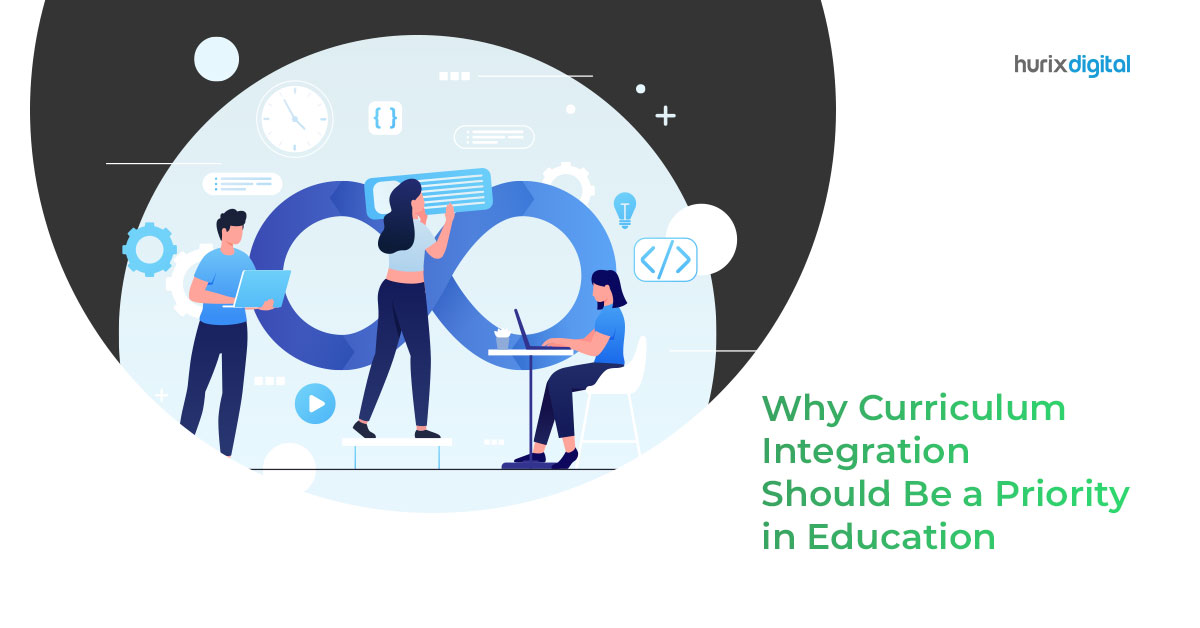
Why Curriculum Integration Should Be A Priority In Education

[vc_row][vc_column][vc_column_text]Have you heard about academic disciplines like neuroscience, digital humanities, bioethics, etc? These disciplines can be described as interdisciplinary or multidisciplinary disciplines as they combine two or more disciplines to create a new field of study. Environmental studies, for instance, combines science, policy, and social science to address environmental issues. To provide more holistic education to students, this method of combing different subjects to create a new discipline can be undertaken to create a new curriculum. This process refers to curriculum integration, a relatively new and unique learning technique. Educators and curriculum providers are right in their claim that curriculum integration should be made an utmost priority in education. What Is Curriculum Integration? Curriculum integration can simply be understood as the process of creating a new curriculum that comprises a diverse range of subject areas and disciplines. This allows students and learners to draw connections between the various subjects giving birth to a holistic and broad worldview. Additionally, curriculum integration also helps to foster critical thinking skills and creativity, as students and learners are encouraged to explore and make associations between different ideas and concepts. Steps Involved In Curriculum Integration Here are some general steps you must keep in mind while creating an integrated curriculum for the benefit of the students and learners: Step 1 – Aims And Objectives You must begin by identifying the learning objectives. The pertinent question to be asked here is what will the students acquire from this curriculum? Identifying the concepts, skills, and knowledge you want the students to learn will also be beneficial. Step 2 – Subject Areas Once the aims and objectives have been concretized, decide the subject areas to be included in the curriculum. For instance, if you want students to learn together about computer science, artificial intelligence, and philosophy, along with gaining analytical skills, you can include digital humanities. Ensure that the subject areas properly align with the aims and objectives. Step 3 – Activities And Assessment You must incorporate some comprehensive assessments and fun activities in the curriculum to ensure the students get an opportunity to learn creatively. This can involve creating hands-on projects, collaborative group work, or cross-curricular writing assignments. Step 4 – Implementation Now is the time to implement the integrated curriculum in the classroom. During the implementation, it will become clearer to you whether the curriculum properly aligns with the aims and objectives. Step 5 – Evaluation And Feedback One way to evaluate the effectiveness of the curriculum is by checking whether students can draw connections between the various disciplines. Additionally, it is also important to collect feedback from each student to further refine and improve the curriculum. Levels Of Curriculum Integration Apart from following the above-mentioned steps, you can also keep in mind the various level of curriculum integration to create a more cohesive and interconnected curriculum. These levels include: Multidisciplinary Integration At a multidisciplinary level, you can bring together two disciplines to create a new field of study. You can choose to teach both disciplines separately and then gradually integrate them. Interdisciplinary Integration At an interdisciplinary level, you can integrate two or more disciplines. This involves implementing various teaching and learning techniques to ensure all the disciplines are properly covered. Transdisciplinary Integration Transdisciplinary integration does not just involve combining two or more disciplines but also a holistic and interconnected approach to learning. A few methods involved in holistic education are mindfulness and meditation, project-based activities, physical activities, service learning, etc. Metadisciplinary Integration The meta-disciplinary level involves exploring the underlying principles of each discipline of the curriculum in more depth. A comprehensive connection must be made within all the disciplines to find a common theme. However, it is important to note that each of these levels builds on to the previous one. As curriculum providers and educators, you cannot directly jump to the meta-disciplinary level. You must move ahead one step at a time to provide the students with a meaningful learning experience. Types Of Integrated Curriculums Now that you know about the steps and levels involved in curriculum integration, it will also be beneficial for you to know about different types of curriculum integration. Some major types of curriculum integration are: Theme Based Curriculum In a theme-based curriculum, all the disciplines integrated are decided, keeping in mind a common theme. For instance, if the theme is social justice, then disciplines will be picked from social sciences and humanities like social studies, environmental studies, language arts, etc. STEAM Curriculum This is a very holistic curriculum involving science, technology, engineering, art, and mathematics. The students can get an opportunity to indulge in topics ranging from online machine learning to English literature and much more. Place-Based Curriculum Place-based integrated curriculum is designed around the local community or environment, with students learning about the history, culture, and natural resources of their community. Project-Based Curriculum In a project-based curriculum, each student is required to work on a project to gain knowledge. Activities like research, analysis, presentations, and oral assignments are given as projects to help the students develop skills from various disciplines. Inquiry-Based Curriculum In an inquiry-based curriculum, students are encouraged to ask questions. Students learn through exploration and discovery, with teachers guiding them to use multiple subject areas to find answers to their questions. Advantages Of Curriculum Integration It is safe to say that curriculum integration can play a major role in revolutionizing the education sector. Here are some advantages of curriculum integration: Enhanced improving outcomes Collaborative and communicative learning Efficient use of time Increased student engagement and interaction Relevant learning Increased creativity Problem-solving and critical analysis skills Increased teacher collaboration Some examples of integrated curriculum activities that have proven to be highly advantageous are science and art collage-making competitions, physical education and health nutrition planning debates, math plus music, songwriting, romance, and science fiction book club, etc. Closing Thoughts You must be convinced that curriculum integration is the right way forward. If you are now looking for integrated K12 curriculum development companies, then you can reach out

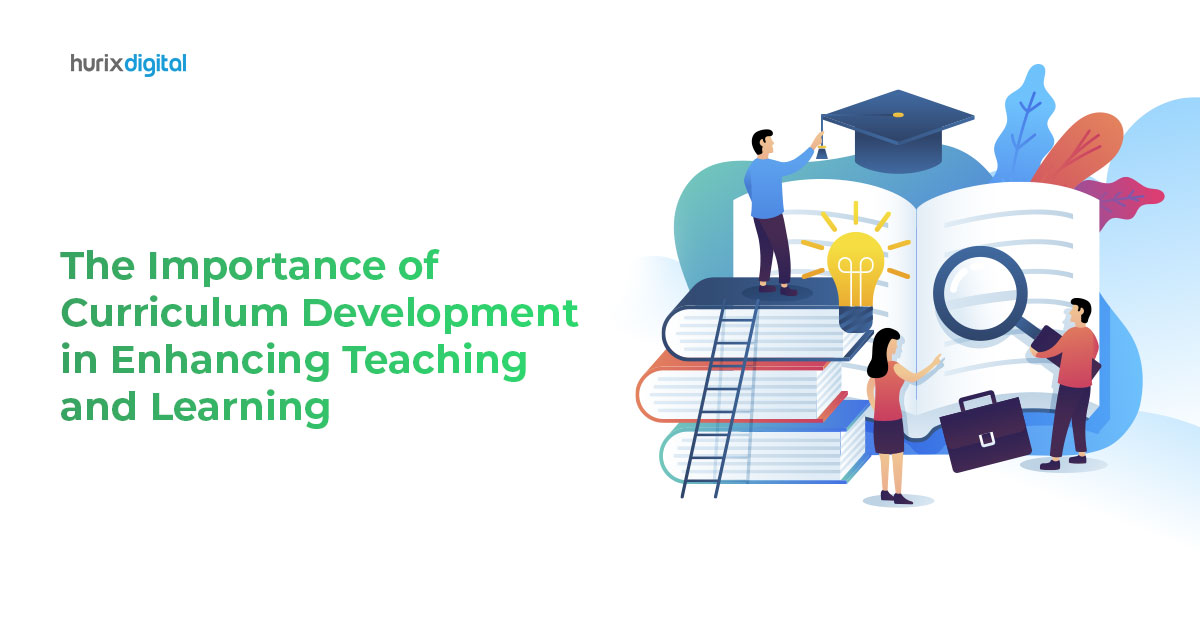
The Importance Of Curriculum Development In Enhancing Teaching And Learning

[vc_row][vc_column][vc_column_text]The way we impart and gain education today has evolved significantly and for a good reason. Technology and audio-visual aid have made it easy for students to grasp complex concepts. But with the rise in online education, the K-12 curriculum has also undergone a radical shift. Although most institutions have gone back to traditional classrooms, eLearning in education is not going to go away anytime soon. Be it for brushing up on lessons, self-paced learning, interactive experiences, and even helping with homework or extra-curricular activities; online learning is helping us make education more fun and interactive.  An estimated 5.3 billion people will have access to the internet by the end of 2023, making online education even more accessible to a larger population. This makes curriculum development imperative to help teachers and students, especially since it is essential to leverage these multifaceted learning models to take learning experiences to the next level. Today we will uncover what curriculum development is all about and examine its role in online program development. What Is Curriculum Development? Before we understand how curriculum development plays a key role in our learning experiences, let us first understand what it is all about. To put it in simple terms, curriculum development refers to the process of creating educational programs and materials that align with today’s updated educational standards and incorporates subjects or skills that are relevant today and for the future. It involves researching and selecting appropriate content, designing courses and instruction manuals, evaluating the information already part of the curriculum, and making updates or changes wherever necessary. The goal is to ensure that students get a comprehensive learning experience that meets their needs and prepares them for the future. By having a well-planned curriculum, each subject or level gets appropriate attention, which helps to enhance a student’s ability to keep pace and grasp complex subjects. Who Is Responsible For Curriculum Development? A look at the traditional educational pattern will tell you that the responsibility of developing curriculum for K-12 schools and other institutions is always with a state and central government subject. Mostly, the government will appoint educational bodies tasked with ensuring that educational standards are set and maintained. However, since the world around us is changing rapidly, so should our educational requirements. As outlined in the “Education 2030” paper by the Organization for Economic Co-operation and Development (OECD), “The concept of ‘curriculum’ should be developed from ‘predetermined and static’ to ‘adaptable and dynamic.’ Schools and teachers should be able to update and align the curriculum to reflect evolving societal requirements and individual learning needs. Teachers, students, and other relevant stakeholders should be involved early in curriculum development to ensure their ownership for implementation.” The shift in how knowledge is shared and taught makes it important for all stakeholders to come together and provide feedback to make setting a curriculum more interactive. As per estimates, the market size of online K-12 education will reach $12,930 million by 2023, from $8011 million in 2022. Thus, with the growing popularity of online education, online program development cannot follow the preset rules and needs a solid partnership of teachers, students, and digital education content providers. How Can Curriculum Development Help Students? A well-set-out curriculum is essential for educators and helps students in more ways than one. For example, since most modern curriculums use interactive learning features, students can access an engaging educational experience. They can go beyond the traditional textbook and grasp complex concepts using interactive videos or audiobooks. Plus, this also allows education to be more accessible for all, especially for differently abled students. Having a set curriculum helps students in several areas, such as: Providing students with a clear understanding of their course and schedule Aligning their educational goals with industry standards Fostering student engagement Enhancing teaching effectiveness Helping students plan their schedule Sets the pace for their learning to ensure proper progress How Does Curriculum Development Aid In Teaching? When it comes to the benefits of curriculum for teachers, there are several areas that we can explore. First, the curriculum helps teachers organize and present the learning structurally, enabling learners to grasp it effectively. Thanks to a proper curriculum, lessons aren’t taught haphazardly, allowing teachers to set the pace for their learning to be imparted properly and efficiently grasped by the students. Teachers can also introduce new-age learning methodologies like quizzes, assignments, objective tests, group discussions, and more to add value to the defined curriculum. Overall, this helps educators, instructors, and teachers to: Get a clear roadmap of instructions It helps teachers understand what students should know Enables teachers to plan their lessons effectively Supports teachers in developing effective teaching methods and practices Encourages teachers to go beyond the normal and use interactive teaching strategies Enhances teacher effectiveness and student engagement It helps teachers stay updated with the latest information and trends in the educational system Thus, it provides a roadmap for learners and teachers and helps align educational goals to the latest standards. In addition, an effective curriculum can help foster student engagement, help them understand expectations, and prepare them for future success – whether in further education, career, or life. Conclusion In conclusion, curriculum development is crucial for education and improving learning outcomes. However, this is not a one-time process. It is essential to be at pace with changes happening around us. Today’s curriculum needs to incorporate interactive technology to help students understand concepts, learn new skills, and get the power of self-paced education. Institutions and online education providers can always work with industry experts and teachers and even take feedback from parents or students for incorporating the best practices in online curriculum development for higher education or K-12 students. You can work with K-12 curriculum development companies to simplify this process and get a solid foundation to build upon. Digital education content providers and K-12 online curriculum service providers have a rich repository of interactive content for students and teachers. HurixDigital is one such provider, with access to over 6000+ interactive and