Blog

Hurix March 27, 2018 No Comments

Design is SUPERB!

Six basic concepts to make your design “SUPERB”

  • Simplicity: Use a single element that conveys the key message clearly rather than 10 different elements that convey it in fragments.

  • Unity: Use elements that support each other and work together towards a common goal.

  • Proportion: When designing objects, keep basic proportions of elements in mind…

Read more

Hurix February 23, 2018 No Comments

Mobile-first? That is old news!

Brace Yourselves for Video-First Content Marketing!

Brace Yourselves for Video-First Content Marketing! Gone are the days of long posts and blogs on your official websites or social media platforms like Twitter, LinkedIn or Facebook. With the average attention span getting shorter and shorter and enticing hyperlinks popping up in the middle of what you are reading, it’s just not possible for…

Read more

Hurix September 11, 2017 No Comments

Challenges and Best Practice in LMS for Virtual Classroom Training

[vc_row][vc_column][vc_column_text]Keeping in step with the advancements in technology, more and more organizations across the globe are adopting learning management systems (LMS) to supplement their learning and training requirements. Compared to traditional classrooms, an LMS offers several advantages as learning is not restricted to a classroom lecture, which may or may not be followed by all learners in the group at the same pace, given their different learning abilities and capacities to retain and recall. An LMS, on the other hand, breaks down larger learning goals in modules, and more recently, in microlearning nuggets, enabling the learners to learn at their own pace, allowing them to revisit concepts till they gain mastery, and also practice the concepts in a virtual environment before putting them to use in the real-world situations. However, with this said, is it all rosy with the LMS or are there some challenges associated with the use of LMS in the virtual classroom?[/vc_column_text][vc_custom_heading text=”In this article, we discuss both the challenges and best practices in LMS in virtual classroom training.” font_container=”tag:h1|font_size:18|text_align:left” google_fonts=”font_family:Lato%3A100%2C100italic%2C300%2C300italic%2Cregular%2Citalic%2C700%2C700italic%2C900%2C900italic|font_style:900%20bold%20regular%3A900%3Anormal” css=”.vc_custom_1563270669658{margin-top: 0px !important;margin-bottom: 0px !important;border-top-width: 0px !important;border-bottom-width: 0px !important;padding-top: 0px !important;padding-bottom: 10px !important;}”][vc_custom_heading text=”Traditional to Virtual Shift Challenges:” font_container=”tag:h2|font_size:18|text_align:left” google_fonts=”font_family:Lato%3A100%2C100italic%2C300%2C300italic%2Cregular%2Citalic%2C700%2C700italic%2C900%2C900italic|font_style:900%20bold%20regular%3A900%3Anormal” css=”.vc_custom_1563270706313{margin-top: 0px !important;margin-bottom: 0px !important;border-top-width: 0px !important;border-bottom-width: 0px !important;padding-top: 0px !important;padding-bottom: 10px !important;}”][vc_column_text]The process of evolution takes place one step at a time and keeping that in mind, there cannot be a pendulum shift from traditional to virtual without going through the painstaking process of overcoming obstacles along the way. The challenge of adaptability: One such obstacle is the fact that people are used to human interaction during the teaching-learning interaction, and while instructors can be present to guide learning with the LMS, the focus is more on technology and the learner. Students who are used to face-to-face instructors may take time to adapt to computer-based learning in virtual classroom settings. Low comfort level with technology: Then again, while the millennial generation is more tech-savvy, this cannot hold good across the board. There are many learners who are not very comfortable with technology, and even though the LMS may be user-friendly and simple to use, it could be a problem to adapt to it by people who are not familiar with applications such as Word, Excel, PowerPoint etc. Slow Internet connection: A major advantage of LMS is that it enables learning while on the move or in the comfort of a learner’s own space. However, even with the increasing penetration of the Internet, there are many people who do not have access to the Internet and even if they have, they may not get the speed they would perhaps get while in their office or institute. This would make access to the LMS difficult and also make it difficult to download or upload files. Low level of motivation: Finally, there is the question of motivation in self-learning. In a traditional classroom, peer interaction ensures the element of competition and to pressure to keep going and perform well; however, in case of self-learning in virtual classrooms through an LMS, people tend to get demotivated, resulting in lower levels of performance or in some cases, opting out of courses altogether.[/vc_column_text][vc_custom_heading text=”Best Practices In LMS Implementation:” font_container=”tag:h2|font_size:18|text_align:left” google_fonts=”font_family:Lato%3A100%2C100italic%2C300%2C300italic%2Cregular%2Citalic%2C700%2C700italic%2C900%2C900italic|font_style:900%20bold%20regular%3A900%3Anormal” css=”.vc_custom_1563270803776{margin-top: 0px !important;margin-bottom: 0px !important;border-top-width: 0px !important;border-bottom-width: 0px !important;padding-top: 0px !important;padding-bottom: 10px !important;}”][vc_column_text]Keeping abreast with the constantly changing technological landscape, the LMS too is evolving to address challenges faced by learners and make the learning experience all the more fulfilling and rewarding. Blended learning: To offset the problem of face-to-face interaction, organizations are now following the concept of blended learning, that is, bringing together the best of traditional and online learning practices. An instructor is present in the virtual classroom settings in the office or institutions to guide the students, initiate discussions, and provide a more interactive experience. Offline learning: To address the problems of Internet speed, LMS now provide best practices for both online and offline learning, enabling students to download course material files or make them available when they don’t have access to the Internet. Video/Games/Immersive Learning: In a fast-paced world, where the attention span is waning given the number of distractions, it is easy for a virtual learner to be distracted. LMS developers are increasingly focusing on making the learner experience more engaging by incorporating multi-media formats including audio/video, game-based learning, discussion forums, and more, which can be accessed across various platforms including smartphones and tablets. Microlearning: Besides, the focus is now more on microlearning which means creating mini bites of content that though small in size, is concise, complete and is easy to digest and assimilate. End-learners can become demotivated in virtual classroom settings; however, learning, grasping and being able to put a concept learnt to practice is itself a powerful motivator to explore further. More and more corporate organizations are breaking away from classrooms to anytime anywhere learning for their employees and meet their training needs. We, at Hurix Digital, offer LMS solutions that are affordable and agile, resulting in less expenditure and quick turnaround time for organizations. Formal or informal training, we customize our LMS solution for YOUR Industry, YOUR employees skills, YOUR company size & scale and YOUR language. Talk to us to know more.[/vc_column_text][/vc_column][/vc_row]


Hurix September 8, 2017 No Comments

8 Popular Features of Moodle LMS for Corporate Training You Should Know

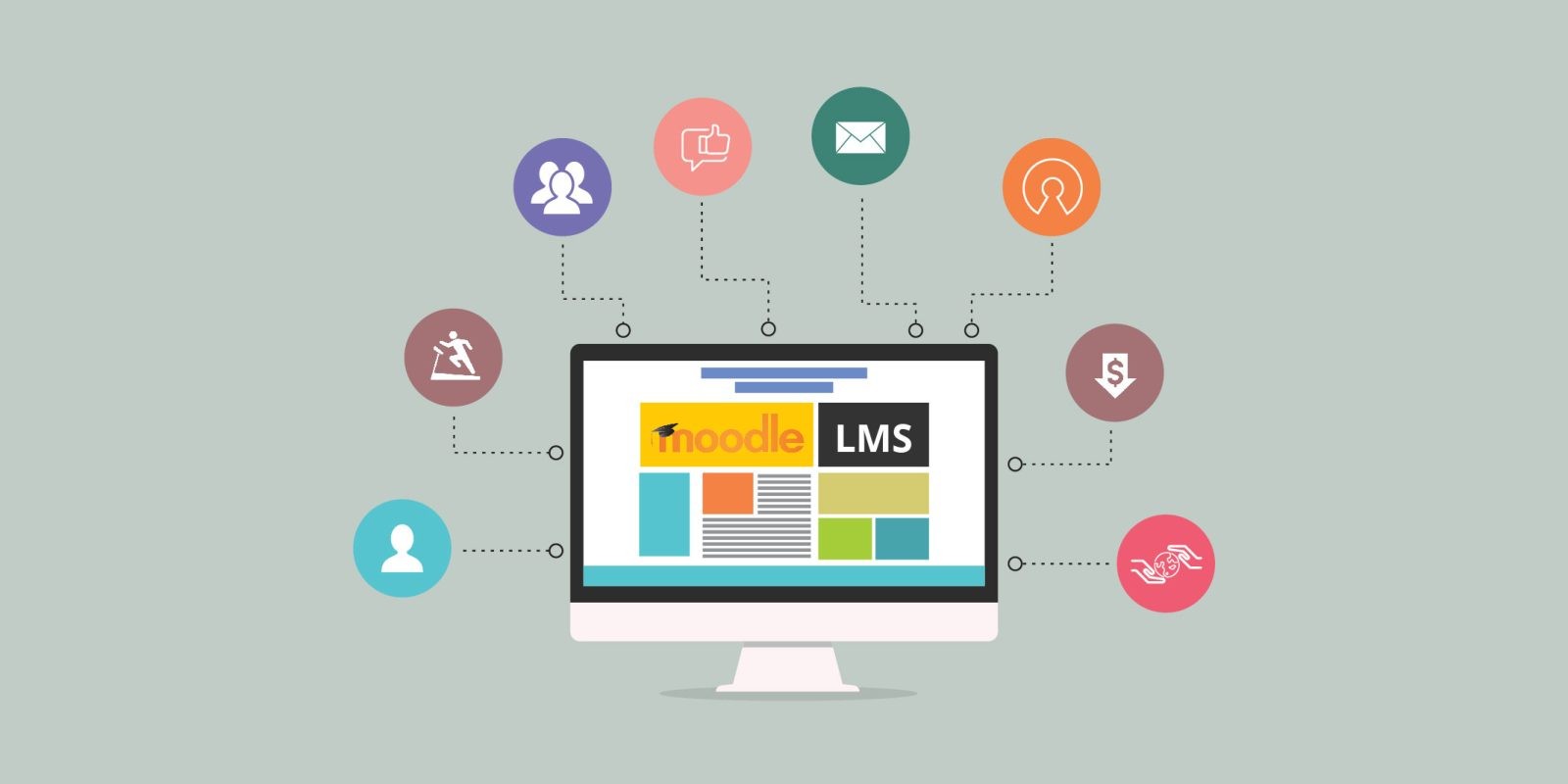
[vc_row][vc_column][vc_column_text]In your scoping and research for an LMS for corporate training, Moodle LMS but have surely appeared on your list of options. Should you choose Moodle as your learning platform or not? If this question has been on your mind, our blog gives you more than one reason to say Yes. Developed in 2002 by Martin Dougiamas, Moodle (Modular Object-Oriented Dynamic Learning Environment) LMS is today the world’s most popular and most used learning management system, primarily because it is flexible, open source, and free to download. This means that you can run, share, study and modify the software to your unique needs. This user-friendly elearning platform serves the online learning and training needs of all types of learners from academic institutions to corporate training. Organizations are using Moodle LMS for corporate training for various types of functions such as: Online learning and training On-boarding training Skill-based training Workplace safety Compliance training Recruitment process Online course development Sales training Product launches [/vc_column_text][vc_custom_heading text=”So what makes the Moodle LMS so attractive? Here are just some of the advantages it offers:” font_container=”tag:h1|font_size:18|text_align:left” google_fonts=”font_family:Lato%3A100%2C100italic%2C300%2C300italic%2Cregular%2Citalic%2C700%2C700italic%2C900%2C900italic|font_style:900%20bold%20regular%3A900%3Anormal” css=”.vc_custom_1563269515255{margin-top: 0px !important;margin-bottom: 0px !important;border-top-width: 0px !important;border-bottom-width: 0px !important;padding-top: 0px !important;padding-bottom: 10px !important;}”][vc_column_text]Learning in personalized environment: It makes online learning possible in a personalized environment, complete with interaction and collaboration with or without the support of an instructor. Further, video conversations can also be facilitated between learners and an external trainer through apps such as WebEx and Skype. Learning at own pace: Learners can rewind to a particular topic in case they have not understood a particular concept and then move on to further modules. Added to that, users can also learn when they want, from the comfort of their own homes or while on the move. Team learning: Organizations can enroll some students/learners to a single course, making team learning possible. Besides, they can also add or remove learners. Creating online-learning communities: As a platform, the LMS for corporate training allows educators to create cost-effective and collaborative online communities and scale up to accommodate a larger user base. With more than 500 plug-ins, Moodle makes learning collaborating, engaging and fun. Effective monitoring and follow-up: Moodle LMS incorporates features that allow training managers and administrators to track each learner effectively and also provide feedback for improved learning outcomes. Besides, they can also generate course completion reports. Open source: It fits as an ideal choice of LMS for corporate training as Moodle LMS is open source which means that it can be freely downloaded and distributed. Low cost: A majority of users of the software have testified high satisfaction rates because of the low costs involved in its implementation and the ease of use it provides. Global support: The LMS is supported by a global community of educators and professionals are who are extremely passionate about improving the online learning experience it provides. This means that the code is scrutinized and is constantly being updated by actual Moodle users who understand what learners need for better user experience. Within the Moodle communities, you can find answer to all your questions. Convinced about the benefits of Moodle LMS for your academic or corporate learning and training needs? You will find in Hurix LMS software a perfect solution for success. The LMS is fully customizable white-label LMS with perpetual IPR, which means that you can use it to match your unique training workflow. There is no need to install, maintain or upgrade your existing processes or technology – simply subscribe to the license-based, cloud-based SaaS model and get your training calendar rolling. Hurix also provides comprehensive maintenance and support services to give you a hassle-free experience.[/vc_column_text][/vc_column][/vc_row]

Hurix July 31, 2017 No Comments

Is Blockchain the Future of eBook Distribution & Sales?

[vc_row][vc_column][vc_column_text] One of the world’s largest educational publisher was recently in the news for their bold, aggressive legal steps against counterfeit. After discovering that the inventory of one of their online distributors was three-fourths unauthorized copies and that they were losing $70-$100 million annually to counterfeiters, the publishing company decided to stop taking content theft lying down. Propriety content is the capital good for publishers, and piracy constantly siphons off revenue. Thus, digital content security is paramount for publishers. With thinning profits, publishers must use every tool available to safeguard their income. Today, encryption technology is making exciting new advances and a new digital asset security technology called blockchain is making waves worldwide. Although it is currently primarily being used in the financial sector, this new technology represents an enormous opportunity for publishers as well. Digital Assets & Electronic Distribution: A Business Reality Today’s audiences are more literate than ever. Fueled by the popularity of phones, tablets and eReaders, millions of customers are more likely to read your books on digital screens than in hard copy. Digital version has become a core business need. But while this digital reality brings access to millions of customers in a click, it also raises the risk of piracy and counterfeit. Publishers need digital armor equipped with best-in-class content security technology to protect themselves against rampant counterfeit. What is Blockchain? Blockchain is a special type of  distributed database or ledger that is changing the way online assets are sold and distributed worldwide. In a blockchain ledger, digital asset transactions are recorded as a block. Each block has a timestamp and a link to the previous block—and because no block is allowed to work in isolation, transactions are protected against tampering. This technology is already being used with digital currency, such as Bitcoin, to ensure the legitimacy of each transaction. Applied to publishing, blockchain is a strong protection against counterfeit and piracy that will enable publishers to host, distribute and monetize their digital products. 7 Principles of Blockchain Design Digital content doesn’t stop at text. There’s a range of propriety multimedia content including audio, video, and animations that are created with a lot of investment and hard work. The risk of copyright violation is high: pirated works can reach millions of users online, leaving a big hole in your pocket. There are seven core principles of encryption technology which must work alongside eBook distribution in a blockchain implementation. These include network integrity, distributed power, value as incentive, security, privacy, rights preserved and inclusion. These principles work together to provide publishers full control over transactions and distribution of copyright material. Encryption is already a mainstay security technology in eBooks, and blockchain comes as a major security upgrade.[/vc_column_text][vc_custom_heading text=”How Does Blockchain Secure eBook Sales & Distribution?” font_container=”tag:h1|font_size:18|text_align:left” google_fonts=”font_family:Lato%3A100%2C100italic%2C300%2C300italic%2Cregular%2Citalic%2C700%2C700italic%2C900%2C900italic|font_style:900%20bold%20regular%3A900%3Anormal”][vc_column_text]Blockchain uses a tiered mechanism of encryption and decryption for validation, then  transfers digital assets and money. For example, you can sell and distribute eBooks using a blockchain system wherein the customer first enters the private key, then a public key from the retailer. These cryptographic keys combine to create a unique digital signature, which then passes through a network of P2P miners who validate the transaction and create a block. Each block is identified by its unique digital signature, and includes a link to the previous block. This ensures that the system is exceptionally tamper proof and secure.[/vc_column_text][vc_custom_heading text=”Advantage and Disadvantage of Blockchain for Publishers” font_container=”tag:h2|font_size:18|text_align:left” google_fonts=”font_family:Lato%3A100%2C100italic%2C300%2C300italic%2Cregular%2Citalic%2C700%2C700italic%2C900%2C900italic|font_style:900%20bold%20regular%3A900%3Anormal”][vc_column_text]Blockchain is a promising new technology. Because it is still in the early stages of real-world implementation, it’s important to be aware of its advantages and drawbacks. The main advantages are reduction of intermediaries, empowered users, high-quality data, process integrity, transparency, and protection against counterfeit. Challenges include lack of clarity on regulatory status, as well as the need for massive computing power with tight security, privacy, and controls. This adds up to a higher cost than other methods, making blockchain a premium option. But this higher technology cost should be balanced against the business costs of piracy and copyright infringement, which can be astronomical. Content is valuable, and it’s time for publishers to safeguard it.[/vc_column_text][/vc_column][/vc_row]
Hurix July 27, 2017 No Comments

Web Content Accessibility – Overview

[vc_row][vc_column][vc_custom_heading text=”An Overview on Web Content Accessibility Infographic” font_container=”tag:h1|font_size:18|text_align:left” google_fonts=”font_family:Lato%3A100%2C100italic%2C300%2C300italic%2Cregular%2Citalic%2C700%2C700italic%2C900%2C900italic|font_style:900%20bold%20regular%3A900%3Anormal”][vc_single_image image=”1438″ img_size=”full” alignment=”center”][/vc_column][/vc_row]

Hurix July 27, 2017 No Comments

Web Accessibility Guidelines

[vc_row][vc_column][vc_custom_heading text=”Web Accessibility Guidelines Infographic” font_container=”tag:h1|font_size:18|text_align:left” google_fonts=”font_family:Lato%3A100%2C100italic%2C300%2C300italic%2Cregular%2Citalic%2C700%2C700italic%2C900%2C900italic|font_style:900%20bold%20regular%3A900%3Anormal”][vc_single_image image=”1435″ img_size=”full”][/vc_column][/vc_row]

Hurix July 25, 2017 No Comments

WCAG – Quick Facts and Guide

[vc_row][vc_column][vc_column_text]At a time when digital media has turned into a way of life, be it for businesses, marketers or individuals, conforming to a set of rules that help define how content and design should be portrayed online becomes a necessity. The thing with online spaces is that it is easily accessible to anyone with an internet connection. So, if you subtract those with special needs from the equation, even if they can access content online, will they be able to absorb it the same way someone without special needs would? This is how WCAG guidelines help. The standard Web Content Accessibility Guidelines (version – WCAG 2.0) is a set of rules that defines how to make web or online content more accessible, especially to people who are differently-abled. ‘Accessibility’ here could involve a wide range of limitations, including visual, auditory, physical, speech, cognitive, language, learning, and neurological. What is it? The Web Content Accessibility Guidelines (WCAG) are part of a series of web accessibility guidelines Who is it by? It is published by the Web Accessibility Initiative (WAI) of the World Wide Web Consortium (W3C) In short: These guidelines form the main international standards organization when it comes to the matter of content for the Internet. Although in the United States, it is not yet backed by law, it is voluntarily accepted and employed by numerous institutions. These guidelines have also been referenced by laws in 14 countries and the EU. Why is WCAG considered an accepted standard of web accessibility? The W3C is considered the supreme authority when it comes to the matter of achieving standardized accessibility goals through online content and design. Since the WCAG guidelines were developed by the World Wide Web Consortium (W3C), it is generally accepted for use worldwide. The consortium also has a resource center that hosts sample code implements or prototypes to easily facilitate use of WCAG standards across all digital content. While this set of guidelines have been in place with the primary aim of making online content easier to access for people with different needs, it is also meant for multi-device use such as content adapted to a range of portable devices, like mobiles. Quick Facts There are two versions of the WCAG set of guidelines. The current version (WCAG 2.0) was published in December 2008 The current version became an ISO standard ISO/IEC 40500:2012 in October 2012 The first web accessibility guideline was compiled by Gregg Vanderheiden and released in January 1995 After the first release, 38 other guidelines followed from various other authors and organizations These different sets were brought together in the Unified Web Site Accessibility Guidelines compiled at the University of Wisconsin-Madison. Version 8 of this Unified Web Site Accessibility Guidelines, published in 1998, served as the starting point for the W3C’s WCAG 1.0. The WCAG 1.0 was published and became a W3C recommendation on 5 May 1999. This has since been superseded by the current version – WCAG 2.0. An introduction to the 1st version – WCAG 1.0 The first version consists of 14 guidelines. Each describes one principle to create accessible design elements. It also shares details on how to apply it to particular web pages. Guideline 1: Provide equivalent alternatives to auditory and visual content Guideline 2: Don’t rely on color alone Guideline 3: Use markup and style sheets, and do so properly Guideline 4: Clarify natural language usage Guideline 5: Create tables that transform gracefully Guideline 6: Ensure that pages featuring new technologies transform gracefully Guideline 7: Ensure user control of time sensitive content changes Guideline 8: Ensure direct accessibility of embedded user interfaces Guideline 9: Design for device independence Guideline 10: User interim solutions Guideline 11: Use W3C technologies and guidelines Guideline 12: Provide context and orientation information Guideline 13: Provide clear navigation mechanisms Guideline 14: Ensure that documents are clear and simple Each of these guidelines has assigned priority levels to verify the end impact on accessibility. Here is a quick breakdown of the various priority levels Priority 1: Web developers must satisfy these requirements, otherwise it will be impossible for one or more groups to access the Web content. Conformance to this level is described as A. Priority 2: Web developers should satisfy these requirements, otherwise some groups will find it difficult to access the Web content. Conformance to this level is described as AA or Double-A. Priority 3: Web developers may satisfy these requirements to make it easier for some groups to access the Web content. Conformance to this level is described as AAA or Triple-A. And then came – WCAG 2.0 The current version was published as a recommendation on 11 December 2008. This revised set of twelve guidelines were organized under four main principles: Perceivable, Operable, Understandable, Robust. It is important to know that the various techniques are periodically updated but the main principles, guidelines and success criteria are stable and do not change. The Principles Perceivable Information and user interface components must be presentable to users in ways they can perceive. Operable User interface components and navigation must be operable. Understandable Information and the operation of user interface must be understandable. Robust Content must be robust enough that it can be interpreted reliably by a wide variety of user agents, including assistive technologies. Both the current and earlier versions use the same three levels of conformance (A, AA, AAA), the difference being that they are redefined in the latter. Why is it pertinent to follow WCAG guidelines? Implementation of the WCAG guidelines helps maintain a standard quality of online content that is inclusive and serves the interest of readers with different kinds of special needs. Making a particular brand’s online content WCAG-friendly is required to showcase that you have an ‘inclusive mindset’ as a brand. Some industries may benefit more by following WCAG norms. Those in e-tail / FMCG / e-learning might experience an increased customer base when they follow inclusive norms. WCAG 2.0 Compliance: Level A vs. AA vs. AAA WCAG 2.0 guideline outlines

Hurix June 12, 2017 No Comments

Top Reasons Why Companies Outsource Quality Assurance Services

[vc_row][vc_column][vc_column_text] Software development companies are well aware that innovation is the keyword to retain a competitive edge in the market. However, with in-house teams focusing on developing innovative applications, at times, quality takes a back seat. The problem gets further compounded when appropriate technology is not used to conduct a quality analysis. A defective product can ruin a company’s reputation and affect revenues in the long-term. Therefore, a thorough Quality Assurance (QA) testing is vital to the success of a product. The most effective way to ensure the quality of code is to separate software development from QA. Independence of quality is key here. An effective way to do this is to allow the in-house software development team to focus on development (restricting themselves only to unit testing) and outsource QA to a company that has the relevant skills, knowledge, expertise and experience to troubleshoot problems and ensures quality. While your in-house testing team may provide you basic, functional testing, domain experts would be able to identify all critical issues in your product’s architecture. Having worked on similar projects, these external domain experts have intensive knowledge of common bugs, their functionality, where you look for them and how best to fix them. Also, the independent quality team will have the unique advantage of understanding the product/application requirements directly from the Product Manager, unlike the in-house testing team which might get influenced by the development team’s understanding.[/vc_column_text][vc_custom_heading text=”Here are some excellent reasons to outsource QA services to an experienced partner.” font_container=”tag:h1|font_size:18|text_align:left” use_theme_fonts=”yes”][vc_column_text] Gain access to domain expertise:Bugs in a software application can have far-reaching implications, especially when critical data is shared, for example, financial, healthcare and legal data. Whether it is a banking app or hospital software, each app requires a domain expert to ensure that the app is safe to use and meets regulatory compliance. Your outsourced QA partner can support you with the necessary domain experts to evaluate your software critically and provide direct value to your product, your company, and your customers. Scale your business: In a bid to scale, companies make a common error of focusing on hiring technical engineers to code new applications or add innovative features to the existing ones. However, scaling a business can sometimes be accompanied by growing-up pains, and if these pains are in the form of bugs or incorrect code, they take a toll on the health of a company. The rush to innovate and push a product into the market without adequate QA can result in post-launch data vulnerability and loss in revenue and reputation. As your development team grows, your QA team should grow too. Instead of putting resources into hiring, training and retaining new talent for each new product, one can concentrate on development and outsource QA to a testing partner. Engagement models: One of the most important decisions to make when developing an outsourcing plan is selecting an engagement model. Several factors go into this consideration, including ‘aspects of international business strategy, selecting the geographical location, understanding the landscape and deciding on the outsourcing strategy.’ The main aspect of this decision is whether you will implement incremental outsourcing or total outsourcing. Incremental outsourcing allows you to mitigate your risk by dividing work into smaller, more manageable projects. Total outsourcing involves outsourcing multiple projects and programs to a service provider. Typical models are 20-30 percent on-site to 70-80 percent off-site. Protect your source code: When you outsource your software for QA, you are not actually sharing the source code of the product to your outsourcing partner. The testing team of the company would be analyzing the software app from the end-user’s perspective and not touching the code. So, if sharing of code is a concern, be assured that when you outsource your QA requirements, your knowledge is in safe hands and that your intellectual property rights will not be in any way compromised. Objective analysis: There is also a psychological dimension at play when you outsource QA services. A third-party can view your product dispassionately and provide a more accurate analysis than an in-house team that has developed the product. With an in-house team performing both development and testing, objectivity would be lost, increasing the risk of bugs and errors left undiscovered in the pilot runs. Test centre of Excellence (TCoE) brings many benefits to an organization in terms of improved quality, speed to market and lower cost of ownership. Today, enterprises need robust applications and quality, but at speed. Outsourcing is an important function and an expert testing advisory can work wonders for your project, product, brand and organization. Overall 360-degree quality improvement: It is important that quality is significantly improved through outsourcing. To achieve this, the specialist outsourcing service providers have the wherewithal to assess testing requirements, identify gaps in test processes and implement positive changes. Product companies need an affordable QA services partner to scale. As a software development company, you may hire an in-house team of testing engineers. However, a limited number of resources can be restrictive, especially when you have a diversified product portfolio. Domain experts can provide you the much needed support to put your products on the path to success and grow them in new markets. Configuration and change management: Another vital aspect of QA and testing outsourcing providers that comes as an advantage for companies is that they maintain a comprehensive change and configuration management system. This provides agility. Mitigation of risk and cost: Risk assessment needs extensive experience and team of experts across fields and domains to ensure the final approved hits high on quality benchmarks. Through outsourced testing, your product can be fine-tuned so that its performance upon deployment is of the highest standard. Maintenance costs will also be reduced with a well-tested product [/vc_column_text][vc_custom_heading text=”Hurix – Your one-stop partner for QA services” font_container=”tag:h2|font_size:18|text_align:left” use_theme_fonts=”yes”][vc_column_text]We at HurixDigital, offer you all the benefits of automated testing: greater test coverage, improved accuracy, real-world testing, improved team productivity, faster market time, and finally, happy and satisfied clients. Our team of engineers and

Hurix May 23, 2017 No Comments

Everything You Need to Know About Software Testing Metrics

[vc_row][vc_column][vc_column_text]As software projects become more and more complex, it becomes imperative for project leads/managers to track the quality at every stage of the software development cycle to ensure that the end-product is completely error-free. They also need to measure the cost and effectiveness of the project and the processes involved to ensure the project delivery is on time and on budget. Software testing metrics help to measure the effectiveness and quality of the software development and testing process. Simply defined, metric is a standard of measurement which measures the degree to which a system, component or process possesses a given attribute. Metrics help to keep track of the software quality at each rung of the software development phase. They also provide information to reduce errors, improve the quality of the software, and ensure that the final output is delivered on schedule. One of the most important responsibilities of the software test lead or manager is to generate these software test metrics. Using these test metrics, the team can take decisions for all phases of the activity including estimating costs and scheduling the project; understanding the kind of improvement required during the entire development life cycle; and taking timely decisions on processes or technology to be modified etc.[/vc_column_text][vc_custom_heading text=”Types of metrics: ” font_container=”tag:h1|font_size:18|text_align:left” google_fonts=”font_family:Lato%3A100%2C100italic%2C300%2C300italic%2Cregular%2Citalic%2C700%2C700italic%2C900%2C900italic|font_style:900%20bold%20regular%3A900%3Anormal” css=”.vc_custom_1563276914454{margin-top: 0px !important;margin-bottom: 0px !important;border-top-width: 0px !important;border-bottom-width: 0px !important;padding-top: 0px !important;padding-bottom: 10px !important;}”][vc_column_text]Metrics can be of two types: Base metrics and calculated metrics. Base metrics: These metrics consist of the raw data captured by the test engineers during the testing phase of the software development cycle. Calculated metrics: These are obtained by converting the data gathered from base metrics into useful information.[/vc_column_text][vc_custom_heading text=”The life cycle of metrics: ” font_container=”tag:h2|font_size:18|text_align:left” google_fonts=”font_family:Lato%3A100%2C100italic%2C300%2C300italic%2Cregular%2Citalic%2C700%2C700italic%2C900%2C900italic|font_style:900%20bold%20regular%3A900%3Anormal” css=”.vc_custom_1563276949220{margin-top: 0px !important;margin-bottom: 0px !important;border-top-width: 0px !important;border-bottom-width: 0px !important;padding-top: 0px !important;padding-bottom: 10px !important;}”][vc_column_text]The metrics lifecycle is divided into four phases: Analysis: During this stage, the test engineers, along with the other stakeholders, identify the metrics and define the parameters to evaluate them. Communication:  The identified metrics are then defined are communicated to the testing team. The team is also educated about the data points that have to be captured for processing each metric. Evaluation:  During this stage, the team captures the required data, verifies its validity and calculates the value of the metrics. Reports: Reports are distributed to the developers and the testing team. Besides, their feedback is taken for further improvements. [/vc_column_text][vc_custom_heading text=”Measuring the quality of the software by using metrics:” font_container=”tag:h2|font_size:18|text_align:left” google_fonts=”font_family:Lato%3A100%2C100italic%2C300%2C300italic%2Cregular%2Citalic%2C700%2C700italic%2C900%2C900italic|font_style:900%20bold%20regular%3A900%3Anormal” css=”.vc_custom_1563276992404{margin-top: 0px !important;margin-bottom: 0px !important;border-top-width: 0px !important;border-bottom-width: 0px !important;padding-top: 0px !important;padding-bottom: 10px !important;}”][vc_column_text]As mentioned above, test metrics are important to measure the quality of the software and ensure that it is efficient and error-free. The question now arises, how to measure the quality of the software using metrics? To explain this with an example, to ensure that the software is error-free, the test analyst would need to design a few test cases, execute them, and identify and log the defects. The development team will then resolve the issues after which the test analyst would re-conduct tests to ensure that the defects are resolved. Now, if the metrics are not defined and followed, the test report will be subjective; however, if metrics are followed in the project, then an accurate test report can be published based on quantifiable measures such as:[/vc_column_text][vc_column_text] Number of test cases executed Number of test cases not executed Number of test cases failed, passed or blocked Number of test cased designed per requirement Number of test cases yet to be designed Number of defects identified and the severity of these defects Number of test cases failed per defect Severity of the defects Priority of the defects Test coverage [/vc_column_text][vc_custom_heading text=”The test engineer can use the data captured by the above metrics to understand:” font_container=”tag:h2|font_size:18|text_align:left” google_fonts=”font_family:Lato%3A100%2C100italic%2C300%2C300italic%2Cregular%2Citalic%2C700%2C700italic%2C900%2C900italic|font_style:900%20bold%20regular%3A900%3Anormal” css=”.vc_custom_1563277073947{margin-top: 0px !important;margin-bottom: 0px !important;border-top-width: 0px !important;border-bottom-width: 0px !important;padding-top: 0px !important;padding-bottom: 10px !important;}”][vc_column_text] Whether the project is on-time and on-budget Percentage of work completed Percentage of the work that is incomplete The time it will take to complete the remaining work Traceability Matrix is to see that all test cases are covered [/vc_column_text][vc_column_text]Based on these metrics, the project lead will know whether the project is on-schedule otherwise he or she will raise the alarm to the other stakeholders and the client to avoid last minute surprises. Dynamic monitoring of metrics provide an instant handle to the Business Leaders managing outsourced development / testing projects remotely and help them meet their SLAs.[/vc_column_text][vc_custom_heading text=”Metrics-oriented Testing and QA services from Hurix:” font_container=”tag:h2|font_size:18|text_align:left” google_fonts=”font_family:Lato%3A100%2C100italic%2C300%2C300italic%2Cregular%2Citalic%2C700%2C700italic%2C900%2C900italic|font_style:900%20bold%20regular%3A900%3Anormal” css=”.vc_custom_1563277135379{margin-top: 0px !important;margin-bottom: 0px !important;border-top-width: 0px !important;border-bottom-width: 0px !important;padding-top: 0px !important;padding-bottom: 10px !important;}”][vc_column_text]To sum up, metrics are used to improve the quality of the software and ensure on time and on budget delivery. Hurix Digital offers a complete range of software testing and quality assurance services to its clients worldwide. Our Quality Assurance (QA) testing validates each and every process and module of a software to ensure that it is completely error-free and the final product works seamlessly. We have various set of testing services such as content QA and testing, product testing, and mobile app testing.[/vc_column_text][/vc_column][/vc_row]