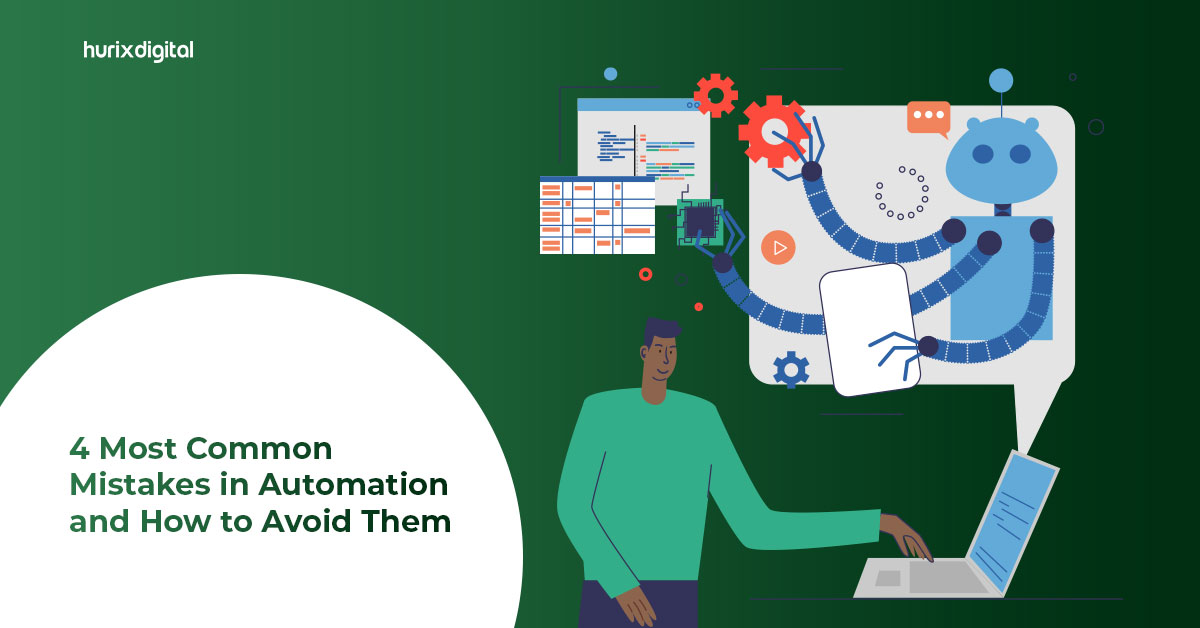
4 Most Common Mistakes in Automation and How to Avoid Them

Automation offers numerous benefits saving time and money, and quality and speed improvements; however, it can also be problematic, especially with increasing hyperautomation and newer technologies such as Robotic Process Automation (RPA).  Automation has become an integral part of modern businesses, and implementing automation best practices can streamline processes, increase efficiency, and improve overall productivity. Organizations often seek automation integration and consulting services to ensure a smooth and successful automation journey. Automation integration involves seamlessly incorporating automated systems and tools into existing workflows. By leveraging the expertise of automation consulting services, businesses can identify areas where automation can deliver maximum impact and develop a strategic roadmap for implementation. These consulting services provide guidance on selecting the right automation solutions, customizing them to meet specific business needs, and integrating them into the existing infrastructure. One critical aspect of automation best practices is automation testing. Automation testing involves utilizing automated tools and frameworks to verify and validate software applications, systems, or processes. It ensures the reliability and functionality of automated processes and minimizes the risk of errors or failures. Automation testing allows organizations to detect issues early, reduce manual testing efforts, and accelerate the overall testing process. 7 Best Automation Best Practices  To effectively implement automation and achieve desired results, it is important to follow some automation best practices. These include: Clearly Define Objectives: Clearly define the goals and objectives of automation initiatives. Understand the specific processes or tasks that can benefit from automation and set realistic expectations. Start Small and Scale: Begin with automating simple and repetitive tasks before moving on to complex processes. Gradually scale automation efforts to cover more areas and processes as confidence and expertise grow. Select the Right Automation Tools: Choose automation tools that align with the organization’s requirements and technical landscape. Evaluate factors such as ease of use, compatibility, scalability, and support. Involve Stakeholders: Involve key stakeholders from different departments or teams throughout the automation journey. Collaboration and communication are essential to ensure that automation initiatives align with organizational goals and meet specific departmental needs. Establish Clear Metrics: Define metrics to measure the success and effectiveness of automation efforts. These metrics may include time saved, error reduction, cost savings, and overall process efficiency. Continuous Monitoring and Maintenance: Regularly monitor and maintain automated processes to ensure they are functioning correctly and delivering the expected results. Proactively identify and address any issues or bottlenecks that may arise. Invest in Training and Skill Development: Provide training and skill development opportunities to employees involved in automation initiatives. This empowers them to effectively utilize automation tools, troubleshoot issues, and optimize automated processes. By following these automation best practices, organizations can maximize the benefits of automation, streamline operations, and achieve higher levels of efficiency and productivity. Automation integration and consulting services play a crucial role in guiding businesses through the automation journey, ensuring successful implementation, and leveraging automation tools effectively. What are the 4 Most Common Mistakes in Automation? Here are the most common mistakes that can hamper automation efforts and actions to avoid these mistakes. 1.Not engaging all stakeholders As we know, automation impacts the enterprise on a broad level, therefore it becomes critical to engage stakeholders from across the organization in the decision-making process. Automation should be viewed as an end-to-end process. Often individual company departments have isolated solutions and do not coordinate their automation strategies. This results in a lack of overarching, clearly defined strategy. Only when you put everything together and have someone to control the operation, it becomes a well-defined strategy and process. Action: Assign responsibility for coordination and stakeholder management to a team member so that roadmap and strategy can be clearly outlined. 2. Believing that anyone can do automation without the need for IT With the further adoption of RPA and low-code/no-code applications, many business users believe that they can automate a process without the assistance of IT. However, many of those applications are integrated with other systems which require technical expertise and knowledge in order to manage and control. If the IT team isn’t involved, there is a risk of failures during certain system changes and upgrades. Action: Involve individuals who are knowledgeable and skilled across technical, business and operations for successful implementation. 3. Deploying automation is always the solution Many enterprises believe that automation is the solution to many business processes to improve efficiency or to cover up gaps in systems. In the process, multiple automation tools are deployed all at once across the enterprise too soon. This can create issues and challenges to manage multiple automated systems efficiently. Action: Evaluate the benefits and drawbacks of automation individually for every potential system by considering system functionality, integration and maintenance strategy. 4. Inefficient monitoring post-production  Automation projects require extensive monitoring and regular quality checks after implementation. Automation reduces manual effort but increases the need for monitoring and if necessary, correction effort. For example, for RPA rollouts, it is important to ensure that robots are working as expected.  Action: Establish processes to enable post-production continuous monitoring. AI can be used to have automatic controls that detect faults and if possible independently correct the faults. Implementing the recommendations to avoid these four automation mistakes can help businesses to achieve desirable outcomes and maximum efficiency in their automation projects.  Contact us or drop a mail to marketing@hurix.com for more information. [/vc_column_text][/vc_column][/vc_row]
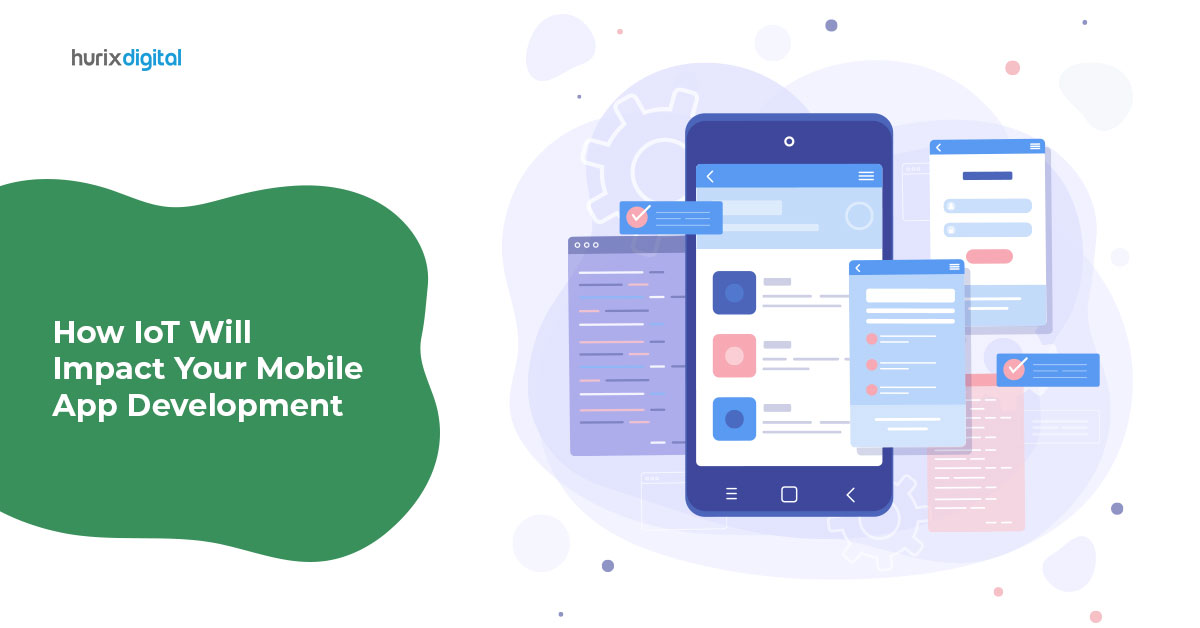
How IoT Will Impact Your Mobile App Development

“Internet of Things” refers to a network of physical devices, vehicles, buildings, and other objects that are embedded with sensors, software, mobile applications, and network connectivity, allowing them to collect and exchange data. This data can be used to monitor and control various aspects such as temperature, lighting, air quality, security, health, device status, and more. IoT technology is being used in many different industries, including healthcare, agriculture, manufacturing, transportation, and smart homes. The potential benefits of IoT include increased efficiency, improved safety and security, and better directing based on real-time data analysis. How Mobile App Development Interfaces with IoT Mobile app development is increasingly dominated by IoT, as connecting devices to smartphones to control devices and report data is proving more useful to all types of users.  The largest use of IoT is observed in the healthcare industry, relevant information like a heartbeat, and BP is monitored using sensors and relayed to the user through the mobile application. Such type of information plays a critical role in monitoring a person’s health. Mobile apps can be used to control and monitor IoT devices, such as smart thermostats, security cameras, and lighting systems. Mobile apps can be integrated with third-party applications to share and use the data generated through IoT devices.  The Impact of IoT in Mobile App Development The Internet of Things (IoT) has the potential to greatly impact mobile app development. IoT refers to the network of interconnected devices that can communicate and share data with each other over the internet. When it comes to mobile app development, IoT opens up new possibilities and challenges. Here are some ways IoT implementation can impact mobile app development: IoT and Mobile App Integration: Mobile apps can be developed to communicate and interact with various IoT devices such as smart thermostats, wearable devices, home automation systems, and more. This integration allows users to control and monitor IoT devices remotely through their mobile apps, offering convenience and enhanced functionality. Data Collection and Analysis: IoT devices generate vast amounts of data, and mobile apps can be developed to collect, analyze, and present this data to users in a meaningful way. For example, a fitness app can collect data from a user’s wearable device and provide insights on their activity levels, heart rate, sleep patterns, and more. Enhanced User Experiences: IoT can enable mobile apps to provide personalized and context-aware experiences. By leveraging data from IoT devices and sensors, apps can deliver tailored content, recommendations, and notifications based on a user’s preferences, location, and real-time data. Improved Automation and Control: Mobile apps can serve as a control center for IoT devices, allowing users to automate and manage various aspects of their connected environment. For instance, an app can enable users to remotely control their home security systems, lighting, or even appliances. Security and Privacy Considerations: With the increasing number of IoT devices and their integration with mobile apps, security and privacy become critical concerns. Developers need to implement robust security measures to protect the data transmitted between devices and ensure user privacy. Development Complexity: IoT integration adds complexity to the development process. Developers must consider compatibility with different IoT platforms, protocols, and device specifications. They need to possess the necessary skills and knowledge to work with IoT technologies and understand the unique challenges they present. Increased Collaboration: IoT app development often requires collaboration between different teams, including mobile app developers, hardware engineers, cloud architects, and data scientists. Effective collaboration and coordination become crucial to create comprehensive IoT solutions. Continuous Iteration and Updates: IoT technologies are evolving rapidly, and developers need to stay updated with the latest advancements and standards. Mobile apps integrating IoT may require continuous iteration and updates to adapt to new devices, protocols, or security measures. In conclusion, IoT has the potential to transform mobile app development by enabling integration with a wide range of devices, enhancing user experiences, collecting and analyzing data, and providing automation and control functionalities. However, developers must also address security and privacy concerns and adapt to the complexities introduced by IoT technologies. Conclusion Overall, mobile app development can enhance the functionality and usability of IoT devices, making them more accessible and useful for users. The Internet of Things has also created a way to secure apps by protecting consumer identities and ensuring data encryption. If you are still confused about interfacing IoT with your mobile app, then the Hurix team of experts can guide you to make the right decision.  We mainly focus on providing the app user with a personalized user experience by integrating the app with mobile device functionalities. Our experienced team will help you understand and implement features like push notifications, user engagement, reminders, and security that can be effectively implemented using IoT to deliver an exceptional mobile application. Contact us or drop a mail to marketing@hurix.com for more information.[/vc_column_text][/vc_column][/vc_row]

Google Classroom or Moodle – Which is the Better Option for You?

[vc_row][vc_column][vc_column_text]Though these two platforms serve a similar purpose, Google classroom vs Moodle comparison helps us understand the different approaches towards online learning. In recent times, online learning has witnessed exponential growth. Following this, learning management systems have advanced in functionalities and become easier to access. The improved quality of LMS has encouraged a lot of K-12 schools and educational institutions to optimize their learning environment through an LMS. Google Classroom and Moodle are two such LMS platforms that aim at improving the learning experience in K-12 and higher education domains. Also Read: K-12 Education in the Post-COVID Era[/vc_column_text][vc_custom_heading text=”Through this article, we will draw a comparison of Google classroom vs Moodle and understand which can cater to your needs better.” font_container=”tag:h2|font_size:18|text_align:left” google_fonts=”font_family:Lato%3A100%2C100italic%2C300%2C300italic%2Cregular%2Citalic%2C700%2C700italic%2C900%2C900italic|font_style:900%20bold%20regular%3A900%3Anormal” css=”.vc_custom_1684911145836{margin-top: 0px !important;margin-bottom: 0px !important;border-top-width: 0px !important;border-bottom-width: 0px !important;padding-top: 0px !important;padding-bottom: 10px !important;}”][vc_custom_heading text=”1. Overview” font_container=”tag:h3|font_size:18|text_align:left” google_fonts=”font_family:Lato%3A100%2C100italic%2C300%2C300italic%2Cregular%2Citalic%2C700%2C700italic%2C900%2C900italic|font_style:900%20bold%20regular%3A900%3Anormal” css=”.vc_custom_1684911153486{margin-top: 0px !important;margin-bottom: 0px !important;border-top-width: 0px !important;border-bottom-width: 0px !important;padding-top: 0px !important;padding-bottom: 10px !important;}”][vc_column_text]Google Classroom is part of the G Suite for Education. It provides a simple and straightforward interface and is accessible via Google account. It encourages collaboration between students and teachers to foster better communication. Moodle provides educators around the world with an open-source solution for eLearning that is scalable, customizable, and secure with the largest selection of activities available. It is based on a modular design that allows educators to design their curriculum using plug-ins to serve various purposes. 2. Deployment Google Classroom is a cloud-based LMS while Moodle offers both, on-premise & cloud-based deployment. The cloud-based platform – MoodleCloud, comes in two packages: Moodle for Free and Moodle for School. 3. Features Though Google Classroom offers a simple interface, it is a well-equipped LMS. Following are some of its core features: · Platform branding for school logos · Ability to reuse tests, and assignments, for future classes · Share videos, links, or images with other students · Schedule posting of assignments · Export grades to a Google sheet · Set access permissions · Email and mobile notifications of due dates · Free access to Google Apps for Education · Guardian emails & calendar · Customized notifications Moodle promotes a conducive learning environment. Its general features are listed below: · Mobile app · Multi-lingual support · BigBlueButton for video conferencing · LevelUP, a gamification module including progressive checkpoints · Chemistry Editor for chemistry assignments · Content authoring tools · Attendance tracking · WordCount for writing assignments · Quizventure for gamification of quizzes and tests · Group Choice for group projects   4. Positives Google Classroom Moodle · Strong collaborative focus · Easy to set up classes & assignments · Integrates with other Google products · Integrates with other educational apps · Keeps guardians updated · Flexible deployment options · Teachers can design their curriculum · Dedicated Moodle mobile app · Highly customizable · Provides custom certificates    5. Negatives Google Classroom Moodle · Not available for businesses · Limited tech support is offered to the users · Accounts for parents aren’t offered · Ads displayed in free accounts · School plans can only accommodate up to 500 users · The interface is not always intuitive    6. Integration Easy integration with various education applications is one of the best features of Google Classroom. It provides smooth integration with applications like Squigi, Writable, Pearson Education, Activity Learn, Aeris, Google apps, and G Suite. Moodle has integrations that are paid add-ons to enhance your learning environment. Some of the certified integrations for Moodle are – BigBlueButton, Bongo, Intelliboard, SimCheck, GO1, JFusion, Joomdle, and Promoodle. 7. Pricing Google Classroom is a free service. Schools and colleges have to register for the free Google education package. The open-source platform of Moodle is free to download and install. However, Moodle Cloud offers its services with three paid plans. $250 AUD or $190 USD for up to 100 users $500 AUD or $380 USD for up to 200 users $1000 AUD or $760 USD for up to 500 users Also Read: Top Online Learning Development and Delivery Tools[/vc_column_text][vc_custom_heading text=”Takeaway” font_container=”tag:h2|font_size:18|text_align:left” google_fonts=”font_family:Lato%3A100%2C100italic%2C300%2C300italic%2Cregular%2Citalic%2C700%2C700italic%2C900%2C900italic|font_style:900%20bold%20regular%3A900%3Anormal” css=”.vc_custom_1593437709909{margin-top: 0px !important;margin-bottom: 0px !important;border-top-width: 0px !important;border-bottom-width: 0px !important;padding-top: 0px !important;padding-bottom: 10px !important;}”][vc_column_text]Google Classroom and Moodle differ in their approach to providing a compelling learning environment. Google Classroom’s simple structure suits new users who are unfamiliar to an LMS, and also for schools that have more than 500 students. Moodle LMS might serve better if you are equipped with advanced technical knowledge. If you don’t have to accommodate more than 500 students, Moodle can be a better choice. Listen to how Google Classroom helped teachers and students to enhance the learning experience. Here is a one-minute quick overview of the Moodle learning platform. Suggested Reads: 10 Benefits of Moodle-based Learning Management System (LMS) 8 Popular Features of Moodle LMS for Corporate Training You Should Know [/vc_column_text][/vc_column][/vc_row]

All You Need To Know About Usability Testing

[vc_row][vc_column][vc_column_text]Table of Contents Introduction Elements of Usability Testing Usability testing – Benefits Usability testing – Costs Usability and ePublishing Introduction Usability testing is a methodology in which the utility testing of a website or application is performed through many different methods. The product is evaluated by testing it with representative users. Test users exercise a product and think aloud about their experience using it, while an evaluator observes the users and listens in on their feedback. Based on this, the evaluator identifies usability problems and assesses the user experience.  These are put in place to establish whether a website or app is ready for publishing. Users will perform the usual tasks while testers watch, listen, and take notes. They try to identify usability problems that occur or might occur, collect qualitative and quantitative data, and determine the user’s product satisfaction.  Usability testing enables the collection of various data which can be used later for the modification and optimization of the application.  UX designers use this testing quite a lot because it represents how easy or difficult the design and interface are to individuals who will ultimately use it.  The design of the product needs to be interactive, attractive, and practical for the user to be able to use it. In usability testing functions one gets to monitor users interacting with the product and this can provide insights into the errors of the product.  Elements of Usability Testing The three core elements of Usability testing are: The participants The task The facilitator The participants need to be a close, realistic interpretation of the end user of the product. They should provide feedback about every question, and task offered to them. The tasks would be mostly real-life activities that the participant might perform in the presence of the product. The facilitator serves as a guide for the participant and provides the answers and instructions and solves the problem of the participant while asking to follow up with questions. The primary role of the facilitator in the usability test is to ensure proper, high-quality, valid data without influencing or compromising the participants’ behavior. The main goal of usability testing is to understand how users might interact with the website or app and make modifications according to the results. All three elements cooperate to form valid, quantitative, and qualitative data which could then be used to improve the performance of a product or service. Usability Testing – Benefits Usability testing enables the designers and developers to identify problems before they are coded. The earlier issues are identified and fixed, the less expensive it is in terms of time and resources. During a usability test, you will: Know if users can complete specific tasks successfully and Identify how long it takes to complete specific tasks Learn how satisfied users are with the website or other product Identify possible changes required to improve user performance and satisfaction Analyse if the user performance meets the usability objectives A solid test plan, recruitment of participants, and analysis and reporting of the findings are all required to effectively run a usability test. Effective Usability Testing does not require a formal usability lab as it can be done in any of these settings: Fixed laboratory with two or three connected rooms outfitted with audio-visual equipment A room with portable recording equipment A room with no recording equipment, if someone is observing the user and taking notes Remotely, with the user in a different location (moderated or unmoderated) [/vc_column_text][vc_column_text] Usability testing – Costs Your testing costs depend on the: Type of testing performed Size of the team for testing Number of participants for testing Number of days you will be testing Budgeting for more than one usability test is necessary. Building usability into any product is an iterative process. Some of the elements that need to b considered when budgeting for usability testing are: Time: Time is essential to plan a usability test. Both the usability specialist and the team would need time to become familiar with the site and pilot test the test scenarios. Time would also be required for running tests, data analysis, report writing, and presenting the findings. Recruiting Costs: Either allow staff time to recruit or engage a recruiting firm to schedule participants. Participant Compensation: If participants are to be compensated for their time or travel, then that has to be included in the budget. Rental Costs:  If you are renting recording, monitoring equipment, or a conference room, it accounts for the rental costs. Also Read: Challenges in UI Testing and How to Fix Them Usability and ePublishing Here are a few points to note while performing usability testing for ePublishing books: Sticking to one format throughout the text is important. Changing or switching fonts, paragraph styles, and other elements within the text can give it a raw, unpolished look. Using fonts that are widely used on computers and eReaders everywhere will make usage easy. Standard font lists are available. It is best to use a font with a Windows and a Mac version. Using low-resolution .png or .jpg files for the images is advised. High-resolution images can result in very large files that would take time to download and this would frustrate the reader. Page numbers and headings are not fixed for eReader. If they are used, then there is the risk of headings and page numbers appearing on the pages at random points throughout the text.  One must also ask the following questions: How it scales across different orientations –  be it landscape or portrait Is it easy to customize content?  Is there access to help with the eBook? Are there accelerators available for quick access within a book, such as navigating to a particular page Is there consistency in the design? How smooth is the navigation inside the book? Is the content accessible (for the visually impaired or the cognitively impaired) What are the technical limitations of the eBook? Usability is not merely an obligatory step in the project schedule. There should be clarity as

7 Signs that Indicate You Must Upskill Your Employees

[vc_row][vc_column][vc_column_text]Technology is rapidly evolving, changing the way business is carried out. To stay relevant in the game, you must upskill your employees and prepare them to cope with the ever-increasing challenges. According to Gartner, the skill required for a single job is increasing by 10% year-over-year. On the other hand, 30% of skills needed three years ago will soon become irrelevant. So if the employees you trained five years ago struggle to stay efficient in their work, it’s probably not all their fault. In this blog, we’ll talk about upskilling and discuss the tell-tale signs that your employees need upskilling. Table of Contents: What is Upskilling 7 Tell-Tale Signs that Indicate the Need for Upskilling Final Words What is Upskilling? Upskilling is the process of acquiring new skill sets that will help you perform a job more efficiently. Every advancement in technology brings about new and smarter ways of doing things. If you do not catch up, your peers might leave you behind. Undoubtedly, adding newer skills is crucial, especially for the older generation unfamiliar with technology. However, upskilling in today’s context is not just about filling skill gaps caused by technology. Instead, it also includes unlearning or letting go of redundant ideas and skills to make room for newer learnings. It helps avoid skill-set imbalances, opens the mind to unique possibilities, and fosters growth. 7 Tell-Tale Signs that Indicate the Need for Upskilling So how do you know if your employees are not up to date with their skill sets? Watch out for these seven tell-tale signs! Also Read: The Importance of Learning Paths in Employee Training 1. Your Organization Lags in Productivity If your employees are having difficulty coping with changing business landscapes, it’s the first sign that you need to upskill them. You might be left behind in the crowd if you do not teach them to adapt to new requirements. A prime example of upskilling could be seen during the pandemic. When traveling was banned worldwide, remote working became the new norm. Companies that trained their employees to handle remote working challenges managed to function productively even during the crisis. On the other hand, those who failed to upskill their employees with crisis management skills struggled to survive. Adaptability is the key to surviving change. To adapt in all circumstances, you must equip your employees with the right skill sets. This can be done with the help of a customized corporate training solution. Find more about corporate learning solutions and how they can benefit your company. 2. You’re Facing Difficulty Promoting Internally Resignation or retirement is an ongoing process in an organization. People in leadership roles today may not always be with you. In that case, you must have employees that can fill their shoes and helm the responsibility. Do you see such employees in your organization? Or are you having a hard time promoting your current employees? If so, it is a sign that your employees need upskilling. Upskilling your employees will prepare them to take on broader roles and responsibilities in the future. You should see that they not only perform well in current roles but also have the competencies that higher positions demand. 3. You Have Low Employee Engagement Providing opportunities for learning and development is a very powerful non-monetary perk you can give your employees. 39% of US employees consider growth potential as a contributor to employee satisfaction. The statistic shows that monetary benefits do not contribute to employee satisfaction. Providing skill training to employees helps them develop a positive attitude toward learning. It enhances their capacity, makes them feel valued, and boosts their morale. This results in higher employee engagement, ultimately driving better productivity. 4. You’re Recruitment Cost is Skyrocketing Is employee turnover in your organization higher than the industry average? The excessive turnover comes with the associated cost of new recruitment, which can become expensive for a business. According to Gallup research, replacing an employee can cost you 1.5 to 2 times their current salary by conservative estimates. But what can you do to retain talent and reduce employee turnover? The answer is to provide them with the opportunity to learn, upskill and grow. 94% of employees would stay longer in companies willing to invest in their professional development. By investing in upskilling your employees, you can make them stay longer in your organization and avoid the terrifying cost of new recruitment. Here’s how you can use L&D as an employee retention strategy. 5. You Have Excessive Staff Do you feel you have too many staff members in your company? If so, it’s time you consider rightsizing by upskilling your employees. Rightsizing is the process of bringing your staff to an appropriate size. Having a lot of staff is often the result of a lack of skill or efficiency in your employees. By upskilling, you’ll make a single person capable of handling multiple roles that you consider redundant. Thus you can optimize your employees and reduce your payroll costs. 6. Your Organization is Not Future Proof Along with tackling the current problems, your employees must also be prepared to take on future challenges. So if you think you’re staff falls short in certain areas, now is the time to upskill and reskill them. Early preparation and learning will empower your staff to catch up with new developments as and when they arrive. It will give you a competitive advantage and help you stay ahead of the curve. 7. Your Employees Lack Soft Skills Upskilling is not always about learning technical skills. In an age where customer experience is the key to growth, inculcating soft skills in your employees becomes critical to your success. Your staff may be good at the desk but lack the skills to manage a team or deal with customers and suppliers. By training them on soft skills, you will create an all-rounded employee with excellent productivity. Communication, leadership, teamwork, public speaking, critical thinking, and public speaking are some key soft skills the current workforce must have to succeed, irrespective

The Role of Virtual Faculty in Higher Education

[vc_row][vc_column][vc_column_text]Technological advancements have revolutionized most of the world’s major industries and sectors, and the field of higher education is no exception. The role of virtual faculty in higher education has increased multi-fold to enhance the learning experience for students.  With the availability of affordable and accessible internet facilities worldwide coupled with the development of new online teaching platforms and software applications, more and more virtual higher education avenues have been thrown open to students.  Whether or not the modified role of faculty is a viable change for the better is a debate that dominates the world of higher education today, but to participate in that discussion, one must first understand what this change entails. The Exponential Rise of Online Learning Worldwide  The COVID-19 pandemic has almost single-handedly resulted in an unprecedented rise in virtual learning worldwide. Forced into their homes to escape the wrath of the virus, both students and teachers came together to make the most of technology in challenging times. UNICEF estimated in September 2020 that almost 1 billion children might fall behind due to the pandemic and resulting school closures. However, the rapid and efficient response to this predicament has allowed virtual faculty to keep the damage to a minimum and leverage technology to ensure that children continue to learn from the safety of their homes. The best way to assess development during a crisis like this is to stay updated with adequate data collection and consider the following issues to understand the reliability and access to a quality college education. Role of Virtual Faculty in Higher Ed: Facilitating Remote Student Success 1. Boost student engagement One of the major challenges of online teaching is ensuring student engagement. This is primarily because it becomes very difficult for institutions and virtual faculty to identify students who attend the virtual lecture but are not focused or participating in the class. Therefore, one of the more important responsibilities of virtual faculty is to ensure that students are engaged in online classes and are actively learning through assignments and in-class discussions.  2. Collaborate with students to clear doubts online One of the most difficult problems that virtual faculty face in online learning models is the prompt and satisfactory resolution of student doubts. First and foremost, students may be more hesitant or find it more difficult to seek the help of their professors online due to the lack of a common physical learning space.  It becomes the duty of virtual faculty to create an environment in the virtual classroom that allows all students to be forthcoming with their doubts and queries. This requires a lot of patience on the part of faculty since doubt-solving over the Internet is considerably more difficult due to communication barriers; nevertheless remains a cornerstone of effective learning in higher education.  3. Ensure structured learning The consensus on education at any level is that a structured learning environment is beneficial to both faculty as well as students. Structured learning models will help students better manage their time and meet their deadlines. Therefore, to ensure the full benefits of online learning to all parties involved, the learning structure should employ a range of collaboration methods that promote a personalized and efficient learning experience. 4. Motivate students to learn better The morale of students may be hit due to the pandemic and the drastic changes in learning patterns that are inevitable as a result of the shift to the online mode of education. The role of virtual faculty thereby also includes efforts to motivate students and boost student morale to gear them towards self-development and efficient learning. This will ensure that they are not disadvantaged by online learning models and retain an interest in the curriculum being taught.  Digital curriculum development in higher education is extremely crucial to help students engage with the content, learn better and improve their academic performance.  5. Effectively use technology for student development Technology has a wide array of potential applications to aid student development. With the creative use of interactive media, student engagement levels can be improved which will eventually translate into better academic performance.  Conclusion The COVID-19 pandemic may recede in the months to come or continue to be a global menace, but one thing is certain: the higher education field will probably never be able to revert to pre-pandemic teaching methods. Over the last two years, several benefits of online learning in higher education have been recognized, such as improved time management, better accessibility, flexibility, and access to opportunities that would have otherwise been impossible due to geographic limitations. Efforts must therefore be made to harness these benefits while at the same time allowing students to experience traditional, physical learning patterns that are beneficial to personal growth and development; developing a hybrid model may be able to achieve this. [/vc_column_text][/vc_column][/vc_row]

5 Latest K-12 Education Trends for 2023

The education system has witnessed several alterations and modifications in recent times. The transformation process received an additional thrust during the pandemic period owing to the recent K-12 education trends. The K-12 education system was very rudimentary and accessible to only a few people. However, with time and innovations, extending education to the remotest part of a nation is now possible.  Technology has a big role to play in amending the entire system of K-12 education and bringing around only the perks of schooling to children. The influence of technology in K-12 education can be understood by looking at three figures – 93%, 81%, and 58%.  Confused about what these figures are all about? Here’s the information you need to clear up your confusion: In a survey, 93% of participants confessed that they had conducted online teaching in some form before the summer of 2020. 81% of US school teachers admitted that their familiarity with educational technology and online tools skyrocketed due to the pandemic. In another survey, 58% of participants confessed that they feel more confident about educational technology and online tools than ever.  At this point, it might seem natural to draw a common conclusion that the K-12 Education system is the consequence of the pandemic.  However, much to the surprise of many, technology penetrated K-12 education and was introduced far before the virus broke out globally. Irrespective of the purpose of such technology, it is indelible that the COVID-19 disaster was the catalyst for promoting the role of technology in the K-12 education system. Moreover, this new system appeared to be more sustainable and convenient from both the perspective of students and teachers. So, now that the pandemic is a thing of the past and the K-12 education system has become more technology-driven, what are the 5 significant education trends we expect in 2023? Dive deep into this article to get a comprehensive answer to this. 

What is Learning Management System in Education? Ways to Use LMS in Education

[vc_row][vc_column][vc_column_text]Did you realize the traditional classroom-based approach is fast losing its significance due to the use of LMS in education? Knowing what is LMS and its importance in education is immense. Using Learning Management Systems in education offers a smart alternative to schools and education in such a scenario and allows instructors to deliver customized content, leverage various pedagogical models, and engage their students much better than previously possible. In fact, a report suggests that one out of five LMS implementations takes place in the field of education, which is an incredible stat. Before going into the details of how educational institutes can leverage this opportunity better, Let’s first understand a bit about LMS in detail.[/vc_column_text][vc_custom_heading text=”What is a Learning Management System (LMS) in Education?” font_container=”tag:h3|font_size:18|text_align:left” google_fonts=”font_family:Lato%3A100%2C100italic%2C300%2C300italic%2Cregular%2Citalic%2C700%2C700italic%2C900%2C900italic|font_style:900%20bold%20regular%3A900%3Anormal” css=”.vc_custom_1684730596797{margin-top: 0px !important;margin-bottom: 0px !important;border-top-width: 0px !important;border-bottom-width: 0px !important;padding-top: 0px !important;padding-bottom: 10px !important;}”][vc_column_text]A Learning Management System is essentially a software tool used to deliver learning content and other resources to end users. The popularity of LMS in teaching is attributed to the ease that it offers to teachers and instructors in delivering study material, monitoring learner participation, and assessing performance. Here’s more on the importance of digital curriculum Development in higher education [/vc_column_text][vc_custom_heading text=”How Can Educational Institutes Leverage Learning Management Systems in Education?” font_container=”tag:h1|font_size:18|text_align:left” google_fonts=”font_family:Lato%3A100%2C100italic%2C300%2C300italic%2Cregular%2Citalic%2C700%2C700italic%2C900%2C900italic|font_style:900%20bold%20regular%3A900%3Anormal” css=”.vc_custom_1582724215656{margin-top: 0px !important;margin-bottom: 0px !important;border-top-width: 0px !important;border-bottom-width: 0px !important;padding-top: 0px !important;padding-bottom: 10px !important;}”][vc_column_text]Although there are various ways educational institutes can impart training to learners, one of the most effective means of delivering online training is through a Learning Management System (LMS). Here’s how educational institutes can leverage LMS for better results –[/vc_column_text][vc_custom_heading text=”Offer Centralized Learning” font_container=”tag:h2|font_size:18|text_align:left” google_fonts=”font_family:Lato%3A100%2C100italic%2C300%2C300italic%2Cregular%2Citalic%2C700%2C700italic%2C900%2C900italic|font_style:900%20bold%20regular%3A900%3Anormal” css=”.vc_custom_1582725034867{margin-top: 0px !important;margin-bottom: 0px !important;border-top-width: 0px !important;border-bottom-width: 0px !important;padding-top: 0px !important;padding-bottom: 10px !important;}”][vc_column_text]The primary advantage of any LMS in education is its centralized source of learning. It allows institutes to save all the e-learning content in one single place, instead of having it scattered at different locations. This helps in both reducing the risk of losing important data/content and enhancing the overall efficiency of the system.[/vc_column_text][vc_custom_heading text=”Unlimited Customization Options” font_container=”tag:h2|font_size:18|text_align:left” google_fonts=”font_family:Lato%3A100%2C100italic%2C300%2C300italic%2Cregular%2Citalic%2C700%2C700italic%2C900%2C900italic|font_style:900%20bold%20regular%3A900%3Anormal” css=”.vc_custom_1582725068179{margin-top: 0px !important;margin-bottom: 0px !important;border-top-width: 0px !important;border-bottom-width: 0px !important;padding-top: 0px !important;padding-bottom: 10px !important;}”][vc_column_text]LMS can be a great tool for higher schools and colleges as it gives them the freedom of unlimited customization options. Instructors enjoy the liberty to tailor the e-learning content for the courses as much as required from anywhere and at any given point of time. Here’s all you need to know about Building Effective Higher Education Courses Online for NextGen Learners.[/vc_column_text][vc_custom_heading text=”Tracking & Reporting” font_container=”tag:h2|font_size:18|text_align:left” google_fonts=”font_family:Lato%3A100%2C100italic%2C300%2C300italic%2Cregular%2Citalic%2C700%2C700italic%2C900%2C900italic|font_style:900%20bold%20regular%3A900%3Anormal” css=”.vc_custom_1582725115620{margin-top: 0px !important;margin-bottom: 0px !important;border-top-width: 0px !important;border-bottom-width: 0px !important;padding-top: 0px !important;padding-bottom: 10px !important;}”][vc_column_text]Implementing learning management systems in education allows instructors to keep track of a learner’s progress in terms of course completion, identification of knowledge gaps, participation and engagement level, and time taken to complete the course. Reporting is another exciting feature of LMS that educational institutes can leverage. These detailed reports can help institutes in the evaluation of course suitability in terms of meeting the present requirements of the schools and colleges and whether they require any modification. Related: Why Should Colleges and Universities Develop eLearning Programs?[/vc_column_text][vc_custom_heading text=”Easy Upgrades” font_container=”tag:h2|font_size:18|text_align:left” google_fonts=”font_family:Lato%3A100%2C100italic%2C300%2C300italic%2Cregular%2Citalic%2C700%2C700italic%2C900%2C900italic|font_style:900%20bold%20regular%3A900%3Anormal” css=”.vc_custom_1582725141469{margin-top: 0px !important;margin-bottom: 0px !important;border-top-width: 0px !important;border-bottom-width: 0px !important;padding-top: 0px !important;padding-bottom: 10px !important;}”][vc_column_text]Schools and colleges generally have many courses covering topics that are in the process of rapid development, requiring constant changes and upgradation of the content and sources. Learning Management Systems make it simple to update existing content without the need to make changes for each student separately as the upgraded content gets distributed to the learners automatically.[/vc_column_text][vc_custom_heading text=”Robust Evaluation System” font_container=”tag:h2|font_size:18|text_align:left” google_fonts=”font_family:Lato%3A100%2C100italic%2C300%2C300italic%2Cregular%2Citalic%2C700%2C700italic%2C900%2C900italic|font_style:900%20bold%20regular%3A900%3Anormal” css=”.vc_custom_1582725208416{margin-top: 0px !important;margin-bottom: 0px !important;border-top-width: 0px !important;border-bottom-width: 0px !important;padding-top: 0px !important;padding-bottom: 10px !important;}”][vc_column_text]With an LMS, you can easily evaluate your students before, during, and at the end of a course, without interfering with the overall learning process. Furthermore, the top LMS systems available in the market can easily integrate learning and evaluation under the same online platform and also allow students to review their own performance as well. Here are 10 Advantages of e-Learning in higher education over Traditional Methods.[/vc_column_text][vc_custom_heading text=”Simplify Learning” font_container=”tag:h2|font_size:18|text_align:left” google_fonts=”font_family:Lato%3A100%2C100italic%2C300%2C300italic%2Cregular%2Citalic%2C700%2C700italic%2C900%2C900italic|font_style:900%20bold%20regular%3A900%3Anormal” css=”.vc_custom_1582725230761{margin-top: 0px !important;margin-bottom: 0px !important;border-top-width: 0px !important;border-bottom-width: 0px !important;padding-top: 0px !important;padding-bottom: 10px !important;}”][vc_column_text]An LMS can help simplify and revolutionize learning. The fact that it is easy to use and doesn’t require much expert intervention makes LMS a great tool for educators and a powerful learning experience for students.[/vc_column_text][vc_custom_heading text=”How do schools and colleges benefit from using an LMS?” font_container=”tag:h4|font_size:18|text_align:left” google_fonts=”font_family:Lato%3A100%2C100italic%2C300%2C300italic%2Cregular%2Citalic%2C700%2C700italic%2C900%2C900italic|font_style:900%20bold%20regular%3A900%3Anormal” css=”.vc_custom_1673346923103{margin-top: 0px !important;margin-bottom: 0px !important;border-top-width: 0px !important;border-bottom-width: 0px !important;padding-top: 0px !important;padding-bottom: 10px !important;}”][vc_column_text]Using a single learning management system in education to deliver content to students can increase adoption rate, minimize costs, and cut down the training time substantially. Top 8 Ways an LMS Can Help Your Overall Professional Development Program –[/vc_column_text][vc_custom_heading text=”1. Supports Active Learning” font_container=”tag:h5|font_size:18|text_align:left” google_fonts=”font_family:Lato%3A100%2C100italic%2C300%2C300italic%2Cregular%2Citalic%2C700%2C700italic%2C900%2C900italic|font_style:900%20bold%20regular%3A900%3Anormal” css=”.vc_custom_1684730700701{margin-top: 0px !important;margin-bottom: 0px !important;border-top-width: 0px !important;border-bottom-width: 0px !important;padding-top: 0px !important;padding-bottom: 10px !important;}”][vc_column_text]Any learning experience can only be meaningful if it’s relevant and authentic. An LMS allows learners to engage in hands-on, relevant, and real-world activities for a fulfilling learning experience.[/vc_column_text][vc_custom_heading text=”2. Enables Collaboration” font_container=”tag:h5|font_size:18|text_align:left” google_fonts=”font_family:Lato%3A100%2C100italic%2C300%2C300italic%2Cregular%2Citalic%2C700%2C700italic%2C900%2C900italic|font_style:900%20bold%20regular%3A900%3Anormal” css=”.vc_custom_1684730716607{margin-top: 0px !important;margin-bottom: 0px !important;border-top-width: 0px !important;border-bottom-width: 0px !important;padding-top: 0px !important;padding-bottom: 10px !important;}”][vc_column_text]A learning management system provides a common collaborative space for content sharing, feedback, and personal interaction. It also allows educators to engage any time, any place, and from any device.[/vc_column_text][vc_custom_heading text=”3. Offer Content-Focused Learning” font_container=”tag:h5|font_size:18|text_align:left” google_fonts=”font_family:Lato%3A100%2C100italic%2C300%2C300italic%2Cregular%2Citalic%2C700%2C700italic%2C900%2C900italic|font_style:900%20bold%20regular%3A900%3Anormal” css=”.vc_custom_1684730728643{margin-top: 0px !important;margin-bottom: 0px !important;border-top-width: 0px !important;border-bottom-width: 0px !important;padding-top: 0px !important;padding-bottom: 10px !important;}”][vc_column_text]Using Learning Management Systems in education gives instructors the advantage of accessing expert advice and relevant content which is specific to their teaching context. This, in turn, can have an immediate and valuable impact on their classrooms.[/vc_column_text][vc_custom_heading text=”4. Saves Time and Money” font_container=”tag:h5|font_size:18|text_align:left” google_fonts=”font_family:Lato%3A100%2C100italic%2C300%2C300italic%2Cregular%2Citalic%2C700%2C700italic%2C900%2C900italic|font_style:900%20bold%20regular%3A900%3Anormal” css=”.vc_custom_1684730738698{margin-top: 0px !important;margin-bottom: 0px !important;border-top-width: 0px !important;border-bottom-width: 0px !important;padding-top: 0px !important;padding-bottom: 10px !important;}”][vc_column_text]Schools and colleges generally struggle with resource constraints while implementing traditional learning methodologies. But with a learning management system, they can cut down their expenses drastically by taking advantage of LMS as a standalone asset for managing teaching and learning.[/vc_column_text][vc_row_inner css=”.vc_custom_1572956227964{margin-top: 0px !important;margin-bottom: 0px !important;border-top-width:

5 Pro-Tips to Build Cost-Effective Blended Learning Solutions

[vc_row][vc_column][vc_column_text]Leveraging the best of both offline and online modalities, blended learning solutions are a popular trend in today’s corporate world that makes it possible for organizations to formulate an effective training strategy for a large number of learners. An excellent pedagogical approach, it efficiently blends digital and live classroom components, typically with a minimum of 30% of learners’ time being spent on digital components. Further, this learning approach can be extremely cost-effective as it allows certain modules of learning to be done online, with asynchronous scheduling where employees aren’t required to travel or attend in-person training, saving the organization a significant amount of money in travel, boarding and trainer costs. Research has also shown that implementing a robust blended strategy brings down the training costs and allows organizations to divert their resources to other areas of the overall budget, leading to an effective corporate training program.[/vc_column_text][vc_custom_heading text=”5 tips to building a cost-effective blended learning solution” font_container=”tag:h1|font_size:18|text_align:left” google_fonts=”font_family:Lato%3A100%2C100italic%2C300%2C300italic%2Cregular%2Citalic%2C700%2C700italic%2C900%2C900italic|font_style:900%20bold%20regular%3A900%3Anormal” css=”.vc_custom_1584975234323{margin-top: 0px !important;margin-bottom: 0px !important;border-top-width: 0px !important;border-bottom-width: 0px !important;padding-top: 0px !important;padding-bottom: 10px !important;}”][vc_column_text]In this post, we explore how to use blended learning solutions in corporate training in order to create a more cost-efficient, immersive and engaging experience for the corporate learners.[/vc_column_text][vc_custom_heading text=”1. Consider Scale, Reach and Budget” font_container=”tag:h2|font_size:18|text_align:left” google_fonts=”font_family:Lato%3A100%2C100italic%2C300%2C300italic%2Cregular%2Citalic%2C700%2C700italic%2C900%2C900italic|font_style:900%20bold%20regular%3A900%3Anormal” css=”.vc_custom_1584970361318{margin-top: 0px !important;margin-bottom: 0px !important;border-top-width: 0px !important;border-bottom-width: 0px !important;padding-top: 0px !important;padding-bottom: 10px !important;}”][vc_column_text]When it comes to designing a successful and cost-efficient blended learning framework, it should both work for individual learners and make complete business sense along with offering a solid ROI. How can you do this? a) Identify whether your users are remote or spread globally. This is important because organizing physical events can be extremely expensive as you might have to reach a large number of remote learners. The ideal way to manage this is by utilizing digital learning to the maximum capacity or hosting an online virtual event followed by providing support to virtual or local coaches to begin a discussion so that they can take learning and sharing forward. b) Do a thorough assessment of the cost per head of different blended options. Blending approaches that support learning over a longer period of time with short and focused interventions brings great results in terms of performance and are cost-effective.[/vc_column_text][vc_custom_heading text=”2. Prioritize the Content” font_container=”tag:h2|font_size:18|text_align:left” google_fonts=”font_family:Lato%3A100%2C100italic%2C300%2C300italic%2Cregular%2Citalic%2C700%2C700italic%2C900%2C900italic|font_style:900%20bold%20regular%3A900%3Anormal” css=”.vc_custom_1584970480322{margin-top: 0px !important;margin-bottom: 0px !important;border-top-width: 0px !important;border-bottom-width: 0px !important;padding-top: 0px !important;padding-bottom: 10px !important;}”][vc_column_text]To save time and cost, your blended learning solution design should prioritize content that can be taught over time. What this essentially means is that the foundational or critical content should be taught first, so that the learners can go back and apply it on the job. Less critical content, on the other hand, can be made available either as just-in-time performance support or offered as a subsequent course to improve performance, learning retention, and learner satisfaction. Learn How to Create Content for a Blended Learning Model[/vc_column_text][vc_custom_heading text=”3. Experiment with New Blended Learning Concepts and Solutions” font_container=”tag:h2|font_size:18|text_align:left” google_fonts=”font_family:Lato%3A100%2C100italic%2C300%2C300italic%2Cregular%2Citalic%2C700%2C700italic%2C900%2C900italic|font_style:900%20bold%20regular%3A900%3Anormal” css=”.vc_custom_1584970566118{margin-top: 0px !important;margin-bottom: 0px !important;border-top-width: 0px !important;border-bottom-width: 0px !important;padding-top: 0px !important;padding-bottom: 10px !important;}”][vc_column_text]When it comes to seeking and expecting answers to their questions, modern learners want a seamless experience with updated, relevant and personalized information. A successful and budget-friendly learning strategy, in such a scenario, should be people-centric, offering engaging experiences to help them make changes in areas they need most, or will add meaningful impact to what they do. The best approach here is to constantly experiment with various blended learning concepts to meet the specific goals and needs of the target audience by- Considering different kinds of resources and activities to help the learners get there either on their own and in large groups. Think about these questions – Which parts of the training can be done virtually and online? Where does it make the most sense to get learners together? Should you utilize mentors or coaches? Conceptualizing and focusing on how the resources and learning activities would help on the job and in moments of need. Make sure that the blended learning strategy you design should help people explore and practice new skills that are relevant to their job profile. Working around different combinations and concepts such as going digital on one aspect and more face-to-face on another or finding a middle ground that works best both learning and cost-wise. Here are 10 Best Practices in Blended Learning[/vc_column_text][vc_custom_heading text=”4. Assess the Tools and Skills You Need in Your Learners” font_container=”tag:h2|font_size:18|text_align:left” google_fonts=”font_family:Lato%3A100%2C100italic%2C300%2C300italic%2Cregular%2Citalic%2C700%2C700italic%2C900%2C900italic|font_style:900%20bold%20regular%3A900%3Anormal” css=”.vc_custom_1584970673952{margin-top: 0px !important;margin-bottom: 0px !important;border-top-width: 0px !important;border-bottom-width: 0px !important;padding-top: 0px !important;padding-bottom: 10px !important;}”][vc_column_text]To get the best results on a low budget, your blended learning strategy should consistently bring in new tools and skills into your learning team or outsource whenever needed to get what you exactly need. The biggest advantage of blended learning solutions is that you can use the best of your existing content and software solutions. Use and repurpose your content, software tools, and communication channels to provide a cohesive learning experience. Using your existing systems also makes it comfortable for learners who are already familiar with your present software and use it regularly. The idea here is to test out new blended learning design concepts and tweak them as per the specific needs of your learners. For e.g., if you already have a course module, be it online or face-to-face, break it down into smaller chunks or play with the format to give the course a blended twist that will help you drive better learner engagement. Learn Why You Should Switch to Blended Learning for Better Learning Outcomes[/vc_column_text][vc_row_inner css=”.vc_custom_1584715783164{margin-top: 0px !important;margin-bottom: 0px !important;border-top-width: 0px !important;border-bottom-width: 0px !important;padding-top: 0px !important;background-color: #dee7f0 !important;}”][vc_column_inner width=”2/3″ css=”.vc_custom_1584714988859{margin-top: 25px !important;margin-right: 0px !important;margin-bottom: 0px !important;margin-left: 20px !important;border-right-width: 0px !important;padding-right: 0px !important;}”][vc_column_text]Guide: How to Choose the Right LMS for Your Business[/vc_column_text][/vc_column_inner][vc_column_inner width=”1/3″ css=”.vc_custom_1572956165932{margin-top: 30px !important;margin-right: 20px !important;margin-bottom: 30px !important;margin-left: 0px !important;border-left-width: 0px !important;padding-left: 0px !important;}”][button size=”mediumlarge_rd_bt” use_icon=”yes” icon_color=”#ffffff” t_color=”#ffffff” b_color=”#f55744″ b_hover_color=”#3ac77f” url=”https://stag.hurix.com/how-to-guides/how-to-choose-right-lms-for-business/” target=”yes” position=”ta_right” icon=”wb-download”]Download Now![/button][/vc_column_inner][/vc_row_inner][vc_custom_heading text=”5. Personalize Learning Modules by Roles” font_container=”tag:h2|font_size:18|text_align:left” google_fonts=”font_family:Lato%3A100%2C100italic%2C300%2C300italic%2Cregular%2Citalic%2C700%2C700italic%2C900%2C900italic|font_style:900%20bold%20regular%3A900%3Anormal” css=”.vc_custom_1584970765443{margin-top: 0px !important;margin-bottom: 0px !important;border-top-width: 0px !important;border-bottom-width: 0px !important;padding-top: 0px !important;padding-bottom: 10px !important;}”][vc_column_text]Lastly, make sure that your blended learning approach enables delivery of content

eLearning Localization – The Next Big Trend in Employee Training 

[vc_row][vc_column][vc_column_text]With technology making the world a more close-knit community and a large number of companies acquiring a global footprint, eLearning localization has become a pressing need to maintain the effectiveness of training programs. Thankfully, eLearning has come a long way since its early days where printed versions of educational or training materials were simply digitized to make them accessible on different devices. Back then, transforming lengthy, word-heavy content into an engaging or interactive format seemed improbable, let alone localizing it for audiences in different parts of the world. However, today there are a host of tools available that make this process relatively simple and straightforward. Here is everything you need to know about localizing eLearning modules and its benefits for training programs:[/vc_column_text][vc_custom_heading text=”What is eLearning Localization and Translation?” font_container=”tag:h1|font_size:18|text_align:left” google_fonts=”font_family:Lato%3A100%2C100italic%2C300%2C300italic%2Cregular%2Citalic%2C700%2C700italic%2C900%2C900italic|font_style:900%20bold%20regular%3A900%3Anormal” css=”.vc_custom_1584107428940{margin-top: 0px !important;margin-bottom: 0px !important;border-top-width: 0px !important;border-bottom-width: 0px !important;padding-top: 0px !important;padding-bottom: 10px !important;}”][vc_column_text]Today, employee training programs aren’t necessarily restricted to a small cluster of participants in one place. The employees you’d like to extend the benefits of upskilling to may be based out of different cities across the world. That’s where eLearning localization plays a crucial role. It adapts the content of any training program as per the specific local culture of any region. Essentially, this is an improvement on the process of translation. While in translation, the content is merely converted from one language to another, localization also takes into account the cultural reference of a place and adapts the entire training material – not just text – accordingly. The localization of content extends to Graphical User Interface, tone of narration, fonts, colors, symbols, photos, images, measurement units, idioms, phrases and abbreviations, to name a few. The idea here is to convey the exact message as the source content, with the right context, setting and emotion.[/vc_column_text][vc_custom_heading text=”Who Needs to Localize eLearning?” font_container=”tag:h2|font_size:18|text_align:left” google_fonts=”font_family:Lato%3A100%2C100italic%2C300%2C300italic%2Cregular%2Citalic%2C700%2C700italic%2C900%2C900italic|font_style:900%20bold%20regular%3A900%3Anormal” css=”.vc_custom_1584107480255{margin-top: 0px !important;margin-bottom: 0px !important;border-top-width: 0px !important;border-bottom-width: 0px !important;padding-top: 0px !important;padding-bottom: 10px !important;}”][vc_column_text]If your training program is targeted at learners from different parts of the world, it is crucial to go beyond translation and localize the content. Colors, imagery, background, tone of narration and gestures can mean different things in different places. For instance, the Western audience is more used to their teachers/instructors maintaining a friendly tone, while in the East, learning is associated with an authoritative tone. Translation cannot address these finer nuances. If the content is not in line with a learner’s cultural appropriation, it can be hard to relate to. Localizing the training material can, therefore, help improve acquisition and retention of new skills and knowledge.[/vc_column_text][vc_custom_heading text=”Benefits of eLearning localization ” font_container=”tag:h3|font_size:18|text_align:left” google_fonts=”font_family:Lato%3A100%2C100italic%2C300%2C300italic%2Cregular%2Citalic%2C700%2C700italic%2C900%2C900italic|font_style:900%20bold%20regular%3A900%3Anormal” css=”.vc_custom_1584108749854{margin-top: 0px !important;margin-bottom: 0px !important;border-top-width: 0px !important;border-bottom-width: 0px !important;padding-top: 0px !important;padding-bottom: 10px !important;}”][vc_column_text]Implementing eLearning localization can be a win-win for a company and the employees, as it promises optimal targeted opportunities for acquiring new skills and knowledge. Here are the top benefits of going beyond translations and localizing employee training programs:[/vc_column_text][vc_custom_heading text=”1. Diversity in Training Modules ” font_container=”tag:h4|font_size:18|text_align:left” google_fonts=”font_family:Lato%3A100%2C100italic%2C300%2C300italic%2Cregular%2Citalic%2C700%2C700italic%2C900%2C900italic|font_style:900%20bold%20regular%3A900%3Anormal” css=”.vc_custom_1584108801318{margin-top: 0px !important;margin-bottom: 0px !important;border-top-width: 0px !important;border-bottom-width: 0px !important;padding-top: 0px !important;padding-bottom: 10px !important;}”][vc_column_text]Localizing online training modules allows organizations to create one elaborate program and then optimize it to suit the needs of employees in different geographical locations, instead of creating separate ones for different locations. The eLearning localization tools can use the basic information and structure of the source module and adapt the message as per the sensibilities of the target audience. [/vc_column_text][vc_custom_heading text=”2. Broader Reach with Minimal Resources ” font_container=”tag:h4|font_size:18|text_align:left” google_fonts=”font_family:Lato%3A100%2C100italic%2C300%2C300italic%2Cregular%2Citalic%2C700%2C700italic%2C900%2C900italic|font_style:900%20bold%20regular%3A900%3Anormal” css=”.vc_custom_1584108846806{margin-top: 0px !important;margin-bottom: 0px !important;border-top-width: 0px !important;border-bottom-width: 0px !important;padding-top: 0px !important;padding-bottom: 10px !important;}”][vc_column_text]Localizing a base or source training module for participants in different locations can ensure a broader reach for the program in a more cost-effective manner. The resources needed to optimize an existing training module are far lower in comparison to developing different modules from scratch. To make sure that the optimization process is as resource efficient as possible, it is advisable to use simple language in the source module and eliminate the use of complex jargon, graphs and images embedded with text. A clean structure and design are what effective localization rests on.[/vc_column_text][vc_custom_heading text=”3. Uniformity ” font_container=”tag:h4|font_size:18|text_align:left” google_fonts=”font_family:Lato%3A100%2C100italic%2C300%2C300italic%2Cregular%2Citalic%2C700%2C700italic%2C900%2C900italic|font_style:900%20bold%20regular%3A900%3Anormal” css=”.vc_custom_1584108884405{margin-top: 0px !important;margin-bottom: 0px !important;border-top-width: 0px !important;border-bottom-width: 0px !important;padding-top: 0px !important;padding-bottom: 10px !important;}”][vc_column_text]The fact that you are leveraging the same source module to train employees in different locations brings in an element of uniformity in your training initiatives. With the same written and multimedia content being made available to all participants, albeit, in different languages and cultural contexts, you can ensure that your employees in the US and in Asia or Europe are being empowered with the same skill set and knowledge.[/vc_column_text][vc_custom_heading text=”4. Higher ROI ” font_container=”tag:h4|font_size:18|text_align:left” google_fonts=”font_family:Lato%3A100%2C100italic%2C300%2C300italic%2Cregular%2Citalic%2C700%2C700italic%2C900%2C900italic|font_style:900%20bold%20regular%3A900%3Anormal” css=”.vc_custom_1584108943758{margin-top: 0px !important;margin-bottom: 0px !important;border-top-width: 0px !important;border-bottom-width: 0px !important;padding-top: 0px !important;padding-bottom: 10px !important;}”][vc_column_text]High Returns on Investment is the basic goal that drives most business decisions and localizing the training module accords you an opportunity to optimize that. Hiring training experts for different office locations across the world can be a capital-intensive process. By comparison, working with a team of experts to localize high-quality content and deliver it as an online training program can save time, money and effort.[/vc_column_text][vc_custom_heading text=”5. Better Impact ” font_container=”tag:h4|font_size:18|text_align:left” google_fonts=”font_family:Lato%3A100%2C100italic%2C300%2C300italic%2Cregular%2Citalic%2C700%2C700italic%2C900%2C900italic|font_style:900%20bold%20regular%3A900%3Anormal” css=”.vc_custom_1584108968917{margin-top: 0px !important;margin-bottom: 0px !important;border-top-width: 0px !important;border-bottom-width: 0px !important;padding-top: 0px !important;padding-bottom: 10px !important;}”][vc_column_text]Localizing the content lends a personalized touch while dealing with employee needs and makes your workforce feel valued, irrespective of their location. A strong, committed workforce is the backbone that can help an organization gain a competitive edge in the global markets. Employees are more likely to engage with the training material, retain it better, and subsequently, apply it in their work processes – which is the main objective behind training programs.[/vc_column_text][vc_custom_heading text=”6. Helps Boost the Brand Image ” font_container=”tag:h4|font_size:18|text_align:left” google_fonts=”font_family:Lato%3A100%2C100italic%2C300%2C300italic%2Cregular%2Citalic%2C700%2C700italic%2C900%2C900italic|font_style:900%20bold%20regular%3A900%3Anormal” css=”.vc_custom_1584108994966{margin-top: 0px !important;margin-bottom: 0px !important;border-top-width: 0px !important;border-bottom-width: 0px !important;padding-top: 0px !important;padding-bottom: 10px !important;}”][vc_column_text]Investing in eLearning localization for employee training can also serve as a catalyst for boosting your brand image. Being mindful of the cultural values and difference of your workforce and accommodating these factors in your internal processes positions you as a truly inclusive organization that values diversity. This wins