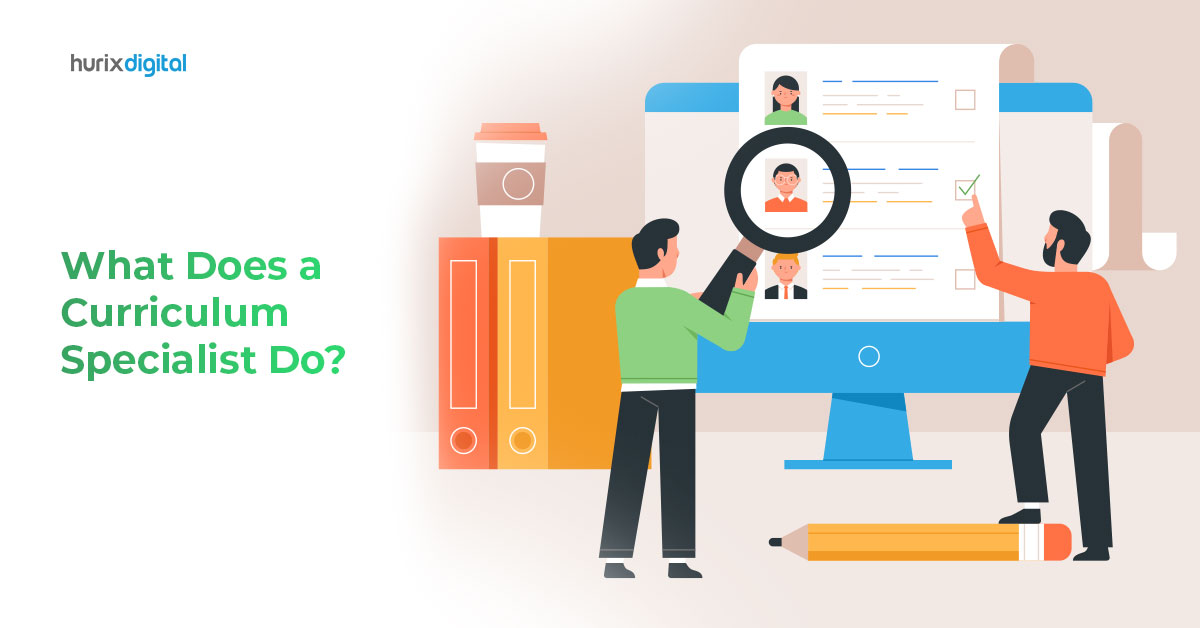
What Does a Curriculum Specialist Do?

[vc_row][vc_column][vc_column_text]Good teachers are the unsung heroes of the world. Yet, as the educational system evolves to meet the industry’s higher demands, so does the effort and commitment on their part. After a point, this can take a toll on anyone, and experienced educators may find themselves seeking new career paths. Being a Curriculum Specialist could be a viable option if you are at these crossroads. This career path will allow you to be integral to students’ education beyond the classroom.  This article will explain what it means to be a Curriculum Specialist and explore this role’s essential skills, responsibilities, challenges, and opportunities. What does a curriculum specialist’s job entail? By definition, a Curriculum Specialist’s job as a professional is to design, implement and evaluate curriculum plans to align with the learning goals of a specific institution. This can include developing new curricula or making suggestions to the administration to improve the current curricula based on extensive research. In some cases, their duties can also involve providing educators with constructive feedback on their implementation of the improved curricula.   Curriculum specialists are also called instructional coordinators or instructional specialists interchangeably, and this job role can involve working on a k-12 curriculum and higher education solutions. It can even extend to elearning in education. What are the roles and responsibilities of a Curriculum Specialist? A Curriculum Specialist is indispensable in ensuring that students receive a high-quality education that prepares them for the future. When it comes to their roles and responsibilities, they can be broadly categorized into two primary sections.  This first set of responsibilities revolves around the curriculum itself. This includes duties such as: Analyzing student test data to identify areas that require improvement Assessing curriculum standards and having discussions around them with the school staff Work on developing or improving the current curricula Reviewing and suggesting relevant reading material or textbooks to enhance the standard of education A curriculum specialist’s second set of expectations revolves around implementing these improvements. These include: Meticulously planning and conducting training sessions and workshops with educators Recommending the implementation of new technologies and teaching techniques Training and mentoring educators and instructional staff to improve their skills and knowledge of new content or programs With the recent shift towards digital education, curriculum specialists will also need to work with digital curriculum providers to ensure that they meet the state and/or national guidelines prescribed.  The Prerequisites to Becoming a Curriculum Specialist The role of a Curriculum Specialist requires a unique set of skills and qualifications and prior experience in the field of education. This section will break down each prerequisite to give you the clarity to decide if you have what it takes excel in this role.  The Essential Skills  The role of a Curriculum Specialist demands a broad range of skills to perform the job duties effectively. Therefore, besides educational qualifications and significant classroom experience, a curriculum specialist’s skills must include the following to excel in this role. Leadership: Effective leadership enables Curriculum Specialists to effectively guide educators to implement innovative strategies that inspire and motivate students toward learning.  Communication: Communication skills are critical for Curriculum Specialists, as they must be able to communicate implementation and changes in curriculum or instruction to everyone involved from diverse backgrounds, different age groups, and varying levels of experience.  Decision-making: Besides leadership and communication skills, Curriculum Specialists must have excellent decision-making abilities to make informed choices about instructional methods and curriculum materials. This requires the ability to evaluate data, identify areas for improvement, and select the most appropriate strategies to address them. Critical Thinking: Moreover, Curriculum Specialists must have excellent analytical skills. This job role primarily requires them to analyze student data, the current teaching strategies, and the curriculum, after which they are expected to make recommendations based on their analysis. This involves an in-depth understanding of the educational system and developing effective strategies to improve student outcomes. The Qualifications  Candidates must meet specific educational requirements to be eligible to apply for this role.  Employers typically require candidates to hold a master’s degree in education or curriculum and instruction. However, some employers may only require a bachelor’s degree. In addition to a degree, employers almost always require a state-issued teaching certificate to ensure that candidates have met the necessary criteria for teaching in the state. This certificate demonstrates that the candidate has completed the required coursework and has passed any necessary exams related to teaching in the state. Certain institutions may also need a state-issued education administrator certificate. Educational requirements may vary between States. The state’s Board of Education would be the best place to check the specifics of the state you are in.  Prior Experience Prior teaching experience is essential to apply for a role as a curriculum specialist. The reasons behind this are twofold.  First, a crucial part of the job involves assessing teachers’ performance using observation and data analysis. Theoretical knowledge alone cannot develop the insights to perform these tasks effectively.  Second, teachers are often more receptive to constructive criticism from someone with a practical understanding of the profession and who is more experienced than them rather than someone who solely has a theoretical background.  Curriculum Specialist Salary As per the Bureau of Labour Statistics, as of May 2021, the average salary of a Curriculum specialist was $63,740.  Summing it up Curriculum specialists are vital in shaping the educational experience of students. This role is perfect for those with a passion for improving our education systems and a desire to aid in the professional development of educators. If you possess the skills, qualifications, and experience, this could be one of the most fulfilling jobs outside of a classroom.  Hurix’s Digital Higher Education Solutions offer cutting-edge technology and innovative teaching strategies to help institutions provide a seamless learning experience to their students. As the world of education rapidly evolves, Hurix’s solutions offer a comprehensive and dynamic platform for higher education institutions to stay ahead of the curve. Contact Hurix today to learn how their digital solutions can transform
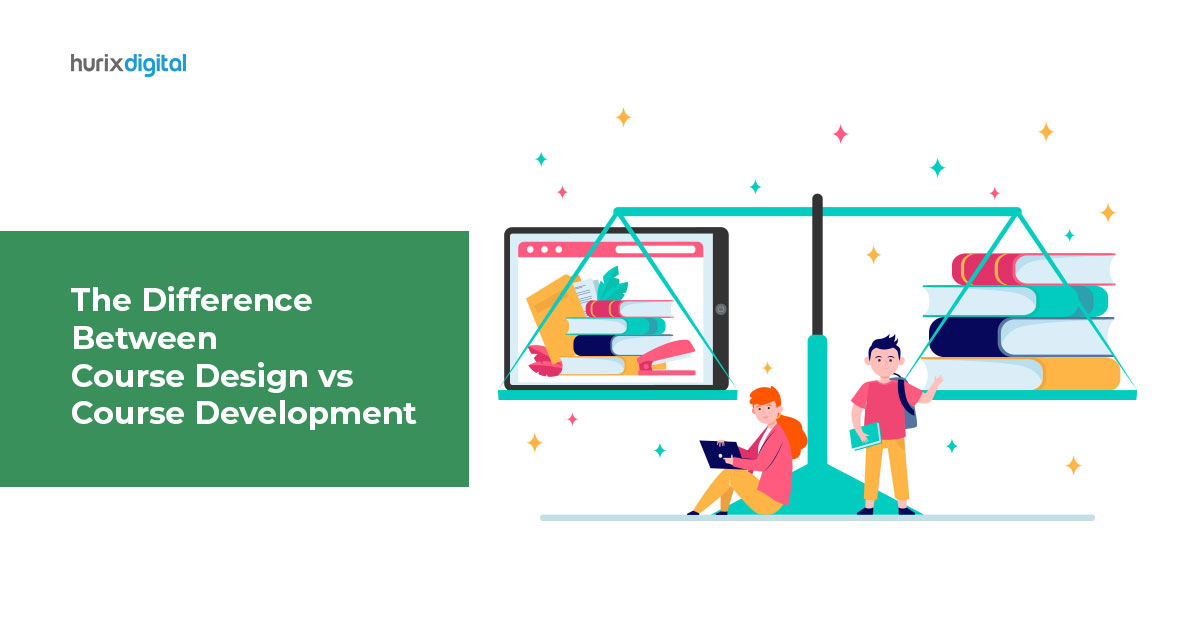
The Difference Between Course Design Vs Course Development

[vc_row][vc_column][vc_column_text]Course design and development is an important part of the content-building workflow for publishers, corporates, and other entities. The subjects and outcomes may be diverse, but the process is similar to building a high-quality product.  The demand for high-quality content is very growing as consumer expectations grow. In 2021, the global eLearning market size was valued at $210.1 billion. Growing at a compound annual growth rate of 17.54% to grow to $848.12 billion by 2030.  At the same time, the number of players vying for market share is growing. Hence, putting the right e-content design and development process in place is a top priority for content publishers. Such as process must facilitate the seamless churning out of high-quality content in an efficient, sustainable, and scalable manner.   What Is E-Content Design And Development? The process used to conceptualize and create e-content or electronic content is called e-content design and development. Within e-content, one of the fastest-growing categories is e-learning. Learners can range from across the educational hierarchy, corporate learners, and part-time learners looking for engaging courses in their area of interest. With over 6.8 billion using smartphones in the world, there is a growing number of learners wanting to access courses via mobile. Hence, the relevance of e-content quality has also shot up. How Learner Aspirations Have Evolved Learner expectations have also evolved. More learners aspire to learn via mobiles anytime, anywhere. Learners also want more engagement with learning content. Rather than learn merely through text and images, they want to learn to serve relevant purposes. For instance, learning must be accessible to learners with limitations and facing barriers. They also want e-learning modules to break down concepts through the use of visual, audio, and interactive learning modules. This is where superior investments in online program development can drive shifts. K12 publishers, for instance, will need to elevate the quality of instructional design in higher education to achieve these results. Hence, e-Content creators must pay more attention to two key aspects – course design and course development.   Course Design vs Course Development  Many creators of e-content get confused between course design and course development. Though they sound similar, they play very different roles in the workflow and require diverse skill sets. Here is a snapshot of the key differences between course design and course development.  The Concept Within the workflow, course design comes first. This is a process, which involves ideation of the program, doing research about existing programs, setting goals, and also setting criteria for program outcomes. Educational program design is an extremely important step and foundation of the project. Once these basics have been established, the next phase – course development – kicks off. Course development is an execution-heavy process that requires a very different set of skills to power it. This process includes creating content for the entire course and bringing various modules to life.   The Process  The process itself is very different for both stages. For instance, in the research phase of course design, the lead will identify a gap that needs to be filled through courses. They will delve deeper into audiences’ needs and how they can be better served through content. Course design leads must also understand the challenges and limitations of audiences so that the course can be effective. They will need to clearly identify the objectives of the course and also determine how the success of the course will be measured. On the other hand, course development requires developers to understand what kind of technologies, learning formats, and design flows can make learning more effective. They will need to flesh out the curriculum extensively and painstakingly produce the final product, which can easily be accessed and distributed.  Key Skills Needed Course design and course development demand unique skills. Here is a snapshot of the core skills required for both processes:   Course Design Domain knowledge: Course designers or instructional designers can benefit from having some domain knowledge in the subject connected to the course. They need not be experts.  Research: Stellar research abilities can help course designers identify gaps and need in the market and the approach to learning. They must be able to sift through data and leverage it to build courses. They must have a clear idea of how to structure online courses for them to stand out from the clutter.  Problem-solving: Addressing current learning gaps through creative problem-solving is useful for instructional designers.  Project management: Course designers need to engage with multiple stakeholders – from developers and curriculum providers to management.  Course Development Tech skills: With e-content becoming much more engaging and interactive, projects need developers with a wide range of technical skills. The technical staff builds the software and interfaces required to make content consumable and accessible.  Domain skills: Subject knowledge is a key aspect of helping ensure that the course material is authentic and there are no errors in content.  Soft skills collaborators will need to possess collaborative and communication skills. They must leverage communication skills to stay connected and function as a team. Accountability is also an important aspect of this journey.  Technology Requirements  Digital content design and development require the right tools to make it an efficient process. Businesses now have access to superior digital publishing suites that are custom-designed for such a need.  Content designers and creators can easily bring their vision to fruition, especially when it involves multi-media content. Such platforms support embedding video, audio, infographics, and interactive elements.  At every step of the way, publishers have access to superior data analytics and insights that can help them design courses that are more relevant to a contemporary audience.   Digital rights management tools can be leveraged to deliver access only to authorized users, for instance, customers who buy or rent the content. This feature helps prevent plagiarism and loss of revenues. The need is so dire that the global digital rights management market is expected to grow from $4.3 billion in 2022 to $7.9 billion in 2027.  The entire process can be managed from a

The Relationship Between Curriculum Development And Evaluation

[vc_row][vc_column][vc_column_text]Curriculum development is a continuous process that keeps evolving to cater to changes in the classroom, the influx of technology, and student evaluations. As a result, it also isn’t a process that works in isolation, as it needs almost consistent inputs to refine it year after year.  What, however, is the exact relationship between curriculum development and evaluation? What is the difference between curriculum development and curriculum evaluation? How does the latter affect the former? This article will dive into the evaluation process, its different types, and its purposes to demonstrate the various ways it influences the design of student curriculums.  What Is Curriculum Evaluation?  Curriculum evaluation refers to analyzing the effectiveness of the resources and tools, such as technology, used for instruction in the K12 curriculum, among others. The evaluation is conducted based on data and trends identified by the measuring and testing process. The evaluation consists of two parts. The first involves assessing student performance vis-a-vis the goals of the curriculum to see whether the students are meeting the standards expected of them. It also goes on to evaluate their performance.  On the other hand, the second part of the process involves assessing the tools used to instruct students, along with the teacher’s performance. While the first part of the process can be done almost daily, the second part often takes place over an extended period of time.  However, both help curriculum developers understand its effectiveness, providing them with tangible evidence to use to improve it for the future.  The Key Purpose Of Evaluation  Evaluating the success of the curriculum is key to its development and improvement over time. This is the process of conducting formative and summative assessments of the curriculum, its associated teaching methodologies, and the tools used to impart education to ensure the key goals are met. Digital curriculum providers continuously evaluate curriculums to make them more refined and comprehensive. Its role is to provide objective data to check whether or not the curriculum is benefiting its intended beneficiaries. This helps tailor objectives and goals to ensure that the curriculum helps attain the most relevant ones. It’s a crucial element of curriculum development, as the K12 education market is set to grow to a whopping $525.7 billion by 2031. This spells the need for continuous improvements to ensure the curriculum remains relevant.  When looked at closely, evaluation data serves several purposes to help with curriculum development. These include:  It helps assess improvements at the student level, such as what skills and knowledge they’ve acquired, where the child could need help, what kind of help they need in particular, and what tools can be used to help each student’s development.  In the classroom, evaluation data can help analyze which objectives in the curriculum have been met, whether the tools and methods used are relevant, and if any re-teaching is needed.  At the school level, it can help curriculum developers understand if there is less or more emphasis on an individual class, whether the overall objectives are being met, and if any areas require more attention throughout the school. It also helps assess the school’s effectiveness as a whole.  At its crux, evaluation helps understand the curriculum’s strengths and weaknesses, allowing its developers to use objective data and make necessary improvements. However, the evaluation results will prove good if schools and institutions adopt certain best practices when developing curriculums.  What Are The Criteria For Curriculum Evaluation?  Several criteria come into play when evaluating a curriculum’s success. However, some objectives aren’t easy to assess when evaluating, while others are. An example of the former includes assessing someone’s honesty and integrity via a written examination.  When evaluating the success of a curriculum, three main domains are taken into consideration. These are the affective, cognitive, and psychomotor domains. These are described below.  Affective: The affective domain assesses value traits such as motivations, integrity, interests, and honesty, among others.  Cognitive: This domain assesses intellectual skills across the board.  Psychomotor: The psychomotor domain helps the brain coordinate a physical task, which can often be difficult to assess in terms of its logistics.  The various criteria based on which a curriculum is evaluated are described below.  Comprehensiveness  Comprehensiveness is perhaps among the most important criteria for evaluating a curriculum. Given that it’s only the cognitive aspect that’s often assessed, the aim of being comprehensive is also to ensure that the evaluation covers the administrative and general aspects of the education system.  This involves assessing the methods of instruction to see whether or not they’ve proved to be effective. It also involves evaluating individual learners to understand what their needs are and how the curriculum can better meet them.  Further, with advancements in AI, and the overall investment in AI technology in education set to grow to $3.68 billion this year, curriculums need to include such tools to be more comprehensive.  Reliability  A reliable curriculum is one that offers consistent results irrespective of the time. This is a crucial aspect to consider when evaluating curriculums.  Validity  Different educational instruments are used to measure different functions. For example, examinations and quizzes are meant to assess how well a student or a group of students have grasped the concepts taught to them. Validity is a test of how well these instruments are at evaluating the functions they’re supposed to assess.  Relevance  Relevance measures how ‘present’ the curriculum is given the larger context in which it is developed and provided to students. These include national and state priorities, educational goals, and so on.  Efficiency  Different parts of a curriculum make use of different instruments to teach a concept. Efficiency is a measure of efficient these instruments or resources are in meeting the goals laid down in the curriculum.  Impact  A curriculum’s positive or negative impact is measured in terms of its effect across various aspects, be it social, environmental, economic, and more. It’s also a measure of the impact on groups or communities as a whole. About 63% of respondents in a survey also stated that

The Scope of Higher Education with e-Learning in the Digital Era

[vc_row][vc_column][vc_column_text]E-learning in higher education has become increasingly popular as technology has advanced, and online learning platforms have become more sophisticated and user-friendly.  With the ability to access educational resources from anywhere at any time, more and more students are opting for e-learning as a convenient and flexible way to pursue higher education.  In this article, we will explore the scope, latest trends, and solutions in e-learning for higher education, including the growth of e-learning, the role of online learning platforms for higher education, the benefits of e-learning, and the challenges and solutions that need to be addressed.  We will also examine the future of e-learning in higher education as technology continues to evolve and new advancements are made. The Growth of E-Learning in Higher Education The growth of e-learning in higher education has been significant in recent years. According to a report by Forbes, the e-learning market for higher education is expected to grow by 9.5% annually, reaching a market size of $325 billion by 2025.  The increasing demand for flexible and convenient learning options and the growing adoption of e-learning by universities and colleges worldwide drive this growth.  With the ability to access educational resources from anywhere at any time, e-learning is becoming an increasingly attractive option for students looking to pursue higher education.  Additionally, e-learning is becoming more affordable, as the cost of online programs is often lower than the cost of traditional on-campus programs.  The growth of e-learning in higher education is also supported by the increasing availability of online learning platforms, making it easier for students to access educational resources. The Impact of Higher Education Solutions Higher education solutions that leverage e-learning is becoming more prevalent and have a significant impact on the education landscape.  These solutions include virtual and augmented reality, gamification, and adaptive learning, which enhance the learning experience by making it more interactive and personalized. Virtual and augmented reality technology can make the learning experience more immersive and engaging, while gamification can make it more interactive and fun.  Adaptive learning, on the other hand, can personalize the learning experience based on a student’s individual needs and abilities, leading to better engagement and knowledge retention. Furthermore, these solutions can improve the effectiveness and efficiency of the educational process. For example, adaptive learning can help students identify areas where they need more support and provide targeted instruction, reducing the need for remediation.  Additionally, virtual and augmented reality can provide hands-on, experiential learning opportunities that can be difficult to replicate in a traditional classroom setting. These solutions can also be integrated with online learning platforms, making them even more accessible for students. These higher education solutions are expected to evolve and improve as technology advances. The Benefits of E-Learning in Higher Education E-learning in higher education provides several benefits for students, including flexibility, convenience, and access to a wider range of resources and instructors: Flexibility is one of the main benefits of e-learning in higher education. With e-learning, students can access educational resources from anywhere at any time, allowing them to balance their education with work or family commitments. This flexibility is particularly beneficial for working professionals, parents, or students living in remote areas who may not be able to attend traditional on-campus classes. E-learning also offers convenience, as students do not have to commute to a physical location to attend classes, which can save time and money. Additionally, e-learning often costs less than traditional on-campus programs, making it more accessible to a wider range of students. E-learning provides students access to a wider range of educational resources and instructors. With e-learning, students can access a variety of course offerings and gain diverse perspectives. This is particularly beneficial for students interested in studying a specific topic or field but who do not have access to it at their local college or university. Challenges and Solutions Despite the clear benefits of e-learning in higher education, there are also some challenges that need to be addressed. Below are some of the main challenges: Ensuring the Quality of Online Education: This includes ensuring students have access to the same resources and opportunities as those enrolled in traditional courses. Limited Interaction and Socialization: Online education may provide limited opportunities for interaction and socialization compared to traditional on-campus education. Technical Issues: Technical issues such as internet connectivity and computer problems can disrupt the learning process. To combat these challenges, several solutions can be implemented: Providing Support Systems: Universities and colleges can invest in support systems such as online tutoring, counseling, and academic advising to help students succeed in their online education. Incorporating Interactive and Collaborative Features: Online learning platforms can incorporate interactive and collaborative features such as discussion boards, group projects, and virtual office hours to provide opportunities for interaction and socialization. Providing Technical Support: Universities and colleges can provide students with technical support to help them troubleshoot any technical issues that may arise. Incorporating Engagement Strategies: Universities and colleges can incorporate engagement strategies such as gamification, adaptive learning, and personalized instruction to ensure student engagement and retention. The future of e-Learning in Higher education The future of e-learning in higher education looks promising as technology continues to evolve and new advancements are made. Some of the key trends that are expected to shape the future of e-learning include: Artificial Intelligence and Machine Learning: AI and machine learning are expected to play a bigger role in e-learning, allowing for more personalized and adaptive learning experiences. Virtual and Augmented Reality: VR and AR are expected to become more prevalent in e-learning, providing students with more immersive and engaging learning experiences. Mobile Learning: With the increasing use of mobile devices, mobile learning is expected to become more prevalent, making e-learning more accessible for students on the go. Blended and Hybrid Learning: Blended and hybrid learning, which combine online and on-campus education, are expected to become more popular, providing students with the best of both worlds. Microlearning: Microlearning, focused on small, targeted lessons, is expected to become more prevalent in e-learning as it

Five emerging technologies in higher education learning

[vc_row][vc_column][vc_column_text]Higher education technology companies are constantly looking for new and innovative ways to enhance the learning experience for students. With the advent of technology, the way we learn and teach constantly evolves.  Let’s look at 5 emerging technologies poised to significantly impact higher education learning in the near future. Virtual and Augmented Reality Virtual and augmented reality (VR/AR) technology has been gaining popularity in recent years as a tool to enhance the learning experience for students.  VR technology immerses users in a virtual environment, allowing them to interact with simulations, models, and other visual aids in an impossible way with traditional methods. AR technology, on the other hand, overlays digital information onto the user’s view of the real world. One of the key benefits of VR/AR technology in higher education is that it allows students to engage in hands-on learning, even when they are not physically in the same location.  For example, VR technology can create virtual field trips that let students explore natural landmarks, historical sites, and other locations from the comfort of their classrooms. This technology can also create virtual labs where students can conduct experiments and gather data in a controlled environment. However, it’s also important to note that VR/AR technology can be costly and require specialized equipment, which may be a barrier for some institutions. Further, it’s important to ensure that VR/AR technology is used effectively and meaningfully rather than just as a gimmick. Artificial Intelligence and Machine Learning Higher education technology companies are increasingly using artificial intelligence and machine learning to analyze student data and personalize the learning experience. Using data on student performance, these technologies can predict which students may be at risk of falling behind and provide them with additional resources and support. AI-enabled tutoring systems can also help students improve their understanding of a topic through personalized feedback and instruction. AI and ML can also automate repetitive and time-consuming tasks such as grading and assessment, freeing educators to focus on more important tasks such as providing personalized instruction and feedback to students. However, it is important to note that AI and ML are not a panacea, and the implementation of these technologies in higher education learning should be done thoughtfully. It’s crucial to consider factors such as data privacy, ethical considerations, and how to ensure that the technology is inclusive and accessible to all students. Overall, the incorporation of AI and ML in education can enhance students’ learning experience by providing them with personalized instruction, predicting student performance, and improving student outcomes. Adaptive Learning Adaptive learning technology is designed to adjust the content and pace of instruction to match the needs of individual students. This technology in higher education uses data on student performance to identify areas where students need additional support and provide them with targeted instruction.  The goal of adaptive learning is to create a personalized learning experience for each student, helping them to progress at their own pace and reach their full potential. One of the main benefits of adaptive learning technology is that it can improve student outcomes by providing targeted instruction. By identifying areas where students need additional support, adaptive learning systems can provide targeted instruction tailored to their specific needs.  This can lead to improved student performance and retention, as students can receive instruction tailored to their specific needs. Adaptive learning technology can also create personalized learning pathways for students, allowing them to progress through the material at their own pace. By providing students with the opportunity to work at their own pace, adaptive learning systems can help to increase student engagement and improve student outcomes. Learning Management Systems Learning Management Systems (LMS) are web-based platforms that provide a central location for students to access course materials, assignments, and other resources. These systems can also track student progress, provide feedback, and facilitate communication between students and instructors.  With more classes being offered online, LMS technology is becoming increasingly important in higher education. One of the main benefits of LMS technology is that it can provide students with easy access to course materials and resources, which can greatly enhance their learning experience. In addition, by providing students with a centralized location to access course materials, assignments, and other resources, LMS technology can help to increase student engagement and improve student outcomes. The use of LMS technology in higher education is becoming increasingly popular. According to a report by MarketsandMarkets, the global LMS market is expected to grow at a CAGR of 19.1% between 2020-2025. Gamification Gamification incorporates game elements, such as points, badges, and leaderboards, into non-game contexts. For example, gamification can motivate and engage students in higher education, making learning more interactive and fun.  By using game elements, educators can create a more engaging learning environment that encourages students to take an active role in their education. One of the main benefits of gamification in education is that it can increase student engagement and motivation. By incorporating game elements into the learning process, educators can make learning more interactive and fun, which can help keep students motivated and engaged in the learning process. This can lead to improved student outcomes, as students are more likely to retain information when they are engaged and motivated. Another benefit of gamification in education is that it can be used to create personalized learning experiences. By using game elements, educators can create customized learning paths that allow students to progress at their own pace. This can help increase student engagement and improve student outcomes. Gamification is still a relatively new concept in education, but it is expected to grow in popularity in the coming years. According to a report by MarketsandMarkets, the global gamification market is set to grow at a CAGR of 27.4% between 2020-2025. Conclusion Higher education technology companies are constantly innovating and developing new technologies to enhance the learning experience for students. From virtual and augmented reality to adaptive learning and gamification, these emerging technologies can potentially transform how we learn. As technology in higher education

Technologies to invest in boosting higher education learning

[vc_row][vc_column][vc_column_text]The learning and education sector has seen drastic developments and unprecedented changes in the post-COVID-19 world. Online education is growing rapidly across the globe, and technological innovations are changing how education is imparted every day.  In such a dynamic environment, every education technology company must constantly update the technologies used to design, develop, and implement different educational programs.  According to a study by Holon IQ, education technology is slated to grow 2.5 times from 2019 to 2025 and is expected to reach $404B in total global expenditure. Therefore, investing in the right kind of higher education technology is pertinent for companies to reap the benefits of technology in higher education.  Ideal Technological Investments for an Education Technology Company  In the current educational landscape, utilizing learning technologies across different digital platforms is pretty much the norm and is a critical factor for e-learning modules.  As the various methods of imparting education continue to evolve, every education technology company needs to update itself continually. Here are some emerging technological practices that will support the growth of higher education in the near future. Digital Learning Technologies  Digital learning technologies are constantly evolving, and every education technology company needs to invest in newer avenues of digital learning and teaching solutions.  These investments may involve significant expenses in infrastructure to support emerging technologies. Here are some common digital learning technologies. Learning management system (LMS) An LMS integrates all course materials, learning modules, exercises, and activities. In addition, it allows for online discussions, group activities, grading assignments, etc.  Multimedia  Multimedia can include video, audio, and other kinds of interactive content. Some multimedia apps can also be embedded in the LMS for more convenient usage.  Collaborative Applications Cloud-based or online applications that allow students to collaborate with their instructors and peers are essential elements that every education technology company should invest in. Synchronized Technologies  Synchronization between different applications and media is necessary to conduct real-time online sessions. In addition, this synchronization helps maintain interactivity in online classes. Emerging Technologies  Emerging technologies, such as artificial intelligence (AI), augmented reality (AR), extended reality (XR), and virtual reality (VR), are expected to enable more engaging teaching methodologies in the coming years. Modes of Instruction  Online education and e-learning modules can be imparted through various instructional modalities. If a course is available in several modalities, students can choose whichever methodology suits them the best.  Classroom Teaching  In this method, the teaching occurs in a classroom, where in-person interaction between the students and the instructors is held. In addition, the use of technology enhances teaching. Online Teaching The entire teaching process occurs online in this modality and is imparted using various technologies.  Hybrid This is a blend of the classroom teaching method and online teaching. Students have the flexibility to choose either option. Sometimes, they may even have the option of choosing both.  Support Services  When an education technology company invests in technological innovations, it must also make additional investments in support services. Some support services are essential for the successful digital transformation of the educational landscape. Technology Support Staff  Additional technology support staff members must be hired whenever an institution updates its educational technologies. The increase in online education has made 24/7 technology support for students and instructors mandatory. Instructional Designers Every education technology company needs to hire instructional designers to support the instructors in effectively implementing e-learning modules. Student Support Services  Students need dedicated academic support to access online libraries and other resources. They also need support for registration, course advice, and consultations.  Instructor Development  Teachers and instructors must undergo regular training and development to keep up with the changing educational landscape.  When instructors had to quickly move to online teaching from classroom teaching during the pandemic, many didn’t have adequate training to make a smooth transition.  Providing adequate training opportunities and resources to the faculty is essential to help them improve their technological skills.  Learner Development  Students and learners across age groups and social classes have had to quickly adapt to the rapidly changing world of education in the past few years since the pandemic hit.  While contemporary learners have access to opportunities and resources that were inconceivable just a few years ago, they also face various challenges in a highly digitized world. Learners should ideally be trained in basic technology and life skills, including computer and internet skills, self-discipline, time management, teamwork and collaboration, stress management, self-motivation, community building, etc. It is also important to provide students with adequate mental health support.  Organizational Policies  More organizational policies must be developed and implemented to support online teaching and e-learning modules.  Responsibilities of teachers, teaching load, enrolment criteria for students, evaluation criteria, and many other factors must be considered while formulating new organizational policies.  Organizations should also examine the funding models for different instructional modalities. Another important issue to be considered is the inequalities in students’ ability to access technological resources. Benefits of Technology in Higher Education In the modern world, technology is indispensable in higher education. The use of technology has enhanced the education and learning processes in numerous ways. Here are a few benefits of technology in higher education. Personalized learning opportunities Increased collaboration among peers Improved levels of learner engagement Incorporates different learning styles Improved teacher productivity Access to unlimited resources Better accessibility and inclusion  Enhanced creativity in learners Automation and online assessment   How Can Hurix Help You? Do you own an education technology company and plan to invest in the latest technological innovations to boost higher education? There are numerous options for you to consider, each with its own pros and cons.  Working with a professional company to implement the best technological updates for your organization can make the process more effective. Hurix Digital has over 20 years of experience helping education technology companies choose the best e-learning practices for their students.  Contact our experts at Hurix to understand your needs better and implement the best higher education technologies to serve your students more effectively. [/vc_column_text][/vc_column][/vc_row]

️How Can You Balance Multiple Content Distribution Goals?

[vc_row][vc_column][vc_column_text]Any marketing strategy must include creating content, but the delivery of that material is just as crucial.  Multiple content distribution goals can become challenging, particularly if you have several different audiences to cater to or if you have several platforms on which to distribute your content.  However, by creating a well-rounded content distribution plan, you can balance your multiple content distribution goals to achieve maximum impact.  In this article, we will explore several strategies to help you balance your content distribution goals. What is Content Distribution? The process of distributing and marketing your material to reach a larger audience is called content distribution. This can include sharing your content on social media, email marketing, search engines, video-sharing platforms, and other digital channels.  Distribution of your content is crucial since it guarantees that it reaches your target audience and aids in the accomplishment of your marketing objectives. Without effective content distribution, your content may go unnoticed and fail to generate the desired results. Content Distribution Channels There are several content distribution channels that you can use to reach your target audience. Here are some of the most popular channels: Content can be easily shared on social media sites like Facebook, Twitter, LinkedIn, and Instagram. You may expand your audience and boost interaction by sharing your content on these channels. Email marketing is a fantastic way to share your material with your subscribers immediately. You can utilize email newsletters, promotional emails, and other email campaigns to share your material with your subscribers. Search engines like Google, Yahoo, and Bing are great for distributing your content to people searching for information related to your content. By optimizing your content for search engines, you may increase your exposure and attract more users to your website. Video-sharing platforms like YouTube, Vimeo, and TikTok are great for distributing video content. By creating and sharing videos on these platforms, you can reach a large audience and increase engagement. Content syndication involves distributing your content on third-party websites. This can assist you in expanding your audience and boosting website traffic. Influencer marketing involves partnering with influencers to distribute your content to their followers. This can help you reach a targeted audience and increase engagement. Podcasts are a great way to distribute audio content. You can reach a targeted audience and increase engagement by creating and sharing podcasts. Content discovery platforms like Outbrain and Taboola are great for distributing your content to a wider audience. These platforms display your content as recommended articles on other websites, which can help you attract more traffic to your website. Using a number of methods to connect with your target audience is, in general, the key to efficient content distribution. You can boost your visibility, drive more visitors to your website, and accomplish your marketing objectives by utilizing a variety of platforms. Latest Statistical Trends Here are some more recent statistical trends related to balancing content distribution goals: According to a survey by Venngage, 84% of marketers say that creating content that is engaging and relevant to their audience is their biggest challenge. According to a Demand Gen survey, 96% of B2B buyers desire content with greater contributions from subject matter experts and industry thought leaders. A report by Adobe found that 59% of consumers say that engaging content makes them more likely to make a purchase. According to a study by Social Media Today, 60% of consumers prefer to watch videos on social media platforms rather than on traditional TV. A survey by Content Marketing Institute found that 93% of B2B marketers use LinkedIn for content marketing, making it the most popular platform for B2B content distribution. These statistics highlight the importance of creating engaging and relevant content, using industry thought leaders, optimizing for mobile devices, and leveraging social media platforms like LinkedIn to reach your target audience. By understanding these trends and incorporating them into your content distribution strategy, you can increase the effectiveness of your content marketing efforts and achieve your marketing goals. Strategies to Help You Balance Your Multiple Content Distribution Goals Identify Your Content Distribution Goals The first step is to identify what those goals are.  Ask yourself: What exactly are you trying to achieve with your content? Who is your target audience? What platforms do you want to distribute your content on? What is your desired outcome?  By answering these questions, you can create a clear picture of what you want to achieve and how you will measure your success. Segment Your Audience You can’t expect to create one piece of content that resonates with every audience member. Instead, segment your audience into groups based on factors like age, gender, location, and interests.  By doing so, you can create content tailored to each group’s specific needs and preferences, increasing the chances of engagement. Utilize Different Platforms No single platform will be able to reach every member of your audience. Therefore, you should diversify your content distribution strategy using various platforms such as social media, email, podcasts, and video. By doing so, you can reach a more extensive audience and increase the chances of engagement. Repurpose Your Content Creating new content regularly can be time-consuming and expensive. However, you can balance your multiple content distribution goals by repurposing your existing content.  For example, you can turn your blog post into a video or create an infographic from a white paper. By repurposing your content, you can distribute it across multiple platforms without having to create new content every time. Use Paid Advertising Implementing paid advertising using platforms such as Google AdWords or Facebook Ads can help you target specific groups of people with your content. It is particularly useful for promoting new products or services, reaching new audiences, and increasing brand awareness. Measure Your Success Tracking your progress can help you identify what is working and what isn’t.  Analyzing metrics such as engagement rates, click-through rates, and conversion rates can help you fine-tune your content distribution strategy to achieve maximum impact. Conclusion Balancing multiple content distribution goals

Top 5 LMS Vendors in the World in 2023

[vc_row][vc_column][vc_column_text]Are you looking to streamline your organization’s training and development programs? Are you tired of manually managing your learners’ progress and performance? Consider implementing a learning management system (LMS). An LMS is a software application designed to facilitate and manage the delivery, tracking, and assessment of learning content. With an LMS, learners also have access to a variety of engaging and interactive content, including videos, quizzes, and gamification elements. So, whether you’re an HR manager, a training coordinator, or a learning and development professional, an LMS can help you achieve your organizational goals and objectives. Let’s explore the top five LMS vendors, so you can find the right solution for your organization’s needs. 1. Hurix Hurix is a popular cloud-based LMS vendor that offers a range of features to help organizations create, manage, and deliver their training and development programs. One of the standout features of Hurix is its customization options. With Hurix, you can tailor the LMS to your organization’s unique needs, including branding, user roles, and course content. The platform also provides an array of content creation tools, including support for a variety of media types and assessment options. Another pro of Hurix is its scalability. The platform can accommodate organizations of all sizes, from small businesses to large enterprises. Additionally, Hurix offers mobile compatibility, allowing learners to access digital content on the go. Highlights Provides detailed analytics on learner progress and engagement, allowing administrators to track performance and make data-driven decisions. Includes collaboration features, such as discussion forums and chat rooms, to facilitate peer-to-peer learning and knowledge sharing. Supports multiple languages, making it accessible to learners worldwide. 2. Moodle Moodle is an open-source LMS that is widely used in educational institutions, businesses, and other organizations around the world. Developed by Martin Dougiamas in 2002, Moodle provides a flexible and customizable platform for creating and delivering online courses and employee training programs. One of the major advantages of Moodle is its affordability – as an open-source platform, it is available for free, making it an accessible option for organizations with limited budgets. However, there are some downsides to using Moodle. While the system is highly customizable, this also means that it can be complex to set up and configure, especially for users with limited technical expertise. Highlights Supports a variety of learning activities such as quizzes, assignments, and discussions Provides communication tools such as forums, messaging, and video conferencing Integrates with other systems and tools such as social media, calendars, and e-commerce platforms 3. Canvas Third on our list of the best LMS vendors is Canvas. It is designed to support online and blended learning environments in educational institutions and businesses. One of the main features of Canvas is its user-friendly interface, which is easy to navigate for both teachers and students. Canvas also offers a range of customization options, such as themes, plugins, and modules, allowing users to tailor the system to their specific needs. It also provides an open API, allowing developers to integrate the platform with other systems and tools. While Canvas does offer a free version of its platform, it is limited in terms of features and support. For organizations that require more advanced features or support, the cost of using Canvas can be relatively high. Highlights Offers communication tools such as messaging, video conferencing, and web conferencing Scalable and reliable as a cloud-based platform Provides a range of accessibility features for students with disabilities 4. D2L Brightspace  D2L Brightspace is known for its focus on student-centered learning and its flexibility in accommodating different teaching and learning styles. It uses adaptive learning technologies to personalize the learning experience for each student. Moreover,  D2L Brightspace is designed to support competency-based learning, which focuses on developing specific skills and knowledge rather than simply completing courses. Not to mention, it allows users to deliver a wide range of learning activities and assessments and tools for communication, collaboration, and analytics. While D2L Brightspace is designed to be user-friendly, there may be a learning curve for educators and students who are new to the platform. Highlights Supports gamification features that enhance student engagement and motivation Offers multilingual support, making it a good option for global use Includes collaborative tools for communication and group work 5. Edmodo Edmodo is a solid choice for K-12 educators and students looking for a user-friendly and collaborative LMS. It allows teachers to create and share class materials, engage students in discussions, and track student progress. Edmodo offers a free basic version that provides access to most of its features, including discussion forums, messaging, and group collaboration tools. This makes it an affordable option for schools and teachers. Highlights Edmodo has a mobile app that allows students, teachers, and parents to use the platform from anywhere at any time. It offers parents access to their child’s account, allowing them to monitor their child’s progress and communicate with their child’s teacher. Edmodo is designed to promote social learning, which means that it provides students with an opportunity to interact with their peers and teachers in a collaborative and engaging environment. Conclusion With so many options available in the market, choosing the right LMS vendor can be a daunting task. However, by studying our list of the top 5 LMS vendors in the world for 2023, you can find a solution that fits your organization’s unique needs. Whether you opt for an open-source platform like Moodle or a comprehensive cloud-based LMS like Hurix, each vendor on our list provides a range of features and benefits to help you achieve your organizational goals and objectives. So, take the time to evaluate your needs, goals, and budget, and choose an LMS vendor that can provide you with the best value and return on investment. Remember, a well-implemented LMS can help you improve not only your training and development programs but also enhance your employees’ performance and productivity. Looking for a reliable and effective LMS vendor? Hurix can help! Contact us today to learn more about our customizable and

How is K-12 Education Changing The Learning Trends Worldwide?

[vc_row][vc_column][vc_column_text]While technology has been making its way into every aspect of our lives, it has had a particularly major impact on the education sector over the past two years. The global COVID-19 crisis has resulted in technology being rapidly adopted to ensure educational continuity, with improvements being made every single day.  When considering K-12 education in particular, the changes have paved the way for how learning is provided and consumed in more ways than one. As a result, the online K-12 education sector is projected to grow to $12,930 million by 2028.  This guide will dive into six major ways K-12 education has shaped learning trends worldwide.  6 Ways K-12 Education Has Shaped Learning Trends  From the increased use of augmented reality to creating an interactive learning environment, there are different ways in which K-12 education is shaping learning trends in several ways. These are explained in greater detail below.  1. The Increased Use of Interactive Video Content  One of the key challenges that the sudden shift to online learning presented was ensuring a level of engagement on par with that of being in a physical classroom. Further, using technology as the primary learning medium proved challenging for teachers and students.  However, with time, educational platforms have paid a great deal of emphasis to using video content to make concepts easier to grasp while also making them more engaging for the students. In fact, 45% of elementary school students considered video content among their favorite learning methods.  This shows the immense potential of increasingly adopting video content in learning solutions.  2. Greater Access to Education Via Mobile Devices  With students learning from home for over two years, schools and institutes worldwide have worked to ensure students can access their learning material via any device whatsoever. This includes mobile devices and tablets.  This wide compatibility has gone a long way in ensuring students aren’t deprived of learning due to limitations caused by their own devices. This is of immense importance, considering spending across products reduced significantly during the heat of the pandemic. Also, with smartphone purchases increasing worldwide, many students are bound to reap the benefits of this greater accessibility.  3. An Increasingly Personalized Learning Experience  One of the primary advantages of the changes in the K-12 education system in recent years is that they have made the learning experience far more personalized. This is a crucial aspect of the digitization of learning as it considers each student’s different learning capabilities.  This approach helps teachers understand individual students’ weaknesses, strengths, and potential areas of improvement. It can help them create a more personalized approach as a part of their curriculum development process while also involving technology to make it future-proof. However, with the influx of technology, all these aspects are taken care of by Artificial Intelligence, as the software provides students with feedback and any required course correction. Further, the use of technology also allows students to pick up right where they left off, thereby giving them the space and time required to understand concepts better and be on par with their peers.  Such an individualized approach to learning can also lead to significantly better outcomes in terms of academic performance.  4. The Introduction of a Hybrid Learning System  While education largely moved online during the pandemic, it goes without saying that this poses several challenges for students who need access to the technology required or those who tend to learn better in a more collaborative environment.  The benefit of hybrid learning is that it offers a classroom-like experience to students, allowing them to collaborate with their peers in real-time while also participating in group discussions, quizzes, and other activities.  Hybrid learning also presents a rather lucrative opportunity for schools, as it significantly reduces the costs involved in getting students to study in a physical building. Moreover, with several logistics out of the way, schools can invest more money in making the learning experience more intuitive and personalized.  5. Greater Gamification Leading to Improved Outcomes Technology in the education sector has reached a point where courses are no longer just digitized versions of good old textbooks. It has made it a lot more engaging and interactive, primarily due to the gamification of education.  Gamification refers to the process of blending gaming with learning and is set to be among the biggest trends in the years to come. Games have proved to be a great way to help students solve complex problems in a game, offering them a different approach to understanding concepts rather than traditional rote learning.  Other than the improved engagement levels and problem-solving abilities, gamification also improves attention spans and students’ abilities to retain information. This is because the game-like approach to learning engages them far more than reading a concept, motivating them to solve a problem rather than giving up too soon.  6. Ensuring the Professional Development of Teachers  One of the biggest advantages of the increased role of technology and the internet in learning is that it helps teachers keep themselves updated with the latest technologies and techniques. This motivates them to try and potentially implement these to improve students’ understanding of concepts and their overall academic performance.  Further, it helps teachers remain updated with the latest information in their subject of expertise, which is often unlikely when relying on a textbook with limited information.  Education institutes must realize these benefits and do their bit to ensure the professional development of their teachers. Given below are a few ways to do so. Offer regular training sessions that allow teachers to leverage the tools at their disposal to improve students’ overall learning experience.  Conducting routine tests to ensure teachers display the highest standards.  Hiring the personnel required to ensure a seamless transition to a fully digital learning environment, along with those required to troubleshoot any issues with the technology itself.  In Conclusion  With the rapid transformation of the ed-tech industry, students are bound to benefit from the increased use of technology. However, this depends on how schools

5 Benefits of K-12 Education in The 21st Century

[vc_row][vc_column][vc_column_text]The K-12 education system has witnessed immense development, especially since the COVID-19 pandemic. As a result, the approach to teaching has become more personalized and learner-centric, and the technologies used to enhance the educational experience have taken several leaps forward. These factors have created an education system highly beneficial for students and teachers alike while making the K-12 curriculum more comprehensive with every passing year.  This guide will dive into the five key benefits the K-12 education system offers in the 21st century.  5 Major Benefits of K-12 Education  While the advances in K-12 education offer several benefits, some particularly stand out in making this an effective system of education – 1. Builds a Strong Foundation  The K-12 system strengthens students’ foundation in crucial subjects and skills, including math, science, language, and social sciences. K-12 education also helps students master basic skills like reading and writing, which are crucial in attaining higher education and the job market.  Apart from academic and professional skills, K-12 education motivates students to become independent. Math, for instance, isn’t restricted to textbooks and theory; having a strong foundation in the subject can help students create effective budgets, manage their taxes, and make the right investments. Mastering the basics is required to progress in any subject and build a strong foundation. With new education technologies, teachers can help students practice the necessary skills according to their individual needs so that no student gets left behind.  2. Makes High-Quality Education Accessible to All  Another crucial benefit of advances in K-12 education is that it makes education more accessible. Students often face various financial, logistical, or health-related constraints that prevent them from accessing the classroom. Since the pandemic, the K-12 system has ensured that students all over the US can access good-quality education.  Alongside several curriculum developments, students with disabilities can now access screen reader-friendly E-learning websites to make the most of their K-12 education. While this field requires more attention and action, with E-learning going online, you’ll be surprised to know that the market for the K-12 education sector is set to grow to $60.03 billion by 2023. With such immense growth, there will be a far greater emphasis on ensuring that education is made more accessible and that investments in the education sector grow significantly.  3. Helps Master Social Skills  K-12 education is significant for social development. By interacting with each other socially, students develop strong collaboration and communication skills that will help them in the future. Students also engage with each other intellectually and can network to create space for themselves in an increasingly competitive job market. Interacting with other students and teachers also helps younger students discover role models to look up to and learn from.  Greater access to the internet has increased connectivity and the opportunity to network with those around you. Not being able to communicate your needs or strengths with others can lead to difficulties in your career and higher education settings, reinforcing the need for strong social skills.  Innovative K-12 curricula have been able to foster collaboration. For example, a new form of learning known as three-dimensional classes tasks students to collaborate on building models or completing puzzles. To succeed, students must combine their strengths and learnings and work together to find a solution. 4. Helps Become Technologically Proficient  The increased penetration of technology in our day-to-day lives and its role in the professional sphere make it crucial that students finish their K-12 education with the ability to adapt to new technologies.  Technology offers access to information and knowledge and presents the opportunity to learn new skills. For instance, the news industry has seen several changes over the years. Earlier, one could get away with being a good writer while being accompanied by a camera person to handle the videography. However, today, graduates entering the industry are expected to be able to write, speak well, record their piece-to-cameras, and edit them.  K-12 education is already making progress in preparing its students for the future. For example, 58% of participants in a survey confessed that they feel more confident about technology in education and online tools than ever before.  5. Prepares Students for A Competitive International Job Market Lastly, a good education in the K-12 system prepares students for a competitive job market. The skills that one learns, along with the focus on creativity, innovation, and free-thinking, make for students who can offer something of value wherever they go, with the acumen to succeed at something new.  Furthermore, the diverse student body aids students in learning to interact better with people from all walks of life, further strengthening the much-needed collaborative skills employers look for these days.  High school graduates of the K-12 system are also equipped to learn new skills and pick up new concepts should they change their career path from the electives they chose while in school. Along with the fact that an education in the K-12 system is highly recognized and opens many doors in the market, it gives students the environment they need to succeed in their professional careers.  In Conclusion  Education is more than memorizing concepts and passing examinations. A good education equips students with critical thinking, collaborative, and technological skills needed to deal with all aspects of life, from their finances and career to their social lives and personal well-being.  The benefits of an education in the K-12 system are many, as you can see from the points mentioned above. More students are expected to reap these benefits as schools and governments invest more in the system and up-to-date technologies. Here are some of the best K-12 companies investing in their students’ growth.  With Hurix Digital’s K-12 content solutions, schools are equipped with the technology and platform to provide students with a holistic learning experience.  Related Read: 7 Best Education Tech (EdTech) Companies for K-12 Institutes in 2023 A Throwback to the Scalability of K-12 Education in the Last 5 Years Top 21 K-12 Education Statistics 2023 [/vc_column_text][/vc_column][/vc_row]