The Reach of K-12 Education in the Next 5 Years

[vc_row][vc_column][vc_column_text]The COVID-19 pandemic, as tragic as it was, gave the K12 Education sector a significant boost, especially in the context of rapidly adopting new technologies for online learning. In 2019, the K-12 Technology Market was valued at USD 1.18 billion; in 2022, it was valued at USD 8 billion and is expected to reach USD 94.7 Billion by 2030. Table of Contents: What Are Some Significant Changes We Can See in The K-12 Ed Tech Space in The Coming Years? How Are K-12 Edtech Companies Going to Drive This Change? What Are the Challenges K-12 Education Companies Could Face in The Coming Years? Conclusion The future of K-12 education is rapidly transforming, and K-12 EdTech companies can expect significant changes in how students learn and teachers teach over the next five years. The education landscape is changing, thanks to new technologies and shifting demographics, and educators, students, and parents must be prepared. What Are Some Significant Changes We Can See in The K-12 Ed Tech Space in The Coming Years? Incorporating new technologies into the classroom is one of the most significant changes we can anticipate in the next five years. These technologies, ranging from Virtual and Augmented Reality to Artificial Intelligence (AI) and machine learning, will alter how students learn and teachers teach. K-12 Education companies can use Virtual and Augmented reality, for example, to bring subjects to life and create immersive learning experiences that will help students grasp knowledge in ways that traditional textbooks cannot match. AI, on the other hand, with the help of data analytics, can be used to personalize learning and adapt to the needs of each student. Another shift that we can anticipate in the K-12 EdTech industry over the next five years is a shift toward personalized learning. Rather than a one-size-fits-all approach, companies can use the power of AI and data and analytics to track an individual’s progress and tailor lessons based on the student’s needs and interests. Students will be more engaged and motivated if they receive personalized learning experiences. Teachers, on their own, need help to achieve this level of personalized attention.  As the world becomes more globalized, so does the diversity of the student population. As a result, K-12 EdTech can anticipate an increase in English Language Learners (ELLs).  K-12 Education companies can use again bank of the power of AI and data and analytics to create personalized learning plans to teach a diversified population of students a new language in a manner that will help them most effectively.  How Are K-12 Edtech Companies Going to Drive This Change, and How Will They Adapt to These New Trends? K-12 Education companies will be crucial in driving the changes in the EdTech space. Here are a few ways they can drive these changes over the next five years.  Developing New Technologies – To meet the growing demand for new technology in the classroom, the K-12 EdTech industry will need to continue researching and developing new technologies such as Virtual Reality (VR), Augmented Reality (AR), and Artificial Intelligence (AI). Providing Personalized Learning Solutions – It is important to develop further and refine personalized learning solutions, such as Adaptive Learning Softwares or Learning Management solutions that can provide customized learning. Blended Learning Solutions – Even though a lot of the world has access to digital learning, a large chunk of the population may still need access to resources to pursue online education entirely. It is necessary to focus on blended learning solutions that combine online and in-person instruction until the industry can go fully digital. Mental Health and Wellness Resources – The focus on mental health and wellness has been gaining traction these past few years and will continue to do so in the future. K-12 education companies will need to develop and provide resources such as mental health and wellness programs and counseling services to support this growing emphasis on mental health and wellness in schools. These are a few areas in which companies can drive changes in the years to come. These companies will have to innovate and create solutions that meet the ever-evolving needs of educators and students. What Are the Challenges K-12 Education Companies Could Face in The Coming Years? While technological advancements are exciting, challenges come hand in hand, and K-12 education companies need to be prepared to meet them head-on. Here are the two most significant challenges they will need to consider. 1. Training Teachers to Use the Latest K-12 Ed Tech Solutions Teachers worldwide belong to something other than the digital era; most may not be digitally adept. Therefore, one of the primary challenges the K-12 EdTech sector will face is providing training to the teaching faculty worldwide on how to use the new tools. This includes ensuring they know how to use this new tech and be proficient enough to use it effectively to make the most out of it. To address this challenge, professional development opportunities, and training will need to be provided for teachers. This could include workshops, online training, and mentoring programs. In addition, this training will have to be ongoing, not just a one-time event, as technology and teaching approaches are constantly evolving. Moreover, just as with students, this training will have to be tailored to the specific needs of the teachers as well as based on their age, digital proficiency, specific subject areas, or grade level. 2. Addressing the Digital Divide  The digital divide, the gap between students with access to technology and those without, is another crucial challenge to consider. In addition, socioeconomic status and geographic location can play a significant role in whether students have access to technology.  One way to address this issue is by ensuring that all the solutions they provide can work flawlessly across multiple platforms equally, thus ensuring that students from weaker socioeconomic backgrounds who may not have access to the latest devices can still have access to the necessary materials required and will not have to struggle to keep up with
Why does K-12 Education Dominate Learning Trends?

[vc_row][vc_column][vc_column_text]K-12 learning serves as the foundation for our modern educational system. As a result, it plays a crucial role in shaping the minds of our children and preparing them for the future. But, despite technological advancements and the evolution of the job market, why does K-12 education continue to dominate learning trends in 2023? In this article, let’s explore why and how. Why is K-12 the Preferred Educational Model, and Why Will it Continue to Dominate Learning Trends in 2023? K-12 Learning Provides a Solid Foundation K-12 Solutions Are Accessible Worldwide K-12 Learning Has Become a Part of Most Cultures There Are No Viable Alternatives to K-12 Solutions K-12 Learning Has a Standardized Curriculum K-12 Education Has Specialized Programs and Resources K-12 Learning Encourages Parental Involvement K-12 Learning Promotes Learning in a Classroom Setting K-12 Learning Encourages and Improves Socialization Among Students Governments Fund K-12 Learning in Many Countries K-12 learning has been the cornerstone of learning for decades, which is also why this education model is so popular and one of the prevailing learning trends year after year; K-12 Learning Provides a Solid Foundation A solid foundation is vital to understanding the world around you. K-12 learning provides students with just that in various academic areas while developing essential life skills.  Furthermore, a high school education is almost always necessary for many entry-level jobs worldwide. A high school diploma is also a prerequisite for pursuing higher education. This makes the K-12 learning model a critical component of the overall education system.  K-12 Solutions Are Accessible Worldwide K-12 learning is an education model followed in most countries, making it the most practical and convenient option globally.  While some countries provide free education, others have public schools open to all and are the primary providers of K-12 learning worldwide. This level of accessibility is a game changer for students from poor socioeconomic backgrounds.  K-12 Learning Has Become a Part of Most Cultures K-12 education is deeply ingrained in tradition and culture and is often viewed as a rite of passage for young people. This cultural significance may make it difficult for alternative forms of education to displace K-12 education. For example, in most cultures, completing high school is viewed as a rite of passage and a significant milestone in a person’s life. In addition, it is a traditional way of preparing students for the future. There Are No Viable Alternatives to K-12 Solutions While there have been technological advancements and the emergence of alternative forms of education, they have yet to be widely accepted or recognized as replacements for K-12 education. Employers and educational institutions still only accept K-12 learning as an essential prerequisite.  K-12 Learning Has a Standardized Curriculum K-12 education is based on a standardized curriculum followed worldwide with minor variations. This standardization helps ensure that students receive a consistent education regardless of which corner of the world they study in or which educational institute they graduate from. This is important for ensuring that students have the same understanding and knowledge of specific subjects regardless of their school. Furthermore, a standardized curriculum helps provide a level playing field for students.  K-12 Education Has Specialized Programs and Resources The K-12 education model considers the needs of various students, including those with special needs or those for whom English is not their primary language. Schools with specialized programs for these students, for example, can provide a more challenging and stimulating learning environment, allowing them to reach their full potential. Schools with specialized programs for students with special needs, on the other hand, provide a more inclusive and supportive learning environment.  K-12 Learning Encourages Parental Involvement K-12 learning is often the primary education for children and encourages parental involvement in their children’s education. Parental involvement ensures parents play an active role in their children’s education. This can be highly beneficial as studies have shown that students who have parental involvement in their education tend to have higher academic achievements in life, better attitudes towards school, and better social skills. This learning format also positively affects the bond between parent and their children. In addition, it gives the children an additional avenue for support and assistance with their studies outside school.  K-12 Learning Promotes Learning in a Classroom Setting K-12 education is typically provided in a classroom setting, which allows students to learn in a structured environment with peers and teachers. This traditional setting is familiar and comfortable for many students and parents. It also allows face-to-face interaction between students and teachers, benefiting student learning. For example, students may be more likely to ask questions and engage with the material in a classroom.  K-12 Learning Encourages and Improves Socialization Among Students The K-12 learning model enables students to socialize with their peers in school, which can help them develop essential social skills and foster a sense of community. This socialization is critical for students’ development because it prepares them for life outside the classroom.  Furthermore, K-12 education exposes students to diverse peers from various backgrounds, which can broaden their perspectives and foster understanding and tolerance. Governments Fund K-12 Learning in Many Countries Governments worldwide support and fund K-12 education as the primary form of education, ensuring its dominance in the educational landscape. In addition, most governments prioritize primary and secondary education as a critical investment in the future workforce.  In the United States, for example, the federal government funds local school districts through programs like the Elementary and Secondary Education Act and the Individuals with Disabilities Education Act.  These funds support and improve K-12 education in various ways, including providing resources for students with special needs and supporting programs to close the achievement gap.  Furthermore, government policies frequently require students to attend K-12 education, making it an essential requirement. Summing It Up K-12 learning was and will continue to be the foundation of modern learning. With its many advantages, from the standardized curriculum to specialized programs and resources, K-12 learning provides a comprehensive and well-rounded education that prepares students for the future. For these

A Throwback to the Scalability of K-12 Education in the Last 5 Years

[vc_row][vc_column][vc_column_text]K-12 education is, without doubt, has been the most popular education model worldwide for decades now. However, this traditional and relatively static mode of education has changed drastically recently. The COVID-19 pandemic has thrown a curveball into the mix, with students, teachers, and schools adapting quickly to an online learning mode. Table of Contents: The K-12 Education Space Pre-Pandemic The K12 Education Space During the Pandemic The K-12 Education Space Post-Pandemic Challenges the K-12 Education Sector Has Faced These Past Few Years Conclusion This article will examine how the K-12 education space has changed and the challenges K-12 education companies have faced over the last five years. The K-12 Education Space Pre-Pandemic  Before the COVID-19 pandemic, the K-12 education space was the same as it was for decades; traditional classroom-based learning, in which teachers delivered instruction to students in a physical classroom setting. In addition, curriculum standards and standardized testing were heavily emphasized to prepare students for college and beyond. Some classrooms had access to digital technology, but it was mainly used to supplement traditional instruction rather than as the primary mode of delivery. Online education and virtual classrooms were less common than they are now, and K-12 companies were slowly dipping their toes into the online education space. There were concerns about the achievement gap and disparities in educational opportunities for low-income and minority students regarding equity and access.  These issues, however, were being addressed, but not as fast as they could have been, and then came the pandemic.  The K12 Education Space During the Pandemic The COVID-19 pandemic had a significant impact on K-12 education, as schools were forced to close their doors to in-person learning and switch to remote instruction. This abrupt change required substantial adjustment on the part of both teachers and students. In addition, many schools and districts struggled to provide adequate resources and support for remote learning, particularly for low-income students who may need access to reliable internet or smart devices at home. That being said, in response to the pandemic, schools implemented new technologies and tools to support remote learning, such as online platforms for virtual classrooms, and worked to improve communication between teachers, students, and parents.  This was when K-12 education companies started to see rapid growth.  The K-12 Education Space Post-Pandemic  The pandemic was the best thing that happened for K-12 companies. It launched the entire world of K-12 education into a modern digital era. While In-person learning has resumed worldwide, the pandemic has accelerated the adoption of technology in the classroom, and many schools are now using online platforms and tools to support remote and blended learning. K-12 education companies have adapted accordingly to meet the needs and demands of the k-12 education sector and have grown into a 60-billion-dollar industry in 2023.  While K-12 education and K-12 education companies in tow have scaled a lot to meet the demands of this new era, there are a number of challenges that need to be solved.  Challenges the K-12 Education Sector Has Faced These Past Few Years One of the biggest challenges holding K-12 companies back is the need for more school resources and funding. Many schools in the poorer districts need help finding the funding required to provide the necessary resources to support the needs of these new digital infrastructures.  However, efforts to increase funding for low-income schools have been made in the last five years, such as implementing Title I funding, which provides additional resources to schools with a high percentage of low-income students. This has gone a long way in closing the resource and support gap between high and low-income schools.  The second barrier to scalability in K-12 education is the need for more qualified and digitally adept teachers. Shifting to this new digital mode of education was probably more challenging for teachers, especially those who never really needed to improve their proficiency with modern digital technology. Schools and K-12 education companies had to go over and above to train teachers whose primary education tools for decades were textbooks and blackboards to start using technology to teach lessons online. Many low-income schools need help to recruit and retain highly qualified teachers. However, there have been efforts to address this issue in the last five years, such as implementing alternative certification programs. This has contributed to an increase in the number of highly qualified teachers in schools that traditionally have difficulty attracting them. There’s Good News Despite these obstacles, there have been significant progress and technological advancements in K-12 education over the last five years. Many schools, for example, have embraced and are implementing new and effective methods of imparting education, such as  Personalization, which uses adaptive learning software to adjust the difficulty of content based on a student’s progress,  the use of AI to track student progress and to provide teachers with crucial data on their strengths and weaknesses, blended learning,  The flexibility of learning from anywhere and more.  One of the best things to happen with this adaptation of new technology is the ability for all educational content to be more inclusive of students with special needs. Accessibility to digital education content has opened up doors for students with disabilities to be able to learn and keep pace with their peers in a format that works best for them.  Wrapping Up  K-12 education has scaled a lot in the past five years, but it has faced several challenges. That being said, in the last five years, advancements and progress have been made in this area.  However, the pandemic has brought about a plethora of good changes for the K-12 education sector and K-12 companies; it has also highlighted the need for more investment in technology and infrastructure. Despite everything that has happened in the past five years, the K-12 education sector has shown that if the need arises, it is prepared to scale up to meet the needs of everyone alike.  If you are looking to move into the digital era in the K-12 education space, Hurix Digital

Best Online Learning Platforms in 2023

[vc_row][vc_column][vc_column_text]Online courses are gaining popularity as more people desire to continue their higher education or develop their professional abilities. As a result, several online learning platforms now cater to the need for distance learning. The online learning sector is flourishing, with new and creative courses being produced every year. Online platforms that are currently popular are predicted to completely change how we study and interact with technology by 2023. These platforms bridge traditional learning and contemporary innovation, including topics like blockchain technology, artificial intelligence (AI), and machine learning (ML).  Students learn subjects thoroughly, and it enhances their professional prospects in an employment market that is always evolving by adopting the most trending pedagogical techniques. Online Learning Platforms V/S Other Alternatives Understanding how the best online learning platforms vary from other analogous alternatives like learning management systems and online course websites is crucial before selecting one. A learning management system (LMS) is an advanced software technology that gives the online learning platform all the necessary resources to run successfully. An online learning platform is a learner-oriented setting in which students may acquire effective knowledge and new skills. Some top features of online learning platforms are creating quizzes, uploading pre-recorded videos, and grading assignments. Online learning platforms are equivalent to websites that provide online courses. The difference is that the OLP usually offers greater flexibility than the LMS.  While online learning platforms can include different learning activities, from brief videos to online courses, online course websites are designed only to create courses. Top 6 Best Online Learning Platforms Students can study anything they choose online, which is a huge benefit of online learning platforms. They can extend their education further or switch to a different field of study.  They may improve their soft skills and knowledge or sign up for photography, art, or music composition classes. These are some of the best online learning platforms that will prove milestones in their life. 1. Hurix Hurix is one of the prominent online learning platforms with multiple extraordinary approaches to helping students learn. It designs and develops premium quality content for learners to meet their requirements.  It offers scenario-based learning, micro-learning, story-based approach, and gamification as the most innovative ways to help students understand their subjects.  Hurix’s courses address the demands of the students and design a curriculum accordingly that stimulates them to attain command in their subject. Hurix offers video content based on deep research by experts and puts life into subjects. With the help of top educators in the industry, students stay interested in the courses, their retention abilities increase, and they are driven to learn and explore more. 2. MasterClass MasterClass is an online learning platform that offers unlimited access to its 180+ top-notch classes costing from $15 to $23 per month. Each class contains 20 video lectures that are a minimum of 10 minutes long.  The classes are categorized as cooking, design & style, acting, photography, sports, writing, government, music, and more.  The lectures are taken by world-class celebrities and VIPs to learn writing and cooking and to help students develop effective leadership skills. Students get feedback from their peers to enrich their evaluation. World’s best instructors share their knowledge, skills, experience, and passion with the structured curriculum. Students will also have access to their TV and smartphone applications, offline classes, members-only newsletters, and a vibrant global community of members all around the world.  Every course has been created to be understandable for beginners and experienced students. Students may acquire everyday learning, discover new hobbies, and gain practical skills with the continuous launch of new courses.  3. SkillShare Skillshare offers unlimited access to more than 34K premium quality classes for just $14 per month. Learners who wish to discover new talents or advance their current ones can opt for Skillshare online courses.  The main focus of its courses is on categories like graphic design, productivity, filmmaking, UI/UX design, web design, social media, content creation, marketing, music, crafts, cooking, and entrepreneurship.  The top-rated industry experts, podcasters, designers, YouTubers, artists, chefs, marketers, entrepreneurs, and freelancers allow students to learn from their experience and creative journey.  With a collection of selected classes that build on one another, the Skillshare learning platform is developed to assist you in achieving your learning objectives by providing you with hand-crafted consecutive lessons that will enhance your skill set.  The courses are available from the range of beginner level to the advanced.  4. Coursera  One of the most well-known online learning platforms, Coursera provides hundreds of courses and various learning opportunities, including projects, professional certificates, and degrees from more than 200 prestigious colleges and corporations.  More than 5400 classes are available on Coursera that can be finished in a single day on graphic design, business analytics, Python, and more. These courses help students develop a professional set of skills that emphasize personal development.  The category of courses varies from technical to artistic, like Data Science, Language Learning, Information Technology, Computer Science, Math and Logic, Physical Science & Engineering, Health, Social Sciences, Art, and Humanities. While some of the courses given by Coursera are free, the lengthier and more complex ones demand a subscription or individual payments. Future employers acknowledge courses as flexible, reasonably priced, and employment-relevant, which makes them more appealing.  5. edX The most prominent universities, including Harvard, Boston University, Columbia University, and MIT, and organizations have joined hands with edx, an online platform that delivers various courses and learning programs.  edX, formed in 2012, tailored more than 3000 interactive courses taught by 160+ content partners. It has taken into 100+ million enrollments worldwide for Bachelor’s/Master’s degrees, executive courses, or professional certificates courses.  edX covers more than 30 popular subjects comprising Architecture, Economics and Finance, Artificial Intelligence, Computer Science, Data Science, Business & Management, Healthcare, and many sub-domains.  Students will be given a validated certificate once their course or program has been completed. It has disseminated 1.4 million+ verified course certificates up to now.  A business plan from edX is also available for entrepreneurs, and it

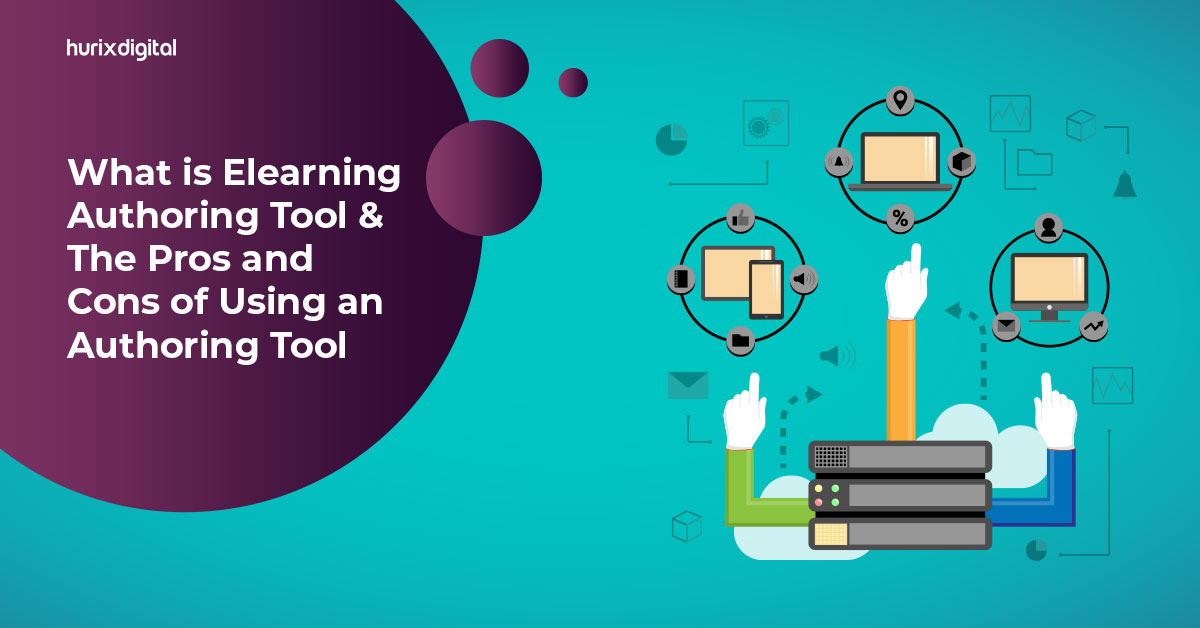
What is Elearning Authoring Tool & The Pros and Cons of Using an Authoring Tool

[vc_row][vc_column][vc_column_text]In 2020, the global e-Learning content market was valued at $197 billion. By 2030, the projected value is estimated to be $ 840.11 billion, growing at a compound annual growth rate of 17.5%. The interactive, accessible, and cost-effective attributes of eLearning have accelerated consumer adoption of this learning mode. It is fast becoming the go-to mode for learning around the world.  Publishers or businesses that leverage eLearning content in their business models are looking to produce high-quality content. Contemporary elearning includes a mix of video, audio representation, infographics, virtual reality, gamification, interactive assessments, and other elements that are a crucial mix for delivering an engaging learning experience. Businesses in the field of eLearning face a critical challenge – how can they create and distribute such high-quality interactive content? In this blog, we deconstruct the role of authoring tools in creating eLearning content, the pros and cons of using them, and the way forward for publishers looking to create high-quality, edgy eLearning content.  What is an eLearning Authoring Tool? An eLearning authoring tool is essentially software that enables publishers and content creators to build digital learning content. They can range from basic software such as word documents, or a blog publishing platform. Some authoring tools enable the embedding of multimedia content to make it more interactive. They may be used by a wide range of content creators. These can include K12 publishers, companies producing scientific journals, universities, and the L&D departments of universities. The capabilities, limitations, and efficiency of authoring tools vary. Let us understand the pros and cons of using such tools to create eLearning content.  The Pros Here is a snapshot of the top advantages of authoring tools: Authoring tools are designed to help content creators deliver elearning content within a brief period. Various templates are maybe available to support the content creators in building structure into their content. This brings down the turnaround time significantly.  Authoring tools are typically designed to also be user-friendly. For instance, blog interfaces make it extremely simple for authors to include visuals in programming with videos. One does not require any kind of training or coding experience to develop learning content using these tools.  Most authoring tools are free of cost to use. Some do have a subscription-based model, which is usually cost-effective. This makes it accessible to a wide range of amateur content creators, as well as professional content creators such as publishers.  Authoring tools enable various add-ons based on the requirements of the content creator. For instance, it can enable the distribution of the latest content via email and social media. Some plugins allow higher interactivity of the content.  The Cons  As expected, authoring tools also come with some disadvantages, or rather limitations, as follows.  Authoring tools tend to come with pre-existing templates. This limitation prevents publishers from coming out with content that has an original and unique design. They may offer limited creative control. For instance, you may be allowed to integrate some aspects of personal branding. You may also have access to some types of interactive elements. However, if you want to use technology such as virtual reality experience, you may not be able to do so.  eLearning publishers are using ebooks in a major way. eBooks are no longer PDF versions of paper textbooks; they can be highly interactive. They may feature elements such as videos, audio representations, infographics, and interactive assessments. They also enable teachers and learners to communicate via the eBook itself. For instance, they can highlight sections and leave comments. They can also search for content with ease. However, authoring tools do not have the necessary capabilities to develop such high-quality interactive ebooks.  Another limitation is secure distribution. It becomes extremely easy to plagiarise and duplicate content that is produced via authoring tools. This might diminish revenues for businesses.  Benefits of a Digital Publishing Platform  Professional publishers of eLearning content need access to high-quality software, which enables them to publish content at scale. Multiple creators must be able to collaborate on the same project seamlessly and deliver a superior eLearning product. This is where access to a digital publishing platform can solve many existing challenges due to a wide range of capabilities. Here is a snapshot of how such a solution can support eLearning publishers in meeting their goals: A digital publishing platform is a single, unified interface that enables seamless creation, publishing, and distribution of eLearning content from one place. For instance, eLearning publishers can add text, audio, video, and other elements systematically without becoming overwhelmed. They can bring out superior-quality content that is interactive and accessible.  All information and content are stored on the cloud. This makes it easy for team members in multiple locations to collaborate on a project at any given time.   It is easy not really to create and publish a project. It is just as easy to upgrade content with new elements. This is an important value-add for eLearning content which keeps you always.  Here’s another valuable capability. Digital rights publishing platforms come with digital rights management software. It enables eLearning publishers to distribute content only to authorized users. For instance, if students purchase or rant for an eTextbook online, the publisher will be able to give them direct access to the book for a specified period.   Language has been a long-time barrier in eLearning content. A superior digital publishing platform enables the publishing of content in languages that have a right-to-left script.  Conclusion  Consumer demands for eLearning content keep increasing. Publishers of K-12 and other eLearning content need the best tools at their disposal to keep pace with consumer expectations and produce high-quality content.  While eLearning authoring tools have their benefits, they also have certain limitations. For instance, they may not have secure distribution capabilities. This is where state-of-the-art digital publishing platforms can offer publishers and other businesses in the eLearning space the framework to produce and securely distribute high-quality eLearning content at scale.  If your business is looking to create, publish and distribute high-quality eLearning content,

Top 11 eLearning Service Providers in USA

[vc_row][vc_column][vc_column_text]We have come a long way from using clay tablets and papyrus rolls to using the internet for learning! Today, we cannot do without e-learning, whether for certificate courses, professional upskilling, or higher education. Some great courses are available online. You can get the hang of data analytics or master the science of happiness! It’s all possible! The e-learning landscape constantly evolves, and the USA is home to some of the most innovative and influential e-learning service providers. These e-learning service providers are making education more accessible, engaging, and effective for learners across the globe. From mastering new skills to enhancing your professional growth, these cutting-edge e-learning providers are revolutionizing the way we learn and succeed. So, buckle up and get ready to dive in! The Popularity of E-Learning at a Glance Through Numbers Here are some statistics you should consider: The global corporate e-learning market size will be worth USD 49.87 billion by 2026. 90% of corporations now use e-learning solutions, compared to just 4% in 1995.  By implementing corporate e-learning, IBM supervisors managed to acquire knowledge from five times the amount of content at just one-third of the expense. Consequently, IBM realized savings of $200 million, representing a 30% reduction in their previous training budget. Why Should You Consider E-Learning? There are multiple ways through which e-learning can help. Below are some of best ways. 1. Flexibility and Convenience E-learning service providers allow you to learn at your own pace and schedule, offering the freedom to fit your education around your busy lifestyle.  2. Cost-Effectiveness With e-learning, you can save on transportation, accommodation, and printed materials. E-learning service providers often offer courses at a fraction of the cost of traditional institutions, making quality education more affordable and accessible. 3. Personalized Learning Experience E-learning service providers use advanced algorithms and adaptive learning techniques to cater to each learner’s strengths and weaknesses, maximizing learning efficiency. Some e-learning platforms also offer game-based learning, which can make it much more fun. 4. Access to Global Expertise E-learning service providers connect you with world-class instructors and experts from around the globe. This gives you the opportunity to learn from industry leaders and gain insights into international perspectives, enriching your educational experience. 5. Eco-Friendly Alternative By leveraging digital technology, e-learning service providers help reduce the environmental impact associated with traditional learning methods. By cutting down on paper consumption, transportation, and energy use, e-learning contributes to a more sustainable future for our planet. The Top 11 E-Learning Service Providers in the USA Let’s examine the top 11 E-Learning service providers in the USA. 1. Hurix Hurix delivers exceptional e-learning solutions tailored for businesses, combining custom content development with a robust Learning Management System for optimal workforce training. Comprehensive e-learning solutions for businesses Custom content development Extensive LMS features Excellent workforce training options Learn more here. 2. Coursera Partnering with top institutions, this e-learning service provider offers exceptional courses and accredited certifications for learners in the USA. Pros High-quality university-level courses Prestigious institutional partnerships Accredited degrees and certificates Cons Varying course quality Some courses come with a hefty price tag 3. Udemy With a vast course library and affordable options, Udemy stands out among eLearning companies in USA for skill development. Pros Extensive course library Frequent promotions Lifetime access to purchased courses Cons Inconsistent course quality Lack of formal accreditation for most courses 4. LinkedIn Learning (formerly Lynda) Boost your career with professional courses and certificates seamlessly integrated with your LinkedIn profile. Pros Diverse professional courses Seamless LinkedIn integration Certificates of completion Cons Subscription-based access Limited focus on creative and technical subjects 5. edX Experience the power of one of the best non-profit e-learning service providers, offering university-level courses and credit-eligible options from top institutions. Pros A non-profit platform Renowned institutional partners University-level, credit-eligible courses Cons Limited course selection Accreditation can be expensive   6. Skillshare Unleash your creativity with diverse courses, making Skillshare a favorite among eLearning companies in USA. Pros Emphasis on creative skills An affordable subscription model An expansive course library Cons Absence of formal accreditation Variable course quality 7. Pluralsight Master the tech world with comprehensive IT courses and learning paths tailored to elevate your technological expertise. Pros Expertise in tech and IT courses Comprehensive learning paths Advanced assessment tools Cons Subscription-based access Limited subject offerings outside of technology 8. MasterClass Learn from industry leaders in captivating, high-quality courses that bring unparalleled insights into various fields. Pros Renowned industry professionals as instructors Superior production quality Captivating content Cons Premium pricing Limited course selection Lack of formal accreditation 9. Codecademy Embark on a coding adventure with interactive learning experiences and hands-on programming courses. Pros Specialization in coding and programming Interactive learning experience Free basic access Cons Restricted to coding subjects No formal accreditation 10. Khan Academy Experience the joy of free, accessible education covering a wide range of subjects for learners of all ages. Pros Free access to all courses A broad range of subjects Suitable for various age groups Cons Limited advanced courses Absence of formal accreditation 11. General Assembly Invest in your future with in-depth courses focusing on tech, design, and business, backed by robust career support services. Pros In-person and online course options Focus on tech, design, and business Offers career support services Cons Expensive Narrow course selection Demands significant time commitment Embrace the Future of Learning with the Top E-learning Service Providers E-learning has become an essential part of our modern lives, enabling us to adapt to a rapidly changing world. The top 11 e-learning service providers in the USA that we’ve explored in this article are at the forefront of this digital revolution. By offering cutting-edge solutions, tailored content, and engaging learning experiences, these companies make education more accessible and effective for everyone. Now is the time to seize the opportunities offered by these e-learning platforms and embark on your personal and professional growth journey.  Ready to transform your organization’s learning experience? Hurix offers a comprehensive suite of services, including custom e-learning content development, Learning Management System

Video-Based Learning: What Are the Benefits of Learning Anywhere?

[vc_row][vc_column][vc_column_text]Video-based learning involves watching videos to advance students’ skills. These materials can take the shape of instructional films, tutorials, lectures, or presentations that have already been recorded. Video-based learning can incorporate a range of multimedia resources such as graphics, animations, and interactive exercises, making the learning experience more engaging and interactive. This method of learning is both flexible and practical, enabling students to access course materials at any time and from any location.  According to a Forrester Research study, people are up to 75% more likely to watch a video than to read a paper or an internet article. On the other hand, research by the SAVO Group found that within just seven days, employees will have forgotten 65% of the information provided in a training session. Nevertheless, retention rates rise by 65% when you deliver these ideas using video. A learner is likely to remember only 10% of textual content, 65% of visual content, but 95% of audio-visual content, according to eLearningindustry.com. So, this kind of instruction efficiently promotes self-learning and holds students’ interest throughout lessons. Suffice it to say that video-based learning has become incredibly popular among students all around the world in recent years. In this article, we explore the advantages of video-based learning, making it a popular option for students worldwide. Advantages of Video-Based Learning  1. Flexible Learning Opportunities With video-based learning, students have the freedom to study whenever and wherever they choose. They may use it to access instructional materials from any location, including their homes, offices, and travel destinations. As video-based learning is neither time nor place-bound, students can fit learning into their hectic schedules. Working professionals and students who must combine job, study, and personal responsibilities would particularly benefit from this flexibility. 2. Effective Learning Viewing videos might be more efficient than learning in a typical classroom. By using video-based learning, students can pause, rewind, and repeat courses as necessary to ensure understanding. This strategy makes sure that pupils have a better understanding of the material, which improves performance and learning retention. 3. Personalized Learning Experience Students can personalize their educational experiences through video-based learning. Users have the option to select the knowledge they want to learn, disregard what they already know, and concentrate on the abilities they need to improve. Learning may be tailored to meet individual requirements and interests thanks to this personalized learning experience. 4. Cost-Effective Learning Watching instructional videos is frequently less expensive than going to regular classes. It helps students save a lot of money by doing away with the need for actual classrooms, textbooks, and other learning resources. Due to this, those who want to learn new skills and information without spending a lot of money may choose video-based learning. 5. Multimedia-Rich, Attractive Content The ability to incorporate a range of multimedia components, such as graphics, animations, and interactive exercises, into videos is only one of its many noteworthy benefits. The learning process is thereby improved and made more dynamic and interesting. This content’s abundance of multimedia facilitates learning complicated concepts and improves memory retention. How Video-Based Learning Works The following stages are incorporated into the video-based learning procedure: Step 1: Producing Specific Content  The initial step for video-based learning is to create specific content for a specific topic. The content must be beneficial for the user and must address the needs of the engaging audience, whether they are students, employees, or any professional. Step 2: Platform Selection The next step is to choose an appropriate platform for delivering the content after it has been developed. For video-based learning, numerous platforms are accessible, from specialized e-learning platforms to well-known video-sharing websites like YouTube. Step 3: Video Production After choosing a platform, the material is created in video format. The films must be interesting and instructive, with understandable images and sounds. Step 4: Video Publishing The videos are then posted to the chosen platform so that learners may view them. To make it simpler for them to navigate and obtain the knowledge they want, the videos might be divided up into modules. Step 5: Learning Management Learning Management Systems (LMSs) administer the video-based learning process. The LMS may be used to measure engagement, track student progress, and give feedback. Step 6: Learner Engagement Students can see the films independently or in groups, at their own pace and leisure. Users may pause the videos, rewind, and repeat certain segments as necessary. Step 7: Assessment and Feedback Tests, assignments, and other interactive features can be used to assess students and offer feedback. Learners may get quick feedback on how they performed, which can help them find areas where they can improve. Overall, video-based learning offers a useful and adaptable learning approach that can be tailored to each learner’s needs and interests. Using this approach, students may swiftly and economically pick up new information and abilities. Video-Based Learning vs. Traditional Classroom-Based Learning Here’s a table summarizing some of the key differences between video-based learning and traditional classroom-based learning: Aspect Video-Based Learning Traditional Classroom-Based Learning Flexibility and Convenience Learners can access educational material from anywhere and at any time. Learners must attend classes at specific times and locations. Personalization Learners have the option of selecting the information they wish to study, skipping over what they already know, and concentrating on their areas of weakness. Learning is frequently organized around a predetermined curriculum that might not be enough for all students. Interactivity and Engagement Using multimedia tools like graphics, animations, and interactive activities may make anything interactive and interesting. Gives students greater chances to engage in interactive and practical learning activities, such as group discussions, debates, and practical tasks. Instructor-Learner Interaction The most common methods for students and teachers to connect include email, online forums, and video conferencing tools. Enables one-on-one communication between teachers and students, allowing the latter to ask questions and receive quick responses. Cost As it does not require physical classrooms, travel expenditures, or other related costs, it can be a more economical method of instruction.  Due to the

Top 7 Innovations in K-12 Education

[vc_row][vc_column][vc_column_text]The education sector has experienced substantial transformations in the last decade. Innovations and new technologies have driven the education sector to a new destination. Institutes are seeking to enhance the teaching-learning methodologies in schools and universities by integrating innovations into the K-12 education system. K-12 solutions are gaining popularity because of their progressive learning strategies. It allows students to think out of the box, brainstorm, actively learn, interpret and solve problems, make decisions, and conceptualize. Top 7 Innovations in K-12 Education It is crucial to provide alluring teaching resources to empower students to develop new learning concepts rather than just a teacher-led learning space. Innovative technologies are being strived to assist students in thriving and boosting self-development.  The way these innovations made their presence in the classrooms is commendable. The main focus is to develop an in-depth understanding of students and enhance their learning experience. Read on to find out about seven innovative ideas for school development. 1. Flipped Classroom System With the help of the flipped learning system, educators make active learning a priority in the classroom. It is predicated on the concept that individual engagement and small group activities during the class help students learn more efficiently.  To promote active learning, teachers give their students lecture resources and explanation videos to view at home or outside of class. Students apply concepts learned online in the classroom to create a sense of interactive learning. They gain knowledge through the course material usually taken outside the classroom, like reading books or watching instructional videos.  It allows students to learn independently at home while developing their practical knowledge, communication, and teamwork skills in the classroom. 2. Audiobooks and Dictation Software Audiobooks and dictation software are the real game-changers in the education industry. Using digital devices like computers, tablets, and smartphones, teachers provide audiobooks to help students learn effectively.  For the students with disabilities, visuals are also provided alongside the audio lessons.  Integrating audiobooks and dictation software into classrooms can enrich the learning-teaching experience. When brainstorming ideas, students can improve their vocabulary and pronunciation.  Due to the sensory experiences provided by audiobooks and dictation software, students retain information in memory for a long time.  3. Digital Content Libraries In the age of digital technology, when knowledge is abundant and regularly updated, and innovative ideas are quickly found, traditional printed textbook materials are inadequate.  A digital content library for schools is a digital collection of critical scholarly resources in an easy-to-search platform. It benefits students to have access to relevant course material outside of their textbooks.  Teachers also use the digital content library to customize their curriculum according to students’ requirements. A content library is an online educational resource that makes it feasible to provide students with various multimedia knowledge to boost their understanding. The curriculum that has been decided by the school board often resembles these online resources.  Depending on the demands of the course, teachers may also modify their material collection. They will be able to keep future generations up to date with the rapidly changing world with the vast amount of knowledge available through digital resources using such innovations in education. 4. Collaborative Learning With Social Media  In this method, two or more students collaborate on the assigned assignment. Students that work in a group count on one another’s abilities and knowledge to complete the assignment. They can seek out their classmates’ assistance on specific issues in such an environment, fostering social, creative, and problem-solving skills. With the help of social media, many teachers and students may communicate and exchange ideas in a collaborative learning environment utilizing digital resources. Regardless of where they reside, it stimulates connections between teachers and students.  They can upload posts, share, like, and comment on each other’s posts. Students can post questions and obtain several replies from other students and teachers. Through this informal exchange on a social media platform, a practical and supportive student-teacher connection is established. 5. Simulation and Game-Based Learning Learning by rote or memorization is not a true form of education. A learner may be pushed and engaged in actual learning and put new abilities into practice using the correct types of simulations and games. With the help of simulation in learning, students may explore real-time situations in a supportive environment.  Examples of digital learning through gamification include simulation attempts, simulation observations, simulation assessments, and simulation play. Many virtual labs are also created to help students learn science and maths in the most creative way. Learners must be given various tasks with different levels of complexity. This way, they can learn which strategies work and which don’t.  Students can make mistakes in a simulated learning setting without affecting them negatively. They are given a chance to think critically and make judgments, which helps them develop their problem-solving and critical-thinking abilities. 6. AR or Augmented Reality If teachers encourage learning with fun, even difficult subjects may be understood easily. Augmented Reality technology provides students with incredibly immersive learning experiences in class to enhance their concentration.  Students may use augmented reality while sitting in a library, park, coffee shop, etc., rather than only in a classroom. They simply need an app that supports augmented reality and an image or flash card that compels augmented reality to appear on the device screen. To study and grasp challenging subjects, students can apply real-time imagination. And since students will be applying concepts in the actual world, they can learn them better. 7. VR or Virtual Reality Virtual reality (VR) allows students to experience the world without leaving the classroom. They can tour faraway places from the comfort of their desks or homes. Virtual reality can advance learning by equipping students with unforgettable and immersive experiences all within the classroom. Accessible to every student from anywhere, VR can be easily monitored by teachers too. Educational institutions use the latest classroom innovation ideas to advance teaching-learning. Teachers can provide students with the finest opportunity for efficient learning by utilizing various digital strategies to deliver an intuitive and

Emerging Trends in Education Technology in 2023

[vc_row][vc_column][vc_column_text]The way we live and socialize is changing quickly, thanks to technology. There is no doubt that it is transforming every industry and sector. Yet, the adoption of new technologies is behind in the educational sector. The use of education-related technology has grown even more crucial since it has the power to transform the world for the better. The hurdles in the way of delivering higher education solutions globally can be reduced with the use of technology. The use of educational technology will provide students with the possibility to develop their imaginations and enhance their awareness. The education industry, as well as groups like students, tutors, administrators, parents, etc., will greatly benefit from current and future advances in educational technology.  Top 5 Higher Education Solutions of 2023 The world needs more potential methods to instill skills in students using modern technology. Here are some of the top ICT trends in education for the year 2023. 1. Incorporating Artificial Intelligence AI in education is opening gates in different ways to help students learn and grow. AI in education leaves no room for doubts when it comes to removing barriers to innovative teaching and learning pedagogy. It also accelerates advancement towards the SDGs. AI-based learning solutions are capable of providing teachers with critical data on their students’ learning preferences, aptitudes, and progress, as well as recommendations on how to modify their teaching techniques to suit the requirements of each student. Assisting in tackling some of the biggest challenges of traditional education methods like time management, AI brings rapid technology developments to substitute old regulatory frameworks. For example, the use of chatbots is helping universities save time while solving students’ problems effectively. The future of e-learning is thus visibly revolutionary for students and organizations. Further, essays and papers can be graded more quickly by AI than by humans. As a result, teachers will have more time to engage with students in developing their critical analysis and thinking abilities. Being a major current trend in education, AI helps enhance human abilities. It also offers protection of human rights for futuristic human-machine associations in life, education, and work, and sustainable development. 2. Remote Learning and Education  Virtual learning is one of the popular education trends as the world moves on from the pandemic. COVID-19 made remote learning prevalent to the point that there is no turning back now. The advancement of e-learning has made education approachable for many learners. It could be known as a massive step in bringing equality of access to education in a world where nearly 270 million children residing in remote localities do not have the chance to receive an education or go to school.  A school requires three mediums for the best virtual learning experience – video conferencing, a Learning Management System (LMS), and a video management system (VMS). Students can benefit from an integrated learning setting with the help of this combination. Most VMSs include options for supporting LMS and live video conferencing. This finest combination, however, uses technology that works together without any issues.  Synchronous lessons are delivered via video conferencing tools like Zoom, Teams, WebEx, and teachers can record, upload, and share pre-recorded videos to the LMS with an integrated VMS. 3. Learning With Gamification Traditional education focuses on equipping students with core knowledge of subjects. Then there’s the concept of gamification, where playing games can be integrated with learning. Through gamification, students use their core aptitudes and problem-solving skills to play games that are related to their subject knowledge.  Many LMS and online learning platforms are providing this kind of game-based learning to encourage students to pursue knowledge and skills. The purpose of this digital technology is to design game features that will enhance students’ concentration and determination. It also involves offering rewards to make them work smarter to overcome real-time challenges, earn bonuses and learn valuable lessons at every stage. This is considered one of the effective methods to deliver training to students for better learning outcomes in the most interesting ways.  4. Rise of Virtual and Augmented Reality  One of the top trends in education is virtual reality and augmented reality. Educational Institutions are employing revolutionary higher education solutions that are changing the scenario of education. VR and AR in the education sector are subsiding the drawbacks of traditional teaching methods and enhancing the student learning experience. In the learning and development of students, AR serves as the most effective tool as it superimposes computer-generated images onto real-world settings. It provides real-time learning to the students using a computer algorithm that makes everything alive and easy to observe. On the other hand, VR focuses on creating an artificial environment and animated objects to give a sense of a new world. It can be a 360-degree view of 1000-year-old historical settings or potential futuristic ones. Students get to explore the in-depth details without being distracted by the outside world, ultimately increasing their concentration power. 5. Soft Skills and STEM  Higher education solutions offer chances to cultivate soft skills through many endeavors. This includes developing courses with teams, projects, lectures, problem-solving activities, brainstorming, and 360-degree assessment.  Moreover, they provide the chance to participate in various events and initiatives organized by academic institutions as well as independent groups that promote students in the fields of science, technology, engineering, and mathematics. Along with hard skills, soft skills are in high demand these days. It is essential to improve students’ soft skills as well as to enhance the possibilities of future employment. The right formula to do so is by supporting STEM students, upgrading their technical, cultural, and employability skills, promoting their lifelong learning, and encouraging application.  Conclusion The one industry that has prospered in the wake of the pandemic is education. Now, employers not only prioritize problem-solving skills but also critical thinking abilities. In this day and age, employers seek self-management abilities, including stress management, resilience, adaptability, and active learning. Yet, this can only be accomplished by educated decision-making. Using modern technologies and trends in education can

20 Online Training Platforms You Cannot Miss In 2023

[vc_row][vc_column][vc_column_text]If we look at the history of human civilization, the one thing that has stayed constant is learning. Back in 3000 BCE, the Sumerians learned using cuneiforms or pictographs on clay tablets. The Egyptians used papyrus rolls. Then around 500 BCE, we were introduced to paper as the first books came into place. The most recent change in learning is the use of technology through various e-learning models that are constantly evolving. We are in a time and age when online training platforms are the norm, and e-learning is becoming something we cannot do without. The final push was provided by the COVID-19 pandemic. But how do you choose the learning platform for you? We bring you a list of the 20 best online training platforms. Here goes. What is Online Learning/Training? Before we get to the list of the best online training platforms, here’s a little bit about what online learning is. It is the practice of receiving education online using a variety of multimedia and Internet-based platforms and tools. It is also called e-learning, computer-assisted education, web-based learning, and Internet-based learning. The classrooms are completely virtual. Numbers Talk In the fall of 2020, 75% of undergraduate students took at least one online learning course. 44% of undergraduate students only took distance education courses.  Source The global e-learning market is projected to reach a market size of USD 848.12 billion, including the region of North America, with a CAGR of 17.54%. This shows how well e-learning is performing and attracting investment.  Benefits of Online Learning The U.S. Department of Education did a detailed study on the usage of technology in learning and listed its many benefits.  It can be personalized for every learner. It can have higher engagement. It encourages learning around real-world challenges and project-based tasks. It goes beyond the classroom and can be done virtually from anywhere. It increases accessibility for all kinds of learners. 20 Best Online Training Platforms of 2023 and 3 Reasons Why While curating this list of the best online training platforms, we have kept popularity, features, reviews, the richness of course materials, teachers’ qualifications, the variety of courses, and ease of use in mind. Along with listing down the best online training platforms, we have also given you three reasons why they are the best.  1. Hurix Digital Has a wide variety of gamified elearning options that increases retention and engagement Also offers scenario-based learning to understand real-life applicability Has the option for bite-sized learning for education on the go Also provides learning paths which are a series of courses that can help one upskill and learn a range of things to achieve the desired objective Offers a responsive, attractive, state-of-the-art Learning Management System (LMS) 2. eDx A not-for-profit organization providing learning from famous institutions like Harvard, along with teachers and alumni as mentors and coaches It also provides MicroMasters degree programs for in-depth remote education It has several richly designed courses that are accessible with verified certifications at no charge 3. Linkedin Learning It offers special video courses conducted by professionals in the field It includes programs for advancing one’s career and business with real-life applications It gives course recommendations that are specifically tailored based on your LinkedIn profile 4. Udemy It offers a wide range of courses on various topics Most of these courses are at really affordable prices It gives lifetime access to course materials 5. Coursera It has partnered with A-league universities and institutions for high-quality courses Offers specializations for in-depth learning Verified certificates are available for many courses, even highly niche ones 6. Skillshare Is excellent for people who want to learn creative skills like photography, design, and such Offers free trials to get a glimpse Highly-affordable courses 7. MasterClass Offers celebrity-taught courses Has courses for practical skills like cooking, writing, and more Has free trial periods 8. Codeacademy Focuses on coding-related courses Shares interactive coding exercises for enhanced learning The courses are free for all 9. iversity Offers courses from top European universities known for their teaching expertise Has free as well as paid courses with certificates Specializes in higher education, especially Massive Open Online Courses (MOOCs) 10. Teachable Creates direct student-teach interaction by allowing instructors to create their own courses Has tools for marketing and course creation Has interesting features for student support and engagement 11. Udacity Offers nano-degree programs in IT and technology in sync with the trend of micro and in-depth learning Has personalized career coaching Offers job placement assistance 12. Babbel Has a focus on language learning Also includes speech recognition for pronunciation practice Has immersive courses to boost engagement 13. The New York Times Cooking Is a specific learning platform that focuses on cooking and food education Offers courses and recipes taught by top chefs and experts from around the globe Includes articles and guides for culinary education on the go 14. Yale Online Has off-beat and mainstream courses taught by industry experts and top instructors Offers a chance to learn from one of the world’s oldest universities Includes interesting practical exercises 15. CareerFoundry Focuses on career development and tech skills Has personalized support and career guidance Offers boot camps in web development, UX design, and other in-demand skills 16. DataCamp Focuses on the trending skill of data science and analytics Offers hands-on learning Has progress tracking and personalized learning features 17. Quizlet Offers free online flashcards, study guides, and quizzes as interesting learning elements Includes a variety of subjects and courses to choose from Offers personalized learning paths and progress tracking 18. FutureLearn Offers insightful online courses and degrees from top universities and organizations Includes courses in a variety of subjects, including business, health, and science Offers a certificate of completion for most courses 19. Open Culture Offers completely free online courses from top universities around the world Includes courses in a variety of subjects, including business, humanities, and science Offers progress tracking and reporting for students 20. MIT Open Learning Publishes materials from over 2500 courses (undergraduate and