Hurix February 21, 2023 No Comments

How to Create Personalized Learning Paths for Higher Education Students

[vc_row][vc_column][vc_column_text]When it comes to higher education, a one-size-fits-all approach is no longer acceptable to students, who are used to a more personalized approach for everything, including the clothes they wear or the music they listen to. Although personalization has become an integral aspect of education today, higher education still finds it challenging to adopt it. Personalized learning paths offer an exciting solution to some of these challenges by primarily focusing on the specific needs of individual students in the higher education space. In this blog, we’re going to discuss the need for educational institutions to create personalized learning paths and how they can create them to achieve better student outcomes. Related Read: 6 Pro Tips to Create Great Custom eLearning Paths[/vc_column_text][vc_custom_heading text=”What is a Personalized Learning Path?” font_container=”tag:h1|font_size:18|text_align:left” google_fonts=”font_family:Lato%3A100%2C100italic%2C300%2C300italic%2Cregular%2Citalic%2C700%2C700italic%2C900%2C900italic|font_style:900%20bold%20regular%3A900%3Anormal” css=”.vc_custom_1602597426142{margin-top: 0px !important;margin-bottom: 0px !important;border-top-width: 0px !important;border-bottom-width: 0px !important;padding-top: 0px !important;padding-bottom: 10px !important;}”][vc_column_text]A learning path is essentially a collection of personalized courses that are grouped to ensure that students master a particular topic or program. Personalized learning pathways are an excellent way to design a customized curriculum centered on what the students need to learn. The idea of grouping is to enroll numerous students into the same learning path quickly and easily, so they all gain proficiency in that particular subject.[/vc_column_text][vc_custom_heading text=”Why Should Educational Institutions Create Learning Paths for Students?” font_container=”tag:h2|font_size:18|text_align:left” google_fonts=”font_family:Lato%3A100%2C100italic%2C300%2C300italic%2Cregular%2Citalic%2C700%2C700italic%2C900%2C900italic|font_style:900%20bold%20regular%3A900%3Anormal” css=”.vc_custom_1602597727708{margin-top: 0px !important;margin-bottom: 0px !important;border-top-width: 0px !important;border-bottom-width: 0px !important;padding-top: 0px !important;padding-bottom: 10px !important;}”][vc_column_text]There are several advantages to creating learning paths for students. Some of these are discussed below – 1. Ownership of Learning When students are actively involved in the planning phase of their own course, they are much more engaged in learning activities. A personalized learning path offers this motivation, as it empowers students to take complete control over their learning journey. Since they invest so much time and effort into it, they’re more driven to excel at every learning goal. 2. Self-Paced Learning Personalized learning paths allow students to decide the pace at which they learn. Unlike the traditional learning methodology, in the personalized learning approach, students can manage the speed at which they master a particular subject. Using various self-assessment tools periodically, students can ensure that they fully understand the course content before moving forward. 3. Enhanced Student Engagement With personalized learning paths, students are encouraged to have much higher engagement with the subject, thereby making for a more personalized education for them.  Instructors can help them identify the ways they learn best and set their individual goals and specific targets for progression. In addition to this, students can create their own schedules which meet their needs. 4. Cater to Different Learning Styles Personalization through learning paths enables course material to be presented in the most meaningful and relevant ways to students.  It allows the students to pick and choose the best and most-suited delivery methods that are most accessible and relevant to them. 5. Steps to Create Personalized Learning Paths for Higher Education Students Customized learning paths allow students to co-design their own learning with educators instead of just following the instructions or complying with the directions of others.  The key objective of this approach is to help learners take complete ownership of their learning and become independent in their personal learning journey.[/vc_column_text][vc_custom_heading text=”Following are the steps you need to take to create personalized learning paths for students -” font_container=”tag:h2|font_size:18|text_align:left” google_fonts=”font_family:Lato%3A100%2C100italic%2C300%2C300italic%2Cregular%2Citalic%2C700%2C700italic%2C900%2C900italic|font_style:900%20bold%20regular%3A900%3Anormal” css=”.vc_custom_1602598827576{margin-top: 0px !important;margin-bottom: 0px !important;border-top-width: 0px !important;border-bottom-width: 0px !important;padding-top: 0px !important;padding-bottom: 10px !important;}”][vc_column_text] 1. Develop Personal Learning Goals for Students Irrespective of the fact that you’re creating personal learning paths for each student individually, the goals and objectives of the overall course must still be an integral part of the experience. To be able to create a successful personal learning path strategy, you need to develop a robust plan that effortlessly blends course essentials with the individual needs and wants of each student. At this stage, the students and educators need to work in collaboration to develop short-term, intermediate, and long-term personal learning goals, where expected outcomes must be specific and aligned to goals so that the students can see a clearly defined path forward. Further, apart from the individualized goals and objectives that the students set for themselves, the learning path should also ensure that the students walk away from the experience with a detailed understanding of the key subject matter. 2. Empower Your Students To make sure that the personal learning path you create is truly successful, students must feel that they are in control of their online learning experience. You can achieve this by ensuring that students are allowed to take charge of their learning experience by choosing which activities (collaborating with peers on specific tasks, identifying apps to support learning) they complete next, assessments they will take, or the way they receive the eLearning content. For instance, while creating personalized learning paths, give students the chance to assess their own knowledge via online assessments.  The idea here is to make your students feel empowered where they have a direct say in the learning process. 3. Create Progress Markers At Regular Intervals At this stage, the instructor and students identify markers that show their progress towards specific learning goals.  Creating periodic milestones gives your students a chance to check their own progress along their learning journey and ensure that they are on the right path. Another benefit of these progress markers is that they allow both educators and students to determine whether any changes are required in the learning path to ensure the accomplishment of each goal. You can either create weekly checklists that your students can follow to stay updated and remain on track or create a single list of mandatory online assignments and exercises. 4. Strategically Cater to Different Student Learning Styles When it comes to online learning, not all students have the same learning styles or personal preferences. This makes it really important to integrate multiple online activities and exercises into your learning path, thus giving students the ability to choose what works best for them. For

Hurix February 21, 2023 No Comments

5 Effective Ways to Train Employees on a New System

[vc_row][vc_column][vc_column_text]Invested lately in a new ERP or CRM system or a simple HR or payroll solution? Organizations today are increasingly investing in new systems and technology. The pandemic seems to have further accelerated technology adoption, especially for cloud technologies. And this is definitely exciting. Know More: Top 7 Factors to Consider When Choosing Employee Training Software However, the other side of the coin is that organizations globally witness poor technology adoption rates. Now, why is that a problem? When organizations do not gain full potential of the new system, it translates into poor ROI. Know More: Supercharge Your Employee Training Program with Bite Sized Learning The new systems implemented, perhaps after much deliberation and with pomp and fervor, simply fail to deliver the expected value. Poor adoption becomes a barrier to successful transformation and fails on its promise and premise of delivering improved workflows.  Know More: How to Design Learning Paths for Employee Training & Development Poor adoption or inefficient use of new systems has a high cost impact. While the most imminent and direct cost is the cost of system ownership itself, add to it the cost of customization, implementation and configuration, maintenance, support, and training, and that drives up the total costs of any new system implementation.  Know More: 7 Interactive eLearning Solutions for Employee Training With such costs showing in your expense sheet, organizations not reaping the full potential of the transformation or change exacerbates total costs and spend. Know More: Supercharge Your Employee Training Program with Bite Sized Learning Consider the costs associated with under-optimal utilization of new systems, procedural errors, and inefficiencies evidenced as employees are on the learning curve. Some of this would be impossible to compute. Know More: How Can You Use mLearning in Employee Training? So, if you add a notional cost, you’d arrive at a whopping cost of new system implementation. Ensuring the success of adoption, therefore, would be an organization’s obvious imperative. So, how to ensure better ROI?[/vc_column_text][vc_custom_heading text=”Challenges and Pitfalls of a New Training Software That Organization May Face” font_container=”tag:h2|font_size:18|text_align:left” google_fonts=”font_family:Lato%3A100%2C100italic%2C300%2C300italic%2Cregular%2Citalic%2C700%2C700italic%2C900%2C900italic|font_style:900%20bold%20regular%3A900%3Anormal” css=”.vc_custom_1642570717082{margin-top: 0px !important;margin-bottom: 0px !important;border-top-width: 0px !important;border-bottom-width: 0px !important;padding-top: 0px !important;padding-bottom: 10px !important;}”][vc_column_text]Two key challenges or pitfalls organizations face in system adoption initiatives:   1. Lack of thought, structure, and investment in the adoption process.  Technology change is more than installing a software and expecting employees to embrace and internalize it – it’s a cultural change. Organizations often fail to give due cognizance to the ‘mental’ transformation that needs to occur. People are creatures of habits. Getting them to embrace new technology when they may be comfortable using existing methods requires careful and mindful planning.   2. Lack of adequate and appropriate training and support. Training can often make or break a transformation initiative. When employees are not fully capable of leveraging the new technology, organizations do not get the desired gains from the new systems.  Combine it with the Need The rate of digital change is huge today. Whether it’s new systems or software, upgrades, or release cycles, digital change is inevitable and integrated in the way business is done today. There is a need for efficiency in proficiency – employees need to be proficient and quick to reap the most of digital initiatives. Organizations must seek to build a mindset of adoption as newer systems become the norm.  So, how can you train your employees on a new system?[/vc_column_text][vc_custom_heading text=”Listed 5 key strategies that can help build an effective system training program.” font_container=”tag:h2|font_size:18|text_align:left” google_fonts=”font_family:Lato%3A100%2C100italic%2C300%2C300italic%2Cregular%2Citalic%2C700%2C700italic%2C900%2C900italic|font_style:900%20bold%20regular%3A900%3Anormal” css=”.vc_custom_1642570916716{margin-top: 0px !important;margin-bottom: 0px !important;border-top-width: 0px !important;border-bottom-width: 0px !important;padding-top: 0px !important;padding-bottom: 10px !important;}”][vc_column_text] 1. Roll in the change Any adoption goes hand in hand with a cultural and organizational transformation. Employees must get to see the bigger picture and understand business drivers – tell them how the technology can help them and the business at large. On-board your employees ‘culturally’ for the transformation journey well before you train them on the technology. Educate employees about the process and get an early buy-in to ensure readiness. Leadership buy-in, mailers, events, leadership videos, and surveys are all excellent onboarding tools.  Time it right and build the momentum. Avoid the stress and frustration by making it a smooth and transparent process. Remember that while the system purchase decision is made by leadership and marks the start of a journey, the success of adoption is driven by end-users. 2. Provide the right training at the right time While software tools are getting more intuitive and user-friendly, and users today are digitally immersed and tech-savvy, a lot depends on the right training program.  Have a clear, holistic training plan and strategy and leadership buy-in at the outset. Use a structured, carefully-crafted design approach for your system or software training.  An effective software training is relevant and engaging.  Relevance: Employees remember information when it is relevant to them. Adults learn and retain best when the information is of immediate use and the skills acquired can be applied.  Engaging Format: A 60-page manual, 3-hour classroom/virtual session, chatbot, coach, etc. will not make users look forward to the adoption journey. Adults learn best when they are engaged – they ‘see’ and practice. Use the tell-show-do approach. Increasing levels of immersion ensure learner engagement and improved retention.  Ensure modalities that allow viewing system demonstrations and provide ample practice opportunities. Practice modes can also be tracked to provide insightful analytics into system aspects that are clear to users and where users may face challenges. This can help charter efforts in the required direction. The Forgetting Curve suggests that users forget 90% of what they learn within a month. So, time your training right – training employees a month in advance is likely to be a waste of effort.   3. Allow adequate time Given more new things to learn and busier work schedules, training often becomes a tedious chore, so plan and allocate adequate time. Sessions organized when you know your employees are likely to be busy will get you fairly unwitting trainees. Similarly, training scheduled close to or after system launch adds unnecessary

Hurix February 20, 2023 No Comments

Benefits of Post Training Evaluation

[vc_row][vc_column][vc_column_text]In the last decade, skill development courses have become extremely popular in organizations. Post-training evaluation is very important to know how successful and effective an online training course is. It offers methodical insights into your training process and improves relationships. According to the Training Industry Magazine statistics, US-based companies’ total spending on employee training and education has been growing incrementally by 14% every year. Post-training evaluation can not only help you identify the positives and plug the loopholes but also enhance employee retention and engagement. Post-training evaluation helps you understand how well the learners received the program and provides valuable insight into the program’s effectiveness. In the end, the only thing that matters when it comes to a training course is the learner’s feedback.  In this article, we’ll learn about the benefits of training evaluation for trainees and trainers. Rise of Employee Training The biggest asset of any industry is its employees, and that’s why it is very important to make sure that they are well-trained and efficient. Successful business organizations understand that investing in talent and skill development will never go in vain.  According to research, the companies that invest in employee training and skill development programs see an increased profit margin of 24% and overall growth over those that don’t. Markets are evolving faster than ever, and the competition is getting tougher every single day. Smart organizations know the immense and diverse benefits of employee training. That’s why they are sorting out their priorities and focusing on the skill development of their employees. What is Post-Training Evaluation? Post-training evaluation is a crucial part of any skill development program that gives you an idea of what the learners have acquired through the course and what they think about it. Plus, it lets you determine how effective the course is for the learners and gives you an insight into the course program from the learner’s perspective. You can use the feedback from the learners to make necessary alterations and modifications in the course so that the learners can have a better experience. 6 Benefits of Post-Training Evaluation Post training assessment is the best way to receive feedback regarding a course and improve the course structure accordingly. There’s a huge importance of training evaluation for companies. Here are the top six benefits of post-training evaluation that are encouraging more and more companies to include this process after the end of their training programs. 1. Helps Understand the Effectiveness of the Training Content Post-training evaluation involves simple and straightforward questions that help you understand how effective the training session is to the trainees. You can ask questions based on the topics they covered in the training program to see its effectiveness.  You can also continue to evaluate by gathering information on how the workplace environment has changed after their involvement in the course. 2. Helps Measure Employee Engagement Levels Post-training evaluation includes simple and straightforward questionnaires that collect information on how the trainees feel about the course. You can collect information about how the trainees felt about the trainer, which part seems stressful to them, if the topics covered in the course were relevant to their work, if the course was worth their time, etc.  Ensure that you observe how the trainees react to the training content. The trainees must be engaged during the training process to help them perform better in their jobs. You can leverage various interactive eLearning solutions for employee training.  3. Helps Evaluate Employee Learning and Understanding The sole purpose of any training program is to gain knowledge about certain topics. Hence, it’s a problem if trainees are missing out on that part. In such cases, you can append the survey with questions that are key takeaways from the training program to evaluate how much they have learned.  This is a great way to see how much information the trainee retains once the course ends. You would also like to read: Employee Training Challenges and Opportunities 4. Helps Measure Training ROI Return on Investment (ROI) is an economic indicator that determines the impact of a certain program in monetary terms. You can use this to measure the effectiveness of learning a certain course, its impact on the trainees, its business outcomes, and more.  An organization spends a huge sum of money on skill development courses. Therefore, organizations expect great returns from the amount they have invested. It is crucial to optimize your eLearning ROI. Post-training evaluation helps you measure how much the training has affected the productivity in your organization compared to the cost that has been implemented on the course.   5. Helps Predict Business Impact By utilizing the method of post-training evaluation, you can ask managers, team leaders, and others questions regarding performance, turnovers, complaints, and various other issues to determine whether there has been an overall increase in productivity and engagement in the organization. The feedback will be of great help for the development of the organization. 6. Helps Improve Relationship With Trainees Your job doesn’t end when you introduce your employees to a new course. It’s important to keep checking their performance during the training process as well. A trainee will always prefer simple yet effective ways to learn something because that will help them understand the topic better. Trainees often have a great understanding of the areas that need development. So, their suggestions and feedback will help you build a better course structure. Plus, this will also improve your relationship with the trainees because they will feel heard and understood. So, ask them follow-up questions throughout the training to understand their views. Conclusion Post-training evaluation is extremely beneficial for organizations to create the best-suited training methodologies for their employees in order to have longer-lasting results for their business. HurixDigital not only provides end-to-end digital content solutions but also offers a wide range of technology solutions to help you stay on top of your game.[/vc_column_text][/vc_column][/vc_row]

Hurix February 20, 2023 No Comments

Role of Technology in Higher Education Curriculum Development

[vc_row][vc_column][vc_column_text]For any educational institution, the curriculum is the roadmap for both teachers and learners. Curriculum development is a crucial aspect of making a course valuable to learners. It is the framework that provides the foundation to achieve a larger learning goal through suitable teaching methods, learning strategies, and instructional materials. Curriculum development is vital for the selection and organization of appropriate learning material and other activities so that learners can acquire the core competencies of a course. It helps teachers to choose their teaching approach and helps learners to achieve their goals and objectives. So, it is imperative to know what is the role of technology in delivering the curriculum. While creating the perfect curriculum for students, instructional designers, and educators also need to factor in the role of technology in curriculum delivery in the field of education. Digital learning is the preferred mode of learning for today’s tech-savvy generation. Therefore, higher education institutions are considering the role of technology in delivering curriculum and incorporating digital technology to make their curriculum more relatable and engaging. [/vc_column_text][vc_custom_heading text=”Importance of curriculum development in education” font_container=”tag:h1|font_size:18|text_align:left” google_fonts=”font_family:Lato%3A100%2C100italic%2C300%2C300italic%2Cregular%2Citalic%2C700%2C700italic%2C900%2C900italic|font_style:900%20bold%20regular%3A900%3Anormal” css=”.vc_custom_1616502361467{margin-top: 0px !important;margin-bottom: 0px !important;border-top-width: 0px !important;border-bottom-width: 0px !important;padding-top: 0px !important;padding-bottom: 10px !important;}”][vc_column_text] Organized path to acquire knowledge: The main purpose of the curriculum is to provide an achievable learning framework that helps students to acquire knowledge. To make the wide spectrum of knowledge acquirable and understandable for learners, educational institutions have divided it into subjects and organized them in an engaging learning model. Determining the structure of content: All subject matter needs to be represented in an acquirable form to the learners according to their learning capability. The development of a curriculum helps in determining the structure of the subject matter for a particular level of teaching. Defining instructional methods: Curriculum development helps to determine a student-centric instructional method that makes the subject interesting to the learners. Development of knowledge, skill, and attitude: A curriculum provides the framework for developing knowledge and skills along with enhancing creative ability. [/vc_column_text][vc_custom_heading text=”How does technology play a role in curriculum development” font_container=”tag:h2|font_size:18|text_align:left” google_fonts=”font_family:Lato%3A100%2C100italic%2C300%2C300italic%2Cregular%2Citalic%2C700%2C700italic%2C900%2C900italic|font_style:900%20bold%20regular%3A900%3Anormal” css=”.vc_custom_1616505713332{margin-top: 0px !important;margin-bottom: 0px !important;border-top-width: 0px !important;border-bottom-width: 0px !important;padding-top: 0px !important;padding-bottom: 10px !important;}”][vc_column_text]The role of technology in curriculum development in higher education has revolutionized the learning process. Incorporating technology in the curriculum offers a dynamic as well as collaborative learning experience to students. For the tech-savvy Gen Z students, technology means not only quick access to a broad spectrum of knowledge, but also an interesting way of learning.   The use of technology in higher education such as digital learning platforms and interactive multimedia is already improving classroom engagement and educational outcomes. Implementing interactive learning features, quizzes, simulations, gamification, and so on in an educational curriculum can improve the motivation, performance, and achievements of learners. Higher education institutions must focus on creating a need-based curriculum for students, with the help of smart education apps and AI-based programs. Embedding technology in the educational curriculum can help students learn in a better and effective manner.[/vc_column_text][vc_custom_heading text=”How to develop a curriculum for tech-savvy students” font_container=”tag:h3|font_size:18|text_align:left” google_fonts=”font_family:Lato%3A100%2C100italic%2C300%2C300italic%2Cregular%2Citalic%2C700%2C700italic%2C900%2C900italic|font_style:900%20bold%20regular%3A900%3Anormal” css=”.vc_custom_1616505788515{margin-top: 0px !important;margin-bottom: 0px !important;border-top-width: 0px !important;border-bottom-width: 0px !important;padding-top: 0px !important;padding-bottom: 10px !important;}”][vc_column_text]In the present scenario, when textbooks are getting replaced by laptops or tablets, and backboards are giving way to smart boards, it has become essential to reform the curriculum for tech-savvy students and develop a new curriculum that embeds digital technologies. Many higher education institutions now realize the potential role of information technology in curriculum collaborating with IT and software organizations to develop smart learning apps and tools to integrate technologies into their curriculum. The aim is to provide students with instant access to a wide spectrum of knowledge and various types of learning materials. Some of the changes that higher education institutions can incorporate when it comes to developing a curriculum for tech-savvy students are: Developing and providing eLearning content Developing learning videos and audiobooks Incorporation of  online lectures and interactive lessons for flipped learning Leveraging simulation and gamification to make the learning process engaging Use of learning software for better understanding Use of course management software for better collaboration Implementation of online collaboration and broadcasting tools to make the courses accessible from anywhere Adoption of cloud-based applications (such as – Learning management system) for the better learning experience For online or hybrid higher education programs, it is essential to have all study materials available online. Many institutions have already incorporated measures to facilitate a digitized learning infrastructure, such as the preparation of a course outline with due dates, planning of assignments for evaluation of learners’ knowledge, creation of online quizzes, and so on. In short, the implementation of technology in the curriculum needs the collaborative effort of all teaching facilitators, institutional heads, and governing bodies. Some educational institutions are already using advanced technologies to improve the student learning experience. For instance, Temple University has implemented a chatbot to answer common and frequently asked questions by students. With a thoughtful and seamless integration of technology in the curriculum, students will not only have a better learning experience, but the role of teachers will also evolve. Effective technology integration in the learning process will change classroom dynamics. Today’s tech-savvy students are comfortable with smart campus concepts, where they can freely interact with smart devices and accumulate knowledge whenever and wherever they want. To facilitate this concept of active learning, educators prepare online lectures and interactive lessons (Flipped Classrooms concept) that students can access anytime. Similarly, Active Learning Forum is one of the collaborative distance learning platforms on which both the educators and students virtually collaborate, and participate in a face-to-face learning process like a regular classroom, but all interactions occur remotely. Institutes like the University of Minnesota and North Carolina State University have been successful at running Active Learning Classrooms to facilitate learning activities. All these approaches are meant to make the learning experience more engaging for the tech-savvy generation. Several higher education institutions are currently focusing on the importance of technology and curriculum, and finding new ways to incorporate

Hurix February 19, 2023 No Comments

6 Factors to Consider while Digitizing Books at Scale

[vc_row][vc_column][vc_custom_heading text=”What is Book Digitization?” font_container=”tag:h1|font_size:18|text_align:left” google_fonts=”font_family:Lato%3A100%2C100italic%2C300%2C300italic%2Cregular%2Citalic%2C700%2C700italic%2C900%2C900italic|font_style:900%20bold%20regular%3A900%3Anormal” css=”.vc_custom_1563797046439{margin-top: 0px !important;margin-bottom: 0px !important;border-top-width: 0px !important;border-bottom-width: 0px !important;padding-top: 0px !important;padding-bottom: 10px !important;}”][vc_column_text]Book digitization, digitizing books or book scanning refers to the process of converting physical books, magazines and other records into digital media using an image scanner. As content goes digital, more and more publishers and organizations are digitizing their physical books in formats such as the ASCII to easily distribute and reproduce them in the online space. These digitized books can then be read on digital screens. The ASCII format helps reduce file size and allows text to be searched, reformatted or processed by third-party applications. Physical books are digitized using image scanners, which can be both manual and automated. Some commercial image scanners place the book on a platen, which is a flat glass plate, and then run a light and optical array underneath the glass to scan the book. Manual scanners, on the other hand, place the book face up and then photograph the pages from the above. Glass or plastic sheets are placed on the pages to flatten them and the pages are either turned manually or by an automated paper transport device.[/vc_column_text][vc_custom_heading text=”Why Should You Digitize Your Books?” font_container=”tag:h2|font_size:18|text_align:left” google_fonts=”font_family:Lato%3A100%2C100italic%2C300%2C300italic%2Cregular%2Citalic%2C700%2C700italic%2C900%2C900italic|font_style:900%20bold%20regular%3A900%3Anormal” css=”.vc_custom_1563797102848{margin-top: 0px !important;margin-bottom: 0px !important;border-top-width: 0px !important;border-bottom-width: 0px !important;padding-top: 0px !important;padding-bottom: 10px !important;}”][vc_column_text]While physical books do retain their charm, more and more people are reading books on their tablets and smartphones. By digitizing your books, you can reach a whole new audience, primarily the millennial generation that accesses all its content and information on their mobile devices, tablets, and laptops. Apart from that, there are several advantages of digitizing books at a large scale. Saves Space: Real estate is expensive, and by digitizing books you can eliminate the need for more space, reduce rent and offsite storage fees. Future-proof Books: Digitization is a great way to protect books from damage, loss and theft. Restore Damaged Books: Book scanning can bring damaged booksto life and make them viewable once again. Provides Easier Access: Digitized books can be accessed online or downloaded for offline use. By making books available online you can target new customers who are unable to travel to a brick-and-mortar store to make a purchase. Easy Sharing: You can email or share digitized books on the cloud or other online platforms, anywhere and anytime. Achieve Cost Efficiencies : With digitization, you can reduce the cost of reprinting including sub-costs like equipment management, paper record maintenance and cost of space, and thus achieve cost efficiencies. Environment-friendly: By digitizing your books at scale you can add dramatically to your green credits. Digitization removes the need to print multiple copies, thus, helps to save paper and increase the eco-friendly quotient of your company. [/vc_column_text][vc_custom_heading text=”Factors to Consider While Digitizing Books at Scale” font_container=”tag:h2|font_size:18|text_align:left” google_fonts=”font_family:Lato%3A100%2C100italic%2C300%2C300italic%2Cregular%2Citalic%2C700%2C700italic%2C900%2C900italic|font_style:900%20bold%20regular%3A900%3Anormal” css=”.vc_custom_1563797161452{margin-top: 0px !important;margin-bottom: 0px !important;border-top-width: 0px !important;border-bottom-width: 0px !important;padding-top: 0px !important;padding-bottom: 10px !important;}”][vc_column_text]1. Commercial scanners: To digitize books on scale, consider commercial scanners with high quality digital camera with light sources on both sides. This is placed on a mount or frame in a way that provides easy access to the person or machine to turn over the pages. The advantage of such scanners is that they are faster than overhead scanners. This being said, there are two types of scanners used for large-scale digitization. Unbound/Destructive book scanning:This is a less expensive method for book scanning and so works best for low budget digitization. In this method, the binding of the book is cut off to create a sheaf of loose leaf papers, which are then fed into an automatic document feeder for scanning. Since this method uses common scanning technology, it does not work well for limited edition books or collector’s items. However, it is a useful solution for inexpensive books and with content that can be scanned easily. This method adds to the process time since it requires cutting. This being said, it is easier to scan loose pages. Besides, it is cheaper and faster, and ensures clearer results. Much of the success of this method depends on how the books are unbound. While a paper guillotine can be used to unbind the book, a better option is hand-unbinding as this helps to preserve text, and more critically, allows higher-quality scans on two-page wide materials including graphic art, photos and centre cartoons. Bound/Non-destructive book scanning:Software-driven machines and robots are used to scan the books. This method eliminates the need to unbind books and helps to preserve the contents and create digital image of the page in its current stage. This scanning type is becoming quite popular since it incorporates technologies that can capture high quality digital images with little or no damage to a rare or limited edition book. Some of these scanners also have ultrasonic sensors that can detect dual pages and therefore prevent skipping of pages. Use cases show that these scanners can scan up to 2900 pages per hour and so are ideal for digitizing books at scale. The first step of the book digitization process is to create the master file. While creating the master file, it is important to keep the following parameters in mind: Image Resolution: Image resolution, measured in dots per inch (dpi) is the number of pixels per unit of length – the higher the resolution, the more detailed the digital copy. As a thumb rule, 300 dpi is recommended for greyscale and colour originals; 400 dpi for special manuscripts; and 600 dpi for black and white originals. Colour Management: Colour reproduction from a physical book to digital book can vary greatly depending on the type of scanner and printer used. The problem is resolved by calibrating the different devices with a standardised colour profile, which is then stored with the digital copy. The standardised colour profile is developed based on the ISO-certified ICC_Profile by the International Color Consortium. 2. Editing and Quality Control:Although software solutions can be used for quality control, a better option is to perform the process manually. Once the document is scanned, it should be manually edited to check for errors such as shadowing or finger marks

Hurix February 18, 2023 No Comments

6 Reasons Why Businesses Need Compliance Consulting

[vc_row][vc_column][vc_column_text]Compliance consulting is arguably the most important area that businesses need to take care of, especially when the business experiences any kind of rapid growth. This is simply because an expert compliance consultant ensures that your business is operating legally and following all the relevant regulations. They have both the regulatory and in-house expertise to support your business through every step of the process. Hiring a professional compliance consultancy service can offer you an independent and objective view in dealing with various compliance regulations so that your business can better identify any infringements of regulation that may be overlooked otherwise. In this blog, we explore more about compliance consulting services along with some of the key reasons why businesses today need these services. What is Compliance Consulting? Compliance consulting services are primarily used by a business for consulting purposes when their specific industry is governed by various complex laws and multifarious regulatory agencies. Since navigating so many different laws can be challenging for businesses, compliance consulting services help businesses to make sure that they comply with all these laws.  In other words, compliance consulting can be defined as expert-driven consulting services aimed at assisting businesses to identify, better manage and mitigate various IT and enterprise compliance risks.  Top 6 Reasons Why Businesses Need Compliance Consulting Among some of the top reasons why it is worth hiring compliance consultants to include-  1. Helps Avoid Legal Liabilities  Any business would want to avoid different kinds of serious legal disputes, get into unnecessary trouble and face serious charges due to non-compliance with the law and regulations. Such legal liabilities can not only cause great harm to a company’s reputation but can also lead to substantial financial loss. Compliance consulting services ensure that your business remains legally compliant by following all essential legislation applicable to your business and also applying them at all costs. This also allows companies to build a robust yet reputable public image to promote their business successfully.  2. Improves Productivity  Compliance consulting services help to create strong business standards. This kind of internal compliance is an excellent way of creating a positive working environment and a healthy work culture. Irrespective of the type of business, employees today want a workplace where they feel fully secured and well taken care of, and this can only be achieved if the company has a clear compliance model. A compliance consulting helps you build that model in the form of set guidelines or policies to ensure the complete safety of both employees and clients. 3. Avoid Unnecessary Costs If not managed well, compliance management in any organization can prove both trickier and costlier to handle, whether it is in terms of employees who you hire to handle the area or the penalties/fines that are levied on you. Hiring experts in compliance consulting helps you ensure that you only pay for what you ask for, thus saving unnecessary costs. Apart from this, there will also be a substantial cost reduction since there will be no fines or penalties that you will have to bear. 4. File Assessments Regularly assessing all of your legal files to ensure that everything about your business is in perfect order is another way in which an expert compliance consultant could help you. Being experts in the area, they may suggest and implement better ways to manage your files to improve both tracking and accessibility in the case of unexpected audits.  Further, a qualified compliance consultant is equipped to accurately assess all of your procedures and policies to suggest ways to improve them and ensure that they are in line with industry regulations. Overall, compliance consulting services will help you optimize the policies/ procedures of your business in the best way possible.[/vc_column_text][vc_column_text] 5. Risk Assessment Many times, businesses have no clue about the kind of risks that they could be facing. These risks could be related to multiple different things depending on the type of industry or sector the business is in. In such a scenario, hiring compliance consulting services helps you perform a detailed risk assessment for your business. Compliance consultants systematically gather as much information as possible to perform a risk assessment that involves putting together a defined list of risks that your business might be facing along with some of the ways to reduce or eliminate them. 6. Ensure Compliance Faster A professionally qualified compliance consultant’s experience enables them to navigate their work much more efficiently. Since businesses face various regulatory issues on an ongoing basis, the expertise of compliance consultants helps them put up procedures in place to efficiently deal with these issues quickly. In the long term, these procedures can prove invaluable for a business to deal with various common regulatory issues quickly. Further, due to their expertise in identifying recurring business issues quickly, compliance consultants can help your business avoid hefty penalties for not following compliance regulations. To Wrap Regardless of the type and size of a business and the industry, following business standards is necessary. The way an organization’s people/employees behave on a regular basis and how a business’s confidential information is handled can have a huge impact on achieving excellent compliance. This is where the need for hiring compliance consulting service- to be able to adhere to a list of statutory compliance arises. Fulfilling all the legal obligations and statutory compliance needs can not only help your business earn goodwill but can also be touted as a virtue of the company. This eventually helps your business attract the best talent and promote the overall image of the brand.  All in all, if you are looking for the most effective ways to achieve business compliance along with gaining the trust and confidence of your customers, compliance consulting is the way to go. It can help you keep pace with the ever-evolving scope of the compliance function, solve a range of key leadership and management challenges, and feel more confident in your business decisions.[/vc_column_text][/vc_column][/vc_row]

Hurix February 17, 2023 No Comments

Top Tips to Design, Develop and Deliver e-Learning Content!

[vc_row][vc_column][vc_column_text]Today, we are living in a privileged world where everything from the coffee we drink to clothes we wear can be customized to our liking. On a similar note, custom e-learning content is the new buzzword of today’s business environment as more and more organizations need to train their employees on the products and processes specific to their industry. The main principle behind designing interactive e-Learning is to treat e-Learning design as an experience for learners, instead of merely treating it as information sharing. Table of Contents: Advantages of Custom E-learning Content Difference Between E-learning and Off-the-Shell Content Best Practices in Creating Custome E-Learning 5 Effective Ways to Develop E-Learning Content Conclusion [/vc_column_text][vc_custom_heading text=”Advantages of Custom e-Learning Content” font_container=”tag:h1|font_size:18|text_align:left” google_fonts=”font_family:Lato%3A100%2C100italic%2C300%2C300italic%2Cregular%2Citalic%2C700%2C700italic%2C900%2C900italic|font_style:900%20bold%20regular%3A900%3Anormal” css=”.vc_custom_1561558777032{margin-top: 0px !important;margin-bottom: 0px !important;border-top-width: 0px !important;border-bottom-width: 0px !important;padding-top: 0px !important;padding-bottom: 10px !important;}”][vc_column_text el_id=”Advantages”]One of the primary benefits of custom e-Learning design is the fact that it can be created in various sizes, shapes, or formats, with all types of combinations to suit any organization’s particular needs. Among other advantages of custom learning content include- It is a perfect solution when there is a need for a specialized approach to a topic or training. Such e-Learning design allows you to fulfill the requirement for extensive branding and any specific customizations needed for the look and feel of the content. Unlike off-the-shelf content, custom e-Learning courses make the process of onboarding new employees less taxing, as it is based on specific products of a company and the way it operates. [/vc_column_text][vc_custom_heading text=”So, What’s the Difference Between Custom e-Learning Content and off-the-shelf Content?” font_container=”tag:h2|font_size:18|text_align:left” google_fonts=”font_family:Lato%3A100%2C100italic%2C300%2C300italic%2Cregular%2Citalic%2C700%2C700italic%2C900%2C900italic|font_style:900%20bold%20regular%3A900%3Anormal” css=”.vc_custom_1676630737690{margin-top: 0px !important;margin-bottom: 0px !important;border-top-width: 0px !important;border-bottom-width: 0px !important;padding-top: 0px !important;padding-bottom: 10px !important;}” el_id=”Difference”][vc_column_text]As the name suggests, custom content is specialized e-Learning design that’s created for customized use with information specific to individual circumstances or a particular industry. Whereas off-the-shelf content or generic content is available ready made without any specialized efforts going into it. Such content is generally ready-to-use after purchase without requiring much input from your end. Related: Benefits of Investing in Custom eLearning Courses for your Enterprise[/vc_column_text][vc_custom_heading text=”Best Practices in Creating Custom e-Learning Content” font_container=”tag:h2|font_size:18|text_align:left” google_fonts=”font_family:Lato%3A100%2C100italic%2C300%2C300italic%2Cregular%2Citalic%2C700%2C700italic%2C900%2C900italic|font_style:900%20bold%20regular%3A900%3Anormal” css=”.vc_custom_1676630811016{margin-top: 0px !important;margin-bottom: 0px !important;border-top-width: 0px !important;border-bottom-width: 0px !important;padding-top: 0px !important;padding-bottom: 0px !important;}” el_id=”Best”][vc_column_text]If you’re convinced with the idea and ready to create your own e-Learning design, here is the list of the guidelines you need to follow- 1. Define the Purpose Firstly, you need to define the purpose of the training that your custom e-Learning content would be based on. You need to answer the most important questions such as – The why behind the training Requirements and expectations of the course Who is going to take the training? Based on these, create a design document for your custom e-Learning which will serve as a roadmap for the entire course. Also, at the same time, clearly lay out what, why, and how to help you better accomplish your goals. The aim of the document created above should be to highlight the specific business needs by taking into account the project and the training. 2.  Collate the Material Required Once the objective is identified, the next step is to gather all the existing source material required for the training. These include- Relevant videos and audio files Notes and existing training material Infographics and images Also, at this stage, you need to identify any missing material followed by what you need to create in order to make the training successful 3. Flesh out the e-Learning Script from the Topic The next step is to filter the broader topic using the material gathered to create the e-Learning design based on the requirements and demands of your specific project. It is important to make sure that the design you come up with matches the expectations set and is in sync with the desired outcomes in terms of assessments, interactions, etc. 4. Finalize the Aesthetics and Develop Material for your Course An important step while creating e-learning content, this requires you to define the visual essentials such as the colors, animations, fonts, images, etc., so as to be able to create a comprehensive and visually appealing course. This needs to be followed by developing the final material such as creating graphics, recording video, and audio portions, and more. 5. Assembling Everything The last and final step is to assemble everything into one cohesive course using a quality software program before moving it to the LMS or the cloud platform for implementation. Related: 10 Benefits of Moodle based Learning Management System (LMS)[/vc_column_text][vc_custom_heading text=”5 Effective Ways to Deliver e-Learning Content” font_container=”tag:h2|font_size:18|text_align:left” google_fonts=”font_family:Lato%3A100%2C100italic%2C300%2C300italic%2Cregular%2Citalic%2C700%2C700italic%2C900%2C900italic|font_style:900%20bold%20regular%3A900%3Anormal” css=”.vc_custom_1676630842679{margin-top: 0px !important;margin-bottom: 0px !important;border-top-width: 0px !important;border-bottom-width: 0px !important;padding-top: 0px !important;padding-bottom: 10px !important;}” el_id=”5Effective”][vc_column_text]1. Instructor-led training (ILT)/Blended e-Learning Instructor-Led Training (ILT) is the most suitable delivery method for specialized content as it requires detailed instructions by a subject-matter expert or a live mentor. This approach combines both face-to-face as well as online modules in order to be truly impactful. Related: Is Blended Learning the Right Approach for Your Enterprise? 2. Video Delivery One of the best custom e-Learning delivery methods, videos are extremely engaging as well as effective in explaining a topic quickly and concisely. Additionally, video learning does not require any kind of time or place commitment from the learner. They can enjoy the freedom of being able to refer to the material as per their own convenience without having to compromise their daily work routine, travel, or meetings. Related: How to Simplify Your Business Proposition with Explainer Videos 3. Customer Web-based training (WBT) and CD or a Computer-based training (CBT) A custom Web-Based Training (WBT) or computer-based training (CBT) is an excellent method of deployment, especially for projects where goals need to be accurately measured. Another advantage of WBT and CBT is the fact that it maintains consistency throughout and ensures every employee/learner receives the training in the same format. These courses are self-paced with no requirement for learners to interact with an instructor or fellow learners. This works best for self-motivated learners who wish to add new skills to their CV in order to attain professional excellence. 4. Social

Hurix February 17, 2023 No Comments

Make eLearning Effective & Interesting with Top Mobile Learning Platforms

[vc_row][vc_column][vc_column_text]It is estimated that the number of smartphone users worldwide will touch a whopping 3.5 billion by 2020! Mobile Learning or m-Learning has brought about a revolution in the eLearning industry. From educational institutions to enterprises – every organization is making use of mobile learning platforms to make learning fun and effective. Thus, now is as good a time as any to tap into this market.[/vc_column_text][vc_custom_heading text=”Why Mobile Learning Platforms?” font_container=”tag:h2|font_size:18|text_align:left” google_fonts=”font_family:Lato%3A100%2C100italic%2C300%2C300italic%2Cregular%2Citalic%2C700%2C700italic%2C900%2C900italic|font_style:900%20bold%20regular%3A900%3Anormal” css=”.vc_custom_1642602928886{margin-top: 0px !important;margin-bottom: 0px !important;border-top-width: 0px !important;border-bottom-width: 0px !important;padding-top: 0px !important;padding-bottom: 10px !important;}”][vc_column_text] Here are some of the noteworthy benefits offered by mobile learning platforms to employees and organizations: m-Learning offers flexibility, which allows learners to access the learning material wherever they may be. As your employees work as a team, it is also important that they learn as a team. Mobile learning platformsoffer collaboration and, as such, ensure cohesiveness right from the training phase. Since m-Learning content makes use of interactive media such as images, videos, animations, and even podcasts, it offers greater engagement, which translates into better completion rates. Unlike other eLearning courses, m-Learning offers information in bite-sized content. Thus, it helps in the retention of learners, even if they have short attention spans. Mobile learning platforms can be integrated with calendars to enable pop-up notifications regarding any reminders related to the ongoing course. As a result, learners can stay updated at all times. Here’s more on how mobile learning is changing the eLearning landscape[/vc_column_text][vc_custom_heading text=”10 Best Mobile Learning Platforms” font_container=”tag:h2|font_size:18|text_align:left” google_fonts=”font_family:Lato%3A100%2C100italic%2C300%2C300italic%2Cregular%2Citalic%2C700%2C700italic%2C900%2C900italic|font_style:900%20bold%20regular%3A900%3Anormal” css=”.vc_custom_1642602991094{margin-top: 0px !important;margin-bottom: 0px !important;border-top-width: 0px !important;border-bottom-width: 0px !important;padding-top: 0px !important;padding-bottom: 10px !important;}”][vc_column_text]Here are some of the top-rated mobile learning platforms in no specific order:[/vc_column_text][vc_custom_heading text=”1. SAP Litmos LMS” font_container=”tag:h3|font_size:18|text_align:left” google_fonts=”font_family:Lato%3A100%2C100italic%2C300%2C300italic%2Cregular%2Citalic%2C700%2C700italic%2C900%2C900italic|font_style:900%20bold%20regular%3A900%3Anormal” css=”.vc_custom_1642603007181{margin-top: 0px !important;margin-bottom: 0px !important;border-top-width: 0px !important;border-bottom-width: 0px !important;padding-top: 0px !important;padding-bottom: 10px !important;}”][vc_column_text]Supported Platforms: Mac, Windows, Linux, iOS Native, Android Native, Cloud, SaaS, Web Business Size: Medium and Large Enterprises SAP Litmos is a cloud-based learning management system (LMS) that is compatible across various devices. It makes rich content available over platforms that users are already familiar with. Key Features and Highlights:  Intuitive and uniform user interface Embedded content creation tools that support various formats Real-time reporting Gamification Customization SCORM and TIN CAN certified Multi-language and localization support Surveys and assessment quizzes Messages and notifications eCommerce shopping cart [/vc_column_text][vc_custom_heading text=”2. Kitaboo Insight” font_container=”tag:h3|font_size:18|text_align:left” google_fonts=”font_family:Lato%3A100%2C100italic%2C300%2C300italic%2Cregular%2Citalic%2C700%2C700italic%2C900%2C900italic|font_style:900%20bold%20regular%3A900%3Anormal” css=”.vc_custom_1642603018869{margin-top: 0px !important;margin-bottom: 0px !important;border-top-width: 0px !important;border-bottom-width: 0px !important;padding-top: 0px !important;padding-bottom: 10px !important;}” link=”url:https%3A%2F%2Fkitaboo.com%2Finsight%2F|title:Kitaboo%20Insight|target:%20_blank|”][vc_column_text]Supported Platforms: Windows, iOS, Android, Cloud, SaaS, Web Business Size: Medium and Large Enterprises Kitaboo Insight is a cloud-based content delivery platform that is compatible across various devices. Enterprises can design and deliver interactive content. This SAAS based platform can be used to manage data, deliver training and track the reports through analysis. Key Features and Highlights: Intuitive user interface Embedded content creation tools that support various formats In-built analytics Gamification Customization SCORM compliant Multi-language and localization support Assessments and quizzes [/vc_column_text][vc_custom_heading text=”3. TalentLMS” font_container=”tag:h3|font_size:18|text_align:left” google_fonts=”font_family:Lato%3A100%2C100italic%2C300%2C300italic%2Cregular%2Citalic%2C700%2C700italic%2C900%2C900italic|font_style:900%20bold%20regular%3A900%3Anormal” css=”.vc_custom_1642603039894{margin-top: 0px !important;margin-bottom: 0px !important;border-top-width: 0px !important;border-bottom-width: 0px !important;padding-top: 0px !important;padding-bottom: 10px !important;}”][vc_column_text]Supported Platforms: Mac, Windows, Linux, iOS Native, Android Native, Cloud, SaaS, Web Business Size: Medium and Large Enterprises TalentLMS offers a highly configurable mobile learning platform that allows course organizers to conduct online seminars and training programs. The TalentLMS mobile app is highly effective in designing and deploying courses. Key Features and Highlights:  Course personalization and authoring Grading eCommerce integration Notifications Web Conferences Allows course building using pre-existing material Testing Registration management Custom report ILT Support [/vc_column_text][vc_custom_heading text=”4. TalentCards” font_container=”tag:h3|font_size:18|text_align:left” google_fonts=”font_family:Lato%3A100%2C100italic%2C300%2C300italic%2Cregular%2Citalic%2C700%2C700italic%2C900%2C900italic|font_style:900%20bold%20regular%3A900%3Anormal” css=”.vc_custom_1642603049609{margin-top: 0px !important;margin-bottom: 0px !important;border-top-width: 0px !important;border-bottom-width: 0px !important;padding-top: 0px !important;padding-bottom: 10px !important;}”][vc_column_text]Supported Platforms: Mac, Windows, Linux, iOS Native, Android Native, Cloud, SaaS, Web Business Size: Small, Medium and Large Enterprises TalentCards allows course creators to generate bite-sized, easy to comprehend courses for mass-training purposes. By using this mobile learning platform, businesses can create visually pleasing customized learning cards to train their staff on-the-go. Key Features and Highlights:  Micro-tests and assessments Gamification Reporting Multimedia extensions Customization User management Integration with media libraries [/vc_column_text][vc_custom_heading text=”5. Adobe Captivate Prime” font_container=”tag:h3|font_size:18|text_align:left” google_fonts=”font_family:Lato%3A100%2C100italic%2C300%2C300italic%2Cregular%2Citalic%2C700%2C700italic%2C900%2C900italic|font_style:900%20bold%20regular%3A900%3Anormal” css=”.vc_custom_1642603061472{margin-top: 0px !important;margin-bottom: 0px !important;border-top-width: 0px !important;border-bottom-width: 0px !important;padding-top: 0px !important;padding-bottom: 10px !important;}”][vc_column_text]Supported Platforms: Mac, Windows, iOS Native, Android Native, Cloud, SaaS, Web Business Size: Freelancers, Small, Medium, and Large Enterprises Adobe Captivate Prime offers the next-gen mobile learning platform that incorporates AI-based social learning through a collaborative peer-to-peer learning environment. A vast number of companies make use of Adobe Captivate Prime to bridge the skill gaps in their organization. Key Features and Highlights: Robust 24×7 customer support Learner tracking and feedback Easy integration with enterprise apps Gamification Offline access Multimedia support through a fluidic player Learner-friendly dashboard AI-based social learning Certification management [/vc_column_text][vc_custom_heading text=”6. Docebo LMS” font_container=”tag:h3|font_size:18|text_align:left” google_fonts=”font_family:Lato%3A100%2C100italic%2C300%2C300italic%2Cregular%2Citalic%2C700%2C700italic%2C900%2C900italic|font_style:900%20bold%20regular%3A900%3Anormal” css=”.vc_custom_1642603069955{margin-top: 0px !important;margin-bottom: 0px !important;border-top-width: 0px !important;border-bottom-width: 0px !important;padding-top: 0px !important;padding-bottom: 10px !important;}”][vc_column_text]Supported Platforms: Mac, Windows, Linux, iOS Native, Android Native, Cloud, SaaS, Web Business Size: Medium and Large Enterprises Docebo LMS is one of the global leaders in the SaaS-based eLearning industry. It offers an easy to operate and manage web application that allows companies to deploy useful distance learning projects. In addition to m-Learning, it also helps with blended and social learning. Key Features and Highlights:  Modular platform MOOC builder Gamification eCommerce External training and re-training Domain customization Notification ILT Classroom Blogs Certification [/vc_column_text][vc_custom_heading text=”7. Thought Industries” font_container=”tag:h3|font_size:18|text_align:left” google_fonts=”font_family:Lato%3A100%2C100italic%2C300%2C300italic%2Cregular%2Citalic%2C700%2C700italic%2C900%2C900italic|font_style:900%20bold%20regular%3A900%3Anormal” css=”.vc_custom_1642603271784{margin-top: 0px !important;margin-bottom: 0px !important;border-top-width: 0px !important;border-bottom-width: 0px !important;padding-top: 0px !important;padding-bottom: 10px !important;}”][vc_column_text]Supported Platforms: Mac, Windows, iOS Native, Android Native, Cloud, SaaS, Web Business Size: Small and Medium Enterprises Thought Industries offers end-to-end mobile learning platforms to facilitate and monetize m-Learning. While the platforms are suitable for educational and training purposes, Thought Industries has a dedicated Learning Business Platform for organizations of various sizes to impart training to its employees or even customers. Key Features and Highlights:  Easy Drag and Drop Builder and Course Authoring Training and Certification Dashboard Learner engagement reports Content propagation Discussion Boards and Social Galleries User-friendly Dashboard Customized user roles Site and course cloning Financial Reporting [/vc_column_text][vc_custom_heading text=”8. eLucid” font_container=”tag:h3|font_size:18|text_align:left” google_fonts=”font_family:Lato%3A100%2C100italic%2C300%2C300italic%2Cregular%2Citalic%2C700%2C700italic%2C900%2C900italic|font_style:900%20bold%20regular%3A900%3Anormal” css=”.vc_custom_1642603265450{margin-top: 0px !important;margin-bottom: 0px !important;border-top-width: 0px !important;border-bottom-width: 0px !important;padding-top: 0px !important;padding-bottom: 10px !important;}”][vc_column_text]Supported Platforms: Mac, Windows,

Hurix February 16, 2023 No Comments

Best e-Content Development Tools in the Business

[vc_row][vc_column][vc_column_text]Rapidly evolving technologies are changing the way we develop and deliver online content. Content authoring tools, also known as e-content development tools, have become a popular means to create digital content. With a basic e-content development tool, you can create a simple MS Word document; the more complex and sophisticated ones allow you to manipulate digital media, text, and interactions to create highly immersive content, lessons, and courses. Instructional designers use these tools to create training material for employees and also educational content for K-12 and higher education. Much of this content is usually developed for use in a learning management system (LMS) and can be saved in various formats. Most e-content development tools are pre-programmed software with a user-friendly interface with templates, media, interactions, tests, and tools, which you can manipulate to create and arrange custom content. They also come with their own range of eLearning formats they support, such as SCORM (1.2, 2004), HTML5, xAPI/TinCan, AICC, and LTI. This being said, no two e-content development tools are the same. Created by different companies, these e-content tools offer a wide variety of features and options to cater to different eLearning needs. Also Read: Online Learning Courses – The New Reality for Institutions and Students[/vc_column_text][vc_custom_heading text=”Here, in this article, we list some of the popular e-content development tools.” font_container=”tag:h2|font_size:18|text_align:left” google_fonts=”font_family:Lato%3A100%2C100italic%2C300%2C300italic%2Cregular%2Citalic%2C700%2C700italic%2C900%2C900italic|font_style:900%20bold%20regular%3A900%3Anormal” css=”.vc_custom_1629790265243{margin-top: 0px !important;margin-bottom: 0px !important;border-top-width: 0px !important;border-bottom-width: 0px !important;padding-top: 0px !important;padding-bottom: 10px !important;}”][vc_column_text] Elucidat This cloud-based e-content development tool offers an extensive library of pre-built templates which you can manipulate in sync with your brand, using the layout designer feature to build custom pages without the need for any code. Elucidat also includes flexible rules and branching options to create personalized learning paths and deliver highly immersive experiences. There are some brilliant eLearning examples included in the free trial account which you can use as a template. The tool also has an analytics dashboard to provide detailed data on how the learners are interacting and responding to the course. The simple yet comprehensive list of features allows you to create high-quality eLearning content, smarter and faster. The tool supports SCORM-compliant HTML5 eLearning, advanced xAPI data reporting, and mobile-responsive content. Adobe Captivate This desktop application can be used for both Windows and Mac. You can use its customization options, themes, color palettes, and slide masters to create fit-for-purpose eLearning content. This e-content development tool has built-in recording which you can use to create videos and system demos and build screens on which the users can practice their skills. The Fluid Boxes feature allows you to create responsive content which can be viewed on multiple devices. Mobile gestures, complex interaction, and geo-location features help to build a high-quality learning experience. While this authoring tool has several benefits, it also has a steep learning curve which implies significant training time for new authors. Articulate Storyline This e-content development tool offers a PowerPoint look and feel and has a modest learning curve. As in the case of PowerPoint, you can control the theme pages with slide masters and a color palette for branding. You can achieve interactivity in the content through various triggers, which activate by tapping, clicking, and rolling over a screen object. On detecting a user action, other objects on the screen can be shown or hidden. These features open up possibilities for adding interactivity without coding. Articulate is one of the oldest e-learning tools and supports most e-learning formats including SCORM. El Design This innovative e-content development tool supports a blend of approaches like AR, VR, next-gen gamification, interactive videos, social learning, microlearning, blended learning, and mobile learning. You can use its various features to create sticky learning and provide room for practice and proficiency gain. Gomo This cloud-based e-content development tool allows you to create web-style eLearning courses which you can host online via the web or offline using the Gomo app. The tool offers a range of themes that you can tweak to look on-brand. There is also a library of interactive templates which you can use to bring your content alive. Authors can also collaborate while creating courses. The software supports multi-sco option that allows translated versions of the course in various languages so learners can choose the language they want to take the course in. Lectora Inspire and Lectora Online Lectora Inspire is a Windows desktop e-content development tool while Lectora Online is the cloud-based HTML5 version. While it offers an interesting set of tools and features, it has a steep learning curve. There are several in-built templates that can be tweaked or used as they are. The tool includes a responsive course design feature that lets you develop courses in the desktop view; the tool then automatically rescales them for mobile devices. Adapt This open-source e-content development tool can be used to create highly responsive HTML5 content. Since it is open source, the tool makes available the tried and tested components from the user community. You can produce content using pre-built templates or create your themes. It also has a range of interaction and assessment features and also an asset library which makes it easy to quickly update content. DominKnow One This tool builds on the features of its traditional e-content development tool, Claro. DominKnow One includes screen capture, responsive authoring, and simulation capabilities. You can use a range of in-built themes and templates and also import your PowerPoint content. The responsive design capabilities are strong, and you can also create varied page types and interactions. Easygenerator This cloud-based e-content development platform is focused on quickly and efficiently creating eLearning content. You can leverage the predefined templates to produce responsive content with simple interactions. Besides, you can also assign roles to different team members and collaborate on a course using the co-authoring feature. This SCORM-compliant tool can be used to create basic HTML5 content. Also Read: Top 5 Online Course Platforms for Educational Institutions[/vc_column_text][vc_custom_heading text=”In conclusion” font_container=”tag:h2|font_size:18|text_align:left” google_fonts=”font_family:Lato%3A100%2C100italic%2C300%2C300italic%2Cregular%2Citalic%2C700%2C700italic%2C900%2C900italic|font_style:900%20bold%20regular%3A900%3Anormal” css=”.vc_custom_1597067673761{margin-top: 0px !important;margin-bottom: 0px !important;border-top-width: 0px !important;border-bottom-width: 0px !important;padding-top: 0px !important;padding-bottom: 10px !important;}”][vc_column_text]Most e-content development tools overlap in functionality.

Hurix February 1, 2023 No Comments

How to make digital content ‘bestseller’ & build your online author(ity)

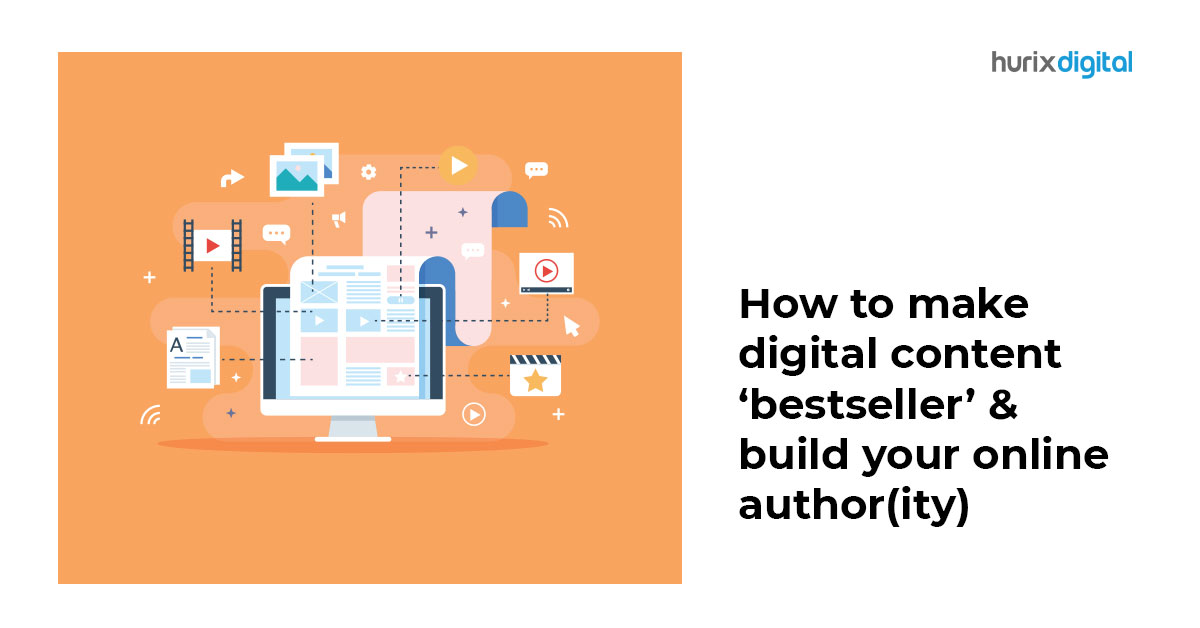
[vc_row][vc_column][vc_column_text]The digital world is complaining of the high incidence of infobesity – information overload. With millions of pages created each day, it is a challenge for content writers to outshine in this digital content glut. The side effects are evident – severe attention deficit. It has become a daunting task for content writers to not just catch the reader’s attention but also convince eyeballs to read content rather than browse/scroll online. How do you capture the attention of your readers to nudge them from browsing to reading? Just three magic words i.e research, patience, and commitment to deliver something unique content for your target audience. Keep in mind that the digital-first world of content publishing is instant in its accolades as it is ruthless in ignoring your digital content.[/vc_column_text][vc_custom_heading text=”Follow this short & effective 5-point checklist to help you craft a ‘bestseller’ in your next digital content composition.” font_container=”tag:h1|font_size:18|text_align:left” google_fonts=”font_family:Lato%3A100%2C100italic%2C300%2C300italic%2Cregular%2Citalic%2C700%2C700italic%2C900%2C900italic|font_style:900%20bold%20regular%3A900%3Anormal” css=”.vc_custom_1563275415141{margin-top: 0px !important;margin-bottom: 0px !important;border-top-width: 0px !important;border-bottom-width: 0px !important;padding-top: 0px !important;padding-bottom: 10px !important;}”][vc_column_text]Write for Digital Reading: The world is moving fast to a digital-first world, think-it-through the digital reader’s eyes – literally. Just as the chances of you writing your digital copy first before print is high, keep in mind that the content will be read digitally by a higher audience than print. It needs to be niche, short, engaging and L-shaped – digital content writing is a lot of science as it is an art. Also, ensure it is HTML5 ready digital content to make it device agnostic and give a superior digital reading experience when they read it either on a computer or a mobile screen. Content Author(ity): Prove your author(ity) on the topic on which you write with hard-work on research and storytelling to stir emotions and itch the reader’s interest to read through entire content till the end. However, a word of caution, all your efforts of this creative writing will be a waste if you throw up content with grammatical errors – so ensure thorough editing, proof-reading, take professional help to scan your content before you publish it for public view. Surprise them with interactive content: Now that you are ready with a great piece of content, why not take advantage of the fact that it’s not going to be published on a dead paper but a live web page online. Catch the attention of your readers with interactivity embedded in your content that keeps them engaged on-page such as video clips, 3D images, audio, assessments etc. Make the most of the digital opportunity in reader engagement with interactive content. Emotional Stickiness: While the print is more concerned with its content correctness; digital is more rewarding on the content stickiness and emotional quotient of the composition. You have to pay really close attention to the finest details of your target audience and its reading preference to ensure your content is the top scorer. If your readers are science fiction fanatics – keep them engaged with a gripping story-play and immersive illustrations that ignite their imagination to keep reading till the last word. And episode choose your story hack if they are researchers & academicians you bait them with a curated list of ref reading as links, videos, and images as more food for thought. People don’t like goodbyes: With so much hard work and mind mapping of readers, copy check and editing, glitz of inter-activities, make sure you have the final word your way. Never end your digital content assignment in a goodbye – always say ‘lets stay connected’. Ask for their email, encourage them to comment on what they just read, a subtle pop-up chat box to just say Hi or thank you. Use call to action words and buttons to help you engage with all those unknown visitors who have read your content. These are your potential fan followers, newsletter subscribers or just social media members whom you would like to invite and stay connected to. HurixDigital brings ideas & imagination of millions of content creators to life. Our cloud-based digital publishing platform creates digital content crafted for the likes & preferences of a fast-growing number of digital readers worldwide. Share with us your next digital content assignment and we will transform it into an ultimate digital experience. [/vc_column_text][/vc_column][/vc_row]