Blog

The Importance of Curriculum Planning for Effective Learning

[vc_row][vc_column][vc_column_text]The curriculum lays down an educational framework governing the instructional and learning methodologies. Curriculum planning is an essential aspect of effective teaching that establishes the groundwork of students’ academic careers. It involves designing, developing, and implementing educational courses with significant input from teachers, including the objectives, content, and assessment methods. In addition to ensuring that students have sound knowledge of what is expected of them academically, a well-planned curriculum establishes a meaningful and engaging learning environment. An effective curriculum offers teachers, students, school administrators, and community stakeholders a quantifiable strategy and structure for delivering quality education.  The curriculum specifies the learning outcomes, standards, and competencies students must demonstrate before proceeding to the next level. An evidence-based curriculum provides students with the necessary skills and knowledge, functioning as a road map directing instructors and students to academic success. Curriculum planning should be extensive, emphasizing cognitive growth domains and social, emotional, and aesthetic development. A student-centered approach to curriculum planning encourages diversification, adaptability, and consistency across levels. Thoughtful consideration is imperative to accomplish the primary objective of the planning process- successful student learning in an organized and systematic manner. Designing a well-conceived curriculum with learning objectives in mind can serve as a reference guide for the instructor in the classroom while guaranteeing that the teacher effectively conveys the right content to the students. The curricular plan ensures that daily instruction serves a greater purpose by dissecting a complex idea into smaller comprehensible portions. Curriculum planning induces well-coordinated, quality teaching, learning, and assessment programs enhancing students’ disciplinary knowledge and behaviors alongside their interdisciplinary, physical, personal, and social aptitudes. Here are a few key ways curriculum planning can achieve the intended student development outcomes. 1. Define Learning Goals and Objectives A curriculum plan incorporates multiple scheduled activities and learning objectives while defining the target outcomes regarding each subject. It serves as a road map, laying out your course and the actions required to realize the purpose of education. Students can understand what is expected of them to achieve their true potential. Distinct goals provide a directive, keep students motivated, engaged, and focused on their learning, leading to better academic outcomes. 2. Consistent and Coherent Content  A well-planned curriculum aids in preventing or eliminating gaps in learning and ensures optimum coverage of all domains within the curriculum. Continuity of learning between fields across various levels enables a logical progression of instruction, building on previously grasped concepts and skills. Cohesiveness in teaching, learning, and assessment practices ensures the entire scope of students’ learning needs is addressed. 3. Improved Assessment and Feedback Curriculum planning marks student progression on a learning curve, providing a reference point for evaluating the learning progress. Teachers can formulate assessments that accurately measure student growth by establishing clear learning objectives and expectations. Effective assessment allows teachers to provide immediate feedback to students by identifying areas of strength and progress, reaching out to extend support, and making necessary adjustments to curriculum and delivery methods to facilitate student comprehension. Curriculum planning fosters a culture of continuous improvement, where teachers are motivated to reflect on their practice, share feedback, and refine their strategies over time, leading to better outcomes for students while supporting the ongoing professional growth and development of teachers. 4. Increased Engagement and Motivation A curriculum built around student needs, interests, and goals of students garners engagement and motivation. Curriculum planning, wherein learner-centeredness is the essence, yields higher student satisfaction and retention rates. Assignments, activities, and learning experiences customized with differentiated lesson plans encourage students to seek answers, exercise their imagination and discretion, and help them develop into confident and self-directed individuals. 5. Personalized learning The delivery of personalized learning solutions that complement each unique learning preference and cater to individual academic strengths is made possible by careful curriculum development. A student-oriented approach to curriculum planning represents a fusion of educational practices and instructional strategies tailored to student needs. A learner-centered curriculum enables the attainment of individual educational aspirations while providing affluent opportunities to improve student learning abilities through a self-directed learning path. 6. Collaboration and Consistency Collaboration is an essential facet of k12 curriculum planning as it enables teachers to pool their expertise, knowledge, and resources to create a cohesive and consistent learning experience for their students. Teachers can share their perspectives, insights, and strategies to improve the quality of instruction and support a more effective teaching and learning process when they work in unison to plan a curriculum. Sharing resources such as lesson plans, instructional materials, and assessments mitigates the workload and avoids duplication of effort. They can also benefit from mutual experiences, ideas, and viewpoints, which assist in determining their strengths and weaknesses and making alterations to the curriculum as necessary. Working together to develop common instructional goals and standards ensures that students are exposed to the same concepts and skills, regardless of the teacher or classroom, encouraging consistency in teaching across classrooms. The Bottom Line Curriculum planning enumerates all elements and dimensions of learning deemed essential. It combines key concepts, skills, and knowledge students need to excel with the appropriate teaching strategies, resources, and assessments to augment their learning. A well-planned curriculum is essential for creating a conducive learning environment that fosters academic growth. Effective curriculum planning must consider the diverse needs and abilities of the learners, including their cultural backgrounds, learning styles, and individual interests. This ensures that learning is accessible, relevant, and engaging to all students. Curriculum decisions have far-reaching consequences for students and teachers in a K-12 education journey and beyond. K12 curriculum should undergo regular evaluation to preserve its efficacy in light of the shifting demands of society at large. Curriculum planning also involves ascertaining the scope and sequence of learning in a structured manner and ensuring the introduction of concepts coherently. Ensuring students have the necessary background knowledge and skills to build on as they progress through their academic journey is crucial. The dawn of digital initiatives in learning and the importance of curriculum development in formal education has triggered the proliferation of digital

Curriculum Design: How To Develop A Successful Curriculum

[vc_row][vc_column][vc_column_text]In an era where eLearning is the present and future of education, it’s a must for educators and course creators to prioritize the comfort of learners over anything else.  Since 2000, the eLearning sector has increased by 900%, and to keep that percentage high, it’s crucial to design courses that are perfect in every way, especially when it comes to curriculum. To set a course for success, one of the very first steps is designing a curriculum that’s engaging and motivates learners to make the most of their learning sessions.  A sound educational program design lays the foundation for effective learning and teaching. Students of today’s age have diverse needs, and a well-made curriculum design takes good care of them. However, creating a perfect curriculum is easier said than done – designers and educators need hours of research to determine what their target audiences need. To make the whole curriculum design process easier, it’s crucial to follow a step-by-step strategy. In this article, we will closely examine the types of curriculum designs, their importance, and how you can easily develop one using practical tips.  Curriculum Design: Types, Purpose, And More The process of curriculum design and development takes a lot of effort as the creator needs to consider many aspects. There are three types of curriculum designs, and each serves a different purpose. Read on to learn the unique benefits of each kind. Subject-Centered Curriculum Design As the name suggests, this type of curriculum strongly emphasizes a particular subject. It can be literature, mathematics, or any other subject. This type of design highly inspires K12 curriculums because it specifies what should be studied and how to make things easy for students to follow.  However, the student’s unique learning preferences are not considered while creating this curriculum design. As a result, there may be issues with motivation and involvement on the part of the learners, and they might even lag behind academically. Learner-Centered Curriculum Design Each individual’s needs, interests, and ambitions are considered in learner-centered curriculum design. It simply recognizes that every learner is unique and adapts to their needs. A learner-centered curriculum design aims to give students control over their education and equip them with the freedom to make informed decisions.  However, this curriculum creation method can be labor-intensive. It is the teacher’s responsibility to develop differentiated education to meet each student’s need for learning and identify materials that support that instruction. Teachers must balance the needs and interests of the students in order to develop a curriculum that is learner-centered, which is quite a challenging task to accomplish. Problem-Centered Curriculum Design In this type of curriculum design and development, real-life problems are used to sharpen the learners’ minds. This curriculum enables students to analyze a situation and find a solution. This also fosters the growth of creative thinking in learners, which later helps them in their careers.  However, this method of curriculum design has the issue of not always considering learning styles. The educator needs to be mindful throughout to make sure that all the students are learning the course effectively.  How To Design A Course Curriculum For Success It’s pretty evident by now that designing a curriculum for a course is harder than it looks. The key is choosing the right curriculum providers for your course that offers all the features you need and being very strategic throughout the process. Follow this step-by-step guide to craft the perfect curriculum for your course.  Step-1: Set The Purpose Of Your Course Curriculum The very first step of the process is determining the goals of your course. You must take your time while planning this part and be specific about each aspect of the process. Discuss your vision with your team to enhance it with their valuable suggestions.  Step-2: Identify The Core Content And Create Your Student Entitlement Your student entitlement (also referred to as the pupil offer) should be stated after you have clarified your goals and guiding principles in the first step. Make an outline of how you will enhance your curriculum with resources like articles, textbooks, video content, and other materials in this step.  Step-3: Curate Content For The Curriculum Of Your Course Once you are done with the first two steps, it’s time to organize the content of your program into subject schemes. Start by examining the course offerings, and then carefully consider what you are going to cover when you are going to cover it, and why. Establish the concepts and areas that will be covered in your curriculum and their connections to other disciplines. The knowledge and skill objectives that form the fundamental basis of learning must then be divided into smaller chunks. Step-4: Prepare Your Delivery Strategy For The Curriculum You must offer settings for delivering a long-term curricular plan after you are done establishing it. The national curriculum outlines different contexts for courses like history that must be addressed. However, you can develop compelling contexts for art or design topics. Each project’s or unit’s teaching narrative should describe the manner in which learning will be imparted. It must be organized and cohesive, properly demonstrating where the project began and how it progressed. This process can be lengthy and complicated – so make sure you take as much time as you’ll need to perfect every aspect.  Step-5: Obtain Top-Notch Materials To Use In Your Curriculum Delivery After all that hard work, the last thing you would want is poor resources for your curriculum. Inadequate resources are going to weaken the impact of the curriculum and may also lead to misunderstandings and even misinformation. Don’t compromise your curriculum’s effectiveness by settling for anything less – shop for the best delivery platform for your course.  Step-6: Evaluate Your Curriculum Your job does not end after successfully forming a course curriculum. You now have to periodically assess its effects on instruction and learning and make any adjustments or changes necessary to make it even better. And lastly, to help students succeed in the course, ensure they

5 Popular Curriculum Development Models You Should Know

[vc_row][vc_column][vc_column_text] The curriculum is a fundamental aspect that guides formal learning experiences. It is conceptualized to suit the educational objectives and philosophy of the learning institution for which it is intended. Curriculum development models serve as a guide for two important processes involved in curriculum creation: design and development. Broadly defined, curriculum design refers to a course’s overall structure or blueprint. Meanwhile, curriculum development is a step-by-step procedure that involves planning, implementing, evaluating, and improving course materials and teaching strategies to produce better educational outcomes. As an educator, being aware of the different curriculum development models will enable you to make informed decisions and chalk out an effective learning plan for your institution. So, let’s dive in! 5 Types of Curriculum Design Models There are several models for developing a curriculum. Here are a few popular ones: Tyler’s Model Tyler’s Model was developed by American educator Ralph W. Tyler in 1949. It is also known as the objective Model and is among the most widely used curriculum design models.  It is based on the notion that the objective of education is to develop learning that is meaningful and useful to learners. Tyler’s Model lays importance on the planning phase. At the same time, it focuses on maintaining consistency among objectives, outcomes, and educational experiences. It is a linear model that considers four fundamental aspects of developing a curriculum, including: The purpose or objective of education to be achieved The learning experience required to attain the defined objective Organizing educational activities for effective learning experiences Assessing the Learning experiences The strength of this Model lies in its concise structure and systematic approach. At the same time, it allows for flexibility. Educators can easily apply this Model to develop curriculum for any level of education and subject area. Since it gives importance to the evaluation of the curriculum, Tyler’s Model enables educators to assess the effectiveness of their educational plans and introduce required changes. However, it has a few shortcomings. It does not give much importance to social learning. Its specific learning objectives don’t address critical thinking or emotional development. As such, this Model may not meet the diverse requirements of students.    Taba’s Model Taba’s Model emphasizes the planning of instructional strategies. Also known as the interactive Model, it was designed in 1962 by Hilda Taba, an Estonian-American curriculum theorist, reformer, and teacher.  It follows a Grassroots or Down-Top approach and promotes a major role for teachers. The Model consists of seven stages of the learning and teaching system, which are mutually interactive. They are as follows: Diagnosis of learners’ needs Formulation of objectives Selection of the content Organization of the content Selection of learning experiences Organization of learning activities Evaluation This Model promotes open-ended questions rather than focusing on right or wrong responses. One of the major benefits is that it offers scope to explore a concept at a deeper level using critical thinking skills. John Goodlad’s Model A Canadian theorist and educational researcher, John Goodlad, conceptualized Goodlad’s Model. It is a distinctive curriculum based upon the core belief that the driving force of educational systems should be values or goals. Goodlad considered values as data sources, contrasting Tyler’s consideration of values as a screen. In his curriculum development model, Goodlad focuses on four data sources, which are as follows: Values Funded knowledge Conventional wisdom The learner’s needs and interests This varies from Tyler’s Model in several aspects. One of the major differences is that Goodlad’s Model recognizes scientific knowledge that stems from research. When it comes to data sources, the Model depends on explicit value statements. This Model proposes continuous evaluation at all stages of the curriculum development process.  Wheeler’s Model Wheeler’s Model is cyclic. It was devised by D. K. Wheeler, a British educator and researcher. This Model uses a systematic and structured process to design and implement a curriculum. It aims to help educators create and implement a dynamic curriculum that is relevant, effective, and efficient. Wheeler’s Model comprises five phases of curriculum development, which are as follows: Selection of aims, goals, and objectives Selection of learning experiences Selection of content or subject matter Organization and integration of learning experiences and content Evaluation and revision of curriculum Wheeler developed this Model to address the shortcomings of Tyler’s concept of curriculum development. Since Tyler’s Model is linear and basic, it overlooks the relationship between different curriculum elements. In response to it, Wheeler proposed this cyclic Model. It underlines the interconnectedness of the various curriculum aspects. This Model enables curriculum designers to begin working on it at any stage. It also focuses on situational analysis. However, this Model is time-consuming and may be difficult to implement.      Kerr’s Model Kerr’s Model of curriculum development was proposed by John Kerr, a British curriculum specialist. Several features resemble those in Tyler’s and Wheeler’s Models. But the difference lies in the emphasis on the interrelatedness of the various components that are a part of this Model. This interrelatedness can be either direct or indirect and is achieved by the flow of the data between the components.   John Kerr proposed four components for his curriculum development model: Objectives Knowledge School learning experiences Evaluation Kerr’s Model recommends sorting objectives as cognitive, psychomotor, and effective. It also underlines that knowledge needs to be organized, integrated, sequenced, and reinforced. This Model pays attention to the needs and interests of students, the influence of social conditions and school, and the maturity of the learners. However, one drawback is that it doesn’t focus on teacher input. The Bottom Line Curriculum development is an integral part of every education program, whether offered online or offline. But designing and implementing a curriculum is not easy, especially when it comes to online learning. This is where digital curriculum providers can be of great help. Hurix is one of the most reliable k 12 curriculum development companies that designs customized curricula based on client requirements. The team of experts at Hurix is adept at developing an eLearning curriculum and ensuring success for your

These Trends And Predictions Will Shape The Future Of Curriculum Development

[vc_row][vc_column][vc_column_text]The pandemic spurred a lot of changes in the educational sector as well as others. Now, innovations are happening in many fields at a fast pace, but the education sector is lagging. It has a lot of catching up to do. And a good place to start is bringing changes to the curriculum.  Curriculum lies at the core of every course and learning process. Making thoughtful improvements to it is the only way to go forward.  In other words, curriculum development is the need of the hour.  And to help you with it, here is a compilation of the emerging trends and predictions you can incorporate to transform the educational landscape.  Blended Mode Of Learning Blended or hybrid learning is gaining popularity for making education accessible and attainable for every student, especially those living in remote areas.  Blended learning brings together the good features of classroom learning and online learning. It provides students with the option of virtually attending classes from their homes or physically attending classes in school. Blended learning makes education flexible and, at the same time, better structured and enhances students’ learning experience. Personalized Learning  Every student has a different learning style. Being cognizant of this, personalized learning takes a student-centric approach and tailors learning courses in a way that meets the need of every student. It imparts knowledge through different mediums, including textbooks, video and audio lectures, storytelling, etc. Combining the powers of AI and personalized learning will make education more impactful and powerful and develop a self-driven and accountable attitude from an early age in students, which will help them through their adult life. Gamification Gamifying the way education is delivered with the help of K12 ed-tech companies will make education engaging. It will also increase students’ interest and encourage them to participate actively in learning activities. In addition, it will motivate the students to perform better and rank higher on the leaderboard than they do now.  Gamification will improve the overall learning process and result in the formation of an interactive classroom environment.  Collaborative Learning Collaborative learning revolves around the concept of students teaming up in small groups to work on a task, create a product, or solve a problem. Working together facilities discussions among students and helps them voice their points of view. Listening to differing points of view develops the quality of open-mindedness and also improves their understanding of concepts. Besides increasing the engagement of students, collaborative learning builds interpersonal skills, which are pre-requisite for success in every field today.  Immersive Learning Digital curriculum providers now offer VR (virtual reality) and AR (augmented reality) based learning. VR and AR enable students to interact with their course material in 3D, thus creating an immersive learning experience. They simplify complex concepts by making them realistic and also add an element of exploration to the learning process.  AR and VR are expected to grow at 18.2% CAGR from 2022-27 in the education sector. As a result, in the future, AR and VR will completely change the way students learn and the way teachers teach.  Mobile-First Learning Statista expects there to be 7.49 billion mobile phone users globally by 2025. This means that mobile-first learning is here to stay.  Mobile-first learning refers to accessing the course content on mobile-based devices. It allows students to access the educational resources at a time and place of their convenience. Implementing mobile-first learning will ensure that learning continues to take place outside the boundaries of the classroom.  Micro-Learning Micro-learning, also known as bite-sized learning, is an approach to learning where complex topics are divided into small digestible chunks. Micro-learning prevents burnout by reducing cognitive overload. It also improves students’ focus and leads to better retention of knowledge. Owing to the benefits of micro-learning, many K12 curriculum development companies now offer course material in the form of multimedia-rich bite-sized chunks.  Disability-Accessible Learning A current trend in curriculum development is about making learning accessible to K12 students with disabilities, including blindness, speech deficits, deafness, photosensitivity, etc. Owing to this, educational institutions have started ensuring that their websites are WCAG-compliant. Many e-learning K12 companies have also started providing screen-reader-friendly and easy-to-understand content that includes the learning needs of differently-abled students.   Social-Emotional Learning The pandemic brought the mental health crisis to the forefront. The likelihood of children suffering from stress, anxiety, depression, and other mental health disorders has drastically increased. Suicide has reportedly become the second leading cause of mortality among 10 to 14-year-olds. All this has created a need to include social-emotional learning (SEL) in educational content development. SEL focuses on developing self-awareness, control, management, and interpersonal skills of K12 students and teachers through academic resources, systems, and programs. It also assists them in becoming mentally and emotionally strong.  Project-Based Learning Alternatively referred to as learning by doing, project-based learning (PBL) is a teaching strategy intended to allow students to build their skills and knowledge through projects based on problems and obstacles they may encounter in the real world.  PBL fosters the development of technical abilities and skills in students and prepares them to face the workforce. At the same time, PBL stimulates the growth of soft skills like problem-solving, team-working, and critical thinking skills.  PBL focuses on providing a holistic learning experience to K12 students, so implementing it in curriculum development is of utmost importance.  Summing Up The curriculum of K12 students needs to undergo a lot of developmental changes. Implementing the current and emerging trends in the curriculum of your educational institution is a great place to start.  It’s no secret that transforming the curriculum alone can be time- and resource-extensive. So, if you want a hassle-free curriculum development experience, reach out to Hurix.  Hurix offers custom learning solutions for elementary, middle, and high school student’s education. It provides multilingual multimedia-rich content, game-based learning, simulation-based learning, and more. In addition, Hurix is the trusted preference of educational companies like Wiley, Cambridge University Press, Carnegie Learning, etc.  To expedite your curriculum development process, connect with Hurix. [/vc_column_text][/vc_column][/vc_row]

How to Infuse Diversity and Inclusivity into Your Curriculum Design

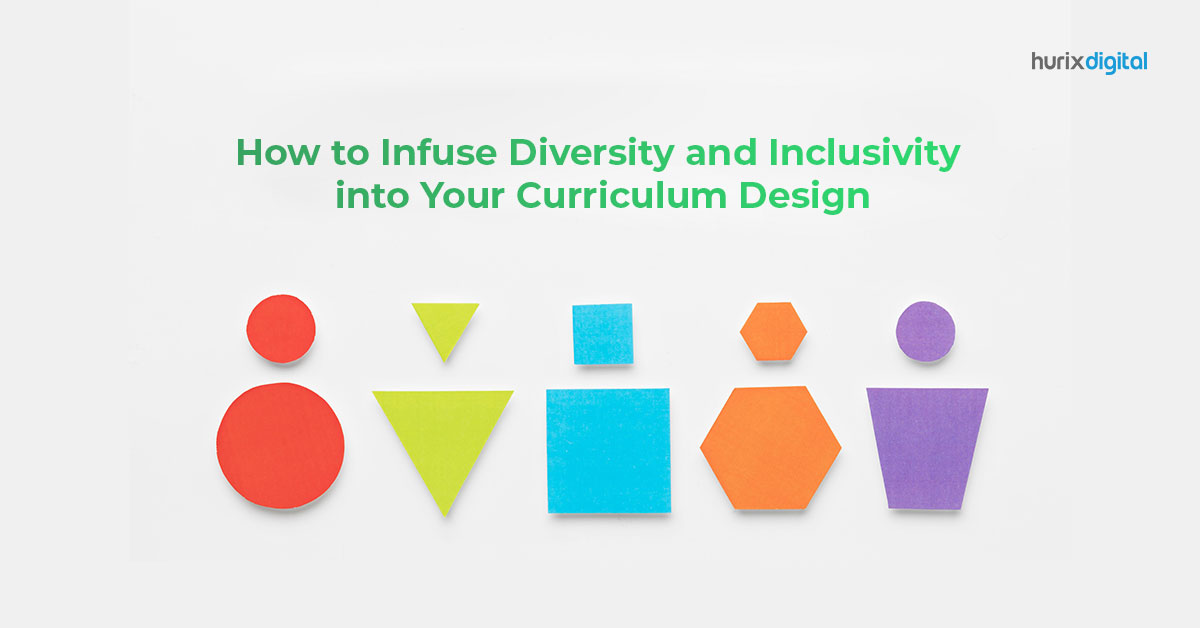
[vc_row][vc_column][vc_column_text]As an educator, you have the critical responsibility of ensuring every student feels valued, heard, and seen in the classroom. However, achieving this requires more than just including diverse topics in your lesson plan. To foster diversity and inclusion in schools, educators must focus on curriculum development that caters to a broad range of learning needs and cultural backgrounds. In this guide, we explore practical ways educators can infuse diversity and inclusion in education and create a safe and welcoming learning environment for all students. What is Diversity, Equity, and Inclusion (DEI) in education? Diversity, Equity, and Inclusion, or DEI in education, refer to the policies and practices that help create learning environments that embrace the differences among students from diverse backgrounds. Diversity encompasses students of various races, ethnicity, genders, abilities, background, cultures, and sexual orientations. Equity refers to the fair distribution of resources and opportunities to help students reach their full potential. By prioritizing equity, educators can help close the achievement gap and promote equal access to educational resources for all students, regardless of their diverse backgrounds. Inclusion refers to the extent to which students feel a sense of belonging in the classroom. Inclusive teaching practices recognize that every student has unique needs and learning styles and seek to meet these needs in the school. Why is DEI in Education important? The impact of DEI in K-12 and higher education is tremendous, whether in improving learning outcomes or shaping the development of students and empathetic human beings. Over the years, various schools and universities have conducted studies on the values of DEI in school and found the following results: Learning with people from diverse backgrounds and cultures in the classroom leads to a better understanding of the subject matter. Diverse classrooms foster critical thinking and problem-solving skills, especially when applied to real-world problems. Exposure to diverse cultures helps develop tolerance and a greater sense of security in environments where foreign cultures are present. Diverse classrooms promote intercultural sensitivity and allow students to learn about other languages and cultures. Creating awareness and personal connections with diverse cultures in the school can prevent the development of prejudices later in life and foster empathy with others. Diversity and inclusion in higher education better prepare students for the global workforce, where they must work with people from different cultures and social groups. Ways to Infuse Diversity and Inclusivity into Your Curriculum Design Here are some ways to promote DEI in your curriculum design: Start With Self-Reflection Before teaching diversity and inclusion to students, take a step back and reflect on your own biases and assumptions. Everyone has biases, and acknowledging and understanding them is the first step in creating an inclusive learning environment. Incorporate Diverse Perspectives Into Course Materials One of the best ways to promote diversity and inclusivity in schools is to incorporate diverse perspectives into course materials. This can be done by adding opinions and philosophies of various authors, artists, and experts from diverse backgrounds to the reading material. However, it must be ensured that these materials are not just a token representation of diversity. They should be authentically integrated throughout the course, not as an isolated incidence. Foster Inclusive Classroom Culture Besides integrating DEI into the course, it’s also important to provide a safe space for students to discuss issues related to diversity and inclusion. Encourage students to share their experiences and perspectives in the classroom. Make sure that they feel safe and respected when discussing sensitive topics. Additionally, create opportunities for students to interact and learn from each other through physical or virtual collaborations. It helps promote a sense of community and belonging. Address Bias Timely To ensure that all students are respected, educators must set clear expectations for behavior and address any instances of bias or discrimination promptly and appropriately. Addressing bias does not mean shaming the other but instead generating awareness about biases in our minds. Once people recognize their biases, they can take steps to eliminate such harmful thinking. Use Inclusive Language And Imagery Another important aspect of inclusive curriculum development is using non-discriminatory language. Educators must make sure to avoid gendered language and use gender-neutral pronouns instead. Similarly, stereotypes and derogatory terms must be removed from the K12 curriculum. It’s also vital that images and other visuals used in course materials reflect diversity in the community and do not perpetuate harmful stereotypes. Leverage Technology For Accessibility E-learning in higher education has become a common phenomenon in today’s digital era. Modern digital curriculum providers offer newer technologies and accessible solutions that make course content accessible for all groups. They provide features such as closed captioning and transcripts for videos and audio recordings, multiple formats, and compatibility with screen readers, enabling access to students with visual or auditory impairments. They also provide multiple–language translations for course materials to help non-native speakers better understand and engage with the content. Educators can leverage them to promote DEI in higher education. Provide Cultural Competency Training For Instructors Providing cultural competency training for instructors is another crucial step for ensuring diversity and inclusion in schools. The areas of training should include: How to create inclusive course material? How to facilitate respectful discussions about sensitive topics? How to address instances of bias or discrimination in a live or virtual setting? Such training can help ensure educators are equipped to create an inclusive learning environment and appropriately address instances of bias or discrimination. Use Feedback To Improve Inclusivity Finally, do not forget to take feedback from students on course materials and group discussions. You can use the feedback to make improvements and adjustments and create a truly diverse and inclusive learning environment. Final Words Undoubtedly, incorporating DEI in education is essential for creating an inclusive and supportive learning environment. Educators must focus on curriculum development tailored to the varied learning needs of students from diverse backgrounds. As an e-learning platform and digital curriculum provider, Hurix Digital provides various tools and resources, such as Universal Design, closed captioning, translation & localization, etc., to

7 Steps Of Curriculum Design: How To Design Your Curriculum

[vc_row][vc_column][vc_column_text]Education as an industry is expected to amass a global value of 10 trillion dollars by 2030. What does that mean for students and teachers across the world? Academic concepts, such as e-learning and curriculum design, will be at the forefront of the education industry. Curriculum design in education can be defined as a thinking process that explains how teachers want the students to learn. The better the curriculum is designed, the easier it will be for students to learn. As the process boasts the utmost importance, every education institute must understand the process to create an efficient educational program design.  Curriculum Design: What Should Be Your Focus? A curriculum design is used to arrange courses, create schedules, and design lesson plans.  The overall process involves coursework, educational analysis, and activities that lead to academic success. Another reason behind creating a curriculum is to meet the school’s teaching standards.  Whatever your motives, the focus should remain on creating a seamless education experience. Your learning environment should be adaptable and cater to your community. That is why these designs vary across the K12 curriculum. Here is an overview of how curriculum designs are categorized. Different Types Of Curriculum Design There are three standard types of curriculum design: Subject-centered design Learner-centered design Problem-centered design Subject-Centered Design  This type of educational program design focuses on specific subjects.  An ideal example for the category would be a maths curriculum design that covers the knowledge spread across the K12 curriculum. Such curriculums revolve around subjects instead of individuals. Learner-Centered Design As the name suggests, these curriculums cater to the goals, needs, and interests of every learner. They revolve around the concept of every student being unique. Thus, this type of curriculum design in education empowers learners and shapes their academic journey via choices. Problem-Centered Design Such curriculums are niche and focus on real-world problems. They are used to teach students how to formulate their solutions to a unique problem. Why Devise A Curriculum Design? Even with new technologies simplifying higher education learning, teachers should invest time and resources in curating a curriculum design, and here is why:  Better Engagement: Adding a learning game or group activity to the curriculum can encourage learners to be more engaging. Elevated Learning Space: An organized structure for learning leads to better efficiency in lesson plans. Learning Goals: A framework allows teachers to maintain focus on learning goals, at times, in an intuitive way. Track Progress: A curriculum design in education leads to effective tracking of students’ progress and skills. Steps in Curriculum Design Now that you understand the fundamentals of curriculum design let’s see how they should be created: Step 1: Set The Purpose What is the need for your curriculum? What problems and issues are you targeting? What do your students need? Ask such questions before trying to design your curriculum. This will help you scope the program effectively. Moreover, it will help you integrate the school’s guidelines, context, and educational policies by the government. Step 2: Work On A Curriculum Map It is always ideal to get a visual representation of your ideas. The same goes for curriculum design in education.  Add necessary details, such as deadlines, student progress, exams, and activities. Mapping the curriculum gives you an overview of what to do, exposing areas that need more work. You can even involve curriculum providers to get an expert assessment of the situation. Tip: Create a student entitlement for better results. Also called pupil offer, a student entitlement should focus on broadening the curriculum. It can include enrichment experiences, such as extracurricular activities and educational visits.  Step 3: List The Intended Outcomes Now it is time to state the intended outcomes that a learner will gain by participating in curriculum design.  This section should include the defined outcomes, the components surrounding the outcomes, some examples, and an overview of learning tendencies. Step 4: Arrange Curriculum Content This is the meaty part of the process, as you will decide the whats, whens, and whys of teaching. You will also select the subjects and concepts the curriculum will cover. How these aspects interconnect with other subjects should also be on your list. This will require a further breakdown of the components. Thus, the content must be carefully structured, revamped, and designed. Step 5: Set Up The Curriculum Design Delivery  Now that the educational program design is taking form, you need to plan its delivery. This step will focus on using picking learning styles, activity design worksheets, and different delivery modes. Another crucial part of the step is to pick the right resources. Focus on using high-quality ad-hoc resources and equipment to keep the curriculum top-notch.  Step 6: Produce Curriculum Product Once everything is finalized, the production of the curriculum material will take place. You should find suggestions from existing materials for better evaluation. During this step, you will also set up the assessment criteria to track the course’s growth.  Step 7: Assess, Adapt, And Improve A process as complex as curriculum design might take some review and revamping.  In the final step, you ensure the sustenance of the educational program with regular reviewing. Make adaptations wherever needed, keep up with the latest policies and programs, find better methods, etc. Keep the curriculum up-to-date with industry standards to ensure you are producing well-equipped learners. In Conclusion Education in an industry that will produce over 800 million K12 graduates by 2030. To keep up with this growth spurt, educational institutions will require an additional 1.5 million teachers annually.  However, the need for elevation won’t step at human resources, with developing economies like Africa and Asia leading the expansion. It will require a redesign of technologies and concepts, such as curriculum design. Since the process involves students’ academic learning, it requires vast knowledge and skills for impeccable execution. That is why names like Hurix help institutions curate their curriculum design with ease.  With 20 years of experience in assisting education technology companies, Hurix is one of the best global curriculum providers.

The Key Principles of Effective Curriculum Development

[vc_row][vc_column][vc_column_text]The curriculum is the backbone of any nation’s education system. To achieve quality education, designing a good curriculum becomes paramount. While there is no right or wrong approach to curriculum development, it’s essential to follow the principles of curriculum development to design a balanced curriculum. Without these principles, the curriculum design will likely lack the learning experiences required to nurture a balanced development of a child. Before we jump into these principles, let’s first understand the basics of the curriculum development process.   The Curriculum Development Process Curriculum development is a process of designing instructional activities, sequencing and selecting objectives, choosing assessment methods, etc., for the programs or courses offered at educational institutions. It aims to develop an effective learning environment for students to acquire the required skills and knowledge to succeed in their personal and professional lives outside of the classroom. The curriculum development process involves continuous improvement rather than a stagnant approach. The content is revised, reviewed, and upgraded based on the demands and needs.  What are the Types of Curriculum Development Designs? 1. Problem-Centered Model Problem-centered curriculum designs help students develop critical thinking, problem-solving, and communication skills. The basic idea is to provide a highly interactive learning environment wherein the students are given problems and encouraged to find solutions after careful observation.    2. Subject-Centered Model Subject-centered curriculum designs focus on a specific discipline or subject matter rather than on the students. They follow the traditional approach that includes four curriculum design subtypes: discipline design, subject-area design, correlation design, and broad-field design. 3. Learner-Centered Model Learner-centered curriculum designs focus on the learning needs of each learner. They aim to create an independent learning environment for students with well-regulated liberty.   What are the Main Principles of Curriculum Development? The principles of curriculum development are the foundation of an effective and well-rounded curriculum. They are values, philosophies, moralities, and norms that benefit students, teachers, and the entire education system. There are several curriculum development principles, but here are the most significant ones:    1. The Principle of Child-Centeredness A child-centered curriculum focuses on students’ motives, needs, and concerns and ensures that they are actively engaged in learning. This principle allows educators to customize instructions to meet each child’s unique needs and interests rather than sticking to the predetermined curriculum.  Students’ interests change based on their age groups, circumstances, and tastes. So learning experiences must be curated to match the learners’ interests, psychology, aspiration, and capacity. Also, while developing any curricular activities, teachers should consider ways to enrich students’ interests.    2. The Principle of Integration The principle of integration helps students acquire a more comprehensive understanding of concepts by adding varied subjects at distinct stages of education. This promotes problem-solving and critical thinking skills. Likewise, to enable learners to correlate with the content, the existing subjects must be integrated with other subjects. When students see how science, social studies, math, and language arts are connected, they can better understand every subject. The integrated curriculum should also provide opportunities for students to collaborate on projects and develop emotional and social skills. 3. The Principle of Utility According to the principle of utility, the curriculum must include valuable and rich content that is relevant to students’ interests and lives. The main aim of the curriculum design must be to maximize its utility to the individual and society, enabling them to meet their goals. This principle not only helps educators to cover the essential skills and topics for their learners but also helps them to ensure that the curriculum is in line with the state standards.    4. The Principle of Character Formation The principle of character formation highlights the significance of developing the moral values and character of students. A good curriculum not only educates students via textbook knowledge but also aids in character training throughout their academic years. When students are taught to think and behave morally, they become productive and good citizens. Excellent character traits like integrity, perseverance, and discipline enhance learners’ capacity to excel academically and beyond the classroom. Additionally, character education also aids in reducing delinquency and crime rates and promoting social justice. 5. The Principle of Flexibility Dynamism and flexibility are ideal qualities that a curriculum must possess to meet the unique needs of learners. Students have different interests and abilities, and they learn in distinct ways. A flexible curriculum not only enables educators to be responsive and creative in their teaching but can also be adapted to changes in technology. Appropriate modifications and timely updates ensure that students are up-to-date with the latest advancements and trends.     6. The Principle of Creativity and Conservation While the principle of conservation emphasizes that resources must be used creatively and wisely, the creative principle encourages the exploration of new approaches and innovative ideas. Following both these principles is critical to developing an effective curriculum that will help conserve one’s cultural heritage. 7. The Principle of Practical Work Active by nature, children learn more and gain a deeper understanding of a subject by applying theoretical or abstract concepts to practical scenarios. The principle of practical work states that a curriculum must be developed to offer students maximum practical work opportunities. 8. The Principle of Mental Discipline The principle of mental discipline focuses on developing a curriculum that fosters students’ mental powers or faculties through practice and cognitive training. Mental discipline enhances students’ attention and helps them to persist in their efforts despite setbacks or distractions. It encourages learners to think logically and critically and hone their problem-solving skills. However, it takes plenty of effort and patience to instill a sense of mental discipline in students. But the benefits reaped by the learners are worth all the efforts. Wrapping Up! While curriculum development is necessary for educational institutions, implementing the curriculum is equally important to achieve its objectives. Regularly reviewing the curriculum is also essential to ensure it aligns with the student’s needs and changing global educational trends.   If you’re seeking the services of professionals to develop an effective curriculum, get in touch with

The Importance Of Curriculum Development In Enhancing Teaching And Learning

[vc_row][vc_column][vc_column_text]The way we impart and gain education today has evolved significantly and for a good reason. Technology and audio-visual aid have made it easy for students to grasp complex concepts. But with the rise in online education, the K-12 curriculum has also undergone a radical shift. Although most institutions have gone back to traditional classrooms, eLearning in education is not going to go away anytime soon. Be it for brushing up on lessons, self-paced learning, interactive experiences, and even helping with homework or extra-curricular activities; online learning is helping us make education more fun and interactive.  An estimated 5.3 billion people will have access to the internet by the end of 2023, making online education even more accessible to a larger population. This makes curriculum development imperative to help teachers and students, especially since it is essential to leverage these multifaceted learning models to take learning experiences to the next level. Today we will uncover what curriculum development is all about and examine its role in online program development. What Is Curriculum Development? Before we understand how curriculum development plays a key role in our learning experiences, let us first understand what it is all about. To put it in simple terms, curriculum development refers to the process of creating educational programs and materials that align with today’s updated educational standards and incorporates subjects or skills that are relevant today and for the future. It involves researching and selecting appropriate content, designing courses and instruction manuals, evaluating the information already part of the curriculum, and making updates or changes wherever necessary. The goal is to ensure that students get a comprehensive learning experience that meets their needs and prepares them for the future. By having a well-planned curriculum, each subject or level gets appropriate attention, which helps to enhance a student’s ability to keep pace and grasp complex subjects. Who Is Responsible For Curriculum Development? A look at the traditional educational pattern will tell you that the responsibility of developing curriculum for K-12 schools and other institutions is always with a state and central government subject. Mostly, the government will appoint educational bodies tasked with ensuring that educational standards are set and maintained. However, since the world around us is changing rapidly, so should our educational requirements. As outlined in the “Education 2030” paper by the Organization for Economic Co-operation and Development (OECD), “The concept of ‘curriculum’ should be developed from ‘predetermined and static’ to ‘adaptable and dynamic.’ Schools and teachers should be able to update and align the curriculum to reflect evolving societal requirements and individual learning needs. Teachers, students, and other relevant stakeholders should be involved early in curriculum development to ensure their ownership for implementation.” The shift in how knowledge is shared and taught makes it important for all stakeholders to come together and provide feedback to make setting a curriculum more interactive. As per estimates, the market size of online K-12 education will reach $12,930 million by 2023, from $8011 million in 2022. Thus, with the growing popularity of online education, online program development cannot follow the preset rules and needs a solid partnership of teachers, students, and digital education content providers. How Can Curriculum Development Help Students? A well-set-out curriculum is essential for educators and helps students in more ways than one. For example, since most modern curriculums use interactive learning features, students can access an engaging educational experience. They can go beyond the traditional textbook and grasp complex concepts using interactive videos or audiobooks. Plus, this also allows education to be more accessible for all, especially for differently abled students. Having a set curriculum helps students in several areas, such as: Providing students with a clear understanding of their course and schedule Aligning their educational goals with industry standards Fostering student engagement Enhancing teaching effectiveness Helping students plan their schedule Sets the pace for their learning to ensure proper progress How Does Curriculum Development Aid In Teaching? When it comes to the benefits of curriculum for teachers, there are several areas that we can explore. First, the curriculum helps teachers organize and present the learning structurally, enabling learners to grasp it effectively. Thanks to a proper curriculum, lessons aren’t taught haphazardly, allowing teachers to set the pace for their learning to be imparted properly and efficiently grasped by the students. Teachers can also introduce new-age learning methodologies like quizzes, assignments, objective tests, group discussions, and more to add value to the defined curriculum. Overall, this helps educators, instructors, and teachers to: Get a clear roadmap of instructions It helps teachers understand what students should know Enables teachers to plan their lessons effectively Supports teachers in developing effective teaching methods and practices Encourages teachers to go beyond the normal and use interactive teaching strategies Enhances teacher effectiveness and student engagement It helps teachers stay updated with the latest information and trends in the educational system Thus, it provides a roadmap for learners and teachers and helps align educational goals to the latest standards. In addition, an effective curriculum can help foster student engagement, help them understand expectations, and prepare them for future success – whether in further education, career, or life. Conclusion In conclusion, curriculum development is crucial for education and improving learning outcomes. However, this is not a one-time process. It is essential to be at pace with changes happening around us. Today’s curriculum needs to incorporate interactive technology to help students understand concepts, learn new skills, and get the power of self-paced education. Institutions and online education providers can always work with industry experts and teachers and even take feedback from parents or students for incorporating the best practices in online curriculum development for higher education or K-12 students. You can work with K-12 curriculum development companies to simplify this process and get a solid foundation to build upon. Digital education content providers and K-12 online curriculum service providers have a rich repository of interactive content for students and teachers. HurixDigital is one such provider, with access to over 6000+ interactive and

What Does a Curriculum Specialist Do?

[vc_row][vc_column][vc_column_text]Good teachers are the unsung heroes of the world. Yet, as the educational system evolves to meet the industry’s higher demands, so does the effort and commitment on their part. After a point, this can take a toll on anyone, and experienced educators may find themselves seeking new career paths. Being a Curriculum Specialist could be a viable option if you are at these crossroads. This career path will allow you to be integral to students’ education beyond the classroom.  This article will explain what it means to be a Curriculum Specialist and explore this role’s essential skills, responsibilities, challenges, and opportunities. What does a curriculum specialist’s job entail? By definition, a Curriculum Specialist’s job as a professional is to design, implement and evaluate curriculum plans to align with the learning goals of a specific institution. This can include developing new curricula or making suggestions to the administration to improve the current curricula based on extensive research. In some cases, their duties can also involve providing educators with constructive feedback on their implementation of the improved curricula.   Curriculum specialists are also called instructional coordinators or instructional specialists interchangeably, and this job role can involve working on a k-12 curriculum and higher education solutions. It can even extend to elearning in education. What are the roles and responsibilities of a Curriculum Specialist? A Curriculum Specialist is indispensable in ensuring that students receive a high-quality education that prepares them for the future. When it comes to their roles and responsibilities, they can be broadly categorized into two primary sections.  This first set of responsibilities revolves around the curriculum itself. This includes duties such as: Analyzing student test data to identify areas that require improvement Assessing curriculum standards and having discussions around them with the school staff Work on developing or improving the current curricula Reviewing and suggesting relevant reading material or textbooks to enhance the standard of education A curriculum specialist’s second set of expectations revolves around implementing these improvements. These include: Meticulously planning and conducting training sessions and workshops with educators Recommending the implementation of new technologies and teaching techniques Training and mentoring educators and instructional staff to improve their skills and knowledge of new content or programs With the recent shift towards digital education, curriculum specialists will also need to work with digital curriculum providers to ensure that they meet the state and/or national guidelines prescribed.  The Prerequisites to Becoming a Curriculum Specialist The role of a Curriculum Specialist requires a unique set of skills and qualifications and prior experience in the field of education. This section will break down each prerequisite to give you the clarity to decide if you have what it takes excel in this role.  The Essential Skills  The role of a Curriculum Specialist demands a broad range of skills to perform the job duties effectively. Therefore, besides educational qualifications and significant classroom experience, a curriculum specialist’s skills must include the following to excel in this role. Leadership: Effective leadership enables Curriculum Specialists to effectively guide educators to implement innovative strategies that inspire and motivate students toward learning.  Communication: Communication skills are critical for Curriculum Specialists, as they must be able to communicate implementation and changes in curriculum or instruction to everyone involved from diverse backgrounds, different age groups, and varying levels of experience.  Decision-making: Besides leadership and communication skills, Curriculum Specialists must have excellent decision-making abilities to make informed choices about instructional methods and curriculum materials. This requires the ability to evaluate data, identify areas for improvement, and select the most appropriate strategies to address them. Critical Thinking: Moreover, Curriculum Specialists must have excellent analytical skills. This job role primarily requires them to analyze student data, the current teaching strategies, and the curriculum, after which they are expected to make recommendations based on their analysis. This involves an in-depth understanding of the educational system and developing effective strategies to improve student outcomes. The Qualifications  Candidates must meet specific educational requirements to be eligible to apply for this role.  Employers typically require candidates to hold a master’s degree in education or curriculum and instruction. However, some employers may only require a bachelor’s degree. In addition to a degree, employers almost always require a state-issued teaching certificate to ensure that candidates have met the necessary criteria for teaching in the state. This certificate demonstrates that the candidate has completed the required coursework and has passed any necessary exams related to teaching in the state. Certain institutions may also need a state-issued education administrator certificate. Educational requirements may vary between States. The state’s Board of Education would be the best place to check the specifics of the state you are in.  Prior Experience Prior teaching experience is essential to apply for a role as a curriculum specialist. The reasons behind this are twofold.  First, a crucial part of the job involves assessing teachers’ performance using observation and data analysis. Theoretical knowledge alone cannot develop the insights to perform these tasks effectively.  Second, teachers are often more receptive to constructive criticism from someone with a practical understanding of the profession and who is more experienced than them rather than someone who solely has a theoretical background.  Curriculum Specialist Salary As per the Bureau of Labour Statistics, as of May 2021, the average salary of a Curriculum specialist was $63,740.  Summing it up Curriculum specialists are vital in shaping the educational experience of students. This role is perfect for those with a passion for improving our education systems and a desire to aid in the professional development of educators. If you possess the skills, qualifications, and experience, this could be one of the most fulfilling jobs outside of a classroom.  Hurix’s Digital Higher Education Solutions offer cutting-edge technology and innovative teaching strategies to help institutions provide a seamless learning experience to their students. As the world of education rapidly evolves, Hurix’s solutions offer a comprehensive and dynamic platform for higher education institutions to stay ahead of the curve. Contact Hurix today to learn how their digital solutions can transform

The Difference Between Course Design Vs Course Development

[vc_row][vc_column][vc_column_text]Course design and development is an important part of the content-building workflow for publishers, corporates, and other entities. The subjects and outcomes may be diverse, but the process is similar to building a high-quality product.  The demand for high-quality content is very growing as consumer expectations grow. In 2021, the global eLearning market size was valued at $210.1 billion. Growing at a compound annual growth rate of 17.54% to grow to $848.12 billion by 2030.  At the same time, the number of players vying for market share is growing. Hence, putting the right e-content design and development process in place is a top priority for content publishers. Such as process must facilitate the seamless churning out of high-quality content in an efficient, sustainable, and scalable manner.   What Is E-Content Design And Development? The process used to conceptualize and create e-content or electronic content is called e-content design and development. Within e-content, one of the fastest-growing categories is e-learning. Learners can range from across the educational hierarchy, corporate learners, and part-time learners looking for engaging courses in their area of interest. With over 6.8 billion using smartphones in the world, there is a growing number of learners wanting to access courses via mobile. Hence, the relevance of e-content quality has also shot up. How Learner Aspirations Have Evolved Learner expectations have also evolved. More learners aspire to learn via mobiles anytime, anywhere. Learners also want more engagement with learning content. Rather than learn merely through text and images, they want to learn to serve relevant purposes. For instance, learning must be accessible to learners with limitations and facing barriers. They also want e-learning modules to break down concepts through the use of visual, audio, and interactive learning modules. This is where superior investments in online program development can drive shifts. K12 publishers, for instance, will need to elevate the quality of instructional design in higher education to achieve these results. Hence, e-Content creators must pay more attention to two key aspects – course design and course development.   Course Design vs Course Development  Many creators of e-content get confused between course design and course development. Though they sound similar, they play very different roles in the workflow and require diverse skill sets. Here is a snapshot of the key differences between course design and course development.  The Concept Within the workflow, course design comes first. This is a process, which involves ideation of the program, doing research about existing programs, setting goals, and also setting criteria for program outcomes. Educational program design is an extremely important step and foundation of the project. Once these basics have been established, the next phase – course development – kicks off. Course development is an execution-heavy process that requires a very different set of skills to power it. This process includes creating content for the entire course and bringing various modules to life.   The Process  The process itself is very different for both stages. For instance, in the research phase of course design, the lead will identify a gap that needs to be filled through courses. They will delve deeper into audiences’ needs and how they can be better served through content. Course design leads must also understand the challenges and limitations of audiences so that the course can be effective. They will need to clearly identify the objectives of the course and also determine how the success of the course will be measured. On the other hand, course development requires developers to understand what kind of technologies, learning formats, and design flows can make learning more effective. They will need to flesh out the curriculum extensively and painstakingly produce the final product, which can easily be accessed and distributed.  Key Skills Needed Course design and course development demand unique skills. Here is a snapshot of the core skills required for both processes:   Course Design Domain knowledge: Course designers or instructional designers can benefit from having some domain knowledge in the subject connected to the course. They need not be experts.  Research: Stellar research abilities can help course designers identify gaps and need in the market and the approach to learning. They must be able to sift through data and leverage it to build courses. They must have a clear idea of how to structure online courses for them to stand out from the clutter.  Problem-solving: Addressing current learning gaps through creative problem-solving is useful for instructional designers.  Project management: Course designers need to engage with multiple stakeholders – from developers and curriculum providers to management.  Course Development Tech skills: With e-content becoming much more engaging and interactive, projects need developers with a wide range of technical skills. The technical staff builds the software and interfaces required to make content consumable and accessible.  Domain skills: Subject knowledge is a key aspect of helping ensure that the course material is authentic and there are no errors in content.  Soft skills collaborators will need to possess collaborative and communication skills. They must leverage communication skills to stay connected and function as a team. Accountability is also an important aspect of this journey.  Technology Requirements  Digital content design and development require the right tools to make it an efficient process. Businesses now have access to superior digital publishing suites that are custom-designed for such a need.  Content designers and creators can easily bring their vision to fruition, especially when it involves multi-media content. Such platforms support embedding video, audio, infographics, and interactive elements.  At every step of the way, publishers have access to superior data analytics and insights that can help them design courses that are more relevant to a contemporary audience.   Digital rights management tools can be leveraged to deliver access only to authorized users, for instance, customers who buy or rent the content. This feature helps prevent plagiarism and loss of revenues. The need is so dire that the global digital rights management market is expected to grow from $4.3 billion in 2022 to $7.9 billion in 2027.  The entire process can be managed from a