Julia Suk March 12, 2023 No Comments

What is Bite Sized Learning and Why’s it Important?

[vc_row][vc_column][vc_column_text]A recent study indicated that the average attention span of humans in the digital era has shrunk to just 8.25 seconds. Those who have developed a habit of shifting across multiple screens tend to get distracted more easily. For instance, if an internet user has a laptop and two smartphones, they will likely be juggling three screens at any given moment. Diminishing attention spans have made it challenging for learners to engage for extended periods. This is where bite-sized learning or micro-learning has revolutionized the learning process, mirroring evolving learner behavior. It refers to the breaking down of digital or eLearning content into smaller, consumable chunks, which can be absorbed within minutes and sometimes seconds. In this blog, we delve into the relevance of bite-size learning in today’s world, its impact on learning outcomes, and how eLearning companies can incorporate it into their learning strategy.   3 Trends Triggering Bite-Sized Learning It is important to understand the relevance of bite-sized learning before putting it into practice. Here is a snapshot of consumer lifestyle changes that are nudging more learners to adopt bite-sized learning:  1. Increased Usage of Mobile Phones  As of January 2023, data reveals that the number of unique mobile users stood at 5.44 billion, which amounts to two-thirds of the global population. As mobile phones and data become more affordable, more consumers will be able to access eLearning from their mobile phones. Hence, eLearning platforms must embrace mobile-first bite-sized learning to reach more audiences.  2. Focus on Diverse Learning Styles Today, there is more acceptance of learners who wish to learn in diverse ways. Not everyone is equipped to sit through lecture-based learning and learn through the written word. Today learners have access to video content, audio representations, eBooks, infographics, and other interactive learning styles. Creators of bite-size learning are also leveraging technologies like augmented reality and virtual reality to build immersive experiences.  3. The Popularity of On-Demand Learning Resources Learners today want to have access to libraries of on-demand learning resources. They want to learn flexibly, based on their own schedules. Bite-sized learning access empowers learners to log in for a brief amount of time during the day. For instance, they can listen to an audio presentation for 10 minutes on the way to work or watch a video on their smartphone while waiting for a doctor’s appointment.  4. Influence of the Gaming Lifestyle  Today, more and more consumers are engaged in online gaming. The culture of rewards, challenges, and leaderboards has seeped into eLearning. The gamification of bite-sized learning makes it a highly thrilling experience for learners. It triggers healthy competition and the motivation to keep learning.  Benefits and Impact of Bite-Sized Learning  Ultimately, the success of any learning tool lies in its impact on learning outcomes. Today, bite-sized learning is being leveraged across a wide range of domains, from languages, and STEM (Science, technology, engineering, and Math), to communication and K12 learning. Let us understand the true impact of bite-sized learning and how it is revolutionizing the learning outcome. Here’s a snapshot of the advantages and benefits:  The introduction of bite-sized learning makes the learning process interactive and convenient to access from any location and at any time.   Access to avoid a range of bite-size learning resources teaches learners to engage in the process of self-learning. The learning process is automated and not dependent upon individual instructors.   Access to a large library of bite-size learning resources makes it easy for learners to revise their learnings and keep practicing learning concepts.  Several workplaces adopting eLearning platforms are incorporating more bite-sized learning resources to help upskill their workforces.  Last but not least, bite-size learning offers relevant content for all learners with diverse needs, thus making learning an inclusive process.   How to Create and Distribute Bite-Sized Learning Content Today, several businesses are leveraging bite-sized learning to drive various outcomes. These include publishers of K-12 content, companies looking to upskill their workforces, and dedicated learning apps, to name a few. However, building and distributing bite-sized learning content can prove to be a cumbersome process. This is where using a streamlined platform approach can prove to be cost-effective and efficient and bring measurability to the process. Publishers of bite-sized learning content can now leverage a state-of-the-art single, unified eLearning platform for all their learning content needs.  The use of such a digitized publishing platform makes it easy to produce bite-sized content, categorize and store it on the cloud, access it on demand, and distribute it securely.  Such a platform enables easy collaboration between multiple stakeholders.  The best part is that it comes within an inbuilt digital rights management system that allows businesses to protect the copyright of their bite-sized learning content.  Another significant advantage is bad publishers get access to in that Data Analytics. Dashboards can be customized, and data can be accessed at a micro level, thus enabling data-driven decision-making for future content and distribution.  Superior digital publishing platforms also enable easy integration with various other software already in use by a company.  In Conclusion  Learners across the world are adopting bite-sized learning at scale. Younger generations of users, especially Gen Z and below, have already embraced bite-sized learning as their go-to mode for learning. Companies that aim to stay relevant in a digitized world must incorporate bite-sized learning into their strategy. Partnering with a digital specialist can help build the right infrastructure to make this paradigm shift. If your business is looking to revamp its content creation and distribution strategy and produce high-quality bite-sized learning content, Hurix Digital is geared to support you in meeting all your company’s content creation needs. Our state-of-the-art Learning Management System is available both as a licensed version (one-time buy) and via a subscription model. Get in touch with us to start a conversation and get access to the best bite-sized learning for your business. [/vc_column_text][/vc_column][/vc_row]
Julia Suk March 12, 2023 No Comments

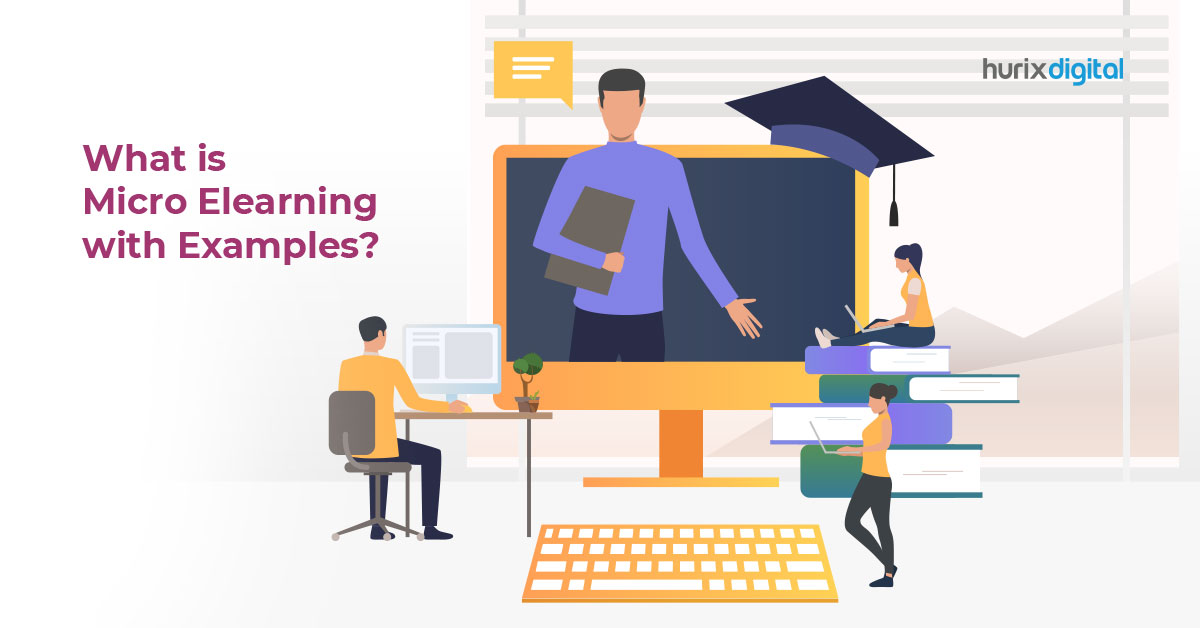
What is Micro Elearning with Examples?

[vc_row][vc_column][vc_column_text]Attention spans are shrinking, and the traditional learning and workforce training approach may no longer be effective. A study conducted by Microsoft in 2015 in the not-so-distant past discovered that our attention spans dropped by 25% in a decade.  While there have been no recent studies on this subject, one only imagine how much has changed in the past eight years. This shows that we need a new method to impart learning that can still be effective today. Enter micro elearning – a trend taking the learning world by storm. This approach delivers bite-sized lessons that are easier to absorb and retain, improving overall learning outcomes. In this article, we’ll discuss micro elearning and how it works, along with its benefits and a few examples of how it can be implemented.  What is Micro eLearning? Micro elearning is a method of delivering short, focused lessons to learners. These lessons typically last 2-10 minutes and cover a specific topic or skill.  The idea behind micro elearning is to break down complex information into easily digestible chunks, making it easier for learners to absorb and retain information. Micro elearning can take many forms, including videos, infographics, interactive quizzes, and more. Benefits of Micro eLearning There are several benefits to using micro elearning as an approach to learning. Some of these benefits include the following: Improved Retention: Micro elearning helps learners retain information better. By breaking down complex topics into small, focused lessons, learners are more likely to retain what they’ve learned. Higher Engagement: Micro elearning is designed to be short and focused, making it more engaging than traditional approaches to learning. Learners are likelier to stay attentive and interested in the material when delivered in bite-sized chunks. Accessibility: Micro elearning can be accessed from anywhere, at any time. This makes it ideal for remote learners or those with busy schedules. Cost-Effective: Micro elearning is more cost-effective than traditional approaches to learning, as it requires less time and resources to create and deliver. Examples of Micro eLearning Micro-eLearning can be imparted in a number of different formats. Here are a few examples.  1. Short Training videos Training Videos are a popular form of micro elearning because they can be quickly produced and delivered to learners. They can cover a specific topic or skill, such as how to use a new software program, handle a customer complaint, or perform a particular task.  Training videos can be created in-house using a smartphone or camera or outsourced to a professional production company.  The advantage of training videos is that they are visual and engaging, making it easier for learners to understand and remember information. 2. Interactive Quizzes Interactive quizzes are a great way to reinforce knowledge and test understanding. They can be used to introduce new concepts or to review previously learned material.  Interactive quizzes can take many forms, such as multiple-choice questions, drag-and-drop activities, or fill-in-the-blank exercises. The advantage of interactive quizzes is that they can be delivered online or through a mobile app, making them accessible from anywhere. 3. Infographics Infographics are a visual representation of information, often used to explain complex concepts in a simplified way. They can be used as micro elearning to convey information quickly and effectively. Infographics are easy to create as several tools are available online that are both free and paid.  The advantage of infographics is that they are visually appealing and easy to understand. 4. Podcasts Podcasts are a popular form of micro elearning because they can be listened to while commuting, working out, or doing other tasks. Podcasts can cover a wide range of topics, from business and marketing to personal development and self-improvement. The advantage of podcasts is that they are convenient and can be accessed anywhere with an internet connection. 5. Gamification Gamification uses game-like elements to make learning more engaging and interactive. This can include things like points, badges, and leaderboards.  The advantage of gamification is that it makes learning fun and rewarding, motivating learners to complete lessons and continue learning. 6. Animated Videos Animated videos are a form of micro elearning that can be used to explain complex topics fun and engagingly. They can be created using animation software or outsourced to a professional studio. The advantage of animated videos is that they can simplify complex topics and make learning more visual and memorable. 7. Interactive eBooks Interactive eBooks are a form of micro elearning that combine text, images, videos, and interactive elements to create an engaging learning experience. They can be accessed on mobile devices, allowing learners to learn at their own pace.  The advantage of interactive eBooks is that they can be personalized and customized to meet the needs of individual learners. 8. Bite-Sized Courses Bite-sized courses are short courses designed to be completed quickly, usually 10-15 minutes. They can cover a specific topic or skill, such as email etiquette or time management.  The advantage of bite-sized courses is that they can be easily integrated into a busy schedule and allow learners to learn on their own time. 9. Micro Assessments Micro assessments are short quizzes or assessments that test learners’ knowledge of a specific topic. They can be used as pre-tests to assess learners’ prior knowledge or post-tests to measure learning outcomes.  The advantage of micro assessments is that they provide immediate feedback to learners and help them identify areas where they need to improve. 10. Micro Activities Micro activities are short, interactive activities that engage learners and reinforce learning. They can take many forms, such as brainstorming exercises, group discussions, or reflection prompts.  The advantage of micro activities is that they allow learners to apply what they have learned and reflect on their learning. Summing It Up Micro elearning is a flexible and practical approach to learning that allows learners to access information quickly and easily. The various micro elearning examples mentioned above show that there is something for every type of learner.  By incorporating micro elearning into their learning strategy, individuals and organizations can stay up-to-date

Julia Suk March 12, 2023 No Comments

Scenario Based Elearning: Meaning and Examples

[vc_row][vc_column][vc_column_text]Imagine you’re learning a new skill – for the sake of simplicity, let’s say it’s baking a cake. You could read a recipe book and memorize the steps, but it’s only once you actually try making the cake that you fully understand how the ingredients come together and what each step involves. This is the essence of scenario-based eLearning – creating realistic situations that allow learners to apply their knowledge and skills in a practical context. Immersing learners in scenarios that mimic real-life situations can enhance their understanding and retention of key concepts, making the learning experience more engaging and effective. In this article, we’ll explore scenario-based eLearning, how it works, and why it’s such a powerful tool for online training. So let’s roll up our sleeves and get ready to dive into scenario-based eLearning! What is Scenario-Based eLearning? At its core, scenario-based eLearning involves creating realistic situations or simulations that learners can interact with. These scenarios mimic real-life situations, allowing learners to apply their knowledge and skills in a practical context. Rather than simply presenting information or concepts theoretically, scenario-based eLearning encourages learners to engage actively with the material, making the learning experience more immersive and leading to better retention and knowledge.  For example, imagine a scenario-based eLearning course for customer service representatives. Rather than simply presenting information on handling demanding customers, the course might present learners with a simulated scenario where they have to interact with an angry customer. By putting learners in the shoes of the customer service representative, the scenario creates a more engaging and memorable learning experience. How Does Scenario-Based eLearning Work? Scenario-based eLearning typically involves several key elements: The Scenario: This is the simulated situation that learners will interact with. The scenario should be realistic and relevant to the course’s learning objectives. The Challenge: Within the scenario, there should be a specific challenge or problem that learners must solve. This challenge should be designed to test the learners’ knowledge and skills and to help them apply what they’ve learned in a practical context. Feedback: As learners interact with the scenario, they should receive feedback on their actions. This feedback can be positive or negative and should help learners understand the consequences of their choices. Reflection: After completing the scenario, learners should be able to reflect on their experience. This can involve answering questions, discussing the plan with others, or reviewing feedback from the course. Incorporating these elements into scenario-based eLearning can create a more engaging and practical learning experience that encourages learners to apply their knowledge and skills practically. Why is Scenario-Based eLearning Effective? There are several reasons why scenario-based eLearning is such a practical approach to online training: Engages Learners: By immersing learners in realistic scenarios, scenario-based eLearning creates a more engaging learning experience. Learners are likelier to stay focused and retain the information they’ve learned. Encourages Application: Scenario-based eLearning encourages learners to apply their knowledge and skills in a practical setting. This can help them see how the material applies to real-world situations, making it more relevant and valuable. Provides Feedback: With scenario-based eLearning, learners receive immediate feedback on their actions. This helps them understand the consequences of their choices and can encourage them to try different approaches to the problem. Builds Confidence: By allowing learners to practice their skills in a safe and supportive environment, scenario-based eLearning can help build confidence and competence. Examples of Scenario-Based eLearning Let’s take a look at some examples of scenario-based eLearning in action: Sales Training: A scenario-based eLearning course for sales professionals might present learners with a simulated sales call. The scenario might include challenges such as objections from the customer or random questions. By practicing these scenarios in a safe environment, learners can develop their sales skills and build confidence. Compliance Training: Compliance training is often dull and dry, but scenario-based eLearning can make it more engaging and effective. For example, a scenario-based course on data privacy might present learners with a simulated data breach. Learners must navigate the scenario, making decisions on how to prevent any further breaches in compliance in the future.   Health and Safety Training: Scenario-based eLearning can help train employees on health and safety procedures. For example, a scenario-based course for warehouse workers might present learners with a simulated emergency, such as a fire or a chemical spill. Learners must navigate the scenario and decide how to respond to the crisis while staying safe. Leadership Training: Scenario-based eLearning can also train leaders and managers. For example, a scenario-based course on conflict resolution might present learners with a simulated workplace conflict. Learners must navigate the scenario and decide how to resolve the dispute while maintaining a productive and positive work environment. Tips for Designing Effective Scenario-Based eLearning If you’re interested in incorporating scenario-based eLearning into your online training program, here are a few tips to keep in mind: Keep it Realistic: The scenario should be realistic and relevant to the course’s learning objectives. Learners should be able to see how the scenario applies to real-world situations. Make it Challenging: The scenario should include a specific challenge or problem that learners must solve. This challenge should be designed to test the learners’ knowledge and skills and to help them apply what they’ve learned in a practical context. Provide Feedback: Learners should receive feedback on their actions within the scenario. This feedback should be immediate and specific, helping learners understand the consequences of their choices. Incorporate Reflection: After completing the scenario, learners should have an opportunity to reflect on their experience. This can involve answering questions, discussing the scenario with others, or reviewing feedback from the course. Tailor to Learner Needs: Scenario-based eLearning should be tailored to the needs of your learners. Consider their job roles, experience level, and learning preferences when designing the scenarios. Summing it up Scenario-based eLearning is a highly effective approach to online training that can help learners apply their knowledge and skills in a practical context. Creating realistic situations or simulations that learners can interact with can

Julia Suk March 9, 2023 No Comments

What Is A Multi-Tenant LMS? Why Your Organization Needs a Multi-Tenant LMS?

[vc_row][vc_column][vc_column_text]In today’s age, where a customized solution is all that people look for, the concept of multi-tenancy is a blessing. Simply put, multi-tenancy is a single instance of a software application under which several customers can be served. The clients are referred to as ‘tenants,’ and they are given the authority to customize certain components of the system. Each client has a different taste, and with multi-tenancy technology, all sorts of clients can be served exactly what they want. The user groups generally have features in common with the other tenants. However, the main thing that distinguishes the environments is the features, privileges, and design elements that are specific to each user group. The concept of multi-tenancy has caught the attention of L&D platforms as well – handling various projects at the same time has become a piece of cake for organizations after the introduction of multi-tenant LMSs. In this blog, we’ll understand the purpose of multi-tenant LMSs and their importance in organizations.  Multi-Tenant LMS – All You Need to Know The concept of multi-tenancy already demonstrates how beneficial it is for the education and corporate sectors. Now, LMSs (Learning Management Systems) are extensively used in both sectors for training purposes. In order to handle a large number of learners effortlessly, dividing them into groups is a simple solution. One of the main uses of a multi-tenant LMS is offering services to various user groups on a single platform. So, your L&D team will be able to accommodate various learner groups on a unified platform using a multi-tenant LMS, whether they are interns, internal employees, members of the extended company, or totally different groups.  Similarly, in the case of the education sector, students of different grades and courses can be handled with equal care with the use of a multi-tenant LMS. Each of these parties can make use of a system with customized branding, permissions, and training goals. You can also provide each tenant with a customized set of procedures and lesson plans. Customers or users might not even be aware that they are using a multi-tenant system since they can only access their own LMS data. It does not, however, restrict your capacity for administration. A standard multi-tenant LMS usually contains the following three features: Each platform of the system consists of two tenants or more and one host. All the tenant’s platforms have a broad selection of learners, material, and branding.  The platforms have a shared collection of supplies that can be distributed to certain user groups or all tenants. Each LMS tenancy can be managed by a “super admin” position or team from a single dashboard. Who Benefits from Multi-Tenant LMSs? Depending on their requirements, a variety of organizations can profit from a multi-tenant LMS. For example:  Educational institutions with multiple campuses and training courses. Training institutes that specialize in providing client-branded education programs. Departments at small businesses with different learning requirements. Organizations with numerous subsidiaries or businesses with a variety of brands. Businesses that want to offer their external partners extended corporate training. Companies with regional offices in several different cities or nations. Large companies with many departments and branches. Basically, investing in a multi-tenant LMS is ideal if your organization is new to online training and requires a fluid commitment time frame.  The Upsides of a Multi-Tenant LMS A multi-tenant solution’s key advantage is that it allows you to cater to a variety of groups with various training requirements without installing or purchasing an additional LMS for all of them. Besides that, here are some more upsides of a multi-tenant LMS: 1. Cost-Effective Most of the time, multi-tenant LMSs are more affordable. That’s because, instead of buying distinct solutions for each of your groups, you only invest in one system. However, because various user groups possess various training requirements, they might require particular features that are more expensive to implement.  Since you only need to buy one subscription, multi-tenancy LMSs usually lower your LMS costs. Also, buying an LMS generally involves a set-up fee in addition to other costs. You can keep away from having to pay that fee multiple times by using a multi-tenant LMS. 2. Customized Learning Experience Big props to multi-tenant LMSs; you get to have a different LMS for every one of your various departments, campuses, or organizations. You can customize all of these systems to meet the individual learning goals of each tenant by giving each one its very own branding and management structure.  3. Centralized Control You can assign a separate eLearning supervisor for all of your branch offices, departments, or franchises by using a multi-tenant LMS, which also allows you to grant custom authorizations to users in different tenants. 4. Consolidated Reporting Reports are crucial instruments that companies use to improve decision-making and keep track of internal and external business developments. You can create individual reports for each tenant and combine information from multiple tenants in your reports by having all of your departments, divisions, or groups within a single database. 5. Quick Deployment Since the primary software installation is already done and in operation, deploying a fresh educational setting is quicker than with a single-tenant LMS while dealing with a multi-tenant LMS.  Conclusion You can offer tailored learning experiences to various user groups in the same ecosystem with the perfect multi-tenant LMS. This makes it an excellent choice for a variety of use cases. Gone are the days when you were required to limit training to only a specific group of trainees and employees. With a multi-tenant LMS, you can deliver effective and enriched learning experiences to each of your trainees.  Eventually, you’ll win over subscribers in your distribution chain, cut support expenses, and boost sales to generate more revenue. This is a win-win situation for all parties concerned! Through Hurix Digital, you can simply elevate your learning experience online using our LMS solutions with LTI support. Get in touch with us today to craft the perfect learning solution for learners. [/vc_column_text][/vc_column][/vc_row]
Julia Suk March 8, 2023 No Comments

How To Create a Feedback Culture For Corporate Training

[vc_row][vc_column][vc_column_text]Feedback is a powerful tool that can help measure the effectiveness and ROI of your training. No matter if it’s a standing ovation or a gut punch, feedback helps us know what we’re doing right or where we’re going wrong. A feedback culture includes a genuine feedback system between employees and managers, between managers and executives, and among employees. It gives companies more opportunities to innovate and spot issues to help employees improve and grow together. It’s no wonder that 89% of HR leaders believe regular check-ins and peer feedback improves their organizational culture. Having a strong feedback culture in place can make you a talent investor. It can take your workplace training projects to a new level. Constructive feedback creates an open learning environment that can boost learner engagement, reduce employee turnover, and also cut down training costs through effective mentorship. But designing a feedback culture is easier said than done. Here are some steps that can help you create an open feedback culture for a safe and positive learning environment at your workplace. 1. Begin from the Top To create a sustainable change in your workplace, getting the leadership on board is paramount. When leaders seek feedback from co-workers and managers, they set an example for other employees. It also makes the management personally accountable for their actions or any mistakes. When employees observe that their managers follow strong feedback principles, they are more likely to be inspired to adapt. On the contrary, if the leaders fail to hone their skills to request or share feedback, the employees will also not take the feedback system seriously. 2. Promote a Growth Mindset Employees with a growth mindset are always willing to improve their skills through hard work and learning. They consider feedback as an opportunity to grow. This makes them an asset for any company having an effective feedback culture.    But how do you integrate it into your business? The key is to nurture a growth mindset in your workplace. This can be achieved in the following ways: Consider a candidate’s attitude towards growth and failure at the time of hiring. Provide tuition reimbursement, invest in employees’ professional development, offer learning opportunities, and cover certificate or professional license costs. Reward employees for making an effort towards self-development.   3. Provide Feedback Training Sharing and requesting feedback requires certain skills that can be acquired through feedback training. It takes time and consistent efforts to develop a strong feedback culture. Empowering your employees with the right resources and conducting regular feedback training sessions can help them adapt to the new feedback culture more effectively. The following are some tips to ensure that all your employees are on the same page when it comes to feedback training: Organize annual workshops on how to give and receive feedback. Share articles or videos to illustrate excellent and poor feedback interactions. Encourage employees to raise their concerns and train them on seeking examples, asking questions, and requesting clarifications. Develop managerial skills in designing realistic learning goals and assisting employees in achieving them. 4. Equip the Team with Feedback Tools Leverage technology to take the burden of administrative work off your team’s shoulders, enabling them to focus on growth. Advanced feedback tools allow employees to have two-way conversations, make notes from feedback training sessions, give encouraging feedback through recognition, request 360 feedback, and gather feedback via surveys. This documents feedback in one place, enabling managers to view past feedback. This not only helps in motivating the direct reports but also in streamlining performance reviews and feedback conversations among employees. A feedback tool is worth the investment.   5. Build a Feedback Structure with Clear Expectations Develop feedback standards to help employees and managers know what to expect from the feedback system. In other words, your stakeholders and learners must be aware of how to give and receive feedback. To set clear expectations, ask yourself the following questions: Who receives or gives feedback? – It will set expectations for managers, learners, executives, and the HR/L&D department. What does the feedback aim to achieve? – Will it enhance your training design, content, or delivery? This will determine how the feedback will impact the entire learning program. How often will it occur? – Decide if it will happen monthly or quarterly based on your company’s needs. How will it take place? – Choose between verbal and written communication and decide on the set-up. 6. Use Diverse Feedback Channels Including a variety of feedback channels can make your feedback system more accessible and effective for all. After all, different scenarios demand different feedback channels. What’s more, people from different backgrounds and teams bring fresh perspectives. Depending on the goal of the feedback, you can try the following: Anonymous feedback – Present the feedback without the giver’s name so that people can be honest without worrying about suffering reprisals. 180 and 360-degree feedback – Including feedback from different teams to offer a rounded picture of the learner’s performance. Face-to-face feedback – Consulting learners to help them verbalize their opinions. Feedback through group discussions – Having quick group discussions so that learners can share their ideas with co-workers. 7. Make It a Habit Quarterly or annual feedback has now become a thing of the past. Today teams are embracing continuous feedback to learn and improve consistently. Conducting more informal meetings or having regular feedback conversations allows your learners to discuss what they’re struggling with. They can also pinpoint areas of improvement for the training programs. What’s more, practicing continuous feedback can reinforce the feedback culture in your company. It will soon turn into a habit, integrating with your learners’ routine.   8. Nurture a Healthy and Safe Environment for Feedback   Imagine how great it would be if everyone were comfortable sharing and requesting feedback. Wouldn’t it be amazing if your learners perceived feedback as a present rather than feeling hammered?   For this to happen, it’s essential to nurture a feedback-safe environment where employees trust each other and receive feedback positively. The comfort levels

Julia Suk March 8, 2023 No Comments

Simulation Training: The Future of Healthcare Professional Development

[vc_row][vc_column][vc_column_text]The healthcare fraternity is continuously innovating to improve the quality and scope of healthcare. Investments are being made to reduce the mortality rate due to errors and enhance safety and recovery rates and patient care.  The medical fraternity is also grappling with new diseases, conditions, and ailments and requires ongoing training to keep pace.  Simulation training for healthcare professionals plays a major role in the transition.  The global healthcare simulation training market is expected to grow at a compound annual growth rate of 15.95% to reach an estimated market value of $ 7.2 billion by 2030. Technologies like virtual and augmented reality are being leveraged to build effective simulation training programs for the healthcare sector.  In this blog, we understand exactly what simulation in healthcare is and its impact on the future of healthcare professional development.  Simulation Training for Healthcare Professionals Simulation is a general term that involves an artificial representation of a real-world process, which enables knowledge and skill building via experiential learning. More specifically, simulation-based healthcare education is a learning tool that leverages simulation aids to recreate clinical scenarios.  Simulation training is considered one of the most important value additions to the development of healthcare professionals, according to a report published as early as 2010. First introduced into healthcare training in the 1960s, simulation training has significantly progressed and is expected to influence every field of healthcare in the future.   Benefits of Simulation in Healthcare The ultimate aim of simulation training is to reduce errors and promote safety in the healthcare domain.  This learning technique allows seasoned healthcare professionals to learn and grow their skills without repercussions on real-life patients. Hence, patient safety is prioritized.  Freshers who have just graduated tend to be armed with theoretical knowledge. The introduction of simulation training into their curriculum enables them to build hands-on skills that help them become productive faster in the real world.   Simulation training enables the customization of a range of learning scenarios, preparing professionals for various conditions and outcomes.  Simulation in healthcare creates access to unlimited practice and is on-demand for professionals.   Common Types of Simulation in Healthcare Here is a snapshot of popular training activities. There are several more available based on an institution’s needs. Task-Focused Trainers These are customized training simulators, which enable learners to practice a specific type of task or even a partial aspect of a task.  For example, task trainers can be used to enhance basic clinical skills such as endotracheal intubation.  The more healthcare professionals practice, the more they are likely to perfect these basic skills before treating a real patient.  Use of Virtual Reality (VR) To create a more immersive experience, the healthcare industry is introducing VR into simulations.  The use of VR replicates a more realistic experience in various scenarios, such as in the intensive care unit (ICU). It prepares healthcare professionals for all potential scenarios that occur in the real world. It also enables interactions such as communication with a patient, which plays an important role in outcomes.   In-Situ Simulations This type of simulation is executed in a real clinical setting, such as an operating room, with the participation of healthcare professionals.  They replicate real-life factors like limited resources, high stress, and complex medical scenarios. This helps healthcare professionals be prepared for the harsh realities of the healthcare domain.  Impact of Simulation on Healthcare Training Simulation in healthcare is revolutionizing the teaching and learning methodology of the healthcare domain. Let’s understand the impact. Reduced Patient Risk Throughout history, healthcare practitioners have either had to practice on cadavers, which are hard to come by, or directly work with patients.  Simulation training has shifted this reality by enabling healthcare professionals to build skills but not at the expense of patients.  Hence, increased patient safety is one of the top outcomes of this shift.  Reduced Payouts for Errors  Healthcare facilities such as hospitals face the risk of lawsuits, settlements, or damages costs of large ticket sizes. They invest large amounts in insurance to cover such costs.  Simulation training reduces the scope of error, which in turn, helps healthcare facilities save on costs. These savings can go towards other more pressing needs.  Access to Data  One of the most valuable aspects of simulation training for healthcare professionals is that it offers both learners and the training entities, such as hospitals to get access to learner-related data.  Using customizable dashboards, they can detect trends, weaknesses, and strengths and where more effort is needed towards training.  More Self-Learning, Fewer Training Resources   Healthcare teaching has traditionally required the extensive expertise of established healthcare practitioners to teach students.  However, healthcare practices have limited time, as they are continuously engaged in patient care. The introduction of simulation in healthcare enables healthcare learners to invest in self-learning. This reduces the burden on seasoned healthcare professionals.  Continuous Evaluation and Feedback Healthcare professionals receive real-time and in-depth feedback for every simulated practice session, which is valuable for a healthcare professional’s growth journey.  Enhanced Confidence Levels Hands-on training is an important aspect of training for healthcare professionals. Simulation training enables customized learning, which enables healthcare professionals to stay up to speed with the growing complexity of patient care.  They can practice on demand and continue to build new skills, which in turn, seeds confidence and an increased ability to make informed decisions, think on their feet, and stay highly productive.  Conclusion  The condition of healthcare is very dynamic, and it demands that healthcare professionals be continuously up-to-date in their knowledge and skill set. With the introduction of simulation training for healthcare professionals, doctors, and nurses, for instance, can run through a complex surgery before the actual surgery.  They can improve their understanding of potential challenges and solutions to various problems.  The top healthcare facilities and medical schools are weaving in simulation training for their staff and students as part of their facilities and curriculum. Simulation in healthcare is growing in its adoption and will play a key role in the future of superior healthcare professional development.  If your business is looking

Julia Suk March 8, 2023 No Comments

Maximize Your Corporate Training with Online Courses

[vc_row][vc_column][vc_column_text]Online courses have become a great way to maximize corporate training. Companies can use online courses to train their employees in a range of industries, from customer service to accounting and more. This approach offers many advantages, such as cost savings, ease of access, flexibility, and the ability to reach a larger audience.  In this blog, we’ll see how you can maximize your corporate training efforts using online courses and the top benefits of online courses for corporate training solutions. How to Maximize Your Corporate Training Efforts With Online Courses? To maximize the effectiveness of online courses, companies must ensure that employees have access to the right resources to complete their tasks. Here are a few tips to help you maximize your corporate training efforts with online courses. Know Your Audience The first step towards enhancing the effectiveness of your training solutions is to understand who you are training and the best way to address their needs.  Define what the training should accomplish and customize the course content accordingly to ensure maximum participation and learning. Choose the Right Course Provider and Platform Many companies offer online courses, and each one offers different features and services. Make sure you select a provider that meets your company’s needs and offers the best experience for your learners. Similarly, there are many online course platforms you can choose from. Consider choosing a platform that provides interactive and engaging content, user-friendly navigation, and customizable content. Determine the Training Delivery Format Next, determine the most effective training delivery format for your course. Some companies prefer video courses, while others prefer interactive learning modules, webinars, or games. With an online course, you can use any or all of these formats to ensure that learners understand the material. Also, ensure learners have a support system to turn to when they need help. Set up a help desk or other resources for learners to get additional guidance. Develop Course Objectives and Assessment Models Next, develop learning objectives and assessment methods. Before launching an online course, determine the goals and objectives the course needs to accomplish. Design a list of corporate training courses to meet the training needs of your employees.  This can include topics such as customer service, creating corporate policies, and sales techniques.  Also, create a plan for assessing learners’ progress and mastery of the material. Incorporate Gamification Elements Finally, consider using gamification elements to engage learners and keep them coming back for more. Gamification can be used to make the learning process more interactive and engaging while making a stronger connection to the content. Incorporating interactive elements in the course, such as quizzes, polls, and discussion boards, will keep your learners engaged and motivated to learn. By following these tips, you can maximize the effectiveness of your training solutions with online courses. With the right tools, you can provide employees and customers with the resources they need to succeed. Top Benefits of Online courses for Corporate Training Solutions Online courses are becoming increasingly popular for corporate training solutions. With the rise of digital learning, organizations are turning to online courses for their corporate training needs. With the benefits it offers, it is easy to understand why.  From flexibility and cost savings to increased knowledge sharing, businesses around the world are using online courses to maximize their corporate training programs.  Here are the top benefits of online courses for training solutions. Flexibility Online courses offer employees the flexibility to attend classes at their own pace without being tied to a specific day and time. This makes it easier for employees to attend classes at their convenience and learn at their own pace. Cost Savings Online courses typically cost less than traditional classroom training. The cost savings associated with online courses make them an attractive option for training solutions. Convenience With online courses, employees don’t have to worry about travel or other logistical concerns. They can take courses from the comfort of their own home or office, which saves time and money. Accessibility Online courses are accessible to anyone with an internet connection. Employees can access course materials and content across multiple devices with the right learning management system. Scalability With online courses, organizations can easily scale their training programs to meet the needs of their staff. This allows organizations to quickly and easily adjust their training program as their needs change. Variety Online courses offer a variety of courses to meet the needs of any organization. From basic digital skills to advanced technical courses, online courses provide a wide range of training options. Consistency Online courses are consistent in their delivery and content. This allows organizations to ensure that all employees receive the same training, regardless of location. Social Interaction Online courses provide the opportunity for employees to interact with each other and collaborate on projects.  This helps to build relationships and foster camaraderie within the company. Engaging  Online courses can be more interactive and engaging than traditional classroom programs in the corporate sector.  They involve videos, simulations, and other interactive elements that keep employees engaged and motivated to learn. Trackable Online courses offer organizations a way to track the progress of employees. Organizations can track the progress of employees through detailed reports and assessments. Sustainable Online courses are sustainable since they require little to no resources to maintain. This ensures that organizations can continue using the same online course for years. Final Words Online courses are an ideal corporate training solution for companies looking to save money and provide their employees with the best learning experience. By leveraging the power of online courses, you can provide your employees with the training they need to succeed and maximize the effectiveness of your corporate training program. If you are looking for a partner to help you achieve your corporate training goals, then Hurix is the right choice for you. Hurix has a proven track record of successful projects, and our e-learning and training solutions are helping businesses to achieve their desired outcomes. With our innovative corporate training solutions

Julia Suk March 8, 2023 No Comments

Top 10 EdTech Companies in the United States

[vc_row][vc_column][vc_column_text]“Technology can become the ‘wings’ that will allow the educational world to fly farther and faster than ever before – if we will allow it.” – Jenny Arledge      Technology can revolutionize education if embraced well. It can improve the quality, speed, and reach of education. This is where EdTech comes in. EdTech refers to the use of technology to enhance teaching and learning. EdTech companies provide innovative products and services that help educators, learners, and institutions achieve their educational goals. The EdTech market’s worth was $123.40 billion in 2022 and is projected to reach $142.37 billion in 2023. Top 10 EdTech Companies in the United States In the United States, several top EdTech companies, such as Coursera, Duolingo, and Chegg, offer online courses, language learning, and test preparation services, among others. These companies are important as they provide access to high-quality education, improve learning outcomes, and bridge the education gap for underserved communities. Let us explore some companies changing the landscape of EdTech in the USA. 1. Duolingo Duolingo is a language learning platform that offers effective and efficient courses that teach reading, listening, and speaking skills. Its personalized learning approach tailors lessons to learners’ level and pace, and its game-like features and playful characters make learning fun and engaging.  Duolingo is accessible to anyone, regardless of financial status, and is used by both the richest people in the world and public school students in developing countries. The platform is also used in classrooms, and its English test is accepted globally. Duolingo aims to give everyone access to a private tutor experience through technology. 2. Coursera Coursera is a global online learning platform offering flexible, affordable, and job-relevant education opportunities through partnerships with over 275 universities and companies. It provides courses, certificates, and degree programs in various fields from leading institutions, making high-quality education accessible to anyone, anywhere.  With B Corp certification, Coursera aims to make a positive impact on society while reducing barriers to education. Over 113 million learners and 7,000 organizations have used Coursera for world-class learning experiences. 3. Chegg Chegg is a learning platform dedicated to students’ academic success. They prioritize affordability and accessibility, investing in their people to foster a collaborative and innovative culture. Chegg strives to enhance the ROI of education by helping students learn more efficiently and cost-effectively. They offer support throughout the students’ journey, promoting impact in both individual lives and communities. 4. Udacity Udacity is a market leader in digital upskilling, transforming talent to greatness by creating job-ready digital skills that empower achievement. Their globally scalable playbook addresses digital talent shortages and collaborates with enterprises and individuals to design tailored talent transformation journeys.  Udacity’s exclusive content is co-created and continually refined with industry leaders, deeply focused, and goes beyond step-by-step guides, cultivating critical thinking. Expert mentors provide personalized support and verify complete mastery of competencies. Udacity began with a mission to make lifelong learning equitable and inclusive, expanding opportunities for professionals and organizations to excel. 5. NeighborSchools NeighborSchools offers a comprehensive solution for parents who struggle to find quality child care. They recognize the challenges that first-time parents face and provide a personalized survey to help narrow down options. Their free service helps parents feel confident in choosing a program that meets their child’s needs.  Additionally, their support for small-scale daycares helps ensure that they can provide high-quality care without worrying about administrative tasks. NeighborSchools is dedicated to making child care more accessible and personal for everyone involved. 6. Knewton Knewton is an adaptive learning technology company that aims to personalize learning through technology. It offers Alta, a complete courseware solution for higher education, and partners with colleges, universities, publishers, and education companies to integrate its technology, content, and expertise.  Its products are designed to be affordable, accessible, and compliant with accessibility standards. Knewton’s adaptive technology has been used by over 40 million students worldwide, and its mission is to put achievement within reach for all learners. 7. BrainPOP BrainPOP is an educational platform that delivers engaging and relatable content to students while boosting academic achievement and developing thinking and SEL skills. With over 20 years of experience, BrainPOP has provided powerful learning experiences to 6+ million educators and 300+ million students. The platform is backed by research, meets ESSA Tier 2 requirements, and has received certifications for research-based design and learner variability.  Additionally, BrainPOP has been recognized for enhancing the best practices of digital-age teaching and learning. BrainPOP’s family and school solutions ignite a love for learning that leads to lifelong achievement. 8. Schoology Schoology is a comprehensive K-12 teaching and learning solution that offers a learning management system, assessment, and professional development in one platform. Unified Classroom Schoology Learning connects learning across the entire district and provides deeper insights into student performance.  Schoology is adaptable to changes and challenges, promotes district-wide collaboration, and offers tools to increase parent engagement, including Microsoft Immersive Reader. 9. Wolfram Alpha Wolfram Alpha is a knowledge engine that aims to make all systematic knowledge computable and accessible to everyone. It uses built-in data, algorithms, and methods to do dynamic computations, providing expert-level knowledge to all education levels. Its team’s unique access to global experts has made it a major intellectual achievement in the 21st century. 10. DreamBox Learning DreamBox Learning offers a personalized and adaptive learning experience for students in math and reading. With a focus on meeting students where they are, the platform intelligently adapts to each student’s unique learning style to help them excel.  The company is committed to continuous learning and strives for impact, guided by open dialogue with its customers. DreamBox Learning is dedicated to transforming the way the world learns, one student at a time. Comparison of the Top 10 EdTech Companies Below is a snapshot of the EdTech companies in the USA and their comparison based on parameters such as service offering, funding, and user base. Company Founders  Products and Services offered User Base Funding 1. Duolingo Luis von Ahn, Severin Hacker Effective language courses tailored to learners’

Julia Suk March 8, 2023 No Comments

Transform Your Education with Cutting-Edge EdTech Solutions

[vc_row][vc_column][vc_column_text]Education technology (ed-tech) refers to technology that improves learning outcomes and performance in education. Since the COVID-19 pandemic, a large number of educational institutions and startups have shifted to a digital basis with education technology solutions.  Additionally, many companies decided to go digital with employee training programs. Certain studies estimate the ed-tech industry to reach a value of more than $319 billion by 2029.  Whether at home, in the classroom, or in the workplace, ed-tech solutions can transform education and learning. Let’s see how What Are the Types of Education Technology Solutions? There are different types of ed-tech solutions, which include the following: Online learning management systems Online learning providers Interactive learning platforms Online studying and teaching services Language learning platforms Learning applications  What Are the Benefits of Education Technology Solutions? Edtech solutions offer several benefits, which are listed below.  1. Easy to Customize EdTech solutions are easy to customize to suit particular learning needs. With diverse classrooms and learning batches with different and complex requirements, customizing education solutions helps meet unique preferences and learning styles. Educators can choose ed-tech tools to meet the criteria they require for different learners or batches of students.  2. Improve Efficiency Education technology solutions improve the efficiency of teaching and educational work. Automating several tasks and allowing for standardized learning content and processes enables you to prepare learning material for large numbers with reduced time and cost. Edtech tools can save teachers from administrative tasks like grading and allow more time to develop course material and interact individually with students. Tasks like testing and assessments can be standardized without the teacher having to prepare each test separately.  3. Make Education More Accessible One of the most important benefits of the ed-tech boom is that it improved the accessibility of educational material and allowed a large number of learners to access it. With digital learning, students in diverse locations and remote areas can access learning material on a variety of devices.  It also made learning content more accessible through interactive features like branching scenarios, simulations, whiteboards, and game-based aspects. Additionally, features like text-to-speech and multimedia functions allow for a more convenient learning experience.  It is particularly helpful for learners with disabilities and makes the content easier to understand through features like audio recordings and one-to-one devices like tablets for each student.  In the classroom, large whiteboards allow for a touchscreen function that can be used with more features like file sharing and screen sharing. With all these technological features, ed-tech has the potential to make learning a more interactive, engaging, and accessible experience.  4. Better Connectivity Between Learners and Teachers Education technology solutions offer platforms and virtual spaces for learners to interact with each other and with educators. With chatrooms, video meetings, and more, communication becomes smooth and convenient. Students can easily share notes and helpful links and ask doubts. This allows educators to reach students in different locations. It also saves on the time and cost involved in travel to classrooms. Additionally, digital material like video course modules and digital textbooks reduces the time and cost of buying physical textbooks and delivering them.  5. Improve Workforce Learning Ed-tech solutions make workforce learning more convenient, efficient, and effective. With interactive features and digital training, skill-building becomes engaging and accessible. This is especially helpful in industries like healthcare, IT, and finance, where technology is rapidly changing market trends and consumer expectations. 6. Continuous Skill Development Continuous skill development plays an important role in these industries and is a key employee expectation as well. Offering digital training with cutting-edge ed-tech solutions can help your employees stay engaged and motivated. It can also improve work performance and result in a well-trained workforce that is equipped to deliver services on par with the latest market requirements and industry standards.  7. Industry Benefits Education technology solutions can transform workforce education and make it more efficient in terms of cost and time. They also allow you to identify learning areas or gaps in skills and where there is scope for growth. High-demand industries like healthcare and advanced manufacturing are particularly likely to benefit from modern ed-tech solutions.  Given the gap between the demand for skilled workforce in such industries and the availability of skilled workforce, these industries can be transformed by ed-tech interventions. Total ed-tech spending is projected to double in the next few years and reach $404 billion. The growing ed-tech sector is also leading to an increased demand for skilled professionals. Developers, UX designers, and cybersecurity analysts are just some examples of the roles that are arising and in demand in the ed-tech market.  8. Change the Way Education Happens E-learning platforms, ebooks, and learning apps have changed the way that education happens. With a growing number of ed-tech companies collaborating with schools, educators, and students, tech-driven education is transforming the way learning takes place. Certain ed-tech companies directly provide online courses and programs like Coursera. Other companies work with teachers and administrators to build education programs, manage online learning, and track student progress.  9. Collaboration With online platforms and applications, teachers and students can connect and collaborate. Certain education technology solutions allow students to collaborate, work on group projects, or just study together. Other platforms allow teachers to share lesson plans, study material, helpful resources, and more. This allows teachers to spend less time creating new learning material and makes the process easier. 10. Improve Student Motivation Making learning more participative and engaging can help students become more motivated. By enabling more effective learning, ed-tech solutions can help improve student performance and make them more involved with the learning process.  What Are Some Leading Edtech Companies? Some of the top ed-tech companies that are changing the way learning takes place are mentioned below.  Duolingo Guild Education Udacity Panorama Education Newsela Course Hero Great Minds Zearn Summing Up Education technology solutions can change how you facilitate education and the quality of learning. By enabling better interactivity and connectivity, they can help create a better learning environment. They can

Julia Suk March 7, 2023 No Comments

Excel in the Banking Industry with our Training Programs

[vc_row][vc_column][vc_column_text]Banking operations and processes are complicated. With the introduction of every new type of technology, the banking sector is frequently rearranging itself to adjust to the changes. Especially after the pandemic, operations in banking became largely digitalized, leaving an entire workforce struggling to adopt remote-friendly solutions with very little training. The banking sector has woken up to the challenge now, and there are countless training programs for the banking sector you can incorporate to prepare your workforce better. This blog takes you on a walkthrough of how banking training programs can be used to help banking professionals excel in their fields. Bank Training Programs: Key Aspects for an Excellent Workforce According to McKinsey research, reskilling and training your employees in banking was found to be 20% more cost-effective than the “hire-and-fire” model. One of the major reasons is that it reduces the total number of new recruits and layoffs. It is now more important than ever to assist the upskilling, reskilling, and training of your workforce in banking with novel methodologies using the latest technology at your disposal. Discussed in detail below are five effective ways using which your bank training programs can be more impactful. 1. Strategic, Proactive Upskilling Being strategic about deploying training programs for the banking sector helps to align the results better with institution needs. Therefore, it helps to conduct a needs assessment before initiating any upskilling program, especially in technology. For example, remote assistance-based training would make more sense for financial advisers as opposed to bank tellers. On the other hand, a bank teller would benefit more from enterprise digital tools that let them automate clerical tasks like recording transactions. A proactive strategy-building session that helps inform and design the training subject matter based on the various roles at the bank would make all the difference. Effectiveness and takeaway from the training would improve significantly if it is targeted towards fulfilling pressing needs and solving pain points. The learning objectives need to be aligned with desired results. 2. Skill Matching and Reskilling Reskilling is associated with helping existing employees fulfill new roles they haven’t handled before by providing them with training. That said, it can be streamlined and made more efficient so that your workforce can reskill with ease and fill new roles seamlessly. The second consideration, thus, is to assess where your workforce already stands. An exercise of skill-matching is in order. Skill-matching allows you to shortlist the professionals with skillsets closest to the new skill required, which helps you significantly reduce the training duration and effort needed for it to be a success. For example, bank tellers already deal with a surge of customers every day – they can be reskilled into being customer representatives without much input. The customer engagement capacity already exists in bank tellers, which can be polished and reapplied to the new role they fill. 3. Invest in Learning Infrastructure As banks have come to need feedback training because of technology, they can leverage technology to aid them in training their personnel right. A robust technological infrastructure can provide the foundation a good bank training program needs to succeed in the following manner: Building digital resource libraries that contain learning materials free for access to the employees who need assistance with their new roles. The library can contain videos, whitepapers, eBooks, guidelines, protocols, etc. – any information that is needed to assume the new duties better. Technological tools can help match employees to new roles during internal hiring to help speed the process up and reduce manual delays. Technology also helps design the training modules and content through digital publishing tools that help with quick creation, distribution, and performance assessments of the participants. 4. Inculcate a Learning Culture The importance of creating a homogenous, learning-oriented culture at a banking institution isn’t easy. Given that the employees must first familiarize themselves with the new role and environment before they can resume work, it is critical to establish a culture of active learning. All the external means of provisioning a learning environment are important, but inculcating a positive motivation to learn new skills is the way to derive maximum effectiveness from bank training programs. One way to do that is by adopting immersive learning experiences, capability building, and encouraging and uplifting brand communication. It helps to establish a common ground where peers recognize each other as fellow learners and promote the culture. Brand communications can be scheduled over enterprise communication channels for good outreach. 5. Encourage Leadership Every effort must be driven by a spearhead for it to follow a set direction, or all efforts would go astray. All feedback training sessions should have a designated talent nurturer or a leader of some sort who drives engagement and keeps things moving. Assuming new roles and responsibilities can be strenuous and daunting for the employees, and the learning leadership should encourage open conversations to ease the process. They should act as bridges between the roles that guide the employees and equip them with the necessary resources to fill the new positions. These leadership champions should also communicate to the employees the significance of the reskilling or upskilling strategy so that the implications are clear. It helps employees anchor the learning with organizational needs rather than brush it aside as “just another training.” Concluding Note Banking is the one sector that has had to reimagine itself completely after the pandemic. Since financials are something that customers don’t take lightly, the journey has been difficult – especially on the workforce front, where massive reskilling, internal hiring, and upskilling have happened. That said, the stellar resilience that bank training programs give the sector is undoubtedly obvious. With easy digital publishing solutions like Hurix, it is possible to mass-distribute feedback training to the enterprise using a central dashboard. There are countless other ways that such platforms have helped make a better workforce out of banking. To learn more, visit Hurix.[/vc_column_text][/vc_column][/vc_row]