Julia Suk March 7, 2023 No Comments

What is a Successful Human Resource Transformation in 2023?

[vc_row][vc_column][vc_column_text]Human resource transformation in 2023 may sound like an overwhelming task, but it is well worth all the efforts if done right. Transforming the HR function by leveraging more digitized and automated systems allows you to drive better business efficiency and higher employee productivity across your organization while empowering the HR team to be more impactful. In this post, we explore the concept of human resource transformation in more detail, including what it is, why you need it, and how you can make it happen.  What Is Human Resource Transformation? In simple terms, human resource transformation refers to a complete redesign of the human resources function within an organization. This concept aims to improve the overall HR department and its operation. Here are the key advantages of a successful human resource digital transformation: Helps organizations differentiate themselves in the market Enhances their competitive advantage Improves the process of attracting, hiring, and retaining employees  The key reason why an increasing number of organizations participate in the HR transformation process is to better align their respective business goals with the overall HR strategy and processes. The larger goal of the process is to deliver desired results for the stakeholders by strengthening the HR function.  Need for a Successful Human Resource Transformation  HR transformation today is a necessity for every business and organization that is looking to outshine and outpace the competition. There are several benefits that the process offers. Some of these are listed below. A. Facilitates Employee Skills Improvement A successful HR transformation initiative involves the strategic development of the skills and abilities of HR professionals to improve the overall employee experience. Some of these skills include developing talent management abilities, data analysis skills, or technological skills. B. Enhances the Overall Employee Experience Today’s employees are much more aware and expect their employers to take the lead in areas such as embracing various new-age and innovative ways of operating the business. Human resource digital transformation helps businesses appropriately evaluate the needs and desires of the workforce and accordingly make changes to train employees and improve both employee performance and retention. C. Drives Efficiency  HR transformation, in collaboration with other tech-enabled solutions, can help facilitate the transition to skills-based strategies and, in turn, encourage employees to realize their full capabilities by driving efficiency.  Key Elements Of A Successful Human Resource Transformation  Organizations that are successful at transforming their HR functions enhance the likeliness of their outperformance compared to their unsuccessful counterparts. Here are some of the key elements of a successful HR transformation. A. Focus on Clarity of Goals and Vision  Lack of clarity on where and how you want to reach can be a recipe for disaster, especially when trying to transform an important business function. This makes it important to spend enough time understanding the areas such as the business, people, as well as challenges and opportunities. The idea here should be to use data and insights to drive your transformation strategy and bring desired results. B. Prioritize People When it comes to the success of a human resource transformation initiative, one of the key elements is people. A lack of people’s support across the entire organization can set you up for failure.  To navigate this well, it is best to get everyone involved, make people more comfortable with HR’s new role, and take a more people-centric approach to the overall planning process. C. Pick the Right Technology  Any process of HR transformation is incomplete without the smart use of technology. The adoption and implementation of technology should be dealt with comprehensively to create a more strategic role for HR in the company. It is recommended to begin by carefully considering the type of software systems you require to meet your specific HR transformation goals with the aim of: Automating and streamlining all manual data processes  Hiring the right people for the right jobs Saving time and resources for better employee experiences. D. Invest in Your Leadership  The concept of human resource transformation isn’t limited to just the HR team. Instead, it is going to impact almost every business function out there in your organization. This makes it essential to invest your leadership from across the organization. Some of the ways to do this include: Get leaders on board from the very beginning and make sure to seek their opinions and ideas in the planning process Get valuable leaders’ insights and incorporate them into your strategy for secure buy-in and ensure that your approach towards HR transformation aligns with their priorities. E. Set Strategic and Measurable Goals  For driving successful HR transformation, here are some of the steps that HR leaders should prioritize: Set strategic and measurable success metrics that are thoughtfully designed based on your specific business goals  Create a long-term plan for implementing various HR initiatives, breaking them down into small, manageable steps and setting a realistic timeline in mind. Build a powerful HR transformation narrative by defining the what, why, and how of the transformation.  Make sure to manage the change with open and transparent communication  In Conclusion  Human resource transformation is the strategic process of changing HR processes to make them more automated and data-driven. To ensure that this transformation is successful, the process should involve the organization as a whole. In this post, we have discussed how HR transformation today often aligns with changes that strategically integrate technology to improve HR functions and processes.  The overall idea of a successful HR transformation is ingrained in the fundamentals of how people and technology together have the power to enhance data collection and analytics, thus enabling more efficient and productive transformation. At Hurix, we believe a powerful human resource transformation is one of the most critical factors to success for business in this era of rapidly evolving technologies. To learn more about our solutions, please contact us or write to us at marketing@hurix.com.[/vc_column_text][/vc_column][/vc_row]

Julia Suk March 7, 2023 No Comments

What Is HR Transformation — and What Does It Achieve?

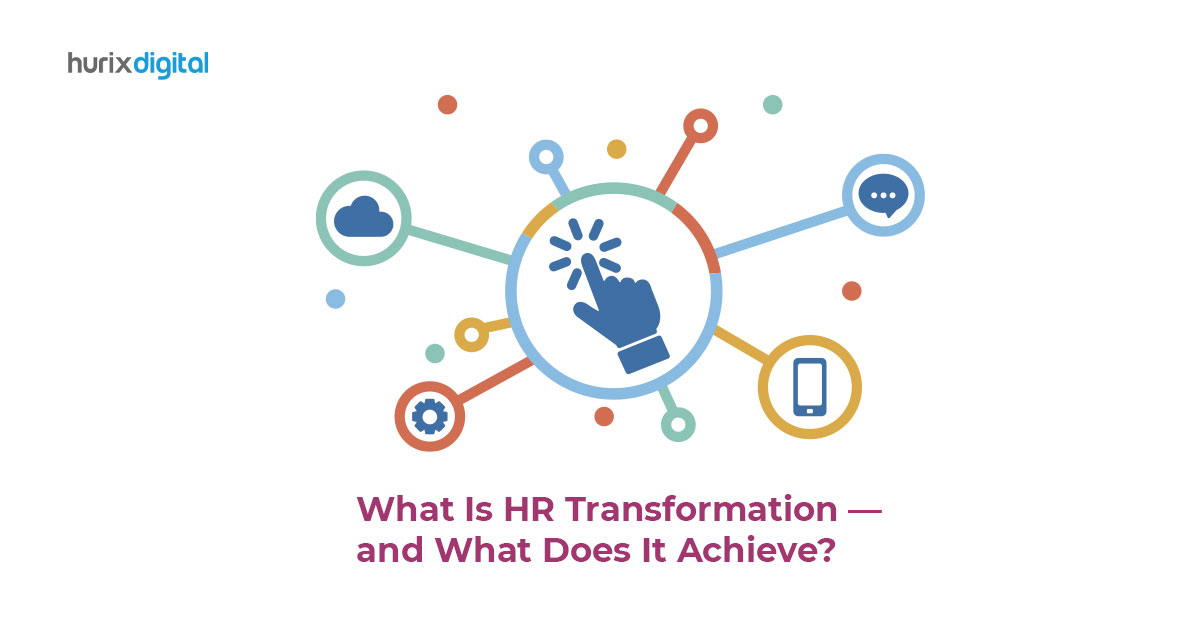
[vc_row][vc_column][vc_column_text]Organizations must constantly adapt to stay ahead of the competition to remain competitive in today’s rapidly evolving business market. HR transformation is a process that reimagines the role of human resources inside an organization.  It is a fundamental component that can help organizations achieve this adaptability.  By adopting HR reform, businesses can improve employee experience, accelerate organizational growth, and achieve strategic business goals.  This article will examine HR transformation, how it works, and what benefits it can bring your company. What is HR Transformation? HR transformation refers to rethinking and reimagining HR practices in an organization to create a more efficient, effective, and strategic Human Resources Department.  This is achieved by shifting away from traditional HR practices that focus on compliance and administrative tasks and, instead, on strategic initiatives supporting broader business objectives. The HR transformation roadmap typically involves adopting new technologies, embracing new working methods, and creating a more people-focused culture. This can include initiatives such as: Using digital technology to expedite operations and decrease administrative burdens, such as HR analytics, automation, and cloud-based HR systems. Investing in employee development initiatives encourages individuals to take charge of their careers and development. Creating a collaborative, innovative, agile culture promotes continual progress and growth. Making the company more flexible, robust, and innovative so that it can react to changing market conditions and evolving business needs. The advantages of HR transformation are enormous. Businesses can  improve their employee experience,  accelerate organizational growth,  achieve strategic alignment, and  future-proof their organizations by establishing a more efficient, effective, and strategic HR function.  This, in turn, can lead to improved business results such as more revenue, higher customer happiness, and increased employee engagement and retention. What Are Its Benefits, and How Can They Be Achieved? An experienced HR transformation consultant would recommend the following ways to bring HR reform to your organization. Improved Employee Experience HR transformation can improve its employee experience by making the workplace more people-focused. This entails abandoning traditional HR approaches that emphasize top-down administration and control in favor of emphasizing employee development, engagement, and empowerment. Businesses must focus on the following measures to achieve this transformation: Determine the present employee pain points and places where HR can bring additional value. Create a culture of open communication, transparency, and collaboration. Invest in employee development initiatives encouraging individuals to take charge of their careers and development. Encourage and act on employee feedback to continuously enhance the work experience. Self-service portals and communication tools are examples of digital technology that can help with employee engagement. With these steps, businesses can create a more positive and fulfilling work environment that supports employee growth and development. Organizational Growth HR transformation can drive organizational growth by enabling businesses to adapt to changing market conditions and remain competitive. This involves leveraging digital technologies to streamline HR processes and free up time and resources for strategic initiatives. Businesses must focus on the following measures to achieve this transformation: Perform a thorough evaluation of HR processes and identify areas for improvement. To expedite operations and reduce administrative burden, embrace digital technologies such as HR analytics, automation, and cloud-based HR tools. Invest in talent management programs like workforce planning, succession planning, and skill development to guarantee your business has the talent to thrive and innovate. Encourage a collaborative, innovative, and agile culture that promotes continual progress and growth. By taking these measures, businesses can develop a more efficient and successful HR function that promotes organizational growth and innovation. Strategic Alignment By coordinating HR practices with more general business goals, HR transformation can assist organizations in achieving their strategic business goals. Making sure that HR complements the overarching business plan entails establishing clear goals, monitoring progress, and making adjustments to strategies. Businesses need to concentrate on the following steps in order to achieve this transformation: Get a thorough understanding of the strategic objectives and ambitions of the organization. Decide which essential HR procedures—like talent acquisition, performance management, and learning and development—will best help you achieve these objectives. Set precise measures and KPIs to assess the influence of HR on the overall business strategy. Constantly evaluate progress and modify HR procedures to align with the business plan. Encourage a culture of collaboration and cross-functional communication that supports the accomplishment of strategic alignment. By implementing these measures, businesses may ensure that HR is a strategic partner in accomplishing the organization’s larger goals and objectives. Future Proofing By making an organization more inventive, resilient, and agile, HR transformation can assist firms in staying ahead of the curve. This entails embracing new technologies, workforce dynamics, and working methods to guarantee that the organization is well-prepared to tackle future problems and opportunities. Businesses need to concentrate on the following steps in order to achieve this transformation: Be abreast of the most recent HR trends and technological developments and evaluate how they might affect the company. Encourage a culture of creativity and experimentation that encourages adaptation and ongoing development. Create a thorough talent plan that takes into account the changing nature of the workforce. Invest in employee development and upskilling efforts to guarantee that people have the skills they need to prosper in a corporate climate that is changing quickly. Encourage a flexible and resilient environment to support adaptability to shifting market conditions and expanding business requirements. These steps, businesses can help companies build a more future-proof organization prepared to handle problems and opportunities as they arise. Summing It Up Businesses have much to gain from HR transformation, such as enhanced employee experience, organizational growth, strategic alignment, and future-proofing. Additionally, companies can position themselves for long-term success in today’s quickly evolving business climate by adopting this innovative approach to HR reform.  HURIX’s workforce learning solutions are designed to help organizations unlock the full potential of their employees. Our comprehensive platform offers personalized learning experiences tailored to each individual’s needs, enabling them to acquire new skills and knowledge that will help them succeed in their roles.   Whether you’re looking to transform your Human resources department, upskill your workforce, improve

Julia Suk March 7, 2023 No Comments

Benefits of Gamification in Healthcare: Engaging Patients and Improving Outcomes

[vc_row][vc_column][vc_column_text]Gamification in healthcare refers to game-like elements, such as points, rewards, and competition in non-game contexts to engage and motivate patients. This approach is used in healthcare to increase patient engagement, improve patient education, increase patient adherence to treatment, and save healthcare providers money.  Benefits of Gamification in Healthcare By incorporating gamification, healthcare providers can encourage patients to take an active role in their health, resulting in improved outcomes and increased patient satisfaction. Gamification has the potential to revolutionize healthcare by making it more interactive, engaging, and effective. Following are some of the benefits of gamification in healthcare: 1. Increased Patient Engagement Gamification can be a powerful tool for increasing patient engagement in healthcare. With the addition of game elements to the treatment process, patients can become more invested in their care and feel more motivated to stick to their medication plans. Games can help patients track their progress, set goals, and receive rewards for achieving milestones. This can help create a sense of accomplishment and make the treatment process more enjoyable. One framework that can be used to create engaging gamification experiences is octalysis. Octalysis is a design framework that breaks down the elements of human motivation into eight key drivers: meaning, accomplishment, empowerment, ownership, social influence, unpredictability, avoidance, and scarcity. By leveraging these drivers, healthcare providers can create a user journey that is as engaging as a live visit to a doctor. A medication adherence app might use the octalysis framework to create a system where patients earn points for taking their medication on time. This is one gamification in healthcare example where social influence can be incorporated by allowing patients to compete with friends or join support groups for extra motivation. By making the treatment process more fun and rewarding, patients are likely to stick to their medication plans and see better health outcomes. 2. Improved Patient Education Gamification techniques have shown great potential for improving patient education in healthcare. By incorporating games and interactive apps, patients can become more engaged in their healthcare and better understand their health needs. Healthcare organizations can use gamification to educate patients about healthy heart functions, nutrition, exercise, and other health-related topics through apps like CardioTeach and Decide. Furthermore, as students pursue careers in healthcare, they can learn how to implement gamification techniques in the classroom or professional settings to educate patients or develop team members. To effectively implement gamification, healthcare providers need to be technologically savvy, have strong teamwork and leadership skills, and be able to communicate with patients and troubleshoot issues. Incorporating gamification in healthcare can help patients become care advocates for themselves and work collaboratively with providers to develop treatment plans. Healthcare providers can also use gamification to educate patients about their health needs and promote healthy habits. Pursuing a degree in healthcare or a related field emphasizing technology and innovation can help students develop the necessary skills to implement gamification techniques effectively. 3. Increased Patient Adherence to Treatment Research suggests that gamification can increase patient adherence to treatment by promoting patient motivation, self-efficacy, and enjoyment in medication management. Gamification can also help patients develop a sense of accomplishment and provide a way to track progress toward treatment goals. By improving medication adherence, gamification can potentially improve healthcare outcomes by reducing hospitalizations, improving disease management, and lowering healthcare costs. However, there are still many knowledge gaps and inconsistencies in evidence regarding the effectiveness of gamification in medication adherence. Further research is needed to determine which gamification techniques are most effective and preferred by patients with chronic conditions. In addition, incorporating patient involvement and co-design in developing gamified medication management apps may improve patient engagement and treatment outcomes. 4. Cost Savings for Healthcare Providers With the rising healthcare costs, providers are under pressure to provide quality care at lower prices. By using games and incentives to promote healthy behaviors and manage chronic conditions, healthcare providers can reduce the number of office visits and hospitalizations, resulting in significant cost savings. Studies have shown that gamification can be effective in helping patients manage their conditions and avoid complications that could lead to hospital visits. For example, patients who used a game to manage their diabetes had fewer emergency room visits than those who did not use the game.  Additionally, gamification can help healthcare providers identify high-risk patients and provide targeted interventions to prevent complications and reduce costs. By using data from games and other digital tools, providers can track patient progress and provide personalized care that is more efficient and cost-effective. Challenges and Limitations One major challenge is the lack of consensus on what game elements are most effective in the promotion of behavior change in healthcare. There is a need for more research to determine which specific game mechanics and design features are most effective for different patient populations and health conditions. Another limitation is the potential for gamification to become a mere novelty that loses its effectiveness over time. Updating and improving the game design is pertinent to maintain patient engagement. Privacy concerns are another challenge associated with gamification in healthcare. Patient data must be kept secure and protected in compliance with regulatory requirements. Patients may also have concerns about their health data being collected and shared with third parties. Healthcare providers and developers must prioritize patient engagement and data privacy to address these challenges and limitations. They should involve patients in the development process to ensure that game design is patient-centered and aligned with patient needs and preferences. Additionally, providers and developers should ensure that patient data is kept secure and comply with regulatory requirements such as HIPAA. Healthcare providers and developers should also establish clear goals and metrics for gamification in healthcare so that the desired outcomes are achieved. Finally, gamification initiatives should be integrated with other healthcare interventions, such as medication management programs and patient education, to maximize their impact on patient health outcomes. Conclusion Gamification can be a powerful tool for improving patient engagement, education, adherence to treatment, and reducing healthcare costs. By leveraging

Julia Suk March 7, 2023 No Comments

What is Healthcare Compliance Training? Everything You Need to Know

[vc_row][vc_column][vc_column_text]Healthcare is a major industry globally and is especially important because it ensures the safety and health of patients. Due to the size and nature of the industry, there are various regulations and compliances involved. Given the risk and the importance of following ethical and good practices, healthcare compliance training is especially important. Here are the things you should know about healthcare compliance training for employees.  What Is Healthcare Compliance Training? Healthcare compliance is the practice of keeping up with the different laws, regulations, and best practices. It helps prevent fraud and ensure ethical standards in healthcare services and patient treatment. This is why your healthcare employees, staff, and personnel must be trained in healthcare compliance.  According to a study by Statista, the global market for medical personnel is projected to reach $11.4 billion by the year 2027. While the recruitment numbers are high, the workforce must be adequately trained meet industry standards and compliance requirements.  Across the globe, healthcare organizations and institutions face the issue of inadequately well-trained staff. Additionally, the healthcare industry is constantly changing, with new developments treatments being available. With new technologies and inventions, you need to ensure that your healthcare workforce can continuously build their skills and knowledge to keep up with industry trends and compliance requirements. This is where healthcare compliance training comes in.  Healthcare compliance training for employees includes various training programs that enable medical professionals and staff to learn the skills and knowledge required to meet compliance. This includes knowledge of the multiple regulatory compliances and ethical standards that have to be met and the skills required to keep up with them. The skills involve handling medical equipment, delivering services and care to patients, and handling software and technology, including administrative software.  What Are the Benefits of Healthcare Compliance Training? Healthcare compliance training for employees offers several benefits to your healthcare organization, clinic, hospital, or medical institution. Training programs for medical compliance also have the potential to transform the healthcare industry. Here are some of the key benefits that can result from healthcare compliance training. Highly skilled and proficient staff Better quality of services delivered to patients  Improved quality of healthcare and outcomes for patients Better brand reputation for the healthcare establishment Improved market reputation for the healthcare sector in a particular country or location Better opportunities for employees to develop skills and improve the services delivered  Better levels of employee retention since employees are more motivated to stay on  Improved business outcomes, brand value, and profits Improved safety and practices leading to reduced risk of legal claims, lawsuits, and losses incurred due to legal compensation Better assessment of employees’ skills and capabilities and easier assessment of gaps in knowledge and skill base Improved overall performance and quality of the workforce Easier identification of strong points and areas where there is scope for growth  A more capable workforce that is equipped to handle work requirements and the details of compliances A more motivated and involved workforce as employees are encouraged with better training and improved performance  Improved scope for skill development, growth, and continuous learning leading to a better work morale Better cost and time efficiency as the efficacy of services (medical and administrative) improves  Reduced risks to patients, loss of life, and inconvenience faced in the healthcare process Enhanced quality of life of patients and more trust in the healthcare system  Online healthcare training and e-learning allow employees to learn skills in an effective, convenient, and accessible way  Interactive features in online training make the learning process more engaging and participatory, with better learning outcomes Features like simulations, scenarios, and game-based learning enable the workforce to be better prepared to perform the skills in real-life scenarios  Why Is Healthcare Compliance Training Important? There are various barriers that healthcare organizations and institutions face with healthcare compliance training and ensuring that it is effective.    1. Resistance to Change  There is a reluctance to adopt a change in the existing practices and adopt the technological know-how required to manage healthcare software.  Traditional healthcare systems have mainly relied on physical records, paper records, and written documentation. Keeping up with the latest compliances often involves managing software and technology. This requires healthcare professionals and medical staff to adjust to the technological requirements.  A study found that 92% of healthcare providers are promoting digitized healthcare facilities. Modern healthcare software relies on artificial intelligence (AI) features, and this can lead to hesitancy to work with the more advanced interface.  However, with healthcare compliance training, employees become comfortable with these technologies, and the features can simplify the tasks involved. 2. Administrative Work  Healthcare compliance can involve increased administrative work, and many healthcare establishments lack the time and resources to keep up with the various compliances. This can be a barrier to the efficacy of healthcare training. However, healthcare compliance training for employees makes them better equipped to handle these tasks efficiently and accurately. As clinics and medical institutions have to manage large patient loads, time and administrative constraints affect their capacity. Training can help improve the time and cost-effectiveness of healthcare compliance. 3. Technical Concerns and Changing Regulations There are various technical concerns with healthcare compliance training. These concerns include the maintenance of the software system, errors, and upgrades or updates that may be required. However, with the right learning management system and training software, it can be a convenient experience.  Additionally, healthcare laws and regulations are constantly changing. Online healthcare compliance training programs have the benefit of being easily updated, and this ensures that you keep up with the latest requirements.  Summing Up  Healthcare compliance training for employees can help your medical establishment keep up with the latest compliance requirements. It can also enable your employees to be better equipped to handle the changing needs of the medical industry.  Hurix offers training and workforce learning solutions and systems training. Our learning solutions provide interactive features such as game-based learning, simulations, and scenarios to keep your employees engaged. Get in touch with us to learn more. [/vc_column_text][/vc_column][/vc_row]

Julia Suk March 7, 2023 No Comments

10 Corporate E-Learning Solutions for Companies in 2023

[vc_row][vc_column][vc_column_text]In the rapidly changing business landscape, companies need to ensure that employees are equipped with the latest skills and knowledge to keep pace with industry demands. Corporate e-learning solutions provide an effective way for organizations to train employees and keep them up-to-date with the latest industry trends.  According to a report by Global Market Insights, the corporate eLearning market is expected to surpass $315 billion by 2027, growing at a CAGR of over 20% from 2022 to 2028.  Moreover, according to Deloitte, companies with strong learning cultures are 92% more likely to create novel products and processes and have staff retention rates that are up to 50% higher. These statistical trends highlight the growing demand for corporate eLearning solutions and the importance of investing in online learning for professional development and growth. Here are ten e-learning solution companies providing innovative e-learning solutions for companies in 2023. Hurix Hurix is an e-learning solution company that provides end-to-end services to help organizations create, deliver, and manage their learning programs. Their solutions include content development, platform customization, and learning analytics. Hurix offers a range of e-learning services that cater to clients’ unique needs. Their content development services include instructional design, graphics design, and localization, which help organizations create engaging and effective learning content.  They also provide platform customization services that enable clients to tailor their learning platforms to their needs. They offer learning analytics that help organizations measure the effectiveness of their training programs. Overall, Hurix is a great option for organizations looking for a comprehensive e-learning solution provider. Their end-to-end services and their cloud-based platform make it easy for organizations to create, deliver, and manage their e-learning programs. Infopro Learning Infopro Learning has a team of experienced instructional designers, multimedia specialists, and subject matter experts who work together to create engaging and effective e-learning content. They use the latest instructional design strategies, including gamification and microlearning, to ensure that their courses are engaging and effective. Infopro Learning also provides learning analytics services that help organizations measure the effectiveness of their training programs. Their analytics solutions include custom reporting, data visualization, and machine learning algorithms that help organizations identify areas for improvement in their training programs. EdCast EdCast is an AI-powered knowledge cloud that provides personalized learning experiences to organizations around the world. Their platform enables organizations to deliver on-demand content, expert insights, and peer-to-peer knowledge sharing to their employees. EdCast’s platform uses machine learning algorithms to provide personalized learning experiences to each employee. The platform recommends content based on each employee’s job role, skill level, and learning preferences.  This personalized approach ensures that employees receive the training they need to perform their jobs effectively. EdCast also offers content creation services. They work with organizations to create engaging and effective e-learning content tailored to their needs.  Docebo Docebo is a cloud-based e-learning solution company that provides an end-to-end learning management system (LMS) to organizations around the world. Their LMS enables organizations to create, deliver, and track their training programs. Docebo’s LMS includes various features, such as content creation tools, social learning capabilities, and gamification features. These features enable organizations to create engaging and effective training programs that meet the unique needs of their learners. Docebo’s analytics solutions include real-time reporting, dashboards, and predictive analytics that enable organizations to identify trends and areas for improvement in their training programs. WizIQ WizIQ is an e-learning solution company offering a cloud-based online teaching and learning platform. Their platform includes various features like virtual classrooms, course management tools, and analytics. WizIQ’s virtual classroom provides real-time collaboration tools such as live video and audio communication, screen sharing, and interactive whiteboards. These features enable teachers to create engaging and interactive online classes. Their course management tools allow teachers to create and manage online courses easily. They can create assessments, assignments, and quizzes and track someone’s progress through the platform.  The platform also includes tools for content creation, such as video and audio recording and interactive presentations. EdApp EdApp is a learning management system that provides unbeatable blended training solutions. With its cloud-based Authoring Tool, HR or L&D professionals can easily design their training modules. Alternatively, users can choose from a vast library of courseware specifically tailored to various industries. Moreover, EdApp offers expert instructional designers who can transform your existing content into impactful microlessons. You can review and change the course content without any additional cost. EdApp’s authoring tool is a game-changer as it seamlessly integrates with Canva and allows for real-time edits. Additionally, the courses can be translated into dozens of languages, making it easier than ever to train employees globally.  Litmos SAP Litmos’s LMS includes various features, such as content creation tools, social learning capabilities, and gamification features.  One unique feature is the integration capabilities. Their platform can integrate with a wide range of third-party systems, including HRIS, CRM, and webinar tools.  This integration capability enables organizations to streamline their training programs and ensure their training efforts align with their business goals. SAP Litmos is a great option for organizations seeking a robust e-learning solution with strong integration capabilities.  Articulate Articulate is also one of the e-learning solution companies that offers a suite of tools for creating interactive and engaging e-learning content. Their flagship product, Articulate 360, includes a range of tools for creating online courses, quizzes, and simulations. Articulate 360 includes Storyline 360, a powerful tool for creating interactive e-learning courses. Storyline 360 allows users to create custom animations, simulations, and interactive scenarios that engage learners and make learning more fun and effective. Articulate 360 also has Rise 360, a tool for creating mobile-friendly e-learning content. It allows users to create responsive courses on any device, including smartphones and tablets. Kineo Kineo is a learning solutions provider that aims to elevate learning experiences by improving a simple idea. Their focus on flexibility and innovation results in effective content that meets the needs of any L&D strategy.  While their solutions are quick to implement, the implementation method depends on each company’s requirements. Kineo offers internal design

Julia Suk March 7, 2023 No Comments

Top 10 E-Learning Companies for Corporate Training

[vc_row][vc_column][vc_column_text]In today’s high-tech world, more and more companies are using eLearning platforms to train their employees. Did you know that the global corporate eLearning market was worth over $302 billion in 2021? It is estimated to reach $1609 billion by 2030, with a CAGR of 20.4% from 2023 to 2030. These numbers indicate the growing power of eLearning in corporate training. The good news is that many eLearning experts (LMS administrators and instructional designers) can help you develop a good eLearning environment for your business. Not to forget the various tools that can take the burden off your shoulders. Right from course development and tracking employee progress to conducting webinars and training program management, eLearning tools can do it all. Here is a list of the top 10 eLearning companies offering corporate training solutions to meet your company’s goals. 10 Best E-Learning Companies 1. Hurix Digital Email ID contactus@hurix.com Solutions Mobile Learning Game-Based Learning Business Simulations Learning Management System   With over 20 years of experience, Hurix Digital is a leading end-to-end online content solution provider. Equipped with best-in-class technology, the company offers corporate training solutions that are technically sound, accessible, hassle-free, and tailored to meet the varied requirements of businesses. Hurix has a dedicated team of digital experts that create high-quality and engaging content for modern-day learners. The company provides cloud–based learning management solutions for software systems training, employee onboarding, compliance, process, and sales enablement training. 2. Docebo Email ID info@docebo.com Solutions Online Tutorials Documentation Webinars Founded in 2005, Docebo has become a leader in Cloud SaaS eLearning in government, corporate, and small business sectors. The company ranks among the world’s top 10 SaaS eLearning companies. It helps in delivering, tracking, and certifying online training. It offers a suite of tools that collaborate seamlessly to cover the full business learning lifecycle, from content development, delivery, and management to analyzing learning impact and essential business drivers. 3. Swift eLearning Services Email ID info@swiftelearningservices.com Solutions Mobile Learning Solutions Custom eLearning Solutions Translation and Localization Swift eLearning services specialize in developing custom content solutions using fast eLearning tools such as Adobe Flash, Articulate Studio, etc. The company is known for creating interactive and multimedia-rich courses that help learners get the best out of every learning. To avoid communication gaps, it assigns devoted project managers to every client. The company also offers translation services to help global clients translate their courseware and training modules into their local or regional languages. 4. iSpring Solutions Email ID sales@ispringsolutions.com Solutions Microlearning Software Learning Management System Screencast Recording Software Founded in 2001, iSpring Solutions is a leading global software company offering professional eLearning authoring tools to educational and corporate clients. With more than 59,000 clients across 172 countries, the company is known for its reliable, easy-to-use, high-quality products and remarkable technical support. Their two flagship products are iSpring Learn, an LMS with an excellent tracking engine, intuitive interface, gamification features, and advanced reporting system, and iSpring Suite Max, a powerful authoring tool for developing online assessments, interactive courses, video lessons, and role-plays.   5. Infopro Learning Email ID info@infoprolearning.com Solutions Course Development Services L&D Services With around 25 years of experience, Infopro Learning is a global, award-winning training and eLearning solutions company. It offers managed training programs, blended learning solutions, and performance improvement strategies that help in driving business growth. The company provides a comprehensive portfolio of services developed to enhance the efficiency and cost of corporate training delivery. It also offers L&D recruitment support for contract employees, full-time hires, or classroom facilitation.     6. Tovuti LMS Email ID troy@tovutiteam.com Solutions Microlearning Employee Onboarding Compliance Training Tovuti LMS is a user-friendly and innovative platform developed to offer interactive and interesting online learning experiences. From interactive videos to memory-matching games to flash cards and more, Tovuti facilitates the creation of over 40 types of gamified and interactive training modules. The company makes eLearning easy for both learners and admins. The cloud-based solution offers powerful tools that empower admins to design high-quality eLearning programs for corporate training.             7. Open LMS Email ID contact@openlms.net Solutions LMS Content Creation LMS Hosting & Support LMS Training LMS Extensions Founded in 2005, Open LMS is a leading Moodle-based LMS platform provider. The company provides highly enhanced, curated SaaS-based versions of open-source LMS. It offers fully managed, world-class services that work well with the widely-used Totara Corporate LMS. Open LMS provides end-to-end eLearning solutions that empower businesses to meet workplace training needs. Moreover, it offers consultation services to help corporates keep up with the latest eLearning trends, the best ways to optimize their training programs, and best practices. 8. Epignosis Email ID info@epignosishq.com Solutions Course Development Software Learning Management Software Microlearning Software When it comes to the best eLearning companies, Epignosis has to be on the list. Offering a suite of products, the company has made premium eLearning technology affordable and accessible for enterprises. Its products include TalentLMS, a traditional learning management system for corporates; eFront, a highly secure LMS platform for government and business organizations; and TalentCards, a microlearning platform and a mobile app for micro-certifications.     9. CrossKnowledge Email ID contact@crossknowledge.com Solutions Channel Training, Workforce Development, Employee Training Cloud-based Software as a Service (SaaS) With over 20 years of experience, CrossKnowledge is a trusted eLearning partner of many reputed global organizations, assisting L&D teams and employees in acquiring key skills to achieve their goals. The company is known for delivering personalized and integrated learning experiences through its high-quality courses designed by world-renowned experts. Their learning platform is an amazing combination of human and artificial intelligence. Not to forget their dedicated Client Success Team serving more than 12 million learners across 130 countries.   10. THORS eLearning Solutions Email ID sales@thors.com Solutions Objective Assessments Custom Course Services Digital Checklist Our last pick in the list of best eLearning companies is THORS eLearning Solutions. THORS empowers original equipment manufacturers (OEMs) and suppliers in the manufacturing sector to onboard and upskill employees by offering time-efficient and data-driven training courses. The company has a team of talented designers and

Julia Suk March 7, 2023 No Comments

E-Learning Content Development: Best Practices and Techniques

[vc_row][vc_column][vc_column_text]Did you know that eLearning has the potential to improve student retention rates from 25% to 60%? These staggering numbers are enough to prove how vital it has become for organizations to move their educational and training operations to eLearning platforms. With that said, eLearning content development isn’t a walk in the park per se. There are several considerations and best practices that aim to make the process simpler and the results better. This blog aims to provide insight into the best practices you can employ to maximize the output from your eLearning content development process. 10 Best Practices To Improve eLearning Content Development Process By incorporating these ten simple practices in your eLearning content development process, you can create training and education modules that deliver the desired outcomes. 1. Market Research eLearning aims to equip your workforce or learners with the latest, updated knowledge to get an edge in the industry. For this purpose, you must thoroughly research the market and industry trends to provide content that is niche-relevant and insightful. A thorough market research would allow you to strategize your content development by giving you information on aspects like: Customer segments Revenue streams Costing Channels Customer expectations Partnership opportunities And much more. Analyze what your competitors are doing, the eLearning companies you can partner with, what services you can avail of, etc. 2. Audience Study Understanding the market alone may seem enough; however, knowing your target audience is just as important to ensure good penetration of your eLearning modules. Creating the target audience profile ideal for your business niche would help your content reach more people through relevance. A thorough audience research would give you critical information about who is consuming your eLearning content: The average age or age group of the learners in the industry Learning preferences Whether or not the age group is familiar with digital tools The average educational qualifications of the target audience 3. Translate Organization Goals Into Training Modules One of the best ways a training or learning curriculum can be most effective is by ensuring that the training objective is aligned with organizational goals. For example, if your organization aims to establish an inclusive work culture, the eLearning content should focus on positivity, cultural diversity, and tolerance. You can leverage the popular A-I-D method to achieve this alignment: A – Analyse the needs of your business. I – Identify the pain points. D – Define the training objective according to pain points and needs. 4. Ensure Accessibility Not all your learners would be familiar with using a digital interface. Additionally, you would need to ensure that for the learners who are differently abled or physically challenged, there are provisions in place to help them learn. Aim to develop the eLearning content with the following things in mind: The colors used should not be triggering or limiting. There should be text-to-speech capabilities for those who find reading difficult. There should be interactive learning modules to aid understanding of tougher concepts 5. Enrich the Content Today, the concept of enriched learning has become extremely popular among learners. eBooks that are interactive and contain media (video clips and audio) are received and consumed better than the standard, text-based material. While developing your content, aim to introduce visual media that assist learner understanding. You can consider gamification, animations, quizzes, audio recaps of a chapter, video-based tutorials, etc., to enrich the content in your eLearning modules. 6. Make the Content Relatable You can improve the engagement level of your eLearning course by making them more relatable for the target audience. For example, a marketing eLearning module could contain popular, real-world instances the learners can immediately relate to. Such analogies help the learners retain the learnings better and may even come in handy when they are able to recall the lessons in time of need. 7. Augment Retention The human memory refreshes itself every morning. This causes the “unnecessary” bits of information to be erased or forgotten. To ensure that your learners are able to better retain the lessons learned during the course, the eLearning modules should be equipped with suitable repetitive course reviews that help the learners recap their understanding. You can do this by including flashcards or quizzes throughout the eLearning course. For better impact, you can also introduce notifications that summarize key learnings. 8. Allow Course Pacing Did you know that 58% of employees prefer self-paced eLearning courses? Especially in a corporate or professional setup, timing a course and forcing the learners to sit through it reduces engagement and course effectiveness. Learners should be able to pace the course according to their understanding capacity and availability. They should be able to revisit the bits they didn’t understand well or take an assessment at a later time. Ensure that your eLearning content allows these functionalities. 9. Provision for Assessments Measuring the outcome in hard numbers is what will ultimately determine how successful your eLearning content was. You can introduce two functions in the eLearning course to help you measure success later: Allow a pre-course assessment to help establish a baseline for each learner. This will tell you what the learner already knew before starting a course. Introduce assessments at the end of each module or chapter and a final assessment to help you understand course progress and performance. 10. Deliver a Good UX eLearning is digital, and everything digital leaves an impression with respect to user experience. A dull eLearning module that doesn’t offer engagement opportunities may ultimately underperform at its goals. Ensure that your eLearning content development process keeps a good user experience in mind. Wrapping Up In 1995, only 4% of organizations used eLearning. Today, the number has increased to 90%. eLearning has made itself a staple in every corporate and academic setup – whether formal or informal. If your organization aims to capitalize on the skills and potential of its human resources, eLearning content development should be a top priority. To achieve that, you can leverage Hurix’s digital eLearning platform to develop

Julia Suk March 7, 2023 No Comments

Top 10 E-Learning Platforms for Effective Development

[vc_row][vc_column][vc_column_text]Do you want to learn a new skill along with your full-time job or degree program? The numerous e-learning platforms in the digital sphere can easily make this possible for you. Since the COVID-19 pandemic, there has been massive growth in e-learning platforms. With the closure of schools and universities around the world, students were forced to switch to online learning to continue their education. Additionally, the growth of e-learning platforms is not only limited to the education sector but has also extended to professional development and upskilling. Many companies and individuals have turned to e-learning platforms to acquire new skills and stay relevant in a rapidly changing job market. By 2025, the e-learning platform market is expected to become a $325 billion industry globally. If you are also looking forward to e-learning development, you are in the right place. We have curated a list of the top 10 e-learning platforms you can greatly benefit from. Before we begin to discuss the top 10 e-learning platforms, let us quickly discuss e-learning platforms to help you make an informed decision. What are E-Learning Platforms? E-learning platforms are online tools allowing learners to access educational resources and interact with instructors and peers over the internet. These platforms are designed to provide a virtual classroom experience that is similar to the traditional face-to-face classroom setting but with added flexibility and convenience. They can be used in a variety of contexts, including K-12 education, higher education, and professional development. Such platforms are used for self-paced learning or as part of a structured curriculum and can be accessed from anywhere with a stable internet connection. Top 10 Platforms for E-Learning Development Many e-learning platforms are available for developing and delivering online courses. Here are 10 popular platforms that are widely used and offer a range of features and functionality: 1. Hurix Hurix is an e-learning platform that provides solutions for digital content development, educational technology, and corporate training. It offers a range of services, including content development, content management, content distribution, and technology solutions. Hurix provides personalized learning experiences with the help of its AI-powered learning platform that provides adaptive learning paths, personalized assessments, and feedback to learners. Their platform is also designed to support mobile learning, which makes it easy for learners to access course materials on the go. 2. LinkedIn Learning LinkedIn Learning is an e-learning platform that was originally launched as Lynda.com in 1995 and was later acquired by LinkedIn in 2015. As of 2022, LinkedIn Learning had 875 million registered users. One unique feature of LinkedIn Learning is its integration with the LinkedIn platform. Learners can add completed courses and certifications to their LinkedIn profiles, which can help them showcase their skills and expertise to potential employers and clients. 3. Adobe Captivate Adobe Captivate was first introduced in 2002 and has since become a popular tool for e-learning professionals and instructional designers. It offers a wide range of pre-built templates and themes, which can help users save time and effort in creating engaging e-learning content. Adobe Captivate integrates with other Adobe products, such as Photoshop and Illustrator, as well as with Learning Management Systems (LMS), which can help users streamline their e-learning workflows and deliver their content to learners more efficiently. 4. Skillshare Skillshare is an e-learning platform that offers a variety of courses and workshops on a range of topics, including creative arts, design, entrepreneurship, lifestyle, and technology. It was founded in 2010 and operates on a subscription-based model, with a monthly or annual fee that gives learners unlimited access to its library of courses. The platform offers a range of courses, from short tutorials to longer workshops, and learners can complete them at their own pace. However, two of the major cons of Skillshare are that it only supports video-based courses and does not offer certificates after completion of the course. 5. Coursera Coursera was founded in 2012 and has since grown to become one of the largest e-learning platforms, with millions of learners and thousands of courses. The platform offers a range of courses in areas such as computer science, business, humanities, and social sciences, taught by instructors from prestigious universities such as Stanford, Yale, and Duke. Coursera’s platform is designed to be user-friendly and flexible, with features such as self-paced learning, video lectures, interactive quizzes, and peer-reviewed assignments. 6. LearnWorlds LearnWorlds is an all-in-one, cloud-based learning management system (LMS) that allows educators, trainers, and businesses to create, market, and sell their online courses and digital products. One of the key features of LearnWorlds is its drag-and-drop course builder, which allows users to create and customize their courses and products without any coding or technical skills. Another important feature of LearnWorlds is its ability to deliver a range of multimedia content, such as videos, interactive ebooks, and webinars. 7. Kajabi Kajabi is an all-in-one platform that allows entrepreneurs and small business owners to create, market, and sell their digital products and online courses. It also offers a range of features and tools that can help users market and sell their products more effectively. For example, the platform offers customizable landing pages, email marketing tools, and integrated payment gateways that allow users to sell their products directly to customers. Some of its disadvantages as an e-learning platform are that it is very expensive and doesn’t offer many customization and course creation tools compared to other platforms. Some of its basic features are quizzes, assessments, and community forums. 8. Edx EdX is an e-learning platform that offers a wide range of courses and programs from top universities and institutions around the world. It was founded in 2012 by Harvard University and the Massachusetts Institute of Technology (MIT) to provide high-quality education to anyone, anywhere. EdX courses are designed and taught by experts in their fields, including professors and industry professionals, and are delivered through a range of multimedia content, such as videos, readings, and interactive exercises. Edx is highly popular for its STEM field courses and for providing financial

Julia Suk March 7, 2023 No Comments

Streamline Your Corporate Training with the Best E-Learning Platforms

[vc_row][vc_column][vc_column_text]Corporate learning solutions, as a concept, have been around for a long time. These training programs are designed to empower workforces to embrace fresh knowledge, processes, skills, and tools.  However, recent shifts in the world of work have triggered a reinvention of these learning solutions as we know them. There is a growing demand for teams to be agile and innovative to meet market demands at an accelerated pace. In this blog, we understand the key shifts that paved the way for disrupting corporate learning solutions. We also delve into the key benefits of adopting E-learning solutions, such as using E-Learning platforms, to help businesses meet their learning goals.  3 Reasons to Rethink Corporate Learning Solutions Since the height of the pandemic of 2020, the world of work and business has experienced accelerated change. There was a time in history when the change occurred every 36 months.  But today, new developments impact a business’s trajectory every day.  Here is a brief look at key shifts that have irreversibly revolutionized the world of work. Shift to Remote and Hybrid Work Mode Working from home in the days before the pandemic was considered a luxury. But today, more workplaces are seeing a financial and organizational benefit to making remote work and hybrid mode shifts.  As of 2022, employees worldwide are expected to work between two to three days per week from home. According to a survey, 8% of employees aspired to work full-time from home. However, many companies aim to prioritize hybrid work. A recent survey indicated that three of every four Gen Zers (74%) want to engage with colleagues face-to-face.  Hence, a mix of remote and hybrid work is expected to prevail in the future.  Adoption of Digitally-Powered Products and Services  Today, the number of consumers coming online and seeking digitized products and services is growing. Hence, companies are also undertaking massive digital transformation drives.  Workforces play an important role in this transition, and they need to be equipped with the necessary skill sets and knowledge to be productive contributors in this journey.  Leveraging Collaborative Tools In 2021, revenues of the collaboration software market amounted to $ 16.3 billion and are forecast to grow to $ 18 billion by 2025.  As companies scale, workforces need to bring more efficiency and accountability to their processes. There is a need for wide-scale collaboration, access to credible data insights, and people and resource management tools.  Workforces need the training to be able to adopt the efficient usage of such tools. Companies of every scale need to adapt these tools to drive business schools in a digital world.  Bridging the Skills Gap A study by Korn Ferry indicates that by 2030, the business world will experience a talent shortage to the tune of $ 8.5 trillion. Rather than continuously struggling to acquire fresh talent with the necessary skills, companies can invest in strengthening their corporate training solutions to meet their upskilling needs.  Such a step enables existing employees to upgrade their skills, become more productive in the workplace, stay highly motivated, and aspire to join the leadership pipeline.  Efficient and timely upskilling simultaneously increases the employee value proposition. Weaving in e-Learning solutions enables the upskilling of existing workforces at scale as an ongoing commitment.  There are several benefits to doing so.  Advantages of E-Learning Solutions  E-Learning solutions enable corporations to address a slew of training challenges through innovation and the creative use of technology. A Flexible Solution  Today, corporate learning solutions need to serve companies of various scales through customized solutions. Small teams need to develop the skills to multi-task and apply institutional knowledge intelligently.  On the other hand, large teams need to be able to evaluate skills gaps effectively and respond to learning needs with speed and accuracy. E-Learning solutions are versatile and offer flexibility to companies to customize solutions based on their needs.  Streamline with A Platform Approach Companies can bring all team members onto a single, unified eLearning platform, and streamline and standardize the learning process, making it agile.  Through the platform approach, companies can onboard members located in any geography and time zone and customize learning based on individual learning needs.  Encourage Microlearning Global learning trends point towards a culture of microlearning. This practice involves learning for short durations by leveraging byte-sized on-demand resources.  Content is accessible in the form of eBooks, videos, online assessments, audiobooks, collaborative assignments, webinars, and online lectures. A trigger for the popularity of microlearning is that on-demand resources are accessible via smartphone.  Contemporary corporate learning solutions encourage employees to learn via their smartphones. The introduction of e-Learning platforms makes it easy to create and distribute learning resources within minutes across smart devices.  Video Conferencing Facilities   The best e-Learning platforms come with state-of-the-art video conferencing facilities. Admins can quickly set up an in-house webinar or live-stream a guest from any location.  The video conferencing utility is well-designed with a focus on enabling engagement.  Engaged Learning via Gamification  Gamified learning is another innovation that has become part of e-Learning solutions. The motivation of learners increases with the promise of rewards, challenges, and leaderboards.  It also generates healthy competition and collaboration between teammates.  Easy to Manage and Track  Access to an e-Learning platform makes it simple for admins of a company to manage the learning process end-to-end.  They can  add and manage new users with ease,  offer a seamless, high-quality experience,  collaborate with multiple stakeholders, and  rack the success of all initiatives and learning resources via in-depth, actionable insights.  To Wrap Up Corporate training solutions play an important role in effective change management in any forward-looking business. The agile and real-time virtues of e-Learning solutions are best geared to empower employees to learn new skills at an accelerated pace and stay productive at work.  In today’s agile business environment, a productive workforce is a competitive workforce and the key to companies staying relevant in a crowded market.   If your small business is looking to adopt an agile e-learning platform, Hurix Digital can support you in meeting all your

Julia Suk March 7, 2023 No Comments

The Ultimate Guide to Corporate Training Materials

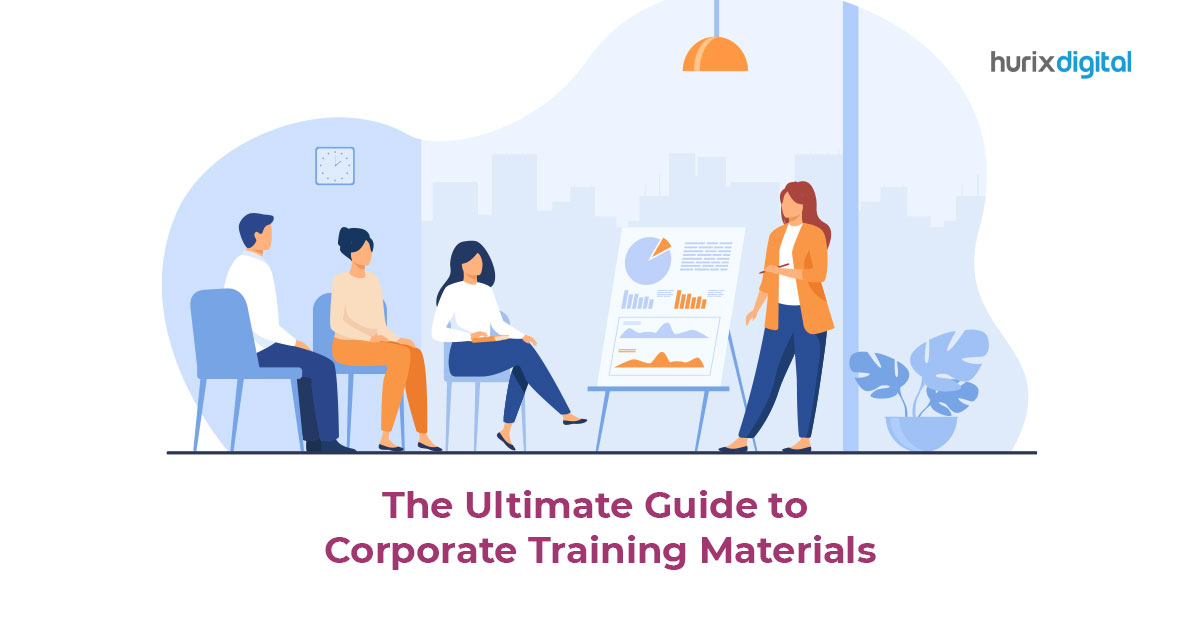
[vc_row][vc_column][vc_column_text]Corporate training materials play an essential role in ensuring the success of an organization. They provide employees with the necessary skills and knowledge to perform their job responsibilities effectively. However, designing and implementing effective training materials can be daunting for organizations. This article will provide you with the ultimate guide to corporate training materials. Understanding Corporate Training Materials Corporate training materials are educational resources designed to enhance the skills and knowledge of employees. These materials can be used to train employees on company policies, procedures, and systems.  They may include e-learning courses, instructional videos, job aids, webinars, manuals, and presentations. Benefits of Effective Training Materials Effective training materials provide several benefits for employees and organizations. Improved Productivity  Employees who are trained on company policies, procedures, and systems can perform their job responsibilities more efficiently and effectively. This leads to improved productivity and reduces the need for supervision and support. Enhanced Employee Engagement  Training provides employees with the necessary skills and knowledge to feel confident in their roles. This can result in increased employee engagement, as they feel valued and empowered within the organization. Compliance With Regulations  Training ensures that employees know the regulations and standards related to their job responsibilities. This reduces the risk of compliance issues and avoids costly fines or legal problems. Cost Savings Effective training can lead to cost savings for the organization. Employees trained on the latest technologies, software, and best practices are less likely to make mistakes, resulting in fewer errors and improved customer satisfaction. Improved Retention Providing training opportunities demonstrates that the organization is invested in the professional development of its employees. Increased job satisfaction and lower turnover rates may result from this. Better Customer Service When employees are trained on customer service skills and best practices, they can provide better customer service, resulting in improved customer satisfaction and loyalty. Designing Effective Training Materials for Employees Designing effective training materials requires careful planning and consideration of the needs of the employees and the organization.  Identify Learning Objectives Define the learning objectives for the training materials. What do you want employees to learn? How will the training materials help them perform their job responsibilities effectively? Figure these out beforehand. Use a Variety of Formats  People have different learning styles, so it is important to provide a variety of formats for the training materials, such as e-learning courses, instructional videos, job aids, webinars, manuals, and presentations. This ensures employees with different learning styles can benefit from the training materials. Keep it Simple and Easy to Follow Ensure the training materials are easy to understand and follow. Use simple language, avoid jargon, and provide step-by-step instructions. Include Interactive Elements Interactive elements like quizzes, simulations, and case studies can keep employees engaged and help them retain the information better. Provide Feedback Employee feedback is crucial to the success of a training program. Collect feedback regularly and adjust the training materials accordingly to ensure they meet the needs of the employees. Implementing Corporate Training Materials for Employees Implementation involves more than just creating and distributing the materials. Here are some steps to ensure successful implementation: Assign a Training Coordinator – A training coordinator can help manage the training program, monitor progress, and ensure all employees complete the training. Establish a Schedule – Establish a schedule for when employees should complete the training. This will help ensure that everyone receives the necessary training on time. Provide Support – Provide employees with the necessary support to complete the training successfully. This may include access to technical support, assistance with login credentials, or guidance on how to use the training materials. Monitor Progress – Monitor the progress of employees completing the training. This will help identify any issues or areas that require additional support. Evaluate the Effectiveness – After the training is complete, evaluate its effectiveness. Collect feedback from all employees and track relevant metrics, such as employee productivity, to determine the impact of the training. By following these easy steps, employers can successfully deploy the training materials and ensure that staff members have the skills and information needed to carry out their duties. Measuring the Impact of Corporate Training Materials Measuring the impact of the training materials is crucial to ensure that the training program is effective and to achieve the desired outcomes. Here are some steps to follow when measuring the impact: Define the Metrics – Define the metrics that will be used to measure the impact of the training program. These metrics should be aligned with the learning objectives and the expected outcomes. Collect Data – Collect data on the defined metrics. This can include pre-and post-training assessments, surveys, performance metrics, compliance metrics, and cost savings. Analyze the Data – Analyze the data collected to determine the effectiveness of the training program. This can include comparing pre-and post-training assessments, analyzing survey results, and tracking performance and compliance metrics. Identify Areas for Improvement – Identify areas for improvement based on the data analysis. This can include adjusting the training program, modifying the training materials, or providing additional support to employees. Communicate the Results – Communicate the results of the data analysis to stakeholders. This can include senior leadership, the training coordinator, and employees who participated in the training program. Make Adjustments – Use the data analysis results to adjust the training program and improve its effectiveness. Evaluate the Program Regularly – Evaluate the training program regularly to ensure it remains effective and relevant. This can include conducting ongoing assessments, gathering feedback from employees, and adjusting the program as needed. By following these steps, organizations can measure the impact of their materials and make adjustments to ensure that the program is effective and achieves the desired outcomes. Closing Lines Corporate training materials are essential for the success of an organization. They provide employees with the necessary skills and knowledge to perform their job responsibilities effectively. Designing and implementing effective training materials requires careful planning, a variety of formats, simplicity, interactivity, feedback, and support.  Measuring the impact of corporate training materials