Blog

A Beginner’s Guide to XML Content Development

[vc_row][vc_column][vc_column_text]Content development can also contribute to XML in several ways. XML (eXtensible Markup Language) is a language that is designed to store and transport data, and content development involves creating and managing digital content, such as text, images, and videos, for various platforms and media. Four Best Examples of How Content Development Can Contribute to XML: XML can be used to structure and organize content. Content developers can use XML to define the structure of their content, such as defining the hierarchy of headings, paragraphs, lists, and other elements, which can help make the content more accessible and machine-readable. XML can be used to create content that can be reused and repurposed. Content developers can use XML to create modular content that can be easily combined with other content and repurposed for different platforms and media, such as ebooks, websites, and mobile apps. XML can be used to facilitate content translation and localization. Content developers can use XML to separate content from presentation and define the metadata needed for translation, making it easier to translate and localize content for different markets and languages. XML can be used to create content that is accessible and inclusive. Content developers can use XML to create structured content that is designed to be accessible to people with disabilities, such as using semantic markup to identify headings, links, and other elements. Overall, content development can contribute to XML by using it as a tool for structuring and organizing content, creating content that can be reused and repurposed, facilitating content translation and localization, and creating accessible and inclusive content. 5 Tools for Structuring and Organizing Content in XML There are several tools available for structuring and organizing content in XML. Here are a few popular ones: XML editors: XML editors such as XMLSpy, oXygen XML Editor, and Altova XML Editor are powerful tools that allow you to create, edit, and validate XML documents. These editors typically come with features like syntax highlighting, auto-completion, and XML schema validation, which can help you structure XML content efficiently. XML schema editors: XML schema editors like Altova XMLSpy and Liquid XML Studio allow you to define and manage XML schemas, which can help you enforce consistency and structure in XML content. XSLT processors: XSLT processors like Saxon and Xalan allow you to transform XML documents into other formats, such as HTML or PDF. These tools can be used to structure and organize content in a way that makes it more accessible or readable. Content management systems: Content management systems (CMS) like Drupal and WordPress can be used to structure and organize content in XML. These systems typically come with features like content types, taxonomies, and metadata management, which can help you create a well-organized content structure. Programming languages: Programming languages like Java and Python have built-in XML parsing libraries that can be used to structure and manipulate XML content. These languages can be used to create custom tools and applications for organizing and managing XML content. Overall, the choice of tool will depend on specific needs and requirements. Creating Content that can be Reused and Repurposed in XML Creating content that can be reused and repurposed in XML requires careful planning and implementation. Here are some steps to follow: Define a clear and consistent structure for content: This can be done using an XML schema or a document type definition (DTD). The structure should be flexible enough to accommodate different types of content while maintaining consistency. Use meaningful and descriptive elements and attribute names: This will make it easier to understand the content and reuse it in different contexts. Apply metadata to content: Metadata can help describe the content and provide additional information about its intended use. This can include information like author, date, and keywords. Use semantic markup: Semantic markup adds meaning to content by defining the relationships between elements. This makes it easier to repurpose content in different contexts. Create modular content: Break up content into smaller, reusable chunks that can be combined in different ways. This will make it easier to reuse and repurpose our content in different contexts. Avoid formatting and styling in the content: Instead, use Cascading Style Sheets (CSS) or other styling techniques to apply formatting and presentation. This will make it easier to repurpose the content for different mediums. By following these steps, can create content that is well-structured, flexible, and easy to reuse and repurpose in different contexts. Six Tips on Facilitating Content Translation and Localization in XML Facilitating content translation and localization in XML involves designing XML structure and content with localization in mind. Here are some tips: Use Unicode character encoding: Unicode allows for multilingual support and is a standard for character encoding. Using Unicode, can ensure that content can be translated into any language without loss of data. Separate content from the presentation: Ensure that the XML document separates content from the presentation. This allows for easier translation without interfering with formatting or styling. Use a consistent and well-defined XML schema: A well-defined schema helps ensure consistency and accuracy during translation. By using a consistent schema, it becomes easier to locate content that requires translation. Use XML comments for context: Adding XML comments can provide contextual information for translators. This information can help them better understand the content and improve the translation quality. Use a Translation Memory tool: A Translation Memory tool helps to save previously translated content in a database, which can be used to quickly translate similar or identical content in the future. This saves time and ensures consistency in translations. Ensure that text expansions and contractions are taken into account: Different languages can have text expansions or contractions that impact the layout and design of the document. Be sure to allow for these differences when designing XML content. By following these tips, can ensure that XML content is optimized for translation and localization, making it easier to reach a global audience. Seven Tips on Creating Accessible and Inclusive Content Creating accessible and inclusive content in

How Does BA as a Service Model Work?

[vc_row][vc_column][vc_column_text]The enterprises providing and managing Business Analysis as a Service (BAaaS) maintain a pool of highly efficient professionals having expertise in BA skills. This group has the capability to provide services during each phase of the software development lifecycle.  When vendors or enterprises receive requests for business analysis, some of the points to be evaluated are as follows: What are the specific skills the customer is looking for For which phase of the SDLC is the BA required Time and cost for the BAaaS In BAaaS (business analysis as a service model) we work in collaboration with various stakeholders to provide the best possible solution. BAs are deployed to the projects as per the skill set and expertise of the subject. Project Discovery In the discovery phase, BA plays an important role to understand the project requirements and avoid scope creep. They study the business needs and goals and evaluate the risks. Based on the information gathered, wireframes and mockups are created to get a primary visual of the proposed solution. BA suggests the MVP for a market-ready product and the estimated cost of development. Business Analysis In the business analysis phase, BA works in collaboration with the technical team and customer to prioritize the features for development. This is done by creating use cases and user stories for the features in order to clearly define the project scope. For project documentation purposes BA creates documents such as Functional requirement documents if needed. Thus BAaaS is a great service offering to ensure proper analysis, timely service and successful project delivery. Maintenance User acceptance testing is done by BA once the product is ready to go live. BA manages any changes or enhancements needed for the product to meet user expectations. Training sessions are conducted by BA to educate the customer about the product features and usability. In conclusion, the ease and effectiveness of the working of the business analysis as a service framework is notable, which is a win-win for both the provider and the customer. Understanding Business Analysis as a Service Business Analysis as a Service (BAaaS) is a strategic approach that involves outsourcing business analysis functions to specialized service providers. It encompasses various activities, including requirements gathering, process modeling, data analysis, and stakeholder management. By partnering with BAaaS providers, organizations can tap into a wealth of expertise and experience to drive effective decision-making. 5 Advantages of BAaaS Cost savings and scalability: BAaaS eliminates the need for a full-time, in-house business analysis team, resulting in cost savings associated with salaries, benefits, and training. Organizations can scale their BA efforts up or down based on project needs. Access to specialized expertise: BAaaS providers employ dedicated professionals with deep knowledge and skills in business analysis. This ensures that organizations have access to the latest industry best practices and insights. Flexibility and adaptability: BAaaS can be tailored to specific project requirements, allowing organizations to choose the scope and duration of engagement based on their needs. Enhanced decision-making: BAaaS provides data-driven insights and recommendations, enabling organizations to make more informed and strategic decisions. Risk mitigation: BAaaS helps identify and mitigate potential risks by conducting comprehensive analysis and providing recommendations for risk management. How to Implement BAaaS in Your Organization? Evaluating your organization’s needs and readiness: Assessing your organization’s requirements and understanding the specific areas where BAaaS can add value is crucial before engaging with a service provider. Selecting the right BAaaS provider: Consider factors such as industry expertise, track record, reputation, and cultural fit when choosing a BAaaS provider. Setting clear objectives and expectations: Clearly define the goals and deliverables for the BAaaS engagement to align the provider’s efforts with your organization’s strategic objectives. Establishing effective communication channels: Establish open and transparent communication channels with the BAaaS provider to ensure a smooth flow of information and collaboration. Integrating BAaaS seamlessly: Integrate BAaaS into existing business processes to ensure its effectiveness and enable seamless knowledge transfer. How to Overcome Challenges in BAaaS Adoption? Data security and confidentiality: Address concerns by selecting BAaaS providers with robust data security measures and strong confidentiality agreements. Alignment with organizational goals: Ensure that the BAaaS provider understands and aligns with your organization’s goals and culture to drive successful outcomes. Managing resistance from internal stakeholders: Communicate the benefits of BAaaS to internal stakeholders and involve them in the decision-making process to mitigate resistance. Building a collaborative relationship: Foster a collaborative and trust-based relationship with the BAaaS provider to maximize the value of their expertise and insights. Monitoring and measuring success: Establish key performance indicators (KPIs) and metrics to monitor the effectiveness of BAaaS and make adjustments as needed. For more information on BAaaS, contact us on marketing@hurix.com[/vc_column_text][/vc_column][/vc_row]

How can the latest technology help in Staff Augmentation Services?

[vc_row][vc_column][vc_column_text]Staff augmentation refers to a business strategy where a company hires additional personnel on a temporary or project basis to fill skills gaps, increase capacity or respond to market demand.  When AI is used in IT staff augmentation services, it can help businesses to streamline their operations, reduce costs, and improve efficiency.  Some of the ways that AI can be used in a staff augmentation model include: Identifying Skill Gaps: AI can help companies identify skill gaps in their workforce by analyzing data on the skills and competencies of current employees. AI-powered tools can analyze job descriptions, resumes, and other relevant data to identify skill gaps and recommend candidates with the right skills for the job. This can help companies fill staffing needs quickly and efficiently, and ensure that new hires are a good fit for the role. Recruitment: AI-powered recruitment tools can help businesses to identify and attract top talent more efficiently. For example, AI can analyze resumes and cover letters to identify the most qualified candidates, saving time and reducing the risk of human bias. Training: AI-powered training tools can help businesses to train new employees more efficiently. For example, AI can create personalized training programs based on each employee’s learning style, progress, and performance. This can help improve employee performance and job satisfaction while reducing training time and costs. Customer Service: AI-powered chatbots can handle customer inquiries, freeing up human staff to focus on more complex issues. Chatbots can provide 24/7 support and can help businesses to improve customer satisfaction levels. Data Analysis: AI can be used to analyze large amounts of data quickly and accurately, providing businesses with valuable insights into their operations. For example, AI can analyze customer behavior to identify patterns and trends, helping businesses to make data-driven decisions. Hurix leverages the power of AI to streamline its Staffing solutions, reduce costs and improve customer experience. [/vc_column_text][/vc_column][/vc_row]

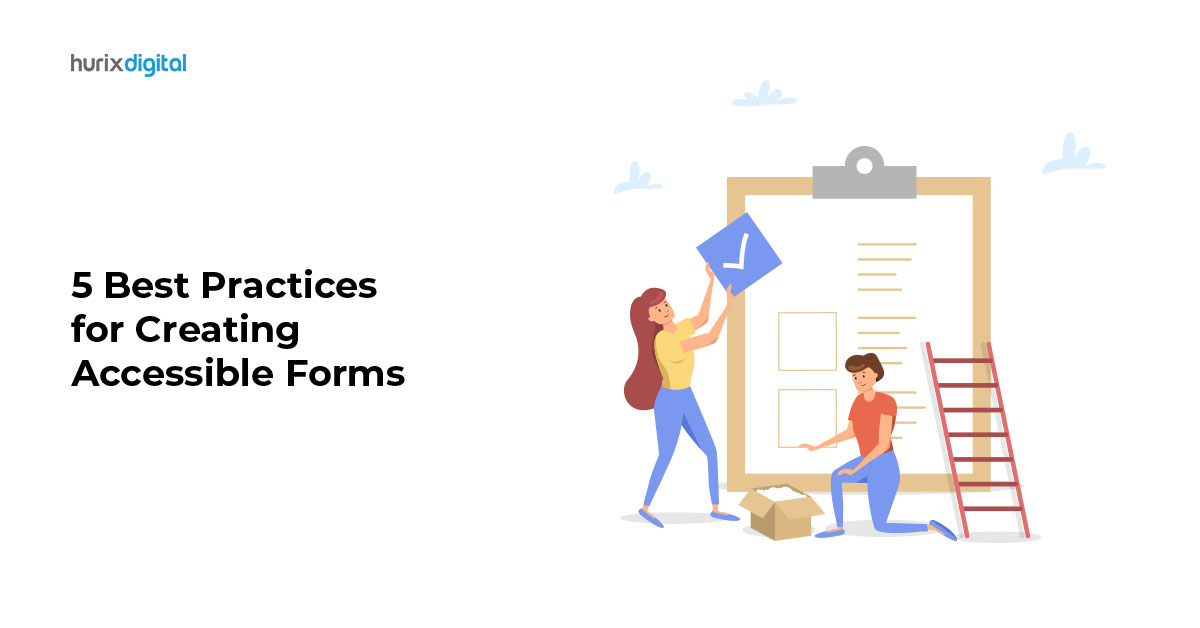
5 Best Practices for Creating Accessible Forms

[vc_row][vc_column][vc_column_text]Forms are a critical component of many websites, applications, and digital services. They are used for a wide range of purposes, including signing up for newsletters, registering for events, completing purchases, and filling out surveys. However, for people with disabilities, completing forms can be a challenging and frustrating experience. From unclear instructions to confusing layouts, there are many barriers that can prevent people with disabilities from successfully completing forms. Ensuring that forms are accessible is essential for creating an inclusive web that works for everyone. Accessible forms enable people with disabilities to complete tasks independently and efficiently, providing them with the same level of access to information and services as other users. Accessible forms also benefit organizations by improving usability, reducing errors, and increasing overall user satisfaction. In this blog post, we will explore best practices for designing accessible forms. We will cover various aspects and best practices for form design, including structure, labels and instructions, input types, error handling, and testing. Whether you’re designing a simple contact form or a complex application form, these best practices will help you create forms that are accessible to all users. Forms are a common feature on many websites and applications, used for a variety of purposes, such as registration, feedback, surveys, and checkout processes. There are several types of forms, including simple forms, multipage forms, and complex forms, such as those used for online applications or e-commerce transactions. Accessible forms are essential for ensuring that all users, including those with disabilities, can complete them effectively. Accessible forms enable users with disabilities to interact with the form elements and submit information without any barriers. There are several benefits of designing accessible forms, including: Improved usability: Accessible forms improve the overall usability of your website or application, making it easier for all users to complete the forms without confusion or frustration. Better user experience: Accessible forms provide a better user experience for users with disabilities, allowing them to complete tasks independently and efficiently. Increased conversions: Accessible forms can help increase conversions and reduce form abandonment rates by ensuring that users can complete the form quickly and accurately. 5 Best Practices for Designing Accessible Forms: Structure: The structure of the form should be clear and organized. Use headings and subheadings to break up the form into sections, and ensure that the tab order follows the logical flow of the form. Labels and instructions: All form elements should have clear and descriptive labels. Use placeholder text sparingly, as it disappears once the user starts entering data. Include clear and concise instructions that help users understand what information is required and how to complete the form. Input types: Use appropriate input types for each field, such as text, date, email, or phone. Ensure that the input type is correctly associated with the label, which helps users who rely on screen readers or other assistive technologies. Error handling: Provide clear error messages that describe the problem and how to fix it. Use visual cues, such as highlighting the field in error, and ensure that the error message is located near the field in question. Testing: Test your form with a range of assistive technologies and devices, such as screen readers, keyboard-only navigation, and voice input. Test the form on different browsers and operating systems to ensure that it is compatible and accessible. By following these best practices, you can create forms that are accessible to all users, including those with disabilities. Designing accessible forms is not only the right thing to do but also makes good business sense. Accessible forms can help increase conversions, reduce form abandonment rates, and improve user satisfaction. At Hurix, we offer web accessibility solutions, including form accessibility best practices like testing and remediation, to help organizations create accessible forms that meet compliance standards and improve user experience. Contact us to learn more about our digital accessibility services and how we can help you create accessible forms.[/vc_column_text][/vc_column][/vc_row]

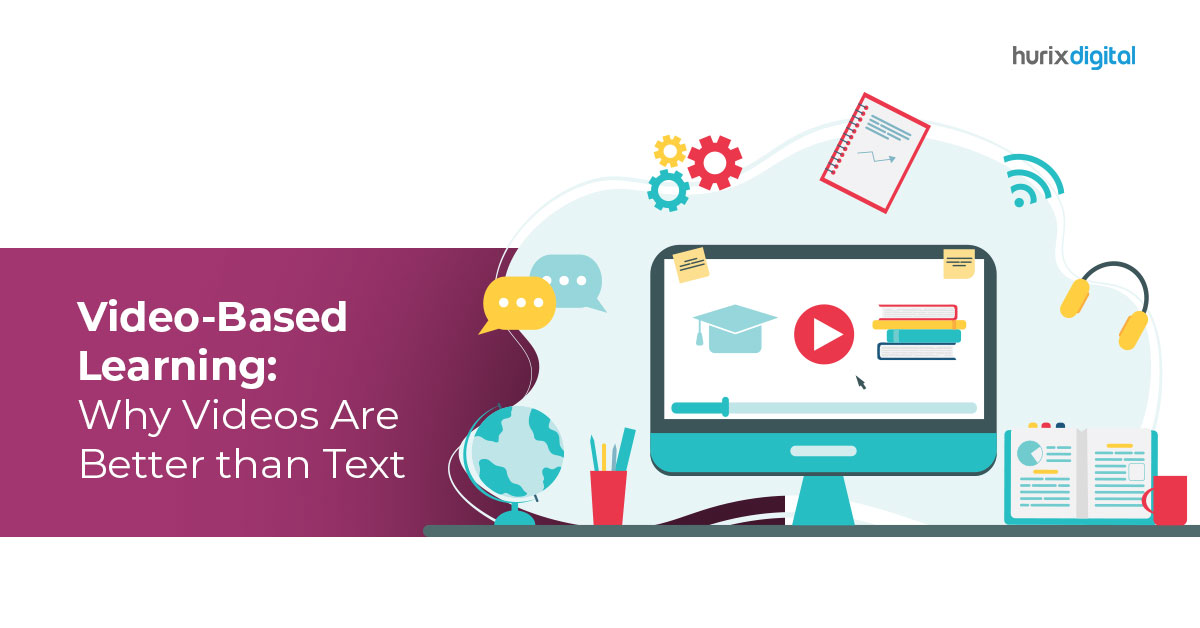
Video-Based Learning: Why Videos Are Better than Text?

[vc_row][vc_column][vc_column_text]Video-based learning is better than text for several reasons. Some statistics to support this point are given below. According to Forbes, users perceive and retain 90% of the information they receive via video versus text. Moreover, the 2021 Training Industry Report shows that 88% of organizations use video broadcasting, webcasting, or virtual classrooms to train their employees.  A study found that Twitter users are six times more likely to share tweets containing videos than tweets with images, and tweets with text are 150% less likely to be shared than images.  In a survey among 1,673 students, 79% said they watched videos to understand a subject through practical applications.  The following sections elaborate on the top reasons why video-based learning is getting more attention than textual content nowadays.[/vc_column_text][vc_custom_heading text=”To 5 Reasons Why Video-Based Learning Is Better Than Textual Content ?”][vc_column_text] 1.Video-Based Learning Fosters Better Engagement  Video-based learning is better than text when it comes to engagement. Research shows that the human brain can process visuals faster than written text. Since videos combine sound, text, and movement, the audience seems instantly connected to them. Moreover, when you watch a video, you’re not just passively viewing information but actively participating in the conversation. This makes videos more engaging and easier to follow. Videos are also an excellent tool for storytelling. While the written text might sometimes seem boring, a video creator can include many interesting graphics to retain the viewer’s attention. So if you want to increase the attention span of the people checking your content, invest in video-based learning. They are undeniably an excellent way to captivate and engage your audience, and they’re definitely worth the investment.  2. Videos Are More Interactive Than Text The second reason that makes video-based learning so popular is that the videos are interactive – you can click on different parts of the video to get more information or to follow the conversation. This feature makes videos more interactive and easier to use than text-only content.  For example, if you’re selling a product, videos can show users how to use it or how it works. Similarly, you can use videos to show the practical application of a subject whose theory you plan to teach in your class.  So if one wants to increase your online presence, videos are a better option than text-based content. 3. Video-Based Learning Improves the Brand Recall  There’s a lot of debate about which format is better – videos or text – when it comes to information reception. But there’s no doubt that videos are more informative and effective than text. While reading a piece of text, readers often lose track of where it all started. So, they go back to the start to re-read and understand the context. This is known as ‘Regression.’  Since textual content is typically monotonous, it is not hard to lose track of the theme or concept at any time during the reading. Videos, on the other hand, almost entirely eliminate the problem of regression.  Hubspot data shows that 80% of consumers remember the video they watched in the previous month. Can you remember which text ad you saw before reading this article? Probably not, and this is where videos are an exception. Videos allow you to pack a lot of information in easy-to-understand nuggets. You can also include infographics, charts, or even text, to make the video more informative. And when viewers find value in your content, they are more likely to remember your brand for a long time. 4. Everyone Prefers Videos Before Making a Purchase There’s no doubt that videos are better than text when making a purchase. Some reasons why videos are preferred are:   Videos are typically easier to understand than text. That means you’re more likely to decide based on your personal experience rather than on what you’ve read or heard in a text advertisement.   Also, the stats from Forbes say that the CTR of videos is approximately 96%, which increases the chances of buyers getting a product or service.  And that’s why video-based learning is such a powerful marketing tool – it can help you sell products and services more effectively than any other form of marketing. They contribute a lot to increasing sales. For this reason, marketers have started using videos more often in their marketing campaigns.  5. Easy Way to Spread Content to More Users Finally, video-based learning and information are also easier to share. You can share a video on social media or send it as an email attachment with just a few clicks.  This makes videos easier to share and more likely to be seen by the people you want to see. The videos are a more shareable choice because:  It takes no more than a click to share videos with other viewers.  Videos have the ability to be more engaging than text. This means that if you create a video worthy of being shared, you’re likely to see a lot of traction in terms of engagement and shares. In fact, videos are so shareable that some experts believe that videos will eventually overtake text as the most popular form of content online.  So, if one wants to ensure their content reaches as many people as possible, one must make video-based learning a prime part of their marketing or educational strategy. [/vc_column_text][vc_custom_heading text=”Takeaway -“][vc_column_text]A video is undeniably a powerful tool that helps marketers and trainers in several ways. Video-based learning is better than text because it improves retention, brand recall, and memory.  Some key takeaway points:  Since videos are more engaging, people are more likely to stay on a video longer than they are on a text page.  With videos, one can use visuals and sound to make the point more effectively.  People are more likely to post a video online than to post a text article.  Videos are best-suited for providing interactive content.  As a result, videos are a great way to attract an audience, increase your brand value, and make learning more purposeful. Explore Hurix

What are E-commerce Solutions? Benefits, Types, Best Practices and More

[vc_row][vc_column][vc_column_text]E-commerce solutions are becoming increasingly important for businesses to grow and thrive in the digital age. With the gradual growth of online shopping, it’s crucial for businesses to have a proven e-commerce strategy to reach and acquire customers and sell products. In this article, we’ll cover everything you need to know about e-commerce solutions and how they can benefit your business. What are E-commerce Solutions? E-commerce solutions refer to a set of software and technology tools that help businesses sell products and services online. These solutions typically include a website or online storefront, a shopping cart, payment processing systems, and inventory management tools.  These solutions also often offer marketing and customer relationship management (CRM) capabilities, enabling businesses to promote their products and manage customer interactions effectively. The purpose is to streamline the online sales process and make it easier to sell products and services to customers through the internet. Top 6 Benefits of E-commerce Solutions E-commerce solutions offer several benefits for businesses looking to sell products and services online. Increased Reach: They allow businesses to reach a global audience, expanding their customer base beyond geographical limitations. Convenient Shopping Experience: They provide customers with a seamless shopping experience, allowing them to shop from anywhere at any time. Improved Sales and Revenue: They make it easier for businesses to sell products and services, leading to increased sales and revenue. Cost-Effective: They can help businesses reduce their costs by eliminating the need for physical storefronts and associated overhead costs. Better Customer Insights: They offer businesses access to valuable customer data and insights, allowing them to understand customer behavior and preferences better. Increased Product Visibility: They make it easy for businesses to display or showcase their products to a large audience, increasing their visibility and attracting new customers. Streamlined Operations: They automate many of the manual tasks involved in running an online store, freeing up time and resources for business owners to focus on growth and innovation. Overall, they offer a comprehensive suite of tools and capabilities designed to help businesses succeed in the digital age. 4 Types of E-commerce Solutions Several types of solutions are available, each designed to meet the specific needs of different types of businesses. B2B (Business-to-Business) E-commerce Solutions: These solutions are designed specifically for businesses that sell products and services to other businesses. B2B e-commerce solutions typically offer features such as bulk ordering, custom pricing, and account management. B2C (Business-to-Consumer) E-commerce Solutions: These solutions are designed for businesses that sell products and services directly to consumers. B2C e-commerce solutions typically offer features such as a user-friendly shopping cart, payment processing, and order tracking. Marketplace E-commerce Solutions: These solutions allow businesses to sell their products and services on a centralized platform, such as Amazon or Etsy. Marketplace e-commerce solutions typically handle all aspects of the sales process, from payment processing to order fulfillment. Mobile E-commerce Solutions: These solutions are designed for businesses that want to sell products and services to customers through mobile devices. Mobile e-commerce solutions typically offer features such as a mobile-responsive design and touch-friendly navigation. The type of e-commerce solution a business chooses will depend on several factors, including its target audience, the types of products and services it sells, and its overall business goals. Funding the Best E-commerce Solution for Your Business Below are some factors to consider while selecting an e-commerce solution. Business Needs: Consider your business’s specific needs, such as payment processing, shipping and handling, and customer management. Make sure the e-commerce solution you choose supports these requirements. Budget: Plan and fix a budget for the solution. Keep in mind that some solutions may offer a monthly fee, while others may charge a percentage of sales. User Experience: Consider the user experience for both your customers and your team. Make sure the e-commerce solution you choose is easy to use and offers a seamless shopping experience for your customers. Scalability: Choose an e-commerce solution that can scale with your business as it grows. Consider the solution’s ability to handle increased traffic and add new features and functionality as required. Integrations: Consider the integrations you need, such as accounting software, shipping carriers, and marketing platforms. Make sure the e-commerce solution you choose integrates with the tools you need to run your business efficiently. Security: Ensure that the e-commerce solution you choose meets industry security standards, such as PCI compliance. This is important to protect your customers’ sensitive information and your business’s reputation. Customer Support: Choose an e-commerce solution that offers reliable customer support, such as 24/7 phone and email support and a robust knowledge base. By considering these factors and evaluating your options, you can select an e-commerce solution that fits your business’s specific needs and helps you reach your goals. 5 Best Practices for Implementing E-commerce Solutions Below are some best practices for a successful e-commerce solution implementation. Plan Ahead: Plan your e-commerce solution implementation, including the budget, timeline, and resources required. Determine the goals you want to achieve and the metrics you’ll use to measure success. Choose the Right Solution: Select an e-commerce solution that fits your business needs and budget and aligns with your goals. Make sure it has the features you need and integrates with your existing systems and tools. Engage Stakeholders: Engage stakeholders, including your team, customers, and partners, in the implementation process. Keep them informed of changes, and seek their feedback to make sure that the solution meets their needs. Test and Validate: Test the e-commerce solution thoroughly before launching to ensure it meets your requirements and provides a seamless customer experience. Validate the solution’s security and performance. Launch and Monitor: Launch the e-commerce solution and monitor its performance. Track the metrics you identified in your planning process, and make adjustments as needed. Implementing the right solution can help your business increase sales, improve the customer experience, and streamline operations. By understanding the benefits, types, and best practices of e-commerce solutions to boost sales, businesses can make informed decisions when choosing one. Conclusion E-commerce solutions are a crucial

What is Performance Consulting: Benefits, Strategies and Future?

[vc_row][vc_column][vc_column_text]Every company or business whether established on a small-scale start-up or a well-established large-scale workforce strives to be invincible and unstoppable to transform workflow with a potential workforce of human capital. However, implementing such kind of polished workforce with human capital into your workflow is a consistent process. Proactive human capital as the fundamental basis of the workflow sometimes may be fluctuating. To address these kinds of workforce fluctuations in business or company performance consulting plays a vital role in transforming your business strategies. Because there are several parameters to be addressed when human capital is invested. Therefore, the question may arise what is performance consulting and why is it important? What is Performance Consulting? Businesses or companies strive hard to transform their business with a productive & potential workforce. However, the armamentarium of strategies and workforce may differ from company to company based on their definite goals & objectives. Here’s, where performance consulting comes into practice in the business needs to improve their human capital based on individual evaluation. The process of what is performance consulting is a more business-like, performance-oriented approach to not only focus on training & learning but to boost the performance of the employees as well to reach productive results. So that the implemented strategies and solutions are aligned with the optimal development of the employees to achieve streamlined significant results. They identify, analyze and evaluate the root cause of workflow performance problems to resolve them with strategic solutions. It enables the transformation and optimization of workforce performance in the business workplace. So that workforce development is articulated with the company’s business goals. Top 8 Benefits Of Performance Consulting  Performance consulting improves employees’ performance  They align the training process with business objectives to enable their employees to improve their performance productivity as per the business requirement. Performance consulting boosts employees’ job satisfaction with work productivity  Increases business revenue by proactively stimulating employees’ productivity Helps to promote employee retention rates They identify, review & connect the business objectives with the employee work efficiency What is Performance consulting is answered when the business objective is aligned with workforce development, this makes their job easier to work more efficiently. Performance consulting maximizing ROI. Performance Consulting Strategies  Identifying Performance Gaps  Sometimes business authorities question what is performance consulting helping them with if they already opted for a training & learning program. However, performance consulting identifies & evaluates the gaps between the business objective & workforce productivity. They identify the root cause to address the complex problems in the workflow through a systematic performance orientation of employees and articulate it with the training program as per the company’s requirement.  Analyzing and Diagnosing Performance Issues  Each business requirement & parameter based on their objectives are different. In the same way, one solution cannot fit all problems. There are several other parameters that influence employees’ performance. Therefore, what is performance consulting doing is that they analyse & diagnose the performance issues of employees like:  Economy Employees motivation Objective Having no access to the right tools Equipment Default in the implementation of their skills process Resources The effectiveness of their supervisor or manager, etc. After dedicated research performance consultant directs the workforce with the proper strategies to implement them for better results and improves employees’ productivity. Developing A Performance Improvement Plan  The primary step of performance consulting is to identify & determine if the workplace requires training to solve the complex problem on a business level or on slow employees productivity they are facing. Because if the company is well endowed with excellent facilities but still the productivity is low then the employees are scaled for their performance. There might be several factors like low motivation, a slump in workflow, knowledge, etc. This training cannot affect any of these factors, but still, those factors all impact the adequate performance of overall business progress. Therefore, they basis all the factors affecting productivity by developing a strategic improvement plan. The Future Of Performance Consulting  Leveraging Technology  Businesses are under the sway of technology. Performance consulting use technology as leverage to provide efficiency, automate innovation, and engage your employees with proactive solutions and LMS tools. It is actively performed by performance consultants to direct your employees with a systematic performance-oriented approach to resolving & improve workplace performance problems with productive solutions. This performance consulting strategy implements eLearning to support & improve your employee’s active engagement, challenging to explore the complex task at hand and encouraging them to think & implement the practical decision to meet the best company objectives & outcomes. Enhancing Employee Engagement  For successfully enhancing employee engagement the performance consultant implements strategies like role-based scenarios for understanding customer services as well as to improve employee productivity. It makes sure that the role-based scenario mirrors real-life tasks and situations so that the employee has the room to voice out their opinions. This enables them to use the characters based on the scenario to relate to the real challenges and empowers customized feedback at each decision point. Because no two employees can learn at the same time by using the same format in an organization. However, using a custom-made LMS provided by Hurix in such a scenario opens the possibility of a wide range of new recourses in terms of both training and learning capabilities.  Implementing Continuous Improvement  Opting for performance consulting for your company workforce is essential to boost their productivity in the process to meet companies’ objectives. They help organizations by identifying the weak link and improving their efficiency and effectiveness by implementing the best tools & solutions. They also redevelop the current systems and procedures to improve business revenue and develop new strategies. They also take the initiative to be responsible for training employees on new processes and procedures. However, Hurix corporate training & performing solutions are engaging and informative to the company’s workforce. In short, what is performance consulting doing is they offer a solution that empowers employees and drives performance to deliver the desired outcomes. Conclusion Performance consulting is essential

5 Latest K-12 Education Trends for 2023

[vc_row][vc_column][vc_column_text]The education system has witnessed several alterations and modifications in recent times. The transformation process received an additional thrust during the pandemic period owing to the recent K-12 education trends. The K-12 education system was very rudimentary and accessible to only a few people. However, with time and innovations, extending education to the remotest part of a nation is now possible.  Technology has a big role to play in amending the entire system of K-12 education and bringing around only the perks of schooling to children. The influence of technology in K-12 education can be understood by looking at three figures – 93%, 81%, and 58%.  Confused about what these figures are all about? Here’s the information you need to clear up your confusion: In a survey, 93% of participants confessed that they had conducted online teaching in some form before the summer of 2020. 81% of US school teachers admitted that their familiarity with educational technology and online tools skyrocketed due to the pandemic. In another survey, 58% of participants confessed that they feel more confident about educational technology and online tools than ever.  At this point, it might seem natural to draw a common conclusion that the K-12 Education system is the consequence of the pandemic.  However, much to the surprise of many, technology penetrated K-12 education and was introduced far before the virus broke out globally. Irrespective of the purpose of such technology, it is indelible that the COVID-19 disaster was the catalyst for promoting the role of technology in the K-12 education system. Moreover, this new system appeared to be more sustainable and convenient from both the perspective of students and teachers. So, now that the pandemic is a thing of the past and the K-12 education system has become more technology-driven, what are the 5 significant education trends we expect in 2023? Dive deep into this article to get a comprehensive answer to this.  Latest K-12 Education Trends – The Basic Premise Before exploring the top 5 trends in education technology in 2023, it is important to understand the basic premise of K-12 education in 2022.  Virtual media can be used in any educational course: Through digital learning tools, faculty members can speed up learning across the spectrum, whether students are learning face-to-face, online, or through the blended mode. It benefits investors: The practical benefits of integrating K–12 education technological toolkits into their classes and curricula are being recognized by educational institutions all around the world. In the ongoing and prospective training environment, 85% of instructors and 71% of administrators see enormous benefits in technological resources, while more than 80% of university students credit their improved scores to online courses. Communication is pertinent: Communication is the key to success and every vital aspect of success. It is readily observed that digital schooling has increased the scope of interaction between teachers and students.  Let us now shift our attention to the five top digital trends expected to affect K-12 education in 2023. Top 5 K-12 Education Trends [2023] 1. A Productive Blend of REAL, AR, AI, and VR Humankind is gradually getting acclimated to receiving attractive content in the blink of an eye. Learning is undoubtedly not atypical when it comes to how Reality, Augmented Reality (AR), Artificial intelligence (AI), and Virtual Reality (VR) will influence all individual activities.  Simply put, as these technologies make their way into all aspects of human life, the socio-educational infrastructure will follow suit and imbibe these technologies into all facets of K-12 education. As AI, AR, and VR tools become more human-centric and technologically advanced, K-12 education stakeholders can use such advancements to simplify personalized or remote learning for every student in classrooms.   2. Individualized Learning Leads to Better Outcomes There was an era where parents seemed to have no issues with one teacher assigned to a class of 40-70 students. Well, those practices are long gone.  Personalized learning is gradually transforming into individualized learning, and it is increasingly taking hold as the latest trends in education indicate.  The difference between personalized and individualized learning is that while personalized learning focuses on making education more interesting for learners, individualized learning analyzes each student’s unique traits and designs content in a way that appeals to their senses.  K-12 education stakeholders can also take the help of technologies like AI and ML (Machine Learning) to aid the transition from personalized learning to individualized learning. Another idea that has been slowly gaining popularity is homeschooling. The parents teach their kids at home instead of enrolling them in a formal or informal institution of higher learning. In 2023, we can expect more parents to join the fray in designing original curricula and devising effective teaching techniques for their kids. 3. Perpetual Education through Subscriptions and Memberships Merely a few generations ago, the schooling system was very diverse. With the speed at which technology is developing, educators and students are embracing subscription-style models of online classes.  For students seeking out adaptable methods of integrating instructions, the rise of online learning providers features inclusive classroom sessions alongside conventional training sessions. Their primary educational model is now online learning.  Among the styles that will continue to be popular in 2023 is this particular one because it was created to meet the evolving requirements of organizations fully. Long story short, educational content delivery platforms like Hurix will enter more K-12 institutions. Hurix provides education stakeholders with an all-in-one Learning Management System (LMS) to simplify classroom or online teaching. Teachers can upload many different lessons, such as pdf, doc, excel file, videos, images, etc., and control who can see the content and who cannot.  So, as subscription-based educational services become mainstream, platforms like Hurix will become more innovative in pursuing the cause of individualized learning.   4. Game-Based Learning Will Become the Norm Rather Than an Exception Kids nowadays are very familiar with edutainment. It has been circulating in the K-12 education segment for a while and successfully announcing its existence.  The year 2023 will explore the positive benefits of gamified learning even more. Playing

webadmin May 12, 2023 No Comments

5 Reasons Why Enterprises Need to be WCAG Compliant

[vc_row][vc_column][vc_column_text]Businesses aim for legal compliance in order to avoid any run-ins with the law. In addition to the usual compliance processes followed by a company, such as GDPR, workplace safety, HIPAA, POSH, etc., WCAG compliance at workplaces are also equally important. It ensures that not just their customers, but also their employees with physical disabilities are able to access their websites and IT systems without difficulty. Back in the day, when the ADA was newly formed, the term “places of public accommodation” referred to any place where people would typically gather to participate in society. But in view of digitization and its global effects, places of accommodation are no longer limited to a physical space. It also includes virtual spaces, where people tend to connect far more often. Therefore, there is a need for every business organization, whether big or small, to have web content that is accessible to all. Not only because it is a legal requirement, but because it is nice to be considerate and compassionate towards people. Today, every business organization should be asking themselves, “Is our website accessible?” Related Read: Difference between WCAG, Section 508 and ADA – Tools of Web Accessibility[/vc_column_text][vc_custom_heading text=”Here are some reasons why enterprises must ensure WCAG compliance:” font_container=”tag:h1|font_size:18|text_align:left” google_fonts=”font_family:Lato%3A100%2C100italic%2C300%2C300italic%2Cregular%2Citalic%2C700%2C700italic%2C900%2C900italic|font_style:900%20bold%20regular%3A900%3Anormal” css=”.vc_custom_1596807768119{margin-top: 0px !important;margin-bottom: 0px !important;border-top-width: 0px !important;border-bottom-width: 0px !important;padding-top: 0px !important;padding-bottom: 10px !important;}”][vc_column_text] 1. Have a User-Friendly Web Presence Globally, around 10% of the world’s population (650 million people) live with a disability. By ensuring that your web content has all the images tagged properly and is able to support a screen reader, people with complete or partial vision or hearing impairment, physical disability and so on will be able to access and navigate through the site without any trouble. Improving the UX of your website is important to retain your audience. Many times, people simply move on to other more accessible sites rather than filing a complaint. And through word of mouth, others too will follow them, and you will see your website audience dwindling. And more often than not, these are customers who can contribute to your revenue, but couldn’t, because your website didn’t allow them to. According to the U.S. Census Bureau, people with disabilities have $220 billion in discretionary spending power. Also See: 5 Things to Bear in Mind While Designing for Accessibility 2. Reach Out to New Demographics 71% of disabled customers with access needs will click away from a website that they find difficult to use. And 82% of customers with access needs would spend more if websites were more accessible. Conforming to the WCAG guidelines doesn’t require much effort, any vendor can do it for you. But lack of it will cost you a whole demography that could have been reached out to if only the website was more accessible. So, in a way, you are driving out potential revenue. Accessibility also builds brand loyalty. When people know your website isn’t accessible on the first try, they aren’t coming back again to check. On the contrary, having an accessible website will help you reach out to newer user base who previously could not access online content. 3. Create an Inclusive Work Environment With a lot of businesses practically working only through digital channels, it makes sense to have a site that is accessible to as many people as possible. Your website will be accessed not only by your customers, but also your employees.  The scope of diversity should also be broadened to include people with a wide range of disabilities. And no, just building a wheelchair accessible ramp doesn’t end an organization’s responsibility of creating an inclusive work environment. In order to create an inclusive work environment, it is imperative that all employees are able to use and manage the digital content equally. 4. Avoid Litigations The number of website accessibility lawsuits is increasing at a rapid rate, with many high-profile companies being included in the defaulters list. There have been many instances in the past where non-conformance to WCAG accessibility guidelines have led to serious litigations against companies, leading to penalty and loss of reputation. In order to avoid such a scenario, it is best to take necessary actions and make the site usable for all. If you think creating an accessible website is expensive, think about the money you would have to shell out in lawsuit damages. 5. Improve SEO SEO and accessibility are interlinked in a way that creating an accessible website will automatically help boost your SEO ranking. This is because assistive technologies and search engines both require a great content structure, semantics and functionality. This is achieved by using proper alt text tags for images, providing descriptive link text, avoiding empty headers and so on. Undertaking these measures serves the dual intention of keeping your website users as well as search engines satisfied. If you can make Google believe in the content and the user experience that your page will provide to site visitors, irrespective of their capabilities, the chances of ranking higher is more likely.[/vc_column_text][vc_row_inner css=”.vc_custom_1597058917101{margin-top: 0px !important;margin-bottom: 0px !important;border-top-width: 0px !important;border-bottom-width: 0px !important;background-color: #dee7f0 !important;}”][vc_column_inner width=”2/3″ css=”.vc_custom_1597058667516{margin-top: 30px !important;margin-right: 0px !important;margin-bottom: 0px !important;margin-left: 20px !important;border-right-width: 0px !important;padding-right: 0px !important;}”][vc_column_text]White paper: WCAG – The Road to Making Businesses Accessible [/vc_column_text][/vc_column_inner][vc_column_inner width=”1/3″ css=”.vc_custom_1597058963301{margin-top: 30px !important;margin-right: 20px !important;margin-bottom: 30px !important;margin-left: 0px !important;border-left-width: 0px !important;padding-left: 0px !important;}”][button size=”mediumlarge_rd_bt” use_icon=”yes” t_color=”#ffffff” b_color=”#f55744″ t_hover_color=”#ffffff” b_hover_color=”#3ac77f” url=”https://stag.hurix.com/whitepapers/wcag-the-road-to-making-businesses-accessible/” target=”yes” position=”ta_right” icon=”wb-download”]Download Now![/button][/vc_column_inner][/vc_row_inner][vc_custom_heading text=”Given below are some ways to make your website accessible:” font_container=”tag:h2|font_size:18|text_align:left” google_fonts=”font_family:Lato%3A100%2C100italic%2C300%2C300italic%2Cregular%2Citalic%2C700%2C700italic%2C900%2C900italic|font_style:900%20bold%20regular%3A900%3Anormal” css=”.vc_custom_1596808130267{margin-top: 0px !important;margin-bottom: 0px !important;border-top-width: 0px !important;border-bottom-width: 0px !important;padding-top: 0px !important;padding-bottom: 10px !important;}”][vc_column_text] The headers and text should stand out against the background of the site Provide a minimum color contrast ratio for non-text content of 3:1 The contrast between text and its background should be 5:1 and more Add alt tags and descriptions for images, videos, and animation Write clear, concise content Use translations if your business offers international services Ensure your site works without CSS Allow users to turn off video/GIF content Use text descriptions for hyperlinks Make forms accessible using HTML tags to

Accessibility Testing: Top 5 Reasons Why Enterprises Need to Perform Accessibility Testing

[vc_row][vc_column][vc_column_text]The constantly evolving technology is significantly changing the way we live. However, there is not enough discussion happening around how we access this technology. It takes a great deal of effort to create a technological landscape that everyone can use or access.  For instance, if a website, app, or product is released in the market, it must be accessible by every individual, even those with special needs. This is where accessibility testing comes in. Accessibility testing helps enterprises ensure that their digital content is easy to access by people with and without disabilities. In this blog, we explore accessibility testing and the reasons it is important for enterprises.[/vc_column_text][vc_custom_heading text=”What is accessibility testing?” font_container=”tag:h1|font_size:18|text_align:left” google_fonts=”font_family:Lato%3A100%2C100italic%2C300%2C300italic%2Cregular%2Citalic%2C700%2C700italic%2C900%2C900italic|font_style:900%20bold%20regular%3A900%3Anormal” css=”.vc_custom_1622560618332{margin-top: 0px !important;margin-bottom: 0px !important;border-top-width: 0px !important;border-bottom-width: 0px !important;padding-top: 0px !important;padding-bottom: 10px !important;}”][vc_column_text]Accessibility testing refers to the practice of ensuring that the web/mobile applications are fully accessible for people with disabilities such as blindness, motor or cognitive impairments, or hearing problems. The process ensures that the content on the web is reachable to anyone without any barriers. Accessibility testing, in most cases, is considered a part of usability testing. As per World Wide Consortium (W3C), there are certain specific guidelines for accessibility testing, which can be classified under the following principles- Perceivable: Both the information and user interface should be presentable to users in a way they can easily perceive. For example- including alternate text for images Understandable: The content on the UI must be legible. For instance, there must be a meaningful message instead of just the color-driven instructions Operable: Navigation through the user interface must be easily accessible and operable. For example, keyboard navigation, where every link on the page must be accessible with a simple keyboard stroke. Robust: The UI content must be powerful enough so that it can be accessible for different users. For instance, accessibility of a website URL on the desktop, web as well as on mobile. [/vc_column_text][vc_custom_heading text=”Reasons why accessibility testing is important for enterprises” font_container=”tag:h2|font_size:18|text_align:left” google_fonts=”font_family:Lato%3A100%2C100italic%2C300%2C300italic%2Cregular%2Citalic%2C700%2C700italic%2C900%2C900italic|font_style:900%20bold%20regular%3A900%3Anormal” css=”.vc_custom_1622560726394{margin-top: 0px !important;margin-bottom: 0px !important;border-top-width: 0px !important;border-bottom-width: 0px !important;padding-top: 0px !important;padding-bottom: 10px !important;}”][vc_column_text]Accessibility testing not only allows enterprises to ensure that the application is accessible to everyone, but also offers several other benefits, as discussed below- 1. Better performance Accessibility testing can be seen as an overlapping concept of usability, aiming to improve the ease of use and user experience of a product or service.  For instance, there is a requirement by the web accessibility standards that the websites need to be entirely usable and navigable with only the keyboard (i.e., without the use of a mouse). While this largely benefits people with disabilities, making the website navigable simply with a keyboard also helps the business’s wider user base. Once all the navigational elements of your website are well thought through and organized in a strict hierarchy, it will help users across the board to locate the content they are looking for more easily. 2. Improves website SEO Creating an accessible website also makes the content more likely to be found by users by improving Search Engine Optimization (SEO). The main objective of SEO is to drive more traffic to your content by improving the website’s ranking in top search engines such as Google. But, in many cases, the goals of both web accessibility and SEO are aligned. Creating apps and websites with cleaner interfaces and easier navigation also helps you improve your bounce rate (the percentage of visitors who exit from your website after the only one-page visit).  3. Helps you write better-quality code Websites and applications that are created with accessibility in mind tend to have a better-quality codebase. This is largely because accessibility testing tools can also identify various errors that create general problems with its usability. The ability to write cleaner code leads to fewer bugs, a better user interface, and much faster loading times. For this reason, accessibility testing of websites should be seen as an investment in your codebase and the future of your enterprise. 4. Reaches a wider audience Accessibility testing or improving your website’s accessibility allows you to reach a much wider audience. This is because accessible content can be viewed and used in different ways including text alternatives, written transcripts, captions, keyboard navigation, resizable text, less distracting clutter, fewer timeouts and more. Such accessibility features are very helpful for people who are-  Not fluent in English Using the content in a mobile environment Suffering from temporary injuries Elderly with age-related decline  Adding features such as seamless support for mobile devices, transcripts, closed captions, and a clean, simple site design will generally benefit all users. 5. Enhanced quality Accessibility testing enhances the quality of the application manifolds. It helps in transcribing the sounds and music into easy descriptions for people with hearing disabilities. There are multiple tools available in the market for closed captioning. Captioned software typically contains text that easily transcribes the narration and offers descriptions of the sounds and music in the content. The software is not only useful for people with hearing difficulties, but also benefits people unfamiliar with the vocabulary and those who aren’t native speakers of the language used in the video. Closed captioning is a great way to improve the quality of your content by ensuring that the accurate message is sent to the user. And here’s a bonus reason which may not be business critical but just as important in the long run – Moral responsibility People with various kinds of impairments are an equal part of the larger society. This makes it a moral responsibility for enterprises to release software and applications that are easily accessible to them. Overall, building accessible products should be done in a collaborative environment where every stakeholder contributes and works in this direction. A designer needs to ensure the typography and design elements are appropriate for all users, developers need to make use of semantic HTML, whereas copywriters should write meaningful, screen reader-friendly content.[/vc_column_text][vc_custom_heading text=”To conclude” font_container=”tag:h3|font_size:18|text_align:left” google_fonts=”font_family:Lato%3A100%2C100italic%2C300%2C300italic%2Cregular%2Citalic%2C700%2C700italic%2C900%2C900italic|font_style:900%20bold%20regular%3A900%3Anormal” css=”.vc_custom_1622561286145{margin-top: 0px !important;margin-bottom: 0px !important;border-top-width: 0px !important;border-bottom-width: 0px !important;padding-top: 0px !important;padding-bottom: 10px