Hurix April 19, 2023 No Comments

How Learner Personas Enhance Mobile Learning within Organizations

[vc_row][vc_column][vc_single_image image=”1187″ img_size=”full” alignment=”center”][vc_column_text]A large percentage of your workforce is constantly on the move and needs access to vital pieces of information – and they need it immediately, anytime, anywhere. Also, since they have a small window of time available to them between their hectic schedules of appointments, travel, and commute, they seek just-in-time learning, targeted and distilled information, and the ability to learn when it is convenient for them. Now although you have decided to go ahead with a mobile learning module, there are no insights on the technology preferences of your learners. Would multimedia in content engage them to complete the modules, how many would prefer videos instead of text or would interactive assessments motivate them to be on course completion track? Some questions that need to be answered before you design your mobile learning.[/vc_column_text][vc_custom_heading text=”Here’s how learner personas enhance mobile learning within organizations” font_container=”tag:h2|font_size:18|text_align:left” google_fonts=”font_family:Lato%3A100%2C100italic%2C300%2C300italic%2Cregular%2Citalic%2C700%2C700italic%2C900%2C900italic|font_style:900%20bold%20regular%3A900%3Anormal”][vc_column_text]Learning Styles in Corporate Training Each employee has a learning personality and its critical to identify and profile learners beyond demographics to design a successful mobile learning course or training. The approach of learner persona creates a cheat sheet for you before you set out to design the course. This being said, who benefits from mobile learning and development opportunities differs from one organization to another, even in the same industry. As said above, executives, salespeople, and field engineers are arguably the most significant examples; however, you can also consider what tasks can be accomplished by a smartphone and look to see who in your organization performs these tasks. These considerations will help you identify and target your mobile learning and development initiatives. Audience Analysis with Learner Persona Mobile learning for corporate organizations is a challenge. Too many device types owned by employees, non-availability of industry-specific training content, lack of in-depth learner engagement tools to measure training success among many more. To ensure the success of your mobile learning program you should have insights on the different learning styles of employees. Learner personas are like prototypes of your target audience. These are hypothetical characters based on their job role, skills, learning needs and preferences. It helps organizations do a comprehensive audience analysis to find out what kind of training content and delivery methodology will motivate their learners more. You need to create an in-depth questionnaire to understand their knowledge & skill level, workplace challenges, learning cycle, technology preferences to know the learning preferences of your target audience. Strike a chord across different roles, departments and age groups of the learners with this personalized approach. With this, you are done with your audience analysis for the training and ready to connect with each learner on a personal level.[/vc_column_text][vc_row_inner][vc_column_inner][vc_column_text css=”.vc_custom_1493297005621{margin-bottom: 0px !important;border-bottom-width: 0px !important;padding-bottom: 0px !important;}”]Learner-centric Micro-learning Your workforce is more digital savvy, culturally diverse and social media proficient today than ever before. Micro-learning based employee training comes as a perfect fit for organizations. It is short, focused, packed with rich media learning nuggets designed to achieve a specific learning outcome. This is more important in the context of a mobile learning course as the content follows a learner-centric approach. Usually, the instructional design has to reflect the attitude towards mobile learning and technology comfort levels. Thus, in-depth learner profiles during course design helps to create impactful modules personalized to the employee training needs. Michael Marketing Manager, Susan Sales Head, Melanie Management Trainee, Patrick Product Development Manager, Terry Technology Lead, Freddy Finance Manager, Frank Field Officer – all these could be unique learner personas that give you a tailored look at different types of learners and learning styles in your organization so that you can customize your mobile learning course design and content delivery in sync with their needs.[/vc_column_text][vc_single_image image=”1189″ img_size=”full” alignment=”center”][/vc_column_inner][/vc_row_inner][vc_row_inner][vc_column_inner][vc_column_text]Hurix Mobile Learning Solutions for Future Workplaces Stay ahead of the digital learning curve with learner-centric and business-focused  mobile learning solutions at Hurix. User-friendly, practical, broad-ranging, scalable, mobile solutions and support for the most popular smartphone devices and mobile learning content types, with content assignment, tracking, and reporting features. We have created interactive, multimedia-rich business-niche mobile learning content for manufacturing, retail, healthcare, pharmaceuticals, IT &ITES and many more. Our solutions are designed to help your workforce to maximize productivity and minimize downtime; and access formal learning content, reference or performance support content while on the move. Talk to us about your mobile learning needs, we would surely get back to you. [/vc_column_text][/vc_column_inner][/vc_row_inner][/vc_column][/vc_row]


Hurix April 19, 2023 No Comments

5 Industries That Will Drive Virtual Reality in Corporate Training

[vc_row][vc_column][vc_column_text] The future of immersive learning is here and now, and it’s virtual. Pegged as the next big L&D trend, virtual reality is predicted to revolutionize corporate training across businesses. As the world gets faster with technological advancements and dynamic business environments,  organizations are seeking effective strategies to skill/upskill their workforce and improve their on-the-job performances. On that account, VR in the workplace has become an instant hit. Mobile applications and game developers have already started to focus on creating high-quality virtual reality content to capture the attention of their users. Going forward, virtual reality will be able to do things formerly unthinkable, especially in the realm of training. It is expected that many professional fields such as healthcare, engineering, travel, real estate, education, military affairs and more, will readily adopt VR for training purposes.[/vc_column_text][vc_custom_heading text=”Below are some of the sectors poised to benefit the most from Virtual reality-based corporate training.” font_container=”tag:h1|font_size:18|text_align:left” google_fonts=”font_family:Lato%3A100%2C100italic%2C300%2C300italic%2Cregular%2Citalic%2C700%2C700italic%2C900%2C900italic|font_style:900%20bold%20regular%3A900%3Anormal”][vc_column_text] Medical Training: It’s difficult to get accurate, on-the-job training in medicine in a risk-free environment. Trainees are quick to apply VR training to their daily practice. Virtual reality helps medics master clinical skills without touching a human body. It’s finally possible to immerse trainees safely in live emergency situations with patients, nurses, and physicians, to virtually perform complex surgeries. The content flexibility in VR provides endless settings and virtual scenarios for training doctors, nurses, technicians and staff on a broad spectrum of technology, skills and techniques. It has proved a miracle for doctors to continually learn new surgery advancements in medicine using VR anytime, anywhere. All these benefits have made VR in medical training a super-specialized learning technology that is efficient, scalable and risk-free for learners. Retail Training: The store is always open for training when employers use VR to skill their staff.  Touted as the ultimate retail training tool, immersive in-store instruction for employee training is ideal for product awareness, store operations, and customer management. An irked customer, confused customer, senior citizen, child, disabled person, a massive weekend rush, Black Friday, etc., the interactive content can be customized to create various real-life work situations in retail business. With VR, retail managers can throw as many situations at trainees as they want without risking their store’s reputation or business in general. Customized to the line of business, native language, local culture, and the user’s organizational role,  VR is a breakthrough learning and training technology for the retail sector. Aerospace Training: Training in the aerospace industry is cost-intensive. And so, VR comes as a blessing for all those with burning ambition to soar the skies, as it has made aerospace training easily accessible and affordable. Today there is a wide range of advanced and professional VR content available for flight training, such as 360 degrees VR headsets and full-motion VR headsets, making it one of the most mature sectors to adopt this training technology. In addition to flight training, VR is now used to train aerospace staff on aircraft maintenance, inspection, cabin and crew responsibilities, ground controllers, etc. The dramatic reduction in training cost-to-learner gives aspirants scope for repeated practice of complex work environments to perform better. Manufacturing Sector: It is one of largest traditional employment providing sectors worldwide. Each industry/factory demands diverse expertise from its employees on product engineering, plant operations, facility management, automation software, etc. In this scenario, say management hired a young college alumnus as a technician to operate a highly complex and dangerous piece of machinery. There are two options to learn how to run the machine and understand its do’s and don’ts. One requires the newcomer actually to work the machine, and the other involves practicing with a simulation that can accurately recreate every aspect of the device itself without the potential for harm.  Even if the trainee makes a mistake during his virtual training session, he doesn’t hurt himself, the machine doesn’t break, and there are no pink slips en route to the management office. Hospitality and Tourism: VR makes it possible for professionals in the travel and tourism industry to move at a comfortable pace when learning about various destinations. So, before agents travel, they can control their itineraries with a quick virtual recce, ready to guide travelers confidently with ease. Virtual tours can include 360-degree headsets, key highlights, information, routes, accommodations, etc. during walkthroughs of popular tourist destinations. In a nutshell, virtual reality can help travel agents, tour operators and hotel managers learn more about their travel destinations, soft skills training, and customer management before they get face-to-face with sightseers and vacationers. More than a Technology Trick After starting a storm in the gaming industry, VR is ready to change the Learning and Development (L&D) landscape in the corporate world. L&D now needs VR developers to conduct customer research, identify demand trends and create customized content/applications accordingly. We at Hurix believe in the transformative power of learning and skills development using virtual reality education solutions. VR technology has the potential to complement manual training and teaching with immersive communication methods and one-to-many reach. Click here to explore our corporate training solutions that actively engage learners, resulting in faster learning, better retention, and improved decision-making[/vc_column_text][/vc_column][/vc_row]

Hurix April 19, 2023 No Comments

Mobile Learning : Why Microlearning is more Effective for Impatient Millennials

[vc_row][vc_column][vc_column_text]Short is beautiful when its mobile learning, more so when you have to remember what you read on digital screens having palm sized dimensions for content display. Microlearning is a way of teaching content to learners in small and very specific nuggets or micro bites. In fact, micro-learning is a trend that is here to stay, more so in the face of the facts that have come to light regarding the learning and retention habits of the new generation. According to studies, by 2025, millennials will make up 75% of the workforce and that the average span of the millennial generation is 90 seconds. So is shorter more effective to address the challenges of dwindling attention spans and distractions?[/vc_column_text][vc_custom_heading text=”Addressing the challenges of limited time span:” font_container=”tag:h1|font_size:18|text_align:left” google_fonts=”font_family:Lato%3A100%2C100italic%2C300%2C300italic%2Cregular%2Citalic%2C700%2C700italic%2C900%2C900italic|font_style:900%20bold%20regular%3A900%3Anormal” css=”.vc_custom_1563273112201{margin-top: 0px !important;margin-bottom: 0px !important;border-top-width: 0px !important;border-bottom-width: 0px !important;padding-top: 0px !important;padding-bottom: 10px !important;}”][vc_column_text]In a world of endless diversions and dwindling attention spans, the 90/20/8 rule seems to be reigning supreme. The proponents of this rule make some interesting observations about the learning span of human beings, according to which people are more alert during the first 8 minutes of their learning after which their attention begins to wane. After 20 minutes, the attention span witnesses a notable dip, and once they reach the 60-120 minute range, the alertness level slips completely. In mobile learning, a microlearning nugget is usually within a 3 to 5 minutes window, which means that learners can more effectively understand and retain their learning.[/vc_column_text][vc_custom_heading text=”Addressing the challenges of the forgetting curve:” font_container=”tag:h2|font_size:18|text_align:left” google_fonts=”font_family:Lato%3A100%2C100italic%2C300%2C300italic%2Cregular%2Citalic%2C700%2C700italic%2C900%2C900italic|font_style:900%20bold%20regular%3A900%3Anormal” css=”.vc_custom_1563273160102{margin-top: 0px !important;margin-bottom: 0px !important;border-top-width: 0px !important;border-bottom-width: 0px !important;padding-top: 0px !important;padding-bottom: 10px !important;}”][vc_column_text]According to the theory of the forgetting curve, learners tend to forget nearly 80% of what they have learnt within 30 days if there is no reinforcement to the learning. Microlearning helps to negate the challenge of the forgetting curve as small, concept-specific nuggets can be used to reinforce formal learning for better retention.[/vc_column_text][vc_custom_heading text=”Addressing specific learner needs:” font_container=”tag:h2|font_size:18|text_align:left” google_fonts=”font_family:Lato%3A100%2C100italic%2C300%2C300italic%2Cregular%2Citalic%2C700%2C700italic%2C900%2C900italic|font_style:900%20bold%20regular%3A900%3Anormal” css=”.vc_custom_1563273174745{margin-top: 0px !important;margin-bottom: 0px !important;border-top-width: 0px !important;border-bottom-width: 0px !important;padding-top: 0px !important;padding-bottom: 10px !important;}”][vc_column_text]Microlearning is not just breaking an 8-hour training module into small nuggets to be consumed by learners at their own pace; in fact, each micro bite is designed to address a specific problem or a definite learner need. Each nugget is kept as crisp as possible while ensuring that it adequately covers a specific learning objective and is easily available to the learners just-in-time, at the moment of their needs. Besides, the microlearning experience is action-oriented, enabling the learners to practice what they are learning in rich media formats.[/vc_column_text][vc_custom_heading text=”Empowering learners:” font_container=”tag:h2|font_size:18|text_align:left” google_fonts=”font_family:Lato%3A100%2C100italic%2C300%2C300italic%2Cregular%2Citalic%2C700%2C700italic%2C900%2C900italic|font_style:900%20bold%20regular%3A900%3Anormal” css=”.vc_custom_1563273200886{margin-top: 0px !important;margin-bottom: 0px !important;border-top-width: 0px !important;border-bottom-width: 0px !important;padding-top: 0px !important;padding-bottom: 10px !important;}”][vc_column_text]Microlearning empowers learners in the following ways: Flexibility: Learners have the flexibility to learn at their own pace on the device of their choice, be it a smartphone or computer. Besides, they don’t have to log on to their learning management system to access the nugget. Mobile learning is anytime anywhere. Learner-centric: These micro bites can be embedded in the learning path in a flexible way, which means that they can learn what they want, at their own pace, and on a device of their choice. These bites also address specific learner styles of end-users and so add an element of personalization in the learning. Just-in-time: Microlearning makes for great performance support tools as the micro nuggets are available to the users at the time they most need the information. Less time consuming: Since these nuggets can be completed quickly, they are more effective and beneficial to the learners. These are just some of the reasons why microlearning is emerging as a powerful approach to address the mobile learning goals of the impatient millennials – learners who want their learning to be quick, effective, engaging, more action-oriented and available to them anytime and anywhere. More and more corporate organizations are embracing microlearning to provide formal and informal learning to their employees to meet their learning and training goals. We, at Hurix Digital, offer microlearning solutions that are affordable and agile, resulting in less expenditure and quick turnaround time for organizations. You can use our elearning solutions for both formal and informal training needs, as standalone learning nuggets, or part of a series or even as performance support tools to create high impact on not only your millennial employees but all other learner profiles also. Related: Microlearning Design Techniques for a Great Learning Experience[/vc_column_text][/vc_column][/vc_row]

Hurix April 19, 2023 No Comments

How mLearning is Changing The eLearning Landscape

[vc_row][vc_column][vc_custom_heading text=”What is Mobile Learning?” font_container=”tag:h2|font_size:18|text_align:left” google_fonts=”font_family:Lato%3A100%2C100italic%2C300%2C300italic%2Cregular%2Citalic%2C700%2C700italic%2C900%2C900italic|font_style:900%20bold%20regular%3A900%3Anormal” css=”.vc_custom_1563539203085{margin-top: 0px !important;margin-bottom: 0px !important;border-top-width: 0px !important;border-bottom-width: 0px !important;padding-top: 0px !important;padding-bottom: 10px !important;}”][vc_column_text]As the name suggests, mobile learning refers to the learning and training that happens using a mobile device. Smartphones have a ubiquitous presence in our lives and a vast majority of people use them to perform a range of functions including accessing content and information. And in this digital era, work life is no longer possible without accessing information on the go. This has built the case for mobile learning, also known as mLearning. mLearning is generally delivered through mobile apps which adds more value to the learning experience by leveraging features that are unique to the mobile platform such as video-based communications, texting, tracking, geo-locations and more. With mLearning, learners, administrators, and managers can focus on learning content that matters most to them while on the move, without any loss of data and functionality along the way. That said, the best use of mLearning is when it is implemented as a part of a larger learning strategy in tandem with instructor-led training and other eLearning channels. As of now, it may be difficult if not impossible to move a complete eLearning course or ILT course on a mobile device. However, essential content can be broken down into micro-sized bites that can be accessed by the end-users while on the move and at a time when they need that information the most. Since mLearning is a means to supplement other eLearning channels, designers developing mLearning courses need to ensure that training content integrates well on multiple platforms and provides learners a seamless experience across different channels. Thus, mLearning is a means to supplement other eLearning channels, and in the digital era where business decisions are being made while on the move, it is an ideal way to provide crucial information to the decision-makers in the form of a short video, a reference document, or even a blog to enable them to make the right decision at the right time.[/vc_column_text][vc_custom_heading text=”Advantages of mLearning” font_container=”tag:h1|font_size:18|text_align:left” google_fonts=”font_family:Lato%3A100%2C100italic%2C300%2C300italic%2Cregular%2Citalic%2C700%2C700italic%2C900%2C900italic|font_style:900%20bold%20regular%3A900%3Anormal” css=”.vc_custom_1563539272132{margin-top: 0px !important;margin-bottom: 0px !important;border-top-width: 0px !important;border-bottom-width: 0px !important;padding-top: 0px !important;padding-bottom: 10px !important;}”][vc_column_text]mLearning is redefining the eLearning landscape by providing decision-makers and professionals access to information they need while on the go using media formats such as text, graphics, audio and video, among others. Here are some advantages of mLearning. Learn Anytime and Anywhere: In a time-challenged world where people are already juggling work-life balance and complexities of their jobs, it is no longer feasible to mark out time for learning and training. And with employees constantly on the move, it is equally difficult to get together an entire team for instructor-led training. mLearning liberates learning from the confines of the classroom, allowing learners to access lessons while on the move, during a coffee break or any time they find suitable, and at a pace that works best for them. Thus, mLearning provides learners greater control over their learning – they engage with the lessons voluntarily and on their own terms, which provides them with a more empowering experience. Digital-first Approach: The millennial generation has literally been born into technology and is more comfortable engaging with mobile devices to make their work easier. With this in mind, mLearningis more attuned to today’s realities and the way the current generation works and thinks. Dynamic Teaching Methodologies: Mobile learning leverages several types of media formats to make learning a more interesting, engaging and immersive experience. The emphasis is more on visual learning and so content is enriched by audio, video and image files. Use cases show that these fast-paced, visually appealing formats are more engaging for the learners and helpsin holdingtheir attention more effectively. mLearning is, therefore, changing the eLearning archetypes, making it fast-paced, dynamic and cutting-edge. Personalized Learning: One of the biggest advantages of mLearningis that learners can learn at their own pace. With personal phones, learners can personalize their learnings. Mobile technology gives learners the ability to choose the right tools for the right task and at the right time. For corporates this means they have the opportunity to design their mLearning content more in tune with their learners’ unique learning requirements and in the formats that work best for them. For example, one learner may prefer a podcast while the other may prefer watching a video and another a role-play scenario – this is perhaps the best way mLearning has changed the eLearning landscape – allowing learners to charter their own learning paths. Slow learners can revisit lessons till they master the concepts and for fast learners, mLearning makes it possible to branch out and pursue new learning paths. mLearning is therefore more suitable for modern pedagogy – it recognizes the fact that students are diverse in nature and have diverse abilities and needs and is better suited to address this diversity. Addressing the Information Gap: mLearning is not just about learning in a variety of places – it is more about the learning happening when it needs to happen. Just as finding information on Google is as-and-when in nature, mLearning too follows this approach and is the perfect way to provide performance support and quick, on-the-go information. Learning is a Multi-Sensory Experience: mLearning provides information in the form of text, audio and video, enabling us to use our brains, eyes, ears and hands in the process. This makes learning a multi-sensory experience, enabling learners to grasp more and retain more. mLearning in the form of games helps to provide a hands-on experience which holds employees in good stead in the long-run. [/vc_column_text][vc_custom_heading text=”Conclusion:” font_container=”tag:h2|font_size:18|text_align:left” google_fonts=”font_family:Lato%3A100%2C100italic%2C300%2C300italic%2Cregular%2Citalic%2C700%2C700italic%2C900%2C900italic|font_style:900%20bold%20regular%3A900%3Anormal” css=”.vc_custom_1563539491282{margin-top: 0px !important;margin-bottom: 0px !important;border-top-width: 0px !important;border-bottom-width: 0px !important;padding-top: 0px !important;padding-bottom: 10px !important;}”][vc_column_text]mLearning has to a large extent revolutionized the eLearning paradigms by providing end-users access to content as and when they need and in the format of their choice. Besides, it has made learning a multi-sensory experience, more in tune with modern pedagogical practices, making it more immersive, engaging, and entertaining for the learners. It has also taken learning out of the confines of the classroom, enabling learners to maintain a better work-life balance and take control of their own learning. Related: 5 Reasons to Integrate Microlearning in Mobile Learning Strategy! MicroLearning vs Mobile

Hurix April 19, 2023 No Comments

Gamification in Corporate Training: Your Checklist for Training Success

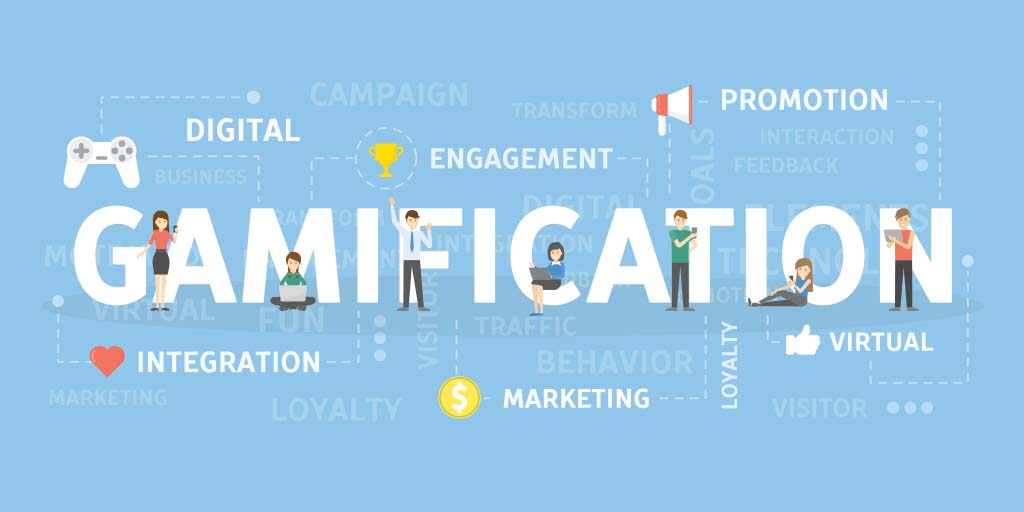
[vc_row][vc_column][vc_column_text]There are several advantages of gamification in corporate training and learning. As is obvious from the name, gamification traces its roots to games; however, unlike games which are primarily meant for entertainment and recreation, gamification includes several end goals and well-defined paths with several milestones to help learners achieve these goals. Gamification adds a fun element to learning and provides learners a more immersive and engaging experience. At the other end of the spectrum, it also provides a safe learning environment, allowing you to practice skills in a simulated environment and thus avoid mistakes that could cost you dear in real-life settings. Gamification is extensively being used in the healthcare industry and defense and is gradually spreading to all industries and becoming an integral part of corporate training. In the corporate context, gamification refers to the addition of game mechanics into a non-gaming environment or functions such as a marketing campaign, customer service, business process, or website to encourage active participation from a target audience. The ever-increasing market of smartphones and the availability of various social media platforms have further fuelled the growth of gamification, allowing companies to engage with their audience. More and more organizations are, therefore, taking the gamification in corporate training route to increase learning outcomes, improve customer loyalty, and boost their brand loyalty. Globally, the gamification market was valued at $ 6.8 billion in 2018 and is forecast to grow at a CAGR of 32% to reach $ 40 billion by 2024. Gamifying corporate training has several advantages but as is the case with every new technology, it is important to do some ground work and understand your goals for gamifying your corporate training and then take the plunge. Related: The Benefits of Gamification In Business[/vc_column_text][vc_custom_heading text=”Here we provide a checklist to effectively introduce gamification in corporate training and make learning more exciting for your learners.” font_container=”tag:h1|font_size:18|text_align:left” google_fonts=”font_family:Lato%3A100%2C100italic%2C300%2C300italic%2Cregular%2Citalic%2C700%2C700italic%2C900%2C900italic|font_style:900%20bold%20regular%3A900%3Anormal” css=”.vc_custom_1563372509595{margin-top: 0px !important;margin-bottom: 0px !important;border-top-width: 0px !important;border-bottom-width: 0px !important;padding-top: 0px !important;padding-bottom: 10px !important;}”][vc_column_text] Break Your Content into Small Nuggets: In a world challenged with decreasing attentionspans, you can no longer bombard your learners with hours of eLearning. The trick is to break your lessons into small nuggets, normally 3 to 5 minutes in length, such that each nugget is complete in itself and provides all the necessary information related to the subject under discussion but with no extra information to divert attention. Besides addressing the challenges of the attention span, these nuggets are easy to store, access and digest while on the move and so perfect for a mobile-first audience. Create a Storyboard: Once you break down the content into small nuggets, create a storyboard for gamification of each nugget. The whole purpose of gamification is to make storytelling more engaging and immersive, so make sure to add relevant features such as points and badges to keep the learners motivated enough to move through their learning journey. It’s a good idea to add levels such that a learner can progress to the next only when they have fully mastered the existing one. Also provide scope for trial and error because this form of learning provides the best outcomes. While creating the storyboard, create a main theme such that each nugget is a sub-plot that adds to the main story. Decide on the Media Elements to Use: Gamification includes the use of a vast array of media elements such as audio, video, graphics, animations, virtual reality and augmented reality. Understand your audience and your corporate training goals before deciding on the media elements to bring your learning modules to life. In case your corporate training goals are to improve the selling skills of your sales team, you might want to consider Augmented Reality/Virtual Reality to allow them to practice in virtual settings sothat they avoid mistakes in real market situations. Then again, for employees on the move, audio files would work better. A thumb rule is to use media options that add value to the lesson and are not bells and whistles that divert attention. Focus on Rewards & Recognitions: One of the greatest benefits of gamification of corporate training is that it encourages self-learning. Make sure to add rewards and recognitions at each level of the learning curve. These recognitions can be in the form of points and badges at the initial level and then translate into rewards such as gifts and vouchers as learning becomes more complex. The learners should be able to see their scores and be motivated to increase their average score. You can also surprise learners with extra bonus points or rewards when they overcome an especially difficult obstacle. Make Rewards Sharable: Make the most of social media by allowing your employees to share their rewards and recognitions in the form of badges and certificates on their social media sites and internal company intranets. Gestures such as these go a long way in boosting self-esteem. Promote Team Work: Gamification in corporate training is not just about individual learning but is a great tool to encourage collaboration and team work. As in games, gamification can include two or more teams competing against each other and this provides a platform for teams to pool in their skills, collaborate and work towards a common goal, that is, to win. Having said that, good gamification in corporate training also helps to build empathy between each team player and does not promote cut-throat competition. Create pressure but avoid the over-kill. Add Branching Scenarios: By using gamification in corporate training, you can ensure that learning is not just a one-time activity but a continuous journey. One way to achieve this is to add role-playing or branching scenarios,so that if the learners are unable to meet a challenge successfully, they can branch off, explore and then find their way back into the main stream. Related: 5 Effective Strategies for Gamification at Work Related: Is Gamified Learning More Effective in the Modern Workplace[/vc_column_text][vc_custom_heading text=”Conclusion:” font_container=”tag:h2|font_size:18|text_align:left” google_fonts=”font_family:Lato%3A100%2C100italic%2C300%2C300italic%2Cregular%2Citalic%2C700%2C700italic%2C900%2C900italic|font_style:900%20bold%20regular%3A900%3Anormal” css=”.vc_custom_1563366439254{margin-top: 0px !important;margin-bottom: 0px !important;border-top-width: 0px !important;border-bottom-width: 0px !important;padding-top: 0px !important;padding-bottom: 10px !important;}”][vc_column_text]Gamification is an exciting tool to enliven your corporate training and achieve more successful outcomes. It

Hurix April 19, 2023 No Comments

Best Content Development Techniques for eLearning Courses

[vc_row][vc_column][vc_column_text]Every employee has a unique way of acquiring and processing information. Some of them prefer listening to audiobooks, while others learn through hands-on workshops. Businesses need to recognize the fact that employees store and perceive information in their own distinctive manner. That’s how the human brain is wired, and you just need to have the right eLearning content for them to utilize their potential to the fullest. They need content that is engaging enough for them to retain the information for long periods.  Traditional organizational training modules are a combination of plain text and images. While some employees prefer reading the course, this may not be beneficial for others. The eLearning courses, however, integrate everything from videos to texts and podcasts.  In other words, there is something for everyone when it comes to content development for eLearning. You just need to choose the right delivery method. Given the current pandemic situation, online content delivery seems to be the most appropriate choice. [/vc_column_text][vc_custom_heading text=”Here are the factors to consider while developing content for eLearning.” font_container=”tag:h1|font_size:18|text_align:left” google_fonts=”font_family:Lato%3A100%2C100italic%2C300%2C300italic%2Cregular%2Citalic%2C700%2C700italic%2C900%2C900italic|font_style:900%20bold%20regular%3A900%3Anormal” css=”.vc_custom_1615994475817{margin-top: 0px !important;margin-bottom: 0px !important;border-top-width: 0px !important;border-bottom-width: 0px !important;padding-top: 0px !important;padding-bottom: 10px !important;}”][vc_column_text]1. Gamify the content for shorter attention spans Online content developers offer interactive games to incorporate the learning outcomes within them. Gamification of content is arguably the most engaging form of eLearning content. Your employees can learn by experimentation, and that’s objectively fun and engrossing. It utilizes the instructional design method – created specifically for those with shorter attention spans when it comes to traditional training manuals. 2. Create microlearning modules for time-starved employees Depending on their job roles, many of your employees may not have the flexibility to follow a fixed training schedule.  As opposed to a lengthy training program, you can choose microlearning modules for them. Microlearning modules are short nuggets of knowledge delivered to your employees according to what fits their timetable.  These micro modules comprehensively cover a single topic and can be accessed via mobile devices.  3. Incorporate scenario-based learning to imbibe practical skills Using content development for eLearning, enterprises can fill a major gap that exists in traditional organizational training modules. It’s the gap that exists between what employees learn and how they implement it on the job.  With scenario-based learning, your employees can learn practical skills in a simulated environment. With this type of eLearning content, you get an immersive atmosphere consisting of sound effects, backgrounds, dialogues, and characters that mimic the actual environment.  4. Use video-based modules for complex concepts You can use video-based modules to transfer knowledge for even the most challenging concepts. Such modules are an amalgamation of live images, text, voiceovers, and graphics. That makes for a compelling training content. If the subject matter in question is quite complicated, break it down into several videos. Videos are clearly no longer just entertainment mediums but an effective format when it comes to content development for eLearning.  5. Include infographics to enhance visual appeal If you want to make your training module a visual treat, infographics and images are an ideal content development solution. Your eLearning course can have a better appeal if you integrate infographics along with the plain text. The employees have a greater chance of recalling the information by studying meaningful mnemonics instead of just textual content.  6. Choose multilingual courses to promote diversity  One of the biggest advantages of content development for eLearning is versatility. Enterprises hire a multitude of employees from different backgrounds who speak different languages. Those who are not well-versed in the English language may find it difficult to acquire and recollect the information. Therefore, you need to create customized, multilingual courses that will also help promote diversity within the organization.  7. Focus on personalized learning It has been established that eLearning content overpowers the one-size-fits-all solution that conventional training modules offer. Through eLearning, you can turn your vision of personalized learning into reality. Since every employee has self-perceived capabilities, they should have the flexibility to choose the type of course content that agrees with those capabilities – and enhance them.  8. Develop separate versions of the same module Your employees have varying levels of expertise. Creating separate versions of the same training course according to their expertise level can help with the personalization. For new joiners, you should create detailed eLearning content. On the other hand, for advanced learners, you can skip the introductory topics and deep-dive into the more complex ones.  9. Prioritize good design  In this digital age, a PowerPoint presentation doesn’t suffice for delivering highly-interactive and valuable training content. Your options with PowerPoint presentations are truly limited when it comes to design. As you would have noticed how captivating ecommerce sites and online games can be, a bunch of bullet points won’t be enough to train your employees.  On the contrary, eLearning content has a high degree of visual engagement, interaction, and readability. Therefore, you should spend a considerable amount of time on the design aspect. The second and better option is to partner with an eLearning content development company like Hurix that has expertise in the domain. 10. Reward your employees When it comes to creating eLearning content for employee training, one has to take this very important component into account. The whole purpose of a customized, online training module is to impart skills and education in a fun and appealing way. Hence, when your employees develop new skills, you should reward them.  Highlight their achievements during the annual performance reviews so that they feel more encouraged and are more attentive during the training sessions. Showing your appreciation for them will create a culture of learning within the company, and it is something you want even in the future. For instance, you can create a leaderboard showcasing the number of courses completed by each employee and reward them when the training is over. [/vc_column_text][vc_custom_heading text=”Final Thoughts” font_container=”tag:h2|font_size:18|text_align:left” google_fonts=”font_family:Lato%3A100%2C100italic%2C300%2C300italic%2Cregular%2Citalic%2C700%2C700italic%2C900%2C900italic|font_style:900%20bold%20regular%3A900%3Anormal” css=”.vc_custom_1615994692945{margin-top: 0px !important;margin-bottom: 0px !important;border-top-width: 0px !important;border-bottom-width: 0px !important;padding-top: 0px !important;padding-bottom: 10px !important;}”][vc_column_text]Content development for eLearning is all about combining the best delivery formats

Hurix April 18, 2023 No Comments

6 Pro Tips to Create Great Custom eLearning Paths

[vc_row][vc_column][vc_column_text]When it comes to eLearning communities in an organizational setup, the concept of personal eLearning paths is gaining rapid popularity. The idea here is to give more importance to custom eLearning objectives instead of generalized courses and subjects. This allows the learners to achieve their objectives in multiple custom ways instead of focusing on a fixed path for eLearning. In this post, we’re going to discuss eLearning paths in more detail, along with the benefits it brings to businesses and expert tips to design great eLearning paths for employees.[/vc_column_text][vc_custom_heading text=”What is an eLearning path?” font_container=”tag:h1|font_size:18|text_align:left” google_fonts=”font_family:Lato%3A100%2C100italic%2C300%2C300italic%2Cregular%2Citalic%2C700%2C700italic%2C900%2C900italic|font_style:900%20bold%20regular%3A900%3Anormal” css=”.vc_custom_1590589369034{margin-top: 0px !important;margin-bottom: 0px !important;border-top-width: 0px !important;border-bottom-width: 0px !important;padding-top: 0px !important;padding-bottom: 10px !important;}”][vc_column_text] An eLearning path is a curated selection of defined courses bundled together for learners to progress through mastering a particular area/subject/program. An incredibly simple yet very-powerful feature of any LMS, eLearning paths allow you to enroll multiple users in different courses at once, thus saving a significant amount of time and resources. Custom learning paths follow a learner-centered approach that emphasizes the goals, preferences, and objectives of learners. They can have multiple benefits for businesses too. Some of these include – Create custom e-learning paths Create a well-structured training program for employees Systematically drive the learner towards their goal An opportunity to address an individual’s needs and specific learning styles Custom eLearning paths give employees complete control over their own eLearning experience where they can acquire knowledge and retain skills more effectively Also Watch the Video Below on Transform your Training Program With Learning Paths [/vc_column_text][vc_custom_heading text=”6 tips to create custom learning paths for employees” font_container=”tag:h2|font_size:18|text_align:left” google_fonts=”font_family:Lato%3A100%2C100italic%2C300%2C300italic%2Cregular%2Citalic%2C700%2C700italic%2C900%2C900italic|font_style:900%20bold%20regular%3A900%3Anormal” css=”.vc_custom_1590589616957{margin-top: 0px !important;margin-bottom: 0px !important;border-top-width: 0px !important;border-bottom-width: 0px !important;padding-top: 0px !important;padding-bottom: 10px !important;}”][vc_column_text]Instead of relying on a one-size-fits-all approach, custom eLearning paths are completely learner-centric and feature targeted activities and assessments that are fully customized based on employee needs. This allows the training managers to ensure that every learner has the chance to fill his/her unique performance gaps and reach their true potential. 1. Set Clear Learning Goals While creating custom learning paths for each employee or learner, the goals and objectives of the eLearning course should remain an integral part of the overall training experience. The first step towards creating a successful personal learning path strategy, therefore, is to develop a plan that effortlessly blends the specific needs of the employees with that of eLearning course essentials. Apart from the individualized goals and objectives set for employees, the learning path should also ensure that the learners walk away from the training experience with robust knowledge of the subject matter. These goals can either be company-wide such as implementing a culture or strategic change, or department-wide such as targeted safety training for employees working in the warehouse. What is important here is to define a clear goal for a group like the new hires or the employees lacking in specific areas and needing improvement. In case there is a long-term learning goal involved, it is recommended to break it down into smaller milestones to keep the employees engaged and motivated throughout. 2. Incorporate Various Learning Styles A successful custom eLearning path for employees must cater to a varied set of learners. The learning path you create must be easily accessible to employees via different devices such as smartphones, desktops, laptops, or tablets. Further, it should cater to the learning needs of different learners. For example – by incorporating podcasts for auditory learners that feature task performance tips, drag-and-drop serious games for kinesthetic learners, and engaging videos for visual learners, you can make sure that information disseminates effectively, giving an advantage of higher levels of employee engagement and retention of information. 3. Design a Skills Matrix A skills matrix is essentially a tool to identify the specific knowledge and skill sets that are required to be successful at a particular job. Designing a skills matrix at the beginning allows you to understand the specific employee needs from the training and help you find relevant content for your learners. 4. Include Relevant Personal Anecdotes To make employees feel motivated and enhance their level of engagement in training, make sure to provide a lot of relevant personal anecdotes in the learning paths you create. It helps them connect with the content much better and allows them to think of ways they can use the information in their own professional lives. Further, making these anecdotes interactive by adding a lot of images, videos, and audio is an excellent way to personalize the overall training process for better learning outcomes. Also Read: Gamification – The Secret Sauce for Employee Engagement? 5. Take Feedback from the Employees Personal eLearning paths you create should always incorporate inputs and feedback from the employees or learners. The effectiveness of a training module can only be increased if the employer or a training manager really knows how to align the training content with the specific needs of an employee. Further, you need to make sure that the employees always feel a significant sense of control over their own learning experience while using these personal learning paths. An excellent way to do this is by including a navigation style that lets learners opt for how they wish to move through the course along with the ability to take certain courses out of turn as per their individual requirements. 6. Develop Self-Assessments Self-reflective assessments are an important aspect of creating great eLearning paths. They allow the employees to reflect on what they did well and what areas they need to improve upon. You can do this by designing engaging quizzes or simulations that enable learners to test their own progress and comprehension. Also, make sure you give learners the chance to correct their own mistakes by including an answer sheet or self-grading rubric. Also Read: How Can Enterprises Implement Simulation Training for Employees[/vc_column_text][vc_custom_heading text=”To Conclude” font_container=”tag:h2|font_size:18|text_align:left” google_fonts=”font_family:Lato%3A100%2C100italic%2C300%2C300italic%2Cregular%2Citalic%2C700%2C700italic%2C900%2C900italic|font_style:900%20bold%20regular%3A900%3Anormal” css=”.vc_custom_1590589775498{margin-top: 0px !important;margin-bottom: 0px !important;border-top-width: 0px !important;border-bottom-width: 0px !important;padding-top: 0px !important;padding-bottom: 10px !important;}”][vc_column_text]The concept of personal eLearning path considers employee training as an ongoing process. It is an excellent way to

Hurix April 18, 2023 No Comments

Why Should Enterprises Develop Serious Games for Employee Training?

[vc_row][vc_column][vc_column_text]Enterprises are always looking for more efficient and effective ways to train their employees. Over time, the traditional classroom training methods have been replaced with digital learning technologies. And now, it is time to look for a more exciting way to educate, train, and inform Gen Y as well as Gen Z employees, using entertainment principles, creativity, and technology. Serious games are one of the most effective learning methods for corporate training. This game-based learning method is innovative and can make the training sessions more engaging. In this process, the concept and the skills you want to impart to your learners are provided through online games instead of face-to-face classes or reading materials. This unique training method can be fun as well as practical at the same time.[/vc_column_text][vc_custom_heading text=”What are serious games?” font_container=”tag:h1|font_size:18|text_align:left” google_fonts=”font_family:Lato%3A100%2C100italic%2C300%2C300italic%2Cregular%2Citalic%2C700%2C700italic%2C900%2C900italic|font_style:900%20bold%20regular%3A900%3Anormal” css=”.vc_custom_1628688434268{margin-top: 0px !important;margin-bottom: 0px !important;border-top-width: 0px !important;border-bottom-width: 0px !important;padding-top: 0px !important;padding-bottom: 10px !important;}”][vc_column_text]Serious games are specially designed games whose primary objective is not entertainment or fun but learning or practicing a skill. As they are engaging, entertaining, and immersive, serious games have become a popular training tool in defense, healthcare, aeronautics, science, and other industries.  Serious games in industrial training are designed to teach employees specific problem-solving skills in an engaging manner. These games involve challenges and rewards to keep employees excited enough to complete the game as well as the training program. A well-designed game uses the entertainment and engagement components to make the learners grasp complex concepts and develop new skills.[/vc_column_text][vc_custom_heading text=”What are the benefits of using serious games in employee training?” font_container=”tag:h2|font_size:18|text_align:left” google_fonts=”font_family:Lato%3A100%2C100italic%2C300%2C300italic%2Cregular%2Citalic%2C700%2C700italic%2C900%2C900italic|font_style:900%20bold%20regular%3A900%3Anormal” css=”.vc_custom_1628688481333{margin-top: 0px !important;margin-bottom: 0px !important;border-top-width: 0px !important;border-bottom-width: 0px !important;padding-top: 0px !important;padding-bottom: 10px !important;}”][vc_column_text]Serious games have already shown great results in different industries as an effective learning tool. Here are the key benefits of leveraging serious games for corporate training. 1. Stimulates the learners’ thinking abilities Game-based learning offers physiological benefits. It can stimulate brain activity as well as thinking capacity. Serious games help in practicing decision making, improving cognitive skills, and applying the learned knowledge in real-life scenarios. 2. Teaches employees to deal with real-world situations Well-designed serious games for training enables learners to pick up new skills and concepts. Here, the learners not only get knowledge and skill training in an interactive environment, but they also get the chance to implement their knowledge in virtual life-like situations. Serious games enable employees to practice their skills and compete in a gaming environment, making the learning process engaging and effective for them. 3. Game-based training aids learners to master tasks Like any other video games, serious games are also designed with multiple levels and objectives. These elements encourage learners to play the game over and over to achieve higher levels, and keep them motivated to get better at a task or skill. There are several proofs that when employers implement serious games as a training tool, trainees endeavor harder to master those skills or tasks. With game-based training programs, learners get multiple chances for trial and error and to learn from their mistakes. 4. Provides immediate feedback In the case of game-based learning platforms, learners get immediate feedback on their performance. They can instantly know whether they are making progress towards the goal or falling behind. This constant monitoring system helps learners to stay focused towards their goals and also drives them to learn about the concept or task in depth to achieve mastery. 5. Promotes multi-tasking Most training games are specially designed, where players have to juggle multiple inputs at once to move forward. This feature of the games makes the players more alert and attentive to handle various tasks at a time. Multitasking is one of the most crucial aspects of corporate positions in today’s world, especially with companies focusing on an agile work culture. And serious games are one of the vital tools to promote multitasking; when carefully designed, they mimic contemporary workplaces and allow trainees to gather multitasking experience through a pseudo real-life scenario. These games can upskill learners with multitasking in a highly engaging and interactive environment. 6. Interactive nature Games are interactive in nature – different gaming elements like levels, rankings, achievements, rewards, competition, etc., make them all the more engaging for the players. When games are used as a training method, every trainee must participate actively in the training program. The interactive nature of games keeps learners engaged as the playful elements of serious games make learning effective and entertaining. Interactive games also contribute to improving communication and coordination, which facilitate better collaboration. 7. Promotes innovative thinking A well-designed serious game can put trainees in adverse situations similar to real-life crises, where the learners have to deal with multiple variables to respond according to the situation’s demand. Creating such scenarios in a game encourages players to think ‘out of the box’ and find a solution. Serious games thus help learners sharpen their innovative thinking and problem-solving skills.[/vc_column_text][vc_custom_heading text=”In Conclusion” font_container=”tag:h3|font_size:18|text_align:left” google_fonts=”font_family:Lato%3A100%2C100italic%2C300%2C300italic%2Cregular%2Citalic%2C700%2C700italic%2C900%2C900italic|font_style:900%20bold%20regular%3A900%3Anormal” css=”.vc_custom_1628688605484{margin-top: 0px !important;margin-bottom: 0px !important;border-top-width: 0px !important;border-bottom-width: 0px !important;padding-top: 0px !important;padding-bottom: 10px !important;}”][vc_column_text]Serious gaming for industrial training allow learners to interact with the subject matter, face real-world challenges, implement their innovative thinking capacity to resolve the problem, and master the necessary skills, by playing the games over and over. Game-based training programs are becoming increasingly popular as soft skills (communication skill, critical thinking, leadership, decision making, people management, etc.) are in high demand in multiple industries. Serious games are the most suitable way to practice problem-solving skills in a virtual environment without any real danger. Therefore, corporate enterprises should consider serious games to train their employees and improve their skills. [/vc_column_text][/vc_column][/vc_row][vc_row][vc_column][vc_column_text] Need to know more about our Products & Services? Drop us a Note. We respect your privacy. We use the information you provide us to send you relevant content about industry trends and our products & services. You may unsubscribe from our list at any time. For more information, check out our Privacy Policy [/vc_column_text][/vc_column][/vc_row]

Hurix April 18, 2023 No Comments

How Can You Use mLearning in Employee Training?

[vc_row][vc_column][vc_column_text]mLearning took root nearly a decade ago, mainly to support traditional eLearning. However, with the growth of the Internet and the easy availability of smartphones, mLearning has witnessed impressive growth and is today an integral element of any organization’s training program. Related: Mobile Learning : Why Microlearning is more Effective for Impatient Millennials[/vc_column_text][vc_custom_heading text=”What is mobile learning or mLearning?” font_container=”tag:h1|font_size:18|text_align:left” google_fonts=”font_family:Lato%3A100%2C100italic%2C300%2C300italic%2Cregular%2Citalic%2C700%2C700italic%2C900%2C900italic|font_style:900%20bold%20regular%3A900%3Anormal” css=”.vc_custom_1565352896484{margin-top: 0px !important;margin-bottom: 0px !important;border-top-width: 0px !important;border-bottom-width: 0px !important;padding-top: 0px !important;padding-bottom: 10px !important;}”][vc_column_text]As the name suggests, mLearning refers to the training that learners receive on their mobile devices, anywhere and anytime. The mLearning modules are, however, not restricted to mobile devices but can also be accessed by users on the device of their choice, Mobile, be it laptop, PC or tablet. Related: 10 Reasons Why You Should Adopt Mobile Learning Apps[/vc_column_text][vc_custom_heading text=”Benefits of mLearning” font_container=”tag:h2|font_size:18|text_align:left” google_fonts=”font_family:Lato%3A100%2C100italic%2C300%2C300italic%2Cregular%2Citalic%2C700%2C700italic%2C900%2C900italic|font_style:900%20bold%20regular%3A900%3Anormal” css=”.vc_custom_1565352952190{margin-top: 0px !important;margin-bottom: 0px !important;border-top-width: 0px !important;border-bottom-width: 0px !important;padding-top: 0px !important;padding-bottom: 10px !important;}”][vc_column_text]The emergence and maturing of eLearning authoring tools have enabled content developers to create immersive learning experiences that are optimized for consumption on all types of devices. From a support role to a ‘mobile-first’ learning approach, mLearning has come a long way as is evident by the following benefits it provides: Greater Control to the Learners: With mLearning, organizations can design their courses in alignment with the changing expectations of their end-users on how they want to learn. They can also align to the changing composition of the workforce, which now includes millennials. mLearning transfers control from the instructor to the learner, such that they can take the training any time they want, while stationary or on the move, and on the device of their choice. Higher Level of Engagement: In a time-challenged world, mLearning allows packaging of content in the micro-bite format, which makes learning easily digestible. Immersive technologies such as interactive videos, animations, and graphics are used to create the micro-nuggets and these make mLearning more impactful, engaging and fun. Leads to Better Completion Rates: Contrary to the pull and push approach of traditional learning, mLearning creates a learning pathway with several branches, allowing learners to experiment and encouraging them to keep coming back for more. And the fact that learners can revisit and practice concepts leads to better completion rates. Leverages Social Media and Collaborative Tools: mLearning integrates social media and collaborative tools that allow for greater interaction with the outside world. Healthy discussions and interactions add value to the learning experience. Related: MicroLearning vs Mobile Learning – Similarities and Differences[/vc_column_text][vc_custom_heading text=”How to Deliver mLearning:” font_container=”tag:h2|font_size:18|text_align:left” google_fonts=”font_family:Lato%3A100%2C100italic%2C300%2C300italic%2Cregular%2Citalic%2C700%2C700italic%2C900%2C900italic|font_style:900%20bold%20regular%3A900%3Anormal” css=”.vc_custom_1565353032907{margin-top: 0px !important;margin-bottom: 0px !important;border-top-width: 0px !important;border-bottom-width: 0px !important;padding-top: 0px !important;padding-bottom: 10px !important;}”][vc_column_text] Podcasts: Employees can listen to micro-learning nuggets during their drive to and back from the office. Videos: As just-in-time learning, they can review these videos in between meetings or while waiting for a conference. An example of mLearning content in this context is a checklist to run through before submission to meet process conformance and quality tests. Here are 9 Ways to Create Highly Effective Learning Videos Interactive Videos: These can be used to offset forgetting curves. Videos in the form of a quiz or challenge can keep the learners on their toes to refresh their knowledge. Simulations and Animations: These allow learners to practice exercises in a safe environment and gain mastery. [/vc_column_text][vc_custom_heading text=”How Can You Use mLearning in Employee Training?” font_container=”tag:h2|font_size:18|text_align:left” google_fonts=”font_family:Lato%3A100%2C100italic%2C300%2C300italic%2Cregular%2Citalic%2C700%2C700italic%2C900%2C900italic|font_style:900%20bold%20regular%3A900%3Anormal” css=”.vc_custom_1565353096111{margin-top: 0px !important;margin-bottom: 0px !important;border-top-width: 0px !important;border-bottom-width: 0px !important;padding-top: 0px !important;padding-bottom: 10px !important;}”][vc_column_text]mLearning supports all types of formal training including Instructor led training (ILT) and performance support. In case of performance support, mLearning is a means to provide condensed capsules of information to employees to help them better perform their job. It is also being used to address a wide range of corporate training needs including onboarding, soft-skills training, product training, professional skills enhancement training, leadership training, compliance training, application simulation training and sales training. Here are 6 ways you can use mLearning in employee training. Scale Your Employee Learning:  It is extremely difficult and both time and resource consuming to mark a specific time to provide training, more so, when not all employees are present in the office at the same time. mLearning in the form of podcasts is a great way to provide performance support tools and job aids which they can listen to while they are travelling or during a break. Use mLearning to Refresh Concepts: Employees can access decision-making simulations during their coffee breaks or in-between meetings to refresh concepts. This is one way you can use mLearning, featuring a bite-size nugget, to facilitate the application of acquired learning. Provide Easy and Timely Access to Information: In a competitive business environment, timing is everything. This is why more senior executives and decision-makers need unrestricted access to a variety of learning tools and resources to make the right decision at the right time. mLearning is a means to provide them the information they need, neatly packaged in videos and infographics, such that they don’t have to wade through a sea of information looking for what they want to make a timely and accurate decision. Personalize your Learners’ Journey: One of the greatest benefits of mLearning is that it allows you to personalize your learners’ journey. While mLearning content can be accessed on a range of devices, most users prefer their smartphones or tablets since they can carry them around with them. This enables them to learn anywhere and anytime they want. Secondly, interactive content allows learners to come up with their own personal version of a solution which is very empowering. When your employees are able to define their own learning objectives and learn at their own pace, they are more likely to accomplish their learning goals and feel more confident about their abilities. mLearning also allows personalization in that you can provide them the content in the format they want, whether it is audio/video or a combination of various media types. Learning in the format they are familiar with, on the device they are most comfortable with, and in an environment in which they are completely at home, translates into higher learning outcomes. Keep Up with Current Trends: Information is everything in