Blog

Hurix April 26, 2023 No Comments

Is Blended Learning the Right Approach for Your Enterprise?

[vc_row][vc_column][vc_column_text]eLearning and Blended learning has been a hot topic in higher education and corporate training ever since the inception of web-based courses in the late 1990s. A survey conducted by the European University Association (EUA) some years back shows that all higher education institutes of those surveyed have started to embrace eLearning. However, what is most interesting to note is that of the surveyed institutes, 91% were using blended learning, integrating eLearning into conventional teaching. eLearning is no doubt the latest buzzword in learning and not without cause, for eLearning benefits both students and enterprises. For the students, eLearning opportunities mean greater access to courses across geographical barriers, and the opportunity to learn anytime, anywhere. For enterprises, it means providing access to learning content across boundaries, thereby saving time and cost, while increasing reach. It’s a win-win situation for both – or so it seems.  However, the EUA study shows that there is a growing disconnect between what students want and what organizations provide. While there are several factors that contribute to the disconnect, one of the main reason is people’s natural tendency to resist change. In the context of eLearning, studies show that in higher education institutes, only 10% to 15% of faculty is open to adopting eLearning tools and techniques. Approximately 70% – 80% constitutes the reluctant majority who needs to be convinced that eLearning would benefit them. Thus, it can be said that rather than a dramatic shift from face-to-face to online learning, a better way out is evolving gradually by taking the middle path, that is, not letting go of the comfort of a face-to-face interaction, yet slowly and steadily adapting to new online technology and entering the world of digital content. In other words, blended learning, or learning that takes the best of face-to-face and online training methods, seems to be the right investment for enterprises in many ways – it can benefit organizations in terms of better acceptance by employees, especially the not too tech-savvy ones, increased engagement, and greater reach. Blended learning also facilitates collaboration and simplified assessment processes.[/vc_column_text][vc_custom_heading text=”Why Blended Learning is the Right Approach for Enterprises?” font_container=”tag:h2|font_size:18|text_align:left” google_fonts=”font_family:Lato%3A100%2C100italic%2C300%2C300italic%2Cregular%2Citalic%2C700%2C700italic%2C900%2C900italic|font_style:900%20bold%20regular%3A900%3Anormal” css=”.vc_custom_1682485147233{margin-top: 0px !important;margin-bottom: 0px !important;border-top-width: 0px !important;border-bottom-width: 0px !important;padding-top: 0px !important;padding-bottom: 10px !important;}”][vc_column_text]Training is a crucial factor contributing to organizational success and so it is very important that it is delivered right, and with an approach that finds wide acceptability with employees. While the millennial generation is more comfortable with technology, almost all organizations would have employees who would be more comfortable with a human instructor to aid their learning. By using the right mix of classroom instruction with eLearning tools and resources, blended learning offers an enriched learning experience.[/vc_column_text][vc_column_text] Expands Reach: Since blended learning combines the best of both classroom and eLearning, it helps to expand the reach and appeal to a wider audience with a wider variety of learning styles and circumstances. Classroom learning provides learners the opportunity to interact with the instructor and peers, and learn from hands-on activities. It also provides each learner the opportunity to share experiences and perspectives. Classroom learning encompasses the best of group learning by sharing resources and experiences. Online learning is more personalized as it allows employees to trace their own learning chart and also learn at their own pace. Besides, digitalized content for blended learning also allows organizations to deliver training to employees across geographies and time zones at low-costs. Blended learning also makes it possible for employees to access content while on the move on their mobile devices, anytime and anywhere. Increases Engagement: Blended learning involves the use of a wide array of content types. In a blended learning environment, learners can participate in classroom discussions with instructor and peers, and also learn through immersive media formats such as audio, videos, texts, graphics, presentations, etc. With these formats and interactions, employees are more likely to relate to the lessons, engage, retain their learnings and apply them in real-life situations. However, classroom learning alone needs to align with every employee’s schedule, which makes it complicated and inconvenient, while significantly adding to travel and accommodation costs. By incorporating the eLearning component in their training, organizations can provide their employees with more flexibility to access and participate in the training conveniently as per their own schedules, when they have time and are able to focus more on the content. Access Ready References: Online learning, in combination with classroom learning, provides a platform to organize and present materials that learners might need in the context of their classroom learning. Learners can be asked to come prepared for a particular lesson in order to save time. There may be some employees who are not familiar with the content to be taught in the classroom. To keep them on the same page, the instructor can provide online references to all employees to help them get acquainted with the subject, and an online assessment can also be administered to check their proficiency. Apart from pre-training, blended learning can also be used post-training. Learners can be provided links to online materials which they can study at their leisure to supplement classroom teaching. Facilitates Collaboration: Blended learning provides learners the opportunity to collaborate both in the classroom and on online forums and communities. This helps to further deepen the learning experience. By using online tools to complete certain tasks, blended learning provides more time for collaborative work such as problem-solving activities and guided practice. Moving away from physical classrooms, employees can use online tools such as discussion and chat forums to interact with a wider audience and extend face-to-face training for improved outcomes. Simplifies Assessment: Using online tools, instructors can quickly administer quizzes and tests to assess the proficiency of their learners. Besides, several online learning platforms also provide reporting capabilities that automatically generate statistics and analytics. Trainers can use these reports to judge the capabilities of their learners and also to fine-tune their future training programs. [/vc_column_text][vc_custom_heading text=”Conclusion” font_container=”tag:h2|font_size:18|text_align:left” google_fonts=”font_family:Lato%3A100%2C100italic%2C300%2C300italic%2Cregular%2Citalic%2C700%2C700italic%2C900%2C900italic|font_style:900%20bold%20regular%3A900%3Anormal” css=”.vc_custom_1682485155527{margin-top: 0px !important;margin-bottom: 0px !important;border-top-width: 0px !important;border-bottom-width: 0px !important;padding-top: 0px !important;padding-bottom: 10px !important;}”][vc_column_text]Convinced about the benefits of blended learning and wish to implement it in your organization? We at HurixDigital can help. Talk to our experts to understand how

Hurix April 26, 2023 No Comments

6 Benefits of Investing in Custom eLearning Courses for your Enterprise

[vc_row][vc_column][vc_column_text]The Internet provides training companies and corporate organizations a wealth of options to download off-the-shelf training and eLearning courses for their employees and learners. Not only are these eLearning courses easily available but are also economically viable. Seems like a good option to meet your organization’s training needs? Well, not exactly – not all things that come cheap offer the best results on investments.  Although you may be spoilt for choice, remember it makes more business sense if the training courses are customized to your unique organizational needs and provided in a format that is within the comfort zone of your employees. The better option then is to invest in custom eLearning course development for your enterprise. Though investing in custom eLearning course development will cost you initially, they will bear fruit in the long-run. Given the competitive business environment, it is imperative to stand out in the crowd to make yourself seen and heard and you can achieve this when your employees are equipped with the necessary knowledge and skills to make a mark in the market. And the best way to ensure this is by investing in custom eLearning courses for your enterprise.[/vc_column_text][vc_custom_heading text=”Why Should You Invest in Custom eLearning Course Development?” font_container=”tag:h2|font_size:18|text_align:left” google_fonts=”font_family:Lato%3A100%2C100italic%2C300%2C300italic%2Cregular%2Citalic%2C700%2C700italic%2C900%2C900italic|font_style:900%20bold%20regular%3A900%3Anormal” css=”.vc_custom_1682484600837{margin-top: 0px !important;margin-bottom: 0px !important;border-top-width: 0px !important;border-bottom-width: 0px !important;padding-top: 0px !important;padding-bottom: 10px !important;}”][vc_custom_heading text=”1. You Know Your Business Needs” font_container=”tag:h2|font_size:18|text_align:left” google_fonts=”font_family:Lato%3A100%2C100italic%2C300%2C300italic%2Cregular%2Citalic%2C700%2C700italic%2C900%2C900italic|font_style:900%20bold%20regular%3A900%3Anormal” css=”.vc_custom_1558417475187{margin-top: 0px !important;margin-bottom: 0px !important;border-top-width: 0px !important;border-bottom-width: 0px !important;padding-top: 0px !important;padding-bottom: 10px !important;}”][vc_column_text]As said above, search the Internet and you will be spoiled for choice for off-the-shelf courses related to your business. Several authors may have created training courses that seem in line with your domain of work. But it is important to remember these eLearning courses will be generic in nature and may not cover the topics you want to cover for your employee training. Besides, they may not be in sync with your organization’s goals and objectives, a fact which further builds the case for customized eLearning courses. Custom courses are always more relevant to your work and employees’ needs and will hold you in good stead in the long run. On the other hand, readily available courses may advance your employee skills to some extent, but so will they for your competitors as well. In that case, there is not much chance for you to provide an upper hand to your employees and, consequently, you stand to lose in terms of gaining a competitive edge. Hence, custom eLearning courses are a reliable solution to stand out from the crowd and be relevant to the prevailing market conditions.[/vc_column_text][vc_custom_heading text=”2. Eliminates the Concept of One-Size-Fits-All” font_container=”tag:h2|font_size:18|text_align:left” google_fonts=”font_family:Lato%3A100%2C100italic%2C300%2C300italic%2Cregular%2Citalic%2C700%2C700italic%2C900%2C900italic|font_style:900%20bold%20regular%3A900%3Anormal” css=”.vc_custom_1558417482016{margin-top: 0px !important;margin-bottom: 0px !important;border-top-width: 0px !important;border-bottom-width: 0px !important;padding-top: 0px !important;padding-bottom: 10px !important;}”][vc_column_text]Taking forward the above point, an external author will not be as aware of your organizational training needs as you are. Your first-hand knowledge about organizational needs, skill gaps, target audience, and market requirements can be channelized to build custom eLearning courses that directly relate to your business goals, thereby eliminating any irrelevant information that could distract your learners and shift focus from your learning goals. For example, you may want onboarding training for your HR department. As new employees join your organization, you need to provide them with the necessary onboarding training to align them with your organizational goals and culture and acquaint them with the necessary processes and functions to adapt them to their new job and responsibilities as smoothly and as quickly as possible. For your organization this means that you need to implement the best onboarding training to achieve objectives and get a competitive edge by retaining the best talent. This is something you can achieve only through custom eLearning courses.  Besides, if anytime the training requirements increase, you can easily update your training material accordingly.[/vc_column_text][vc_custom_heading text=”3. Circumventing the Generic Tag” font_container=”tag:h2|font_size:18|text_align:left” google_fonts=”font_family:Lato%3A100%2C100italic%2C300%2C300italic%2Cregular%2Citalic%2C700%2C700italic%2C900%2C900italic|font_style:900%20bold%20regular%3A900%3Anormal” css=”.vc_custom_1558417487890{margin-top: 0px !important;margin-bottom: 0px !important;border-top-width: 0px !important;border-bottom-width: 0px !important;padding-top: 0px !important;padding-bottom: 10px !important;}”][vc_column_text]There will always be some requirements of your organization that will not be part of any generic training course, no matter how relevant that course is to your employees. This is because no external authors can gauge your exact business needs. Hence, custom eLearning is the only answer in such situations. Even if you take the example of compliance training, you may well feel that it applies equally to all organizations; however, some amount of customization to your business would still be required even though you belong to the same industry. Also read: Supercharge Your Employee Training Program with Bite Sized Learning[/vc_column_text][vc_custom_heading text=”4. Better Knowledge Retention and Outcomes” font_container=”tag:h2|font_size:18|text_align:left” google_fonts=”font_family:Lato%3A100%2C100italic%2C300%2C300italic%2Cregular%2Citalic%2C700%2C700italic%2C900%2C900italic|font_style:900%20bold%20regular%3A900%3Anormal” css=”.vc_custom_1558417494019{margin-top: 0px !important;margin-bottom: 0px !important;border-top-width: 0px !important;border-bottom-width: 0px !important;padding-top: 0px !important;padding-bottom: 10px !important;}”][vc_column_text]It goes without saying that custom eLearning courses lead to better learning outcomes. For one, to create these courses, you would first have to conduct an in-depth analysis of your own business processes and day-to-day operations. By adding this process-related information to your eLearning courses, you will be able to improve knowledge retention by capturing useful knowledge and techniques used by your current employees for later use for your future hires. Thus, custom eLearning courses become a stepping stone to build your own organizational story and evolve to the next rung of the ladder in tune with the changing business environment, and that too at little additional cost.[/vc_column_text][vc_custom_heading text=”5. Generic and Custom – The Best of Both Worlds” font_container=”tag:h2|font_size:18|text_align:left” google_fonts=”font_family:Lato%3A100%2C100italic%2C300%2C300italic%2Cregular%2Citalic%2C700%2C700italic%2C900%2C900italic|font_style:900%20bold%20regular%3A900%3Anormal” css=”.vc_custom_1558417499655{margin-top: 0px !important;margin-bottom: 0px !important;border-top-width: 0px !important;border-bottom-width: 0px !important;padding-top: 0px !important;padding-bottom: 10px !important;}”][vc_column_text]For some organizations, taking the middle path can work best. For example, if you have just started off and have a limited budget, you may start with a combination of both, that is, use pre-built generic courses to set the context, and invest in custom courses to plug the knowledge gaps and customize your training to meet your specific organizational goals; and equip your employees with the necessary knowledge and skill set to survive competition and build your unique brand.[/vc_column_text][vc_column_text]Once you are convinced about the benefits of custom eLearning courses, your next step should be to find an eLearning solution company

Hurix April 25, 2023 No Comments

7 Interactive eLearning Solutions for Employee Training

[vc_row][vc_column][vc_column_text]Interactive eLearning solutions created for training employees are critical for the growth of your business. If the content is dull and not engaging, it would result in diminished employee productivity, which will eventually affect your revenue. Employees must constantly keep upskilling themselves to be at par with the new technologies. For this reason, enterprises develop corporate training programs for employees to achieve their business goals.  It goes without saying that the content of your online training program must be engaging to gain the attention of your employees and attain optimal productivity. That said, a lot of enterprises struggle with the most important question – What kind of interactive elements should be incorporated into online training programs?[/vc_column_text][vc_custom_heading text=”Here are some of the most interactive learning solutions enterprises can leverage for employee training.” font_container=”tag:h1|font_size:18|text_align:left” google_fonts=”font_family:Lato%3A100%2C100italic%2C300%2C300italic%2Cregular%2Citalic%2C700%2C700italic%2C900%2C900italic|font_style:900%20bold%20regular%3A900%3Anormal” css=”.vc_custom_1630698664202{margin-top: 0px !important;margin-bottom: 0px !important;border-top-width: 0px !important;border-bottom-width: 0px !important;padding-top: 0px !important;padding-bottom: 10px !important;}”][vc_column_text]1. Gamified scenarios Research has associated gamification of training content and game-based learning solutions with improved employee performance and engagement. For this reason, it has become a common feature in online training programs designed for employees. However, the game’s design must meet your organization’s goals. Failing which, it could all be a fruitless exercise. Gamification is an excellent approach to stimulating the competitive spirit of learners. By creating a high-pressure gamified scenario, you can analyze how your employees use their skills and knowledge to handle such a situation.  In fact, in game-based learning solutions, you can increase the complexity of the scenario to improve the approach taken by employees.  2. Storytelling If your employee training solution involves emotive subject matter, then storytelling is a useful approach. Everybody loves stories; it’s something embedded in human beings right from childhood. Modern training programs leverage the art of storytelling to teach concepts that are centered around emotions and morality. With an interactive e-learning solution, employees can remember and connect with stories on a human level, which is why they are hard to forget.  Storytelling is best suited for teaching soft skills and compliance that are seemingly dry as subjects. By incorporating this method into your online training program, you can make the content more engaging and real for your employees. An effective storytelling approach should include sound effects and visuals.  3.  Microlearning Employees must be able to incorporate learning into their schedules. When working in a high-pressure environment, they may not have the luxury of time to learn additional skills. In that case, the online training program should be designed in such a way that they can take up learning as per their schedule.  In microlearning, the learning modules are broken down into short knowledge nuggets that can be perused in a short time. This helps save time, all the while helping the learners to upskill themselves. It provides the required flexibility to employees for learning and development.  4. Branching scenarios Branching scenarios are a popular form of eLearning. In this method, learners are presented with unique, adventure-style scenarios. They are required to make decisions leading to certain consequences. Each consequence then presents new choices and challenges. The decisions made by learners unfold the further course of action.  When it comes to learning through experience, branching scenarios are a powerful learning tool. ‘Trial and error’ is how employees prefer to learn rather than the methods where you’re just imparting instructions. Needless to say, branching scenarios are incredibly fun and engaging when implemented in employee training programs.  5. Interactive eBooks PDFs represent a bygone era. They are incredibly dull and not at all fun to read. Most organizations have text-heavy PDFs in place of interactive eLearning solutions. If you have been relying on these text-based documents, it’s time to bring eBooks into the picture.  One way to implement interactive training methods is to convert all PDFs into eBooks. You can transform employee handbooks, policy documents, and other resources into a responsive eBook that’s easily accessible. Nowadays, there is no dearth of platforms where you can easily create eBooks. Besides, you can always hire an expert to design them for you.  6. Video-based learning A great way to make your online corporate eLearning solutions interactive is to integrate video-driven learning. Video clips are not limited to branching scenarios. You can offer an immersive learning experience to employees through augmented reality and virtual reality.  Companies specializing in interactive training solutions can create custom videos for your enterprise. You can also use animations for teaching specific processes to employees that are otherwise difficult to learn.  Footage of real-life incidents, reconstruction, role-play, and video-based simulations allow employees to learn engagingly, making your employee learning solutions more effective.   7. Reflective learning Often, the lessons that stick with people are the ones that compel them to take a step back and think. For a lasting impact, reflective learning should be included in employee training, especially in the fields of health and IT security.  You can design scenarios, and create reflective questions that challenge preconceived notions and encourage behavioral change in learners. This technique is very useful for teaching compliance-related topics to employees.[/vc_column_text][vc_custom_heading text=”Conclusion” font_container=”tag:h2|font_size:18|text_align:left” google_fonts=”font_family:Lato%3A100%2C100italic%2C300%2C300italic%2Cregular%2Citalic%2C700%2C700italic%2C900%2C900italic|font_style:900%20bold%20regular%3A900%3Anormal” css=”.vc_custom_1630698898926{margin-top: 0px !important;margin-bottom: 0px !important;border-top-width: 0px !important;border-bottom-width: 0px !important;padding-top: 0px !important;padding-bottom: 10px !important;}”][vc_column_text]Depending on the industry your company operates in, you may need one or more eLearning solutions mentioned in the list above. It’s important to conduct a deep analysis of the learning outcomes that are to be achieved by your employees.  By incorporating the aforementioned interactive features, you can make your online training program relatable, relevant, impactful, and engaging. Whatever learning solution you decide to incorporate, should be able to meet the goals set forth by your organization. [/vc_column_text][/vc_column][/vc_row][vc_row][vc_column][vc_column_text]Need to know more about our Products & Services? Drop us a Note. We respect your privacy. We use the information you provide us to send you relevant content about industry trends and our products & services. You may unsubscribe from our list at any time. For more information, check out our Privacy Policy[/vc_column_text][/vc_column][/vc_row]

Gokulnath B April 25, 2023 No Comments

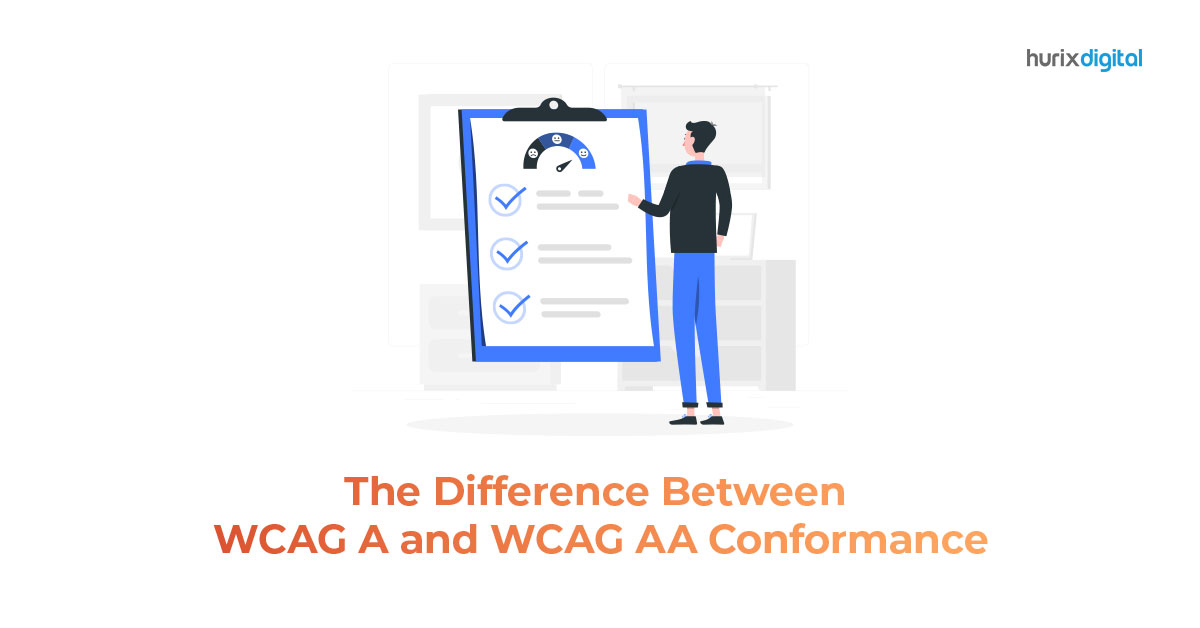
The Difference Between WCAG A and WCAG AA Conformance

[vc_row][vc_column][vc_column_text]From shopping online to connecting with friends and family, the internet has made our lives easier and more convenient. However, it’s essential to realize that not all users have the same level of digital accessibility when interacting with web content. This is where WCAG accessibility comes into play. This article will examine the Web Content Accessibility Guidelines (WCAG) and discuss the differences between WCAG A and WCAG AA conformance. What are WCAG Accessibility Standards? Understanding WCAG conformance is vital for creating a more inclusive and accessible online experience.  The WCAG accessibility guidelines were developed by the World Wide Web Consortium (W3C) to provide a standardized approach to web accessibility. The guidelines are organized into four main principles: perceivable, operable, understandable, and robust. Each principle is further broken down into specific guidelines that must be met to achieve WCAG conformance. WCAG conformance means that your website adheres to the guidelines according to WCAG accessibility standards. There are three levels of WCAG conformance:  WCAG A is the lowest level of compliance.  WCAG AA is a mid-range level of compliance.  WCAG AAA provides the highest level of accessibility compliance. However, some AAA accessibility criteria cannot be applied universally, so meeting this level of compliance is generally not required.  This article will focus on the A and AA of the WCAG accessibility standards. WCAG A vs. WCAG AA: The Differences When it comes to digital accessibility, conforming to WCAG accessibility guidelines is essential. While all three levels are important, the differences between WCAG A and WCAG AA are the most significant. WCAG A Requirements WCAG A is the minimum level of compliance, and it’s essential for ensuring that your website is accessible to the broadest group of users. Without addressing the requirements at this level, barriers will exist that cannot be overcome by assistive technology. Some of the requirements at the WCAG A level include the following: Providing text alternatives for non-text content. Ensuring that all content is presented in a meaningful order. Providing clear and concise instructions for user input. Ensuring that the content is easily navigable using a keyboard. Ensuring that the content is readable and understandable. WCAG AA Requirements WCAG AA provides a higher level of accessibility compliance. While the minimum level of support is provided at WCAG A, some barriers that impact certain user groups may still exist. Addressing the criteria at this level establishes a higher level of accessibility that should work with most assistive technology on desktop and mobile devices. Some of the requirements at the WCAG AA level include the following: Providing sign language interpretation for pre-recorded audio content. Ensuring that content is navigable using assistive technology. Providing a mechanism to bypass content blocks repeated on multiple pages. Ensuring that the content is easily distinguishable from its background. Ensuring that the content can be presented differently without losing information or structure. Choosing the Right Level of WCAG Conformance When achieving WCAG accessibility, website owners and developers must choose between WCAG A and WCAG AA conformance levels. While WCAG A is the minimum level of accessibility required for most websites, conforming to WCAG AA standards can bring a more inclusive experience to a broader range of users.  Factors to consider when choosing between WCAG A and WCAG AA Audience: Consider your target audience and their needs. If your website is for a broader audience, such as a government or educational site, conforming to WCAG AA guidelines would be a better choice. On the other hand, if your site caters to a specific group of users, WCAG A might suffice. Legal requirements: Depending on the country or state where you operate, there may be legal requirements to meet certain levels of WCAG accessibility. Research your local laws to determine which level is appropriate. Budget and resources: Conforming to WCAG AA guidelines requires more time, resources, and testing than WCAG A. Consider your budget and resources for developing and maintaining your website. The benefits of conforming to a higher level of WCAG accessibility Increased accessibility: Conforming to WCAG AA standards will provide a more inclusive experience for a broader range of users, including those with visual, auditory, and cognitive impairments. This can increase user satisfaction and engagement and even open up new audiences and potential customers. Legal compliance: Conforming to higher levels of WCAG accessibility may be required by law in some jurisdictions, reducing the risk of legal action against your organization. Future-proofing: As technology evolves, WCAG accessibility guidelines will continue to evolve. Conforming to a higher level of WCAG accessibility now will help to future-proof your website and avoid costly retrofits. Achieving WCAG A and WCAG AA Conformance If you are aiming to make your website accessible to everyone, it’s essential to adhere to WCAG 2.0. Here are a few tips for achieving WCAG A and WCAG AA conformance Provide alternative text for non-text content: Non-text content, such as images, must have an alternative text that describes its content and purpose. This text must be compatible with assistive technology, allowing screen readers to read it aloud to users who cannot see the image. Ensure that website content is easy to navigate: Navigation is critical for website accessibility. Users with disabilities may require alternative website navigation methods, such as keyboard-only navigation. Therefore, ensuring that your website can be navigated using keyboard-only commands is essential. Use sufficient color contrast: Make sure your website content’s color contrast is sufficient. This ensures that users with visual impairments can differentiate between text and background colors. Provide captions for videos and audio content: Videos and audio content must have captions or transcripts. This helps users with hearing impairments understand the video or audio content. Ensure that the website is compatible with assistive technology: Ensure that your website is compatible with assistive technologies such as Braille displays, screen readers, and voice recognition software. This ensures that users with disabilities can access the content of your website. There are also several tools available online that can help you determine where you stand when it comes to

Gokulnath B April 25, 2023 No Comments

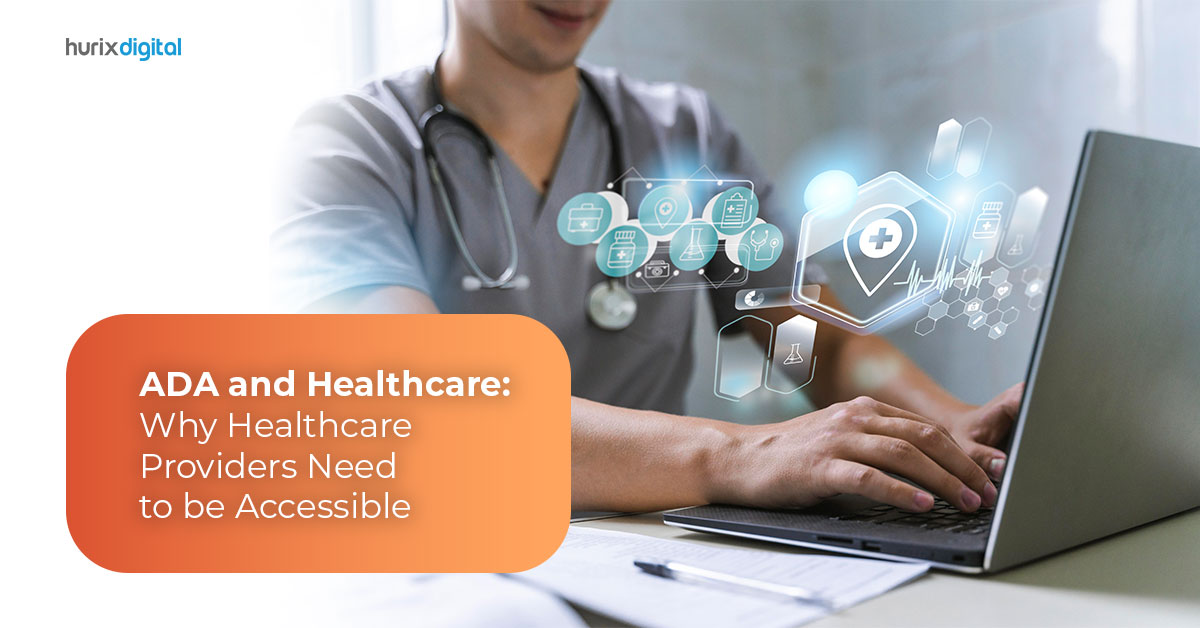
ADA And Healthcare: Why Healthcare Providers Need To Be Accessible

[vc_row][vc_column][vc_column_text]ADA, commonly known as the Americans with Disabilities Act, is a prominent regulation that forbids prejudice against individuals with disabilities. In addition, legislated in 1990, the Americans with Disabilities Act ensures that people with disabilities have fair access to public services, including healthcare. Also, despite the ADA’s attempts, numerous healthcare providers still struggle to deliver accessible and affordable care for individuals with disabilities. This blog focuses on why healthcare providers need to be accessible and how they can improve accessibility. Understanding The Significance Of Accessibility In Healthcare ADA accessibility in healthcare implies that people with disabilities can access healthcare assistance without constraints or prejudice. Moreover, it comprises access to medical equipment, physical areas, communication, and accommodations. In addition, accessibility in healthcare is a statutory prerequisite under the Americans with Disabilities Act and an ethical and moral obligation.  People with disabilities face considerable hindrances when accessing healthcare. These obstacles include physical hindrances, such as inapproachable buildings and tools, and communication hindrances, such as medical service providers not being qualified to communicate with people with disabilities.  Furthermore, these barriers can lead to delays in treatment and diagnosis, increased healthcare expenses, and even medical blunders or lack of ADA web compliance. Nevertheless, by improving accessibility in healthcare, medical service providers can guarantee that people with disabilities obtain timely and reasonable supervision. It can enhance medical outcomes, lower healthcare expenses, and improve patient satisfaction. Advantages Of Improving Accessibility In Healthcare Improving accessibility in healthcare can help both patients and ensure better ADA compliance with websites. Below are a few key benefits: Enhanced Patient Results: Better healthcare accessibility can enhance patient results. Patients with seamless access to medical care are more likely to seek timely medical attention, resulting in early diagnosis and treatment of medical conditions. It, in turn, can lead to more suitable health outcomes and an enhanced quality of life for patients. Increased Treatment Plan Adherence: Patients accessing medical care are more likely to adhere to their treatment plans. When patients face barriers to accessing medical care, they may be less likely to follow through with their treatment plans, leading to worse health outcomes. By improving healthcare ADA website accessibility, patients can receive the medical care they need, leading to better adherence to treatment plans and improved health outcomes. Increased Patient Contentment: Patients who can effortlessly access medical care are more content with their healthcare experience. When healthcare facilities are readily accessible, patients are more likely to feel at ease during their medical appointments. It can help improve patient satisfaction and promote better patient-provider communication, eventually enhancing health outcomes. Reduced Healthcare Expenses: Improving healthcare accessibility can help lower healthcare expenditures. By promoting easy access to medical care, patients are less likely to delay seeking medical care, which can result in more extensive and expensive health issues. Also, increasing access to preventative care makes patients less likely to require expensive medical treatments in the future. Improved Population Health: Improving healthcare accessibility can also help improve overall population health. Having access to quality medical care can lead to better health outcomes for the entire population, reducing the disease burden and enhancing overall population health. Extended Healthcare Access For Vulnerable Peoples: Improving healthcare accessibility can help improve access to healthcare for vulnerable people, such as low-income individuals, older adults, and those with disabilities. These populations may face barriers to accessing healthcare. Still, by improving healthcare accessibility, they can receive the medical care they need, ultimately leading to better health outcomes and an enhanced quality of life. Measures Healthcare Providers Can Take To Improve Accessibility Healthcare accessibility is crucial to ensuring patients can access healthcare services, facilities, and data easily. Nevertheless, many people face considerable barriers, such as cost, distance, language, and culture, when accessing healthcare assistance. In addition, as a healthcare service provider, you are accountable for guaranteeing that all patients have access to your assistance regardless of their circumstances or background. Below are some steps that you can take to improve healthcare accessibility for your patients: Offering Numerous Communication Channels Diverse patients may have different communication choices, and as a healthcare service provider, you should offer numerous communication mediums to cater to their requirements. For instance, some patients like phone calls, others prefer emails, and some prefer face-to-face interaction. Also, your communication mediums should be accessible to individuals with disabilities, like you can use videos to interact with patients with hearing issues. Translating Information Into Different Languages Language barriers hinder healthcare accessibility, and patients who cannot speak or understand the language used by healthcare providers may find it difficult to access information and services. To improve accessibility, you should translate essential information such as brochures, instructions, and consent forms into multiple languages. Employing multilingual staff or interpreters to communicate with patients who do not speak the same language as you can also be helpful. Executing Telemedicine Telemedicine is the utilization of technology to deliver healthcare assistance remotely. It can potentially enhance accessibility by lowering geographical hindrances and cutting the expense of healthcare services. As a healthcare provider, you should consider enforcing telemedicine services to make your services more accessible to patients who cannot visit your facility physically. Telemedicine can also provide remote diagnosis, consultations, and treatment. Making Facilities Accessible Accessibility also involves making physical spaces accessible to people with disabilities. You should ensure that your facilities are designed to accommodate people with disabilities. For instance, you can install ramps, handrails, and accessible toilets to make your facility more accessible to individuals with mobility problems. Providing Transportation Assistance Transportation is another significant deterrent to healthcare accessibility, particularly for people residing in rural areas or those without dependable transportation. As a healthcare provider, you should consider providing transportation assistance to patients who require it. Collaborating with local transportation institutions to provide your patients with discounted or free transportation services can be viable. Educating Patients Many patients may not be aware of the services and resources available to them. As a healthcare provider, you should take the initiative to educate your patients about the services and resources

Hurix April 25, 2023 No Comments

How to Select the Best Gamification Company

[vc_row][vc_column][vc_column_text]Gamification has become a powerful tool in corporate training. According to a report, 95% of employees feel engaged while using gamified elements at their workplace. Gamification can improve employee productivity and increase their motivation levels, which explains its popularity.  Many companies are now adopting gamified solutions to achieve their learning and development goals. However, with a multitude of gamification companies out there, selecting the right one can be quite a tiresome task. Hence, you need to analyze certain factors before making a decision.[/vc_column_text][vc_custom_heading text=”Here are the factors you should consider while selecting a gamification company-” font_container=”tag:h1|font_size:18|text_align:left” google_fonts=”font_family:Lato%3A100%2C100italic%2C300%2C300italic%2Cregular%2Citalic%2C700%2C700italic%2C900%2C900italic|font_style:900%20bold%20regular%3A900%3Anormal” css=”.vc_custom_1629473005888{margin-top: 0px !important;margin-bottom: 0px !important;border-top-width: 0px !important;border-bottom-width: 0px !important;padding-top: 0px !important;padding-bottom: 10px !important;}”][vc_column_text]1. Training needs Gamification is anything but a one-size-fits-all solution. Even though it is a common business component, gamification companies do not offer the same things. You have to carefully review your company’s training requirements to select the right service provider.  If your primary goal is to provide process training or compliance training, make sure the service provider understands your requirements and is capable of creating appropriate solutions. For instance, if you want to teach leadership and management, you should select a gamified course that presents leadership challenges and offers practical knowledge in a fun way.  Apart from that, you should also analyze the aesthetics, dynamics, and mechanics of the games.   2. Accessibility across devices Your employees may want to access their gamified training program on their mobile phone, tablet, or computer. If that’s the case, you should choose a gamification company that can create a solution that is accessible from various devices.  Apart from that, if your company uses a learning management system, you should be able to integrate the gamified content with it. Irrespective of which game-based learning program you choose, it should run smoothly on all devices.  3. Appropriate challenges What’s the point of gamification if your employees sail through the challenges with little effort? The purpose of gamified content is to create high-pressure scenarios that compel learners to use their analytical skills.  While a highly complex game could be demotivating, a simple game with too few challenges could be less interesting for learners. There should be a fine balance keeping in mind the skill level of employees.  Also, while searching for the best gamification companies, select the one that offers resettable leaderboards. This way, once a challenge is completed, you can reset the leaderboard for employees to start afresh and aim for higher scores. 4. Incentivize People are motivated by varying incentives depending on the nature of their work. Therefore, your gamification program should be able to incentivize the learners accordingly.  You should first pick your target audience, learn what motivates them, and then select an appropriate incentive for completing the gamified training program. For instance, the targets and the driving factors of a sales team and a development team are quite different. Hence, you need to incentivize your gamified learning programs  based on what drives the employees to perform better. 5. Multi-language A great advantage of online training programs is that employees can access them from anywhere in the world. If you have a team that is spread across continents, your gamified learning content should be available in multiple languages.  Before selecting a vendor, check if their product is available in all the languages your team needs.  6. Technical support Businesses may or may not have an in-house support team for fixing technical glitches. Since you are probably going to outsource game-based learning content development, make sure that the vendor has a strong technical support team.  It’s not uncommon to run into problems due to a lack of technical knowledge or any other issues. For this reason, a good quality customer care service is imperative to continue providing the best learning experience.  Considering that most employees are still working remotely, technical support is of utmost importance.  7. Budget and time Have you allocated the appropriate budget and time required to complete the training?  Needless to say, your budget will be an important factor while choosing the best vendor among scores of gamification companies. For instance, some companies charge an extra amount to customize the content. If your budget set for employee training permits, customization is the way to go. Depending on how much time you can dedicate to corporate training, you should choose a game that would fit the length of the training program.  It is because some game-based learning programs may take days, weeks, or even several months to complete. Therefore, you must bear this factor in mind while selecting a vendor.  8. Communication materials Apart from the gamified training program, your employees may need communication materials including videos, emails, and leaflets. For instance, launching a trailer before an actual gamified program may motivate employees to participate in it.  Similarly, leaflets may serve as a guide or reference material after the training period is over. To increase the chances of success of your game-based learning program, your vendor should be able to provide these communication materials.  9. Overall training plan Does your gamified training program integrate well with other learning initiatives such as practical training, eLearning courses, and on-field training? While going through a list of gamification companies, make sure that your vendor can create a program that supports your overall training plan. To attain the desired learning outcomes, you should create a combination of game-based learning and other training initiatives.  Not only would it boost the effectiveness of your employee training program but also instill new skills and knowledge in the learners.  10. Automated reports Depending on the vendor you choose, you can access automated reports that will help you analyze the results. If you have a large workforce, it could be particularly challenging to measure the results manually. In that case, the auto-generated reports will help you save a lot of time and take some pressure off the project managers. For instance, companies such as Michelin, Sanitas, and Ford access automated reports through gamification platforms to review and track the performance of each

Hurix April 25, 2023 No Comments

Best Elearning Courses for You: Custom Content or Off-the-shelf Courses

[vc_row][vc_column][vc_column_text]There has been a paradigm shift in the approach of businesses towards the learning and training of employees. There has been a move from the regular and mundane classroom techniques, to the fresh and modern methods of eLearning which is now used to create a more conducive learning experience with custom elearning content development. There is often a dilemma that is faced by Learning and Development managers due to the increased demand to roll out learning courses online. The question that they are confronted with is whether to purchase a learning course that is available off-the-shelf or to develop customized learning content that is specific to their needs. Custom content development and off-the-shelf training can each fulfil certain business needs due to their own set of advantages. However, it is important to determine which solution would work best for your training needs and which would integrate well with your business.[/vc_column_text][vc_custom_heading text=”The difference between customized e-learning content development and off the shelf courses” font_container=”tag:h1|font_size:18|text_align:left” google_fonts=”font_family:Lato%3A100%2C100italic%2C300%2C300italic%2Cregular%2Citalic%2C700%2C700italic%2C900%2C900italic|font_style:900%20bold%20regular%3A900%3Anormal” css=”.vc_custom_1574693236790{margin-top: 0px !important;margin-bottom: 0px !important;border-top-width: 0px !important;border-bottom-width: 0px !important;padding-top: 0px !important;padding-bottom: 10px !important;}”][vc_column_text] Basis of Distinction  Customized Courses Off-the-shelf Courses Nature of content For specific content. For generic content. Business Needs Can be customized to meet the needs or requirements completely. May not meet business needs as the content is created in advance and is generic. Cost Expensive to create customized courses with particular requirements. Front-cost is relatively low as they are ready-made. When appropriate When customizations are necessary, usually for training large groups. When training is more universal in nature. Time It is a time-consuming process Time and cost effective as it only has to be installed which is a quick process. [/vc_column_text][vc_custom_heading text=”Off-the-shelf elearning Courses:” font_container=”tag:h2|font_size:18|text_align:left” google_fonts=”font_family:Lato%3A100%2C100italic%2C300%2C300italic%2Cregular%2Citalic%2C700%2C700italic%2C900%2C900italic|font_style:900%20bold%20regular%3A900%3Anormal” css=”.vc_custom_1630472119756{margin-top: 0px !important;margin-bottom: 0px !important;border-top-width: 0px !important;border-bottom-width: 0px !important;padding-top: 0px !important;padding-bottom: 10px !important;}”][vc_column_text]An off-the-shelf course refers to an official course outline which is delivered as if it was originally prescribed to be taught by a certain trainer. It is affordable as it is readily available and is pre-loaded with a plethora of features. These courses do lack flexibility as they can’t be tailor made to suit the needs of a business, which therein makes it difficult to integrate the course with other technologies. When can off-the-shelf courses be used? Off-the-shelf courses is often most suitable for training where the content is universal. Individuals preparing for an exam or certification which requires more generic information or content would benefit better from off-the-shelf courses. Universal content – When the content is universal in nature and is more generic in comparison to specific training programs or software, off the shelf training would work best. Courses can be rolled out on more general topics such as negotiation, team building, compliance training, and the like which cover all relevant topics and is informative instead of spending excess money and time on customizing the content. Urgency in requirement – When the requirement is immediate and is urgent, off-the-shelf courses work well as they are readily available for upload on a Learning Management System. Affordability – Off-the-shelf courses are an affordable option as they are ready made and don’t require investment of any additional resources. Costs involved are relatively low as the development cost is distributed among many users.[/vc_column_text][vc_custom_heading text=”Customized Courses” font_container=”tag:h3|font_size:18|text_align:left” google_fonts=”font_family:Lato%3A100%2C100italic%2C300%2C300italic%2Cregular%2Citalic%2C700%2C700italic%2C900%2C900italic|font_style:900%20bold%20regular%3A900%3Anormal” css=”.vc_custom_1574693220030{margin-top: 0px !important;margin-bottom: 0px !important;border-top-width: 0px !important;border-bottom-width: 0px !important;padding-top: 0px !important;padding-bottom: 10px !important;}”][vc_column_text]Custom content development or customized courses provide an opportunity to modify, add, remove, or alter any content to a particular course outline to suit it best to the needs of a business. When can customized courses be used?  Custom content would be the best choice when a business rolls out new versions of a software and wants its employees to get well versed with the latest features. Distinct training requirements – Custom content development is apt when there is a requirement for specific training needs. Not only is there a good amount of control over the content you want, there is also increased workflow and reduced wastage of time and money. Dynamic training content – Training needs can change over a period of time. Custom content development is apt for such cases as you own the customized course and can make changes easily at no additional costs. Here’s more on how to optimize your eLearning ROI. A reflection of your brand – Through custom courses, you can express the story you wish to with specific concept illustrations, colors, and by using a company logo to make your content more specific to your organization, which also promotes your brand.[/vc_column_text][vc_custom_heading text=”Pros and Cons – Custom course and off-the-shelf training” font_container=”tag:h2|font_size:18|text_align:left” google_fonts=”font_family:Lato%3A100%2C100italic%2C300%2C300italic%2Cregular%2Citalic%2C700%2C700italic%2C900%2C900italic|font_style:900%20bold%20regular%3A900%3Anormal” css=”.vc_custom_1630472177552{margin-top: 0px !important;margin-bottom: 0px !important;border-top-width: 0px !important;border-bottom-width: 0px !important;padding-top: 0px !important;padding-bottom: 10px !important;}”][vc_column_text] Off-the-shelf training courses Pros Lower up-front cost – The cost of setting up off-the-shelf courses is relatively low. The front cost tends to be inexpensive as all that is required is purchase of the course training materials online and it’s installation. The process is simple and highly cost-effective. Rich features – Off-the shelf courses have multiple features that are already available in the learning material. Meet business needs – The content is created and developed in an easy-to-learn format by leading industry experts that could benefit your employees and your business. Support – Support is included in off-the-shelf courses or can even be added with a maintenance contract. Communities of users across different forums online provide self-help support as well. Quick to deploy – Off-the-shelf courses are easy and quick to deploy. Vendor managed – The design, development and testing is handled by the vendor. Cons While it provides a host of advantages, off-the-shelf training has several disadvantages which makes customization more favorable. No tailor-made course content – Off-the-shelf courses are generic. While they cover an array of different topics which could help your business, it may not be specific to your needs. Potentially irrelevant topics – Since it is more generic in nature, certain topics which are not relevant may be included, which could be a waste of time. Unnecessary features – There may be several irrelevant features which actually complicate what would have been simpler to manage. Requests for certain features would likely go unheard and future enhancements may not even be relevant to

Anand Kumar April 25, 2023 No Comments

How Can Enterprises Get Better Training ROI with Blended Learning Solutions?

[vc_row][vc_column][vc_column_text]In this blog we talk about how blended learning solutions help enterprises get better training roi. Blended learning, as the name suggests, is a blend of traditional face-to-face learning and online learning. It is also sometimes called hybrid learning since it uses a mix of different learning and development strategies to achieve results. Blended learning solutions include the use of various digital media types, technology, and evolving pedagogical practices. Any blended learning program thus reaps the benefits of both classroom and online learning. Blended learning results in better learning outcomes, more satisfied and empowered employees, which in turn, translate into better training ROI for the enterprises. Here are the Best Ways to Deliver Online Learning Courses to Employees. One reason why blended learning is gaining ground is the fact that it works as a bridge between two different worlds – traditional learning, which provides the learners comfort of peer and instructor presence; and online learning, which passes greater control of learning to the individual and makes learning a more personalized experience. While advances in technology may be redefining business landscapes, it is important to keep in mind that people are generally resistant to change. Several studies point to the fact that there is a reluctant majority that needs to be convinced about the benefits of online learning. Blended learning, thus, is a way for enterprises to take the middle path rather than make a dramatic shift from traditional to online. With blended learning, learners do not have to forego the comfort of face-to-face interaction while at the same time, they gain from a sea of information and online resources with a just few clicks of the mouse. Blended learning, therefore, translates into higher acceptance by employees, increased engagement and greater reach, all of which translate into better ROI for enterprises.[/vc_column_text][vc_custom_heading text=”Here are some benefits of blended learning solutions:” font_container=”tag:h1|font_size:18|text_align:left” google_fonts=”font_family:Lato%3A100%2C100italic%2C300%2C300italic%2Cregular%2Citalic%2C700%2C700italic%2C900%2C900italic|font_style:900%20bold%20regular%3A900%3Anormal” css=”.vc_custom_1582896244096{margin-top: 0px !important;margin-bottom: 0px !important;border-top-width: 0px !important;border-bottom-width: 0px !important;padding-top: 0px !important;padding-bottom: 10px !important;}”][vc_custom_heading text=”Time Saving: ” font_container=”tag:h2|font_size:18|text_align:left” google_fonts=”font_family:Lato%3A100%2C100italic%2C300%2C300italic%2Cregular%2Citalic%2C700%2C700italic%2C900%2C900italic|font_style:900%20bold%20regular%3A900%3Anormal” css=”.vc_custom_1582898797994{margin-top: 0px !important;margin-bottom: 0px !important;border-top-width: 0px !important;border-bottom-width: 0px !important;padding-top: 0px !important;padding-bottom: 10px !important;}”][vc_column_text]Instructors have to spend a lot of time in creating teaching resources, for example, they have to source and collate material, have it printed, and then distribute to the student. Needless to say, this is a time-consuming process. A better option is to access online resources, upload on an online corporate training platform and then send the link to the article, PDF, presentation or a document to the learners. Many instructors have already adopted this practice, thus, saving precious time[/vc_column_text][vc_custom_heading text=”Cost Efficient: ” font_container=”tag:h2|font_size:18|text_align:left” google_fonts=”font_family:Lato%3A100%2C100italic%2C300%2C300italic%2Cregular%2Citalic%2C700%2C700italic%2C900%2C900italic|font_style:900%20bold%20regular%3A900%3Anormal” css=”.vc_custom_1582899599500{margin-top: 0px !important;margin-bottom: 0px !important;border-top-width: 0px !important;border-bottom-width: 0px !important;padding-top: 0px !important;padding-bottom: 10px !important;}”][vc_column_text]Blended learning solutions are also cost saving as enterprises don’t have to invest in printed copies of their training content. They can simply upload their training resources on a central repository and make it available for reading, downloading, and editing. Besides, they also save in terms of accommodation and travel costs as employees can access classroom training sessions using online environment.[/vc_column_text][vc_custom_heading text=”Better Communication: ” font_container=”tag:h2|font_size:18|text_align:left” google_fonts=”font_family:Lato%3A100%2C100italic%2C300%2C300italic%2Cregular%2Citalic%2C700%2C700italic%2C900%2C900italic|font_style:900%20bold%20regular%3A900%3Anormal” css=”.vc_custom_1582899624842{margin-top: 0px !important;margin-bottom: 0px !important;border-top-width: 0px !important;border-bottom-width: 0px !important;padding-top: 0px !important;padding-bottom: 10px !important;}”][vc_column_text]Most online platforms offer a vast range of in-built communication tools such as live chat, messaging boards, video calls etc. These tools make interactions between the instructor and employees more effective. Instructors can upload assignments, share information, assign due dates, and address questions. Besides, online forums and communities also provide employees a platform to debate, share, and seek information, all of which makes the subject under discussion more relevant and interesting.[/vc_column_text][vc_custom_heading text=”Expands Reach: ” font_container=”tag:h2|font_size:18|text_align:left” google_fonts=”font_family:Lato%3A100%2C100italic%2C300%2C300italic%2Cregular%2Citalic%2C700%2C700italic%2C900%2C900italic|font_style:900%20bold%20regular%3A900%3Anormal” css=”.vc_custom_1582899653843{margin-top: 0px !important;margin-bottom: 0px !important;border-top-width: 0px !important;border-bottom-width: 0px !important;padding-top: 0px !important;padding-bottom: 10px !important;}”][vc_column_text]The fact that blended learning combines the best of classroom and online learning helps enterprises to expand their reach. In classroom learning, employees can interact with their instructors and peers, and also learn from hands-on activities. With the face-to-face interaction, they can also understand where they stand in respect to their peers and also share experiences and gain perspectives. Online learning, on the other hand, is more personalized, allowing them to learn at their own pace and expand their knowledge beyond the classroom. Also, blended learning allows enterprises to extend training beyond geographies at minimal costs. Employees can log in to an online environment, for example, WebEx, at a designated time and participate in training sessions. Besides, blended learning also enables learners to access content while on the move, on their smartphones or device of their choice.[/vc_column_text][vc_custom_heading text=”Increases Engagement: ” font_container=”tag:h2|font_size:18|text_align:left” google_fonts=”font_family:Lato%3A100%2C100italic%2C300%2C300italic%2Cregular%2Citalic%2C700%2C700italic%2C900%2C900italic|font_style:900%20bold%20regular%3A900%3Anormal” css=”.vc_custom_1582899691673{margin-top: 0px !important;margin-bottom: 0px !important;border-top-width: 0px !important;border-bottom-width: 0px !important;padding-top: 0px !important;padding-bottom: 10px !important;}”][vc_column_text]Online content is created using several digital media types, such as audio, video, text, graphics, animations, etc. These media formats help to bring alive complex concepts and make the content more engaging, immersive, real-time and contextual. Take the example of sales training. An instructor can supplement classroom lessons with presentations and also online games that allow employees to practice their skills in a virtual environment, get a ‘first-hand’ experience how the knowledge can be put to practice in real-time settings, and also learn from mistakes. With these formats and activities, learners are more likely to engage with the lesson, retain the knowledge and apply them in actual situations. The second aspect to consider is that employees are busy with their jobs and so it is difficult to align classroom learning with so many different schedules. By adding online learning to the training, enterprises can provide their employees more flexibility to access and participate in training. Learn whether Blended Learning the Right Approach for Your Enterprise.[/vc_column_text][vc_custom_heading text=”Pre and Post-Training: ” font_container=”tag:h2|font_size:18|text_align:left” google_fonts=”font_family:Lato%3A100%2C100italic%2C300%2C300italic%2Cregular%2Citalic%2C700%2C700italic%2C900%2C900italic|font_style:900%20bold%20regular%3A900%3Anormal” css=”.vc_custom_1582899891174{margin-top: 0px !important;margin-bottom: 0px !important;border-top-width: 0px !important;border-bottom-width: 0px !important;padding-top: 0px !important;padding-bottom: 10px !important;}”][vc_column_text]Instructors can use readily available online resources to supplement their classroom lessons. They can also share links of these resources and ask the employees to come prepared for the lesson in the classroom. Then there may be some employees who are already familiar with the concept and others who are not. By sharing these resources beforehand, instructors can bring all employees on board and

Hurix April 25, 2023 No Comments

Emerging eLearning Technologies – Driving the Change

[vc_row][vc_column][vc_column_text]In the last 16 years, the use of elearning technologies by enterprises have grown by 900% and 98% of startups and small businesses are preparing for adoption of elearning as their full-time learning and development structure. The reason behind this shift is long-term benefits associated with elearning methods, such as: Reduced costs of training Increased revenue Improved productivity And as the adoption increases year on year, there are new technologies contributing to this ever-growing scenario. Let’s take a deeper look at each one of them: 1. Microlearning  Microlearning includes delivering small chunks of information in short bursts. For example, creating 5-minute or 10-minute videos for a sub-topic. Why? The idea behind it is to deliver only one aspect of a larger topic at one time. This makes the sessions more focused and actionable at the same time. If an employee is facing an issue regarding a subtopic X, they can easily find a learning module related to X. They don’t have to go through the whole topic again. Since the delivery of knowledge is short and to-the-point, it is easier for the learner to retain knowledge effectively. Videos, infographics, tests, and small activities form some of the key methods to deploy this technique for any organization. Here’s some microlearning design techniques for a great learning experience. 2. Adaptive Learning   Say you have 150 employees at the workplace, and each employee will have a different format/learning path based on their personal learning preferences. You achieve this by Adaptive learning, where the learning path is personalized according to the needs and learning requirements of an individual. AI helps the system analyze data related to how the learner grasps concepts and what type of training should be followed by which concept? This saves the learners’ time from skimming through the topics they already know and get started with the topics they need to learn. 3. Game-based Learning  It is known that games generate happy emotions which lead to the release of pleasure hormones like serotonin and dopamine. Blending this aspect of games with eLearning is a trend which began a few years back and still continues to be a part of corporate training programs. The key benefit of game-based learning is learner engagement, which leads to a higher retention rate and it adds value to the performance of the employees. Any successful game-based learning program will include following: Helps to solve problems, build hypothesis and develop strategies Keep people interested Challenge users but keep them satisfied with growing levels Personalized game-based paths Capability to communicate or interact with other players Shouldn’t be too easy or too difficult Here’s How to Setup Effective Game-Based Learning for Enterprises 4. AR and VR Based Learning  AR and VR have been a part of almost every industry and are leading the eLearning technologies trend as well. Similarly, both AR and VR are rapidly gaining importance in the learning and development industry. Augmented reality uses a graphical overlay to increase the interest of learners in the content. In a way, AR helps in delivering an experience through which the learner can connect to the delivered knowledge practically. On the other hand, virtual reality helps in delivering a 360-degree cognitive learning experience. Some of the best implementation happens when safety-related training is to be delivered to the learners. You can also combine AR and VR with other methods to drive brag-worthy propositions, for example, combining it with game-based learning could help you reward tangible badges to the winners or even move up the leaderboard.[/vc_column_text][vc_custom_heading text=”Elearning Technologies Guiding the Change ” font_container=”tag:h1|font_size:18|text_align:left” google_fonts=”font_family:Lato%3A100%2C100italic%2C300%2C300italic%2Cregular%2Citalic%2C700%2C700italic%2C900%2C900italic|font_style:900%20bold%20regular%3A900%3Anormal” css=”.vc_custom_1572443110479{margin-top: 0px !important;margin-bottom: 0px !important;border-top-width: 0px !important;border-bottom-width: 0px !important;padding-top: 0px !important;padding-bottom: 10px !important;}”][vc_column_text] 1. Learning as a Service  To understand learning as a service, think of Netflix and how it allows streaming of several movies and TV series. Similarly, learning as a service platform create a pool of learning courses relevant to learners. The course providers offer off-the-shelf, advanced learning courses to an organization for corporate learning. An important element included in this subscription is the personalization of content as per employee and business requirements. Just like Netflix, corporate learning is moving towards personalized, user-based learning experience. This means that the user can select the course that they want to complete based on his or her career growth or business requirements. With this, corporate learning is also looking forward to solutions that help them subscribe to a package they need instead of a package containing a pool of unnecessary courses. 2. Personalized Recommendation Engines  Creating personalized learning paths with the use of mobile learning helps learners be more productive and get the best value of their time. Personalized Recommendation Engines helps in understanding the specific use cases and skill sets of a learner which becomes very important to make the eLearning program successful. If you have complex learning requirements such as software development, it is best to utilize and deploy a recommendation engine. However, it is necessary to note that personalized recommendation engines require quality data for execution. Hold on to the thought until you have a considerable number of users on your platform and you also have a considerable amount of data relevant to these users. 3. Augmented Reality and Virtual Reality  Virtual and augmented reality applications and implementations are more accessible to businesses today. Industry leaders such as Apple, Google, Microsoft, and Facebook are spending significant money in VR and AR technology development and enhancement. These eLearning technologies can offer endless learning opportunities with an immersive experience to the modern learner and leading the change in eLearning segment.[/vc_column_text][vc_custom_heading text=”Bottom-Line” font_container=”tag:h5|font_size:18|text_align:left” google_fonts=”font_family:Lato%3A100%2C100italic%2C300%2C300italic%2Cregular%2Citalic%2C700%2C700italic%2C900%2C900italic|font_style:900%20bold%20regular%3A900%3Anormal” css=”.vc_custom_1572443094615{margin-top: 0px !important;margin-bottom: 0px !important;border-top-width: 0px !important;border-bottom-width: 0px !important;padding-top: 0px !important;padding-bottom: 10px !important;}”][vc_column_text]Did you know that elearning technologies can help you gain a competitive edge in the industry? 72% of organizations agree to that. Businesses are transitioning from classroom-learning to elearning technologies as it helps improve employee performance, business performance, and employee growth. Due to this cultural shift, more and more industry leaders are adopting this trend. But to make it successful you need to ensure that

Hurix April 25, 2023 No Comments

How to Train your Dragon to Move Away from Legacy Business Applications

[vc_row][vc_column][vc_column_text]Simple answer is Business Application training, but it’s not as easy as it seems. The metaphor of course, refers to migrating your IT infrastructure from legacy business applications to new age technologies. These cutting-edge tools and technologies promise and deliver more often than not, improved processes and productivity. The challenge however is to manage the transition from legacy systems to new technologies. If the transition is not managed well, it may be counterproductive and lead to loss of efficiency. What’s more important is training your employees to get up to speed with the new tools. Two decades ago, the waterfall approach was the most widely practiced project management approach. Today, it is Agile everywhere. Also, business applications, two decades ago, ran via Client-servers. Today, they run on cloud servers in the form of web and mobile apps. Business application software has become a consumer product. As you can see, the last two decades have turned business application development on its head. We can hardly recognize it with what it used to be a decade ago. Most businesses today run on legacy systems that are not at par with modern-day requirements. At the same time, there is also a massive influx of new technologies capable of replacing legacy business solutions. They are faster, smarter, and require users to spend less time on repetitive tasks. Thus, businesses keen on growth must migrate to these modern-day systems to ramp up their operations. As the world of business application development keeps evolving, businesses will have to train their employees to become well-versed at using these applications. That calls for timely and effective business application training. But new business application training comes at a cost. If not planned and executed properly, it can negatively impact your business productivity.[/vc_column_text][vc_custom_heading text=”Challenges faced during migrating legacy systems and how to address them with Business Application Training:” font_container=”tag:h1|font_size:18|text_align:left” google_fonts=”font_family:Lato%3A100%2C100italic%2C300%2C300italic%2Cregular%2Citalic%2C700%2C700italic%2C900%2C900italic|font_style:900%20bold%20regular%3A900%3Anormal” css=”.vc_custom_1573826738467{margin-top: 0px !important;margin-bottom: 0px !important;border-top-width: 0px !important;border-bottom-width: 0px !important;padding-top: 0px !important;padding-bottom: 10px !important;}”][vc_column_text]Enterprises are pouring funds and resources into upskilling and preparing their workforce, so they can adapt to the latest business applications seamlessly. Various teaching models like in-class training and on-demand training are also being tried to accelerate learning and productivity. Despite their best intentions, businesses run into several challenges that hamper their ROI in training investments. Here are quick tips to measure training ROI. Some of the most common challenges are: Limited practical training Disruption in mission-critical applications Employee sentiments towards migration The right business application training approach can mitigate legacy system migration challenges greatly. Here are some ways to help your legacy employees migrate to new applications without losing out on productivity. 1. Organize walkthrough sessions The first step in introducing users to a new application would be to conduct walkthrough sessions. The sessions can be organized by experts from the application vendor or by in-house members with prior experience in working with the application. Ensure that the walkthrough sessions also have a manual that users can go back to, to look up information as and when they need it. 2. Run a pilot project Introducing a new business application to your users is a sensitive process. If not planned properly, it can bring processes that have been working with clockwork precision to a standstill. It is not recommended, therefore, to migrate to the new applications at once. Users must be given a taste of what to expect while using it in live environments. A pilot project implemented on a low priority function can help with that. It imparts the experience of working directly with the application while also setting the stage to identify pain points, loopholes, and areas where caution is to be exercised. To ensure that the pilot project progresses smoothly, several learning approaches can be adopted. For the mobile-first generation, the right modes of learning will include microlearning, blended learning, real-world simulations, scenario-based learning. These can be served in the form of on-demand training or as pre-recorded learning materials. 3. Scale successful pilots The benefit of running a pilot project is that it helps identify similar operations which can be ramped up using the application. Scaling the pilot project to similar functions helps reduce error instances and also minimizes the need for repetitive learning. Also, as and when the application usage is expanded to other areas, the need for basic training regarding the business application is also minimized. 4. Identify super-users Super-users are users who are well-versed with the application usage on a day-to-day basis. They are also aware of the hacks that deal with getting the best out of the application. Their prior training or exposure to the application makes them super-users. Super-users are the go-to resources and can help new users onboard the application much more easily. They can introduce the users to the interface, the right way to use it, and also create awareness about the common mistakes. While introducing a new application to your users, identify super-users within the team. An in-house super-user can act as a leader who can train new users to ramp up their skills. As they are already adept at using the application, they can also sustain the existing productivity levels. 5. Gather feedback Feedback from users is what helps identify whether the business application training is heading in the right direction or not. Feedback helps evaluate the critical pain areas users face while using the application. The pain areas can be addressed internally, or support can be sought from the vendors to customize the application. Gathering feedback also aids in understanding the overall sentiments regarding the use of the business application. If the overall employee sentiment is not positive, corrective measures must be taken to instill confidence in them. Mid-level or senior-level managers will have to step in and create awareness about why the migration is being done and what are the expected benefits of the exercise. That should help employees embrace the new application with optimism instead of hesitance.[/vc_column_text][vc_custom_heading text=”To Summarize” font_container=”tag:h2|font_size:18|text_align:left” google_fonts=”font_family:Lato%3A100%2C100italic%2C300%2C300italic%2Cregular%2Citalic%2C700%2C700italic%2C900%2C900italic|font_style:900%20bold%20regular%3A900%3Anormal” css=”.vc_custom_1573822971743{margin-top: 0px !important;margin-bottom: 0px !important;border-top-width: 0px !important;border-bottom-width: 0px !important;padding-top: 10px !important;padding-bottom: